Archives for category: Places

When I get to the sea, I’m constantly reminded of all the wonderful creatures, beautiful and unique, who glide through these waters. I know whales are out there, have seen a quick sighting in Alaska and a couple of closer encounters two years ago in Oregon. Ve stayed on the coast these past three years, in Depoe Bay, the Whale Watching Capital of the world along with boasting the smallest harbor in the world.

This time the weather was perfect, we are seeing whales spouting from our balcony all day long and we went back out to get up close. I can feebly try to put words with the experience, but my photos tell the story in a much more exciting way. We are all visual people, aren’t we?

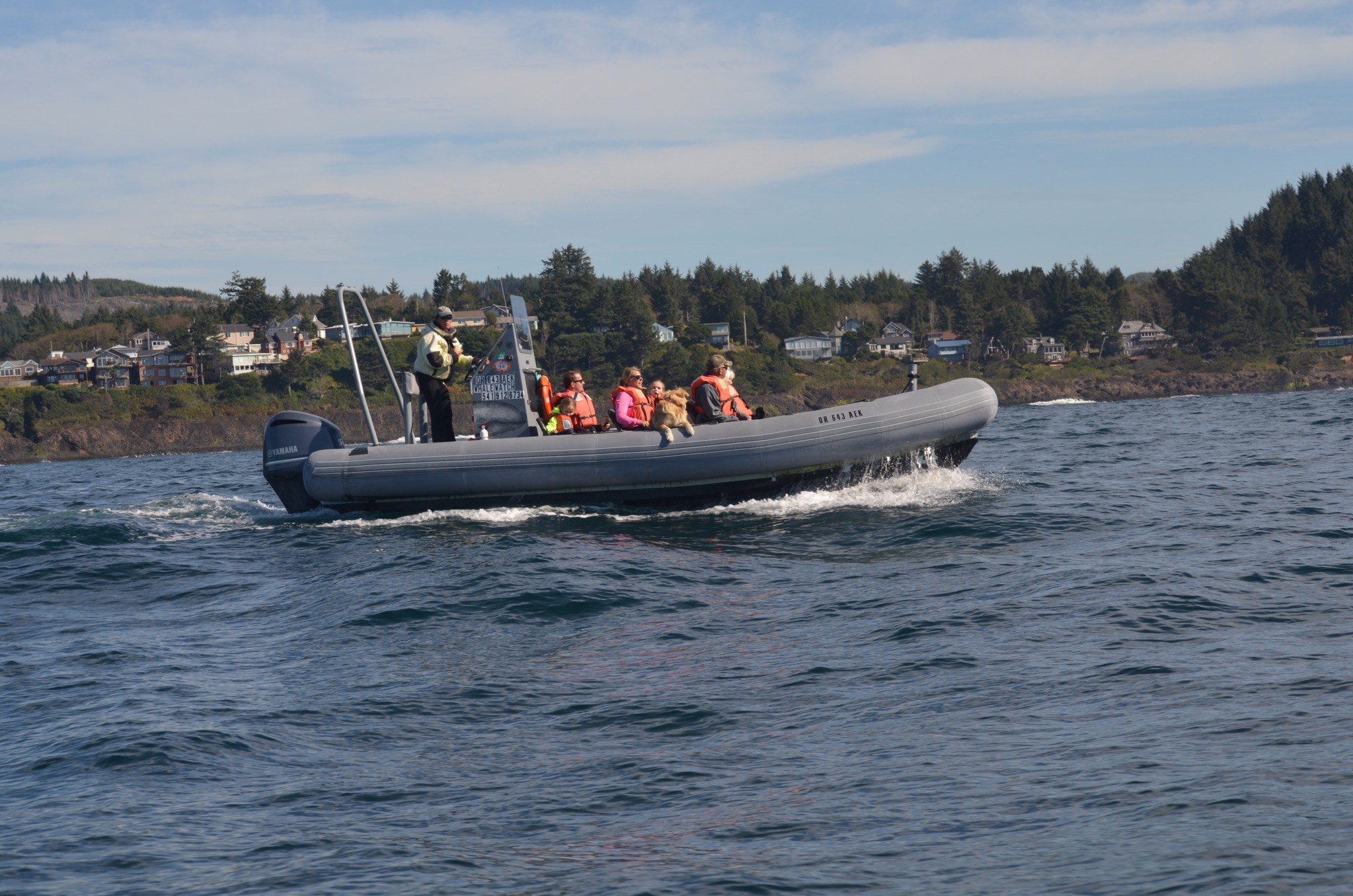
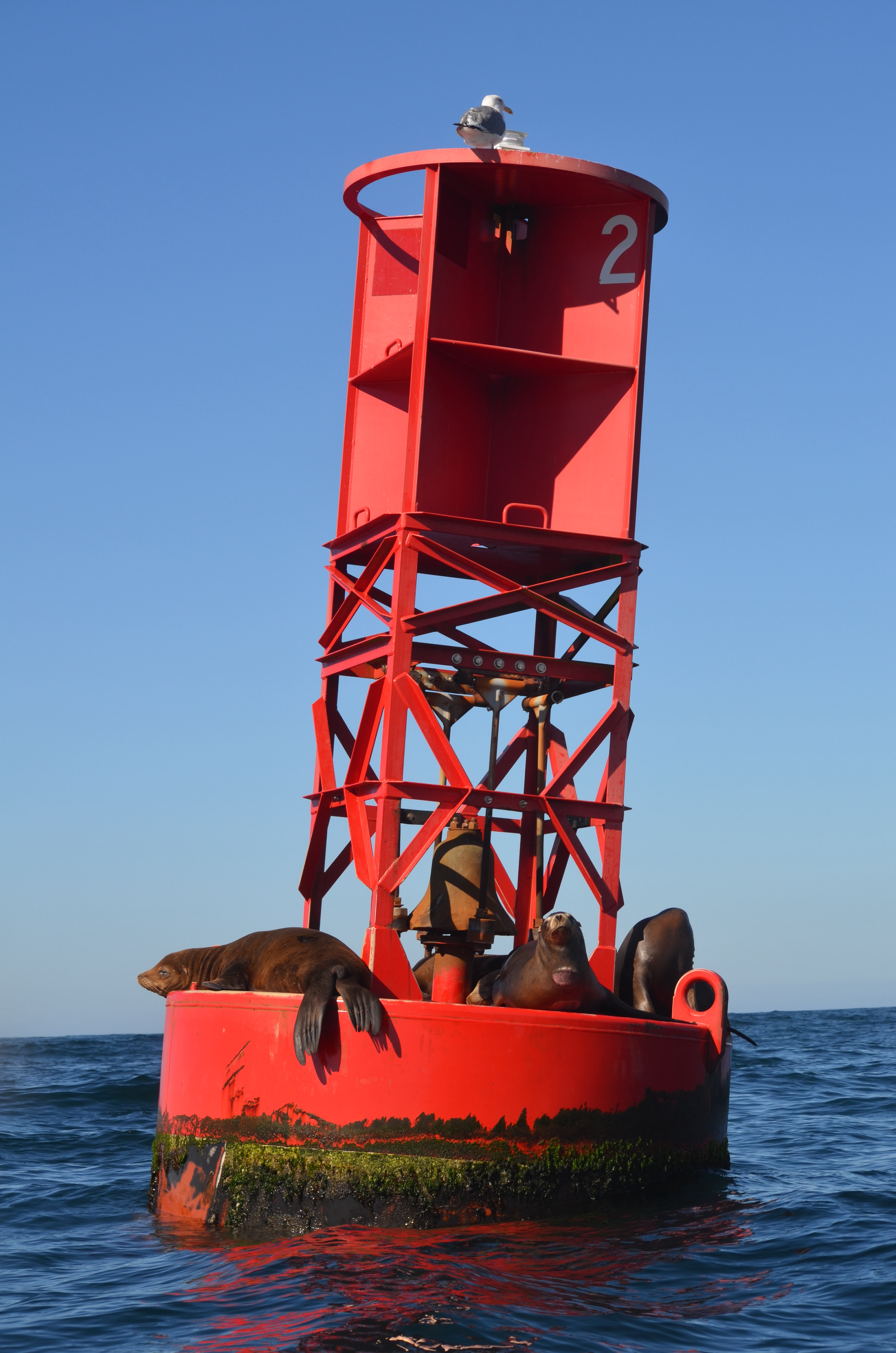
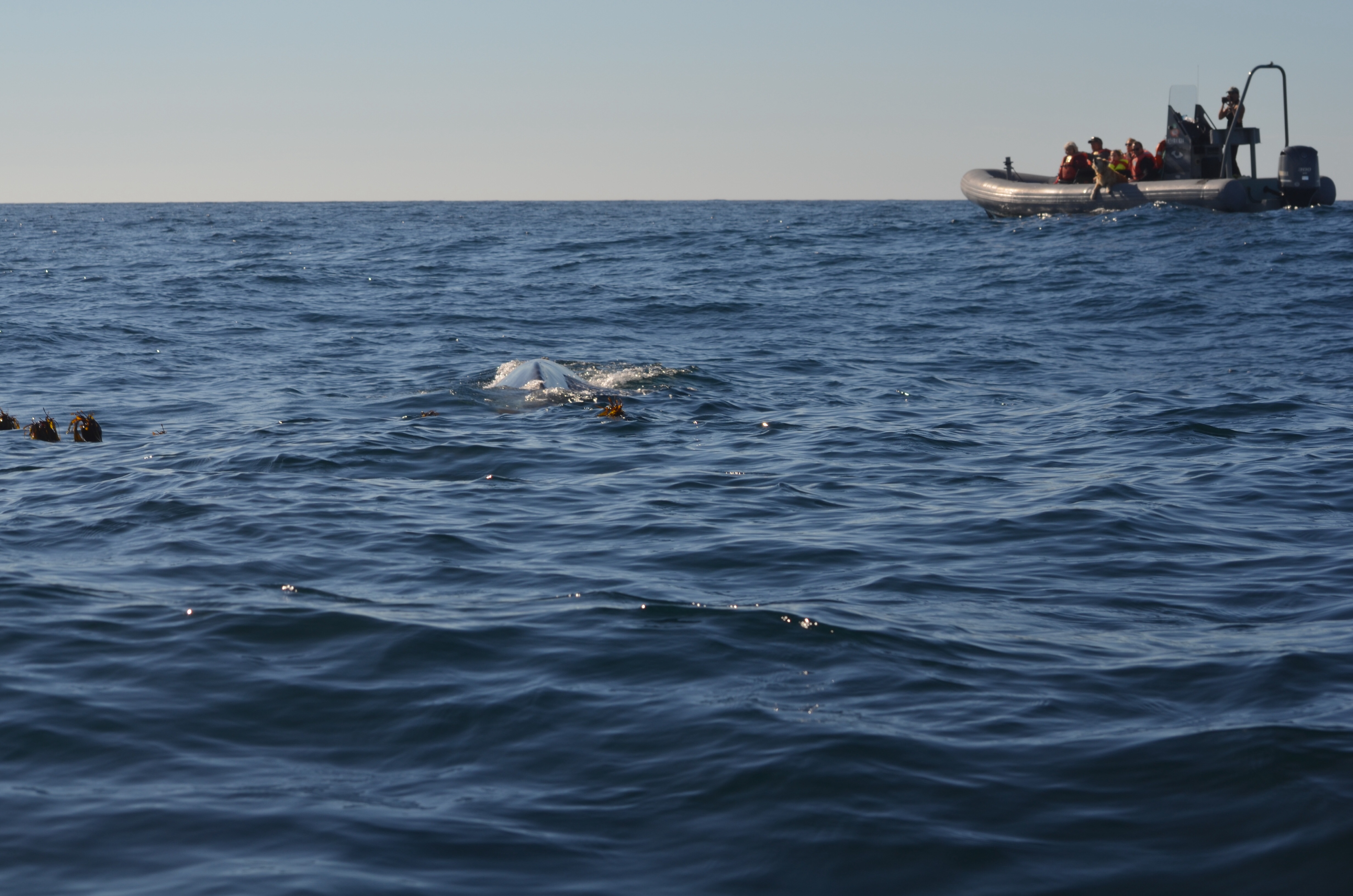
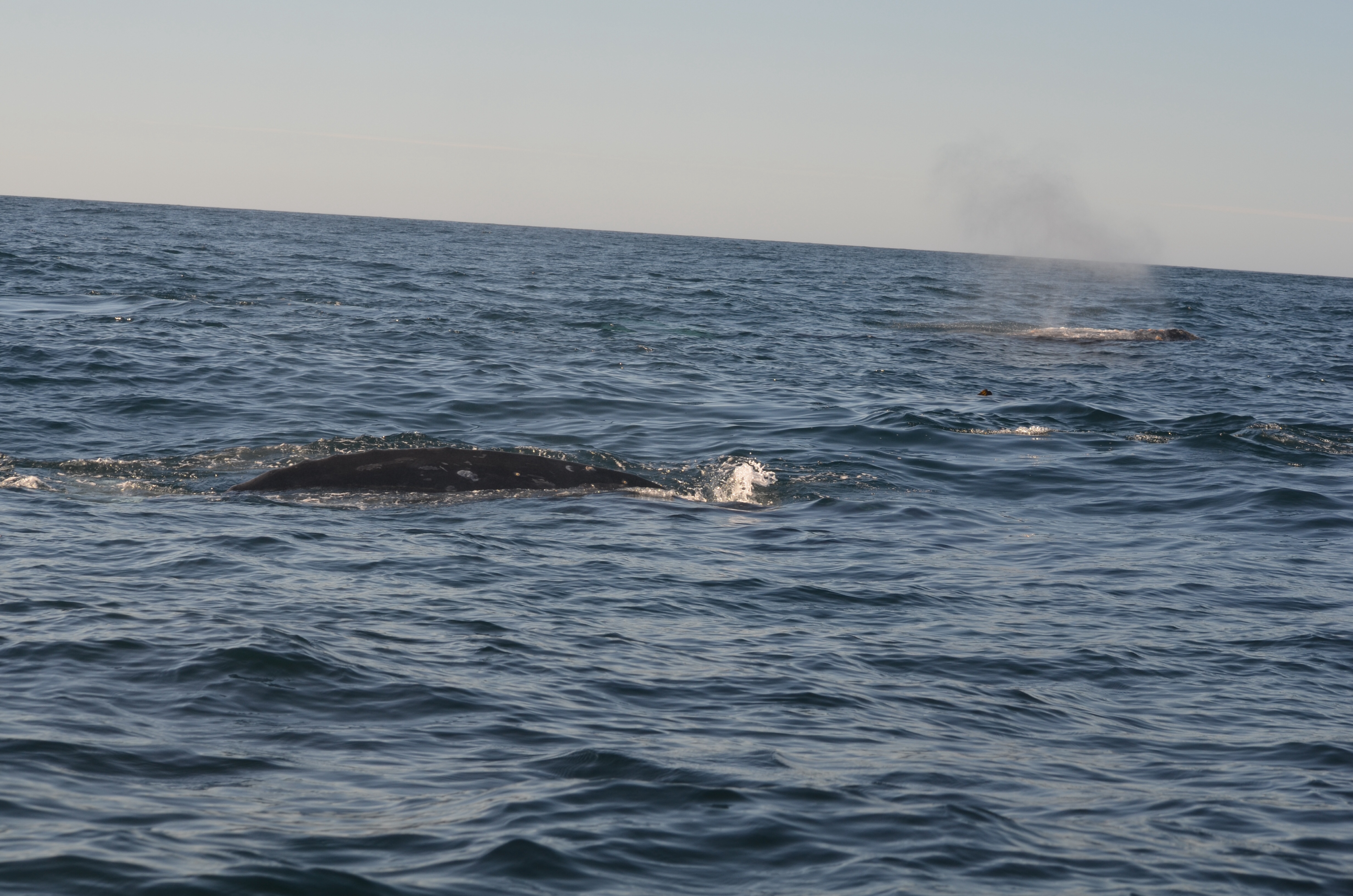
We rode on Zodiac boats, like the coast guard uses, with a whale scientist as our leader. Here is her boat with her whale hunting dog on watch.IMG_6067On the way out, we stopped at the bay’s buoy, where sea lions rested in the sun.imageWe spotted our first whales and the sun made rainbows in their spouts.
IMG_6088The day was a delight for children, seasoned whale watchers, our guides, anyone alive! At one point, we had four whales all around us, with three of them playing between the two boats, chasing each other.imageimage
Having two grey whales come up beside you, within twenty-five feet is quite a thrill.
We learned so much, like watching for the Fluke Print, the flat water left when the whale submerges and displaces the water.
image
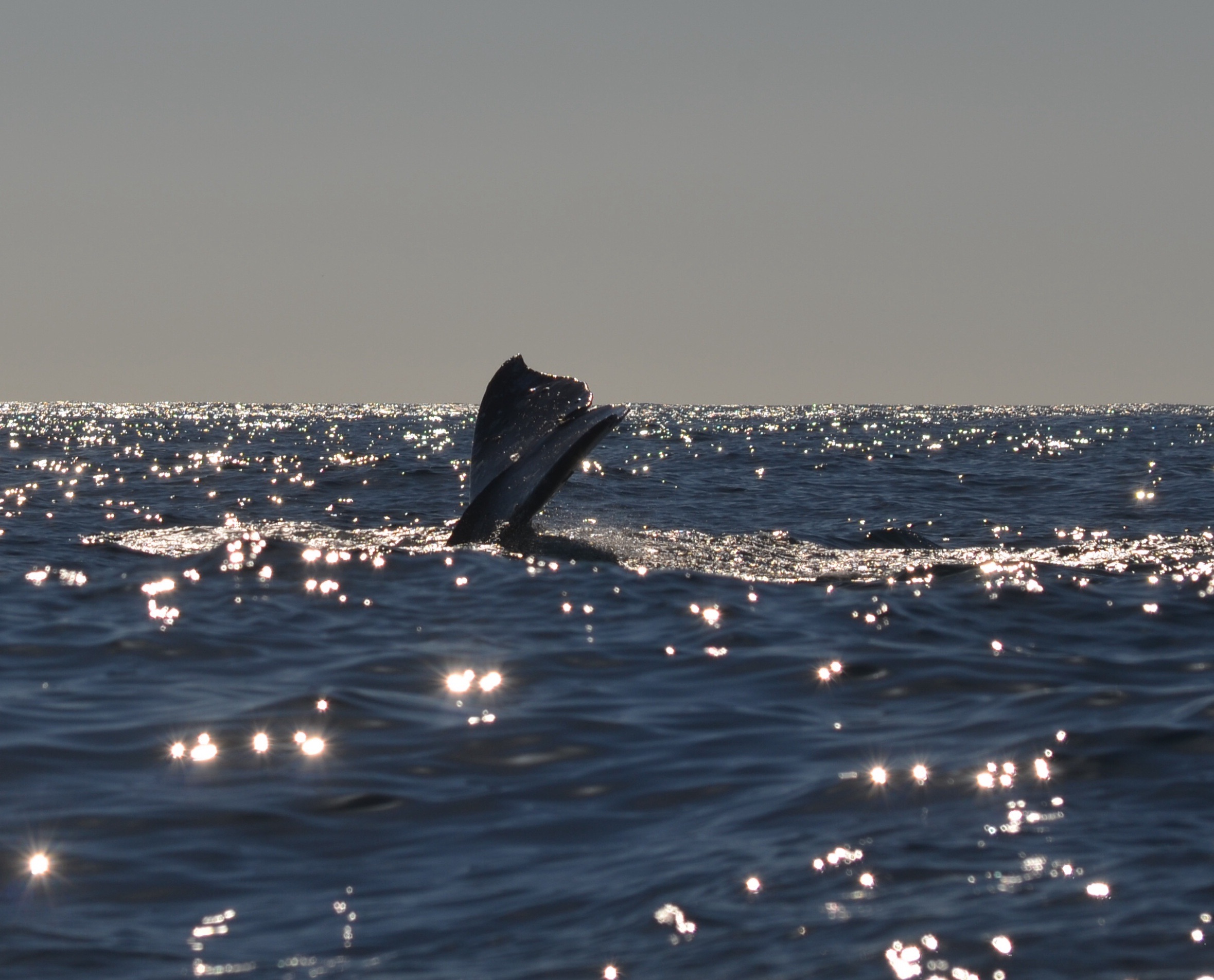
By the end of our trip, we had seen at least ten whales, most of them regulars to this area, known by name. Only an insensitive soul wouldn’t be touched by the grandeur of these giants, gliding by, leaving us in wonder with a flip of their mighty tails.
imageimage
My Whales’ Tale is a joy to be shared!

Fifty-one years ago, I set foot on the campus of Oklahoma State University as a 17 year old Freshman, a very fresh Freshman.  At least I had friends who came with me, but it was a shock to say the least.  I hadn’t really been away from home that much and I had come from a big class in a big school in a big city, but this was a really big school in a college town.  My new roommate was from a very small town in Oklahoma with a graduating class of 12.  I had a lot to learn.

Last week, I was once again on campus the first week of classes.  I’d been up the week before, amused and remembering what it was all like as I watched two students carry a couch down the street.  I walked across campus to pick up my staff parking permit right between classes, so I felt like I belonged in the throng.  It was hot so the dress was shorts and t-shirts, a far cry from the skirts I had to wear.  While I walked, I read the messages on the t-shirts, mostly OSU themes or shirts promoting rock bands or bars.  They carried their books in backpacks while we just carried ours on our hips in the olden days.

I remember how much we walked back then.  I wouldn’t try a bike on campus since you have to weave between so many students.  The parking is tight, so you walk.  It’s amazing that students ever put on weight with all the walking.  I remember the wind that whips across the campus, that wind that sweeps across the plains in the song, “Oklahoma.”  I walked in sun, rain, and snow when I was a student.  I guess I’ll be doing that again.

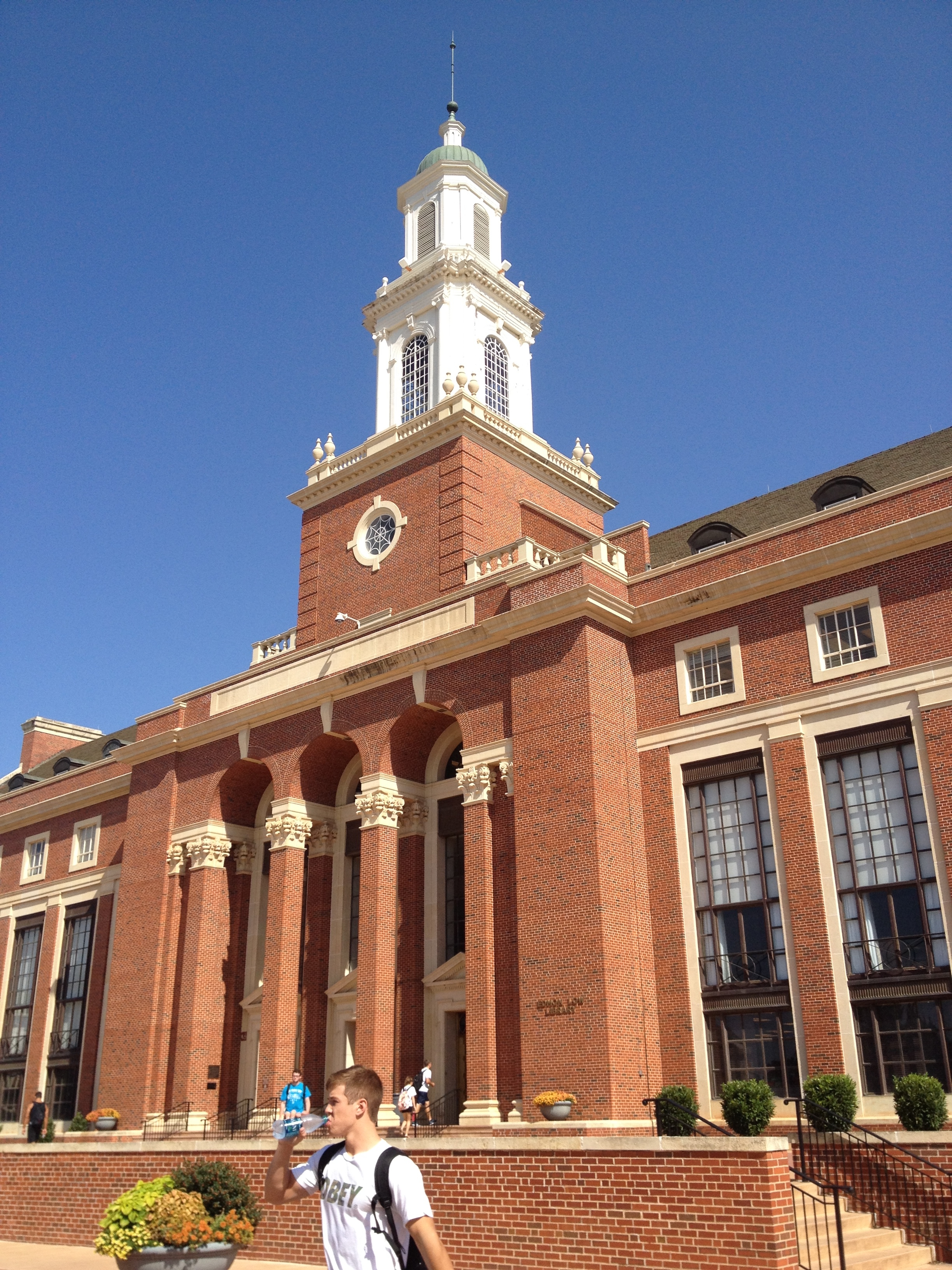
In front of the beautiful library, I looked up to the tower.  I haven’t had the desire to go inside, afraid it will dim my memories of so many hours with the card catalogues and hunting through the stacks or shelves for a certain source material for a research paper.  Do they even have books and periodicals now?  Is it just rows of computers?  I’ll get in there eventually.  IMG_5057

The sidewalk had chalk messages reminding students of an upcoming event.  The new patio area in front of the Student Union, the top Student Union in the country, had tents and tables for various groups to recruit members, or have a blood drive, or sell posters, and there was a row of tables with vegetables, baked goods, jewelry, and odd items.  Everybody is figuring out where they belong or who they belong with.  IMG_5058

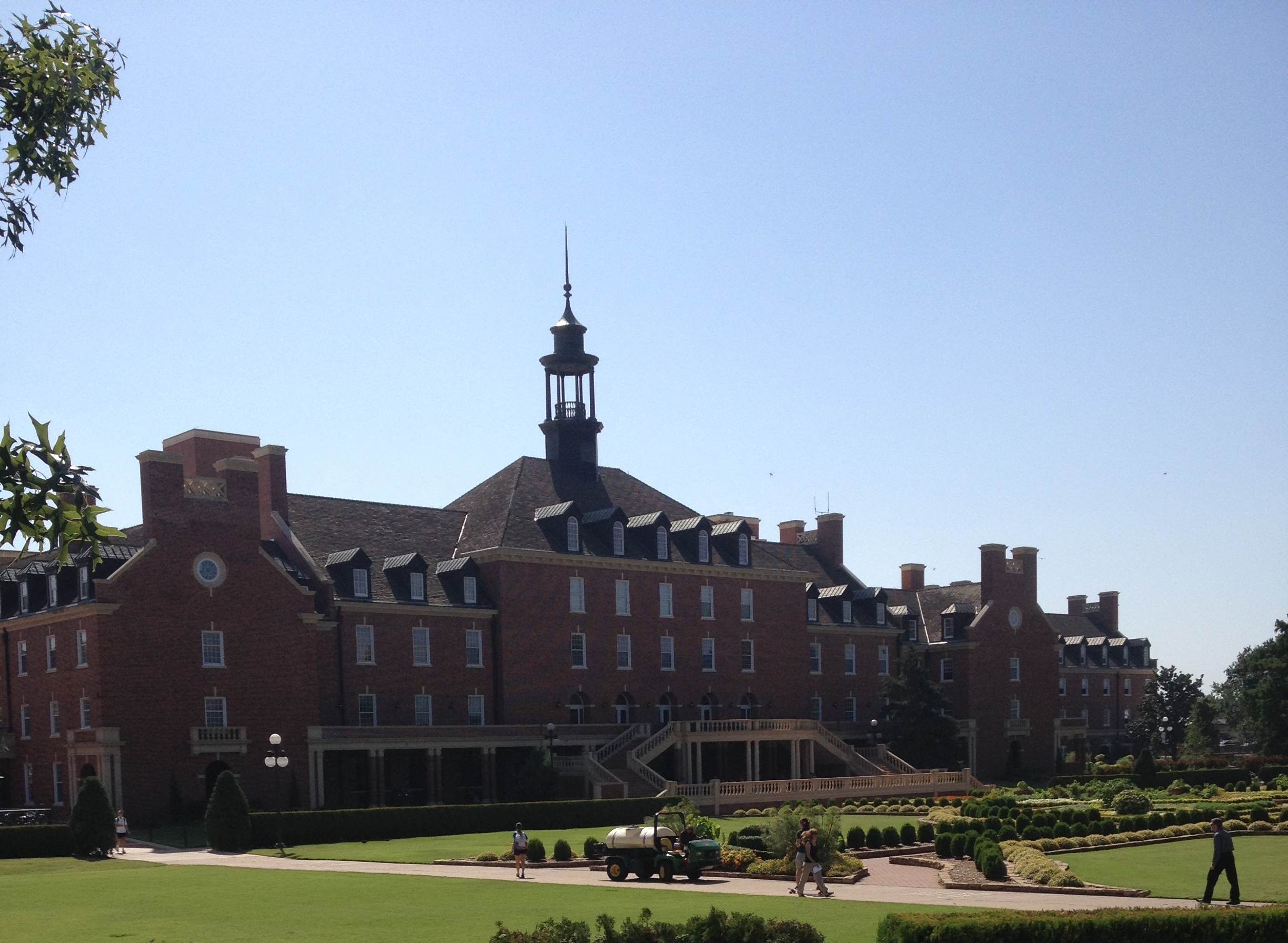
There are twice as many buildings – or maybe more than that – than when I was there.  The old familiar standbys are matched with new structures that parallel the older ones in style, giving the campus such a uniform look, one of the nicest things about that campus.  That’s the way it should be, with the historic buildings still standing and still used mixed with the new.  Signs of traditions and history mixed with progress and growth.

The campus bookstore doesn’t really have many books.  About 75% of it is clothing or decorative items.  There’s an Apple store with all the latest in computers, phones, tablets, printers and accessories.  There are school supplies back in the back with the few books.  They even had 3-D printers for sale.  Wow!  A whole new world out there from my Freshman year when the only phone was on the wall in the hall or the pay phone booths downstairs.  I had a manual typewriter (not electric), a lamp, a record player, a popcorn popper and a hair dryer.  That was it for my special equipment.   No refrigerators or microwaves.  All snacks were from the machines in the basement and meals were in the cafeteria, except on Sundays when we went out or ordered sandwiches or pizza.  We had discovered pizza by then.

Walking back, I saw a familiar box with the student newspaper.  Back then, it was the O’Collegian, but we called it the O’Colly and now that is the official name.  I pulled one out, amazed that with a digital version they still print the paper one.  It was nice to have one in my hand, just for old times sake. IMG_5060It was a good start back to school.  Even though I’m there to advise students, I know I’m going to learn more from them.  It’s comforting to see how much stays the same, even with all the changes.  It’s nice to come back to a place that holds so many memories.  Should be a good year!

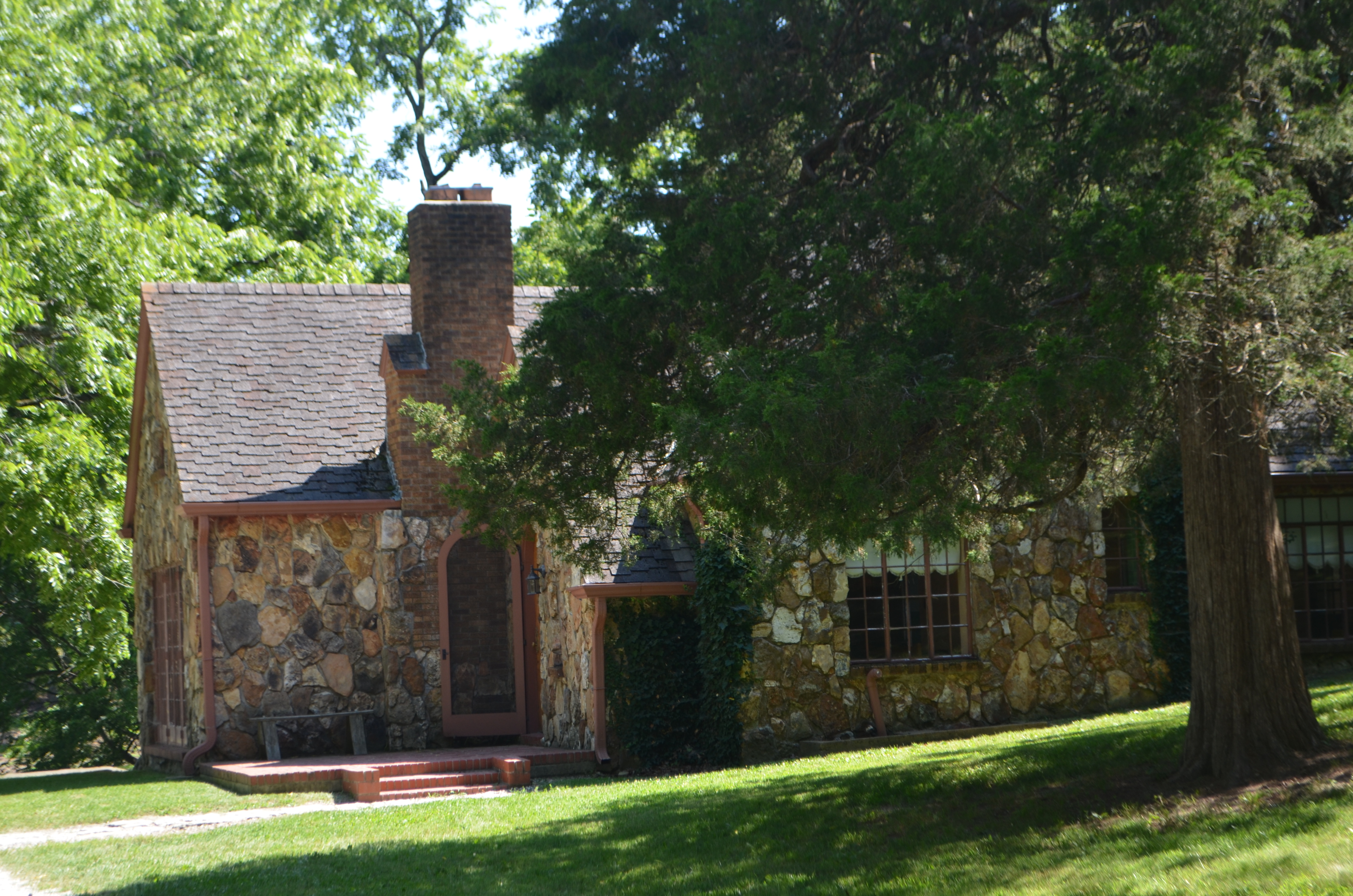
Last year, I traveled to Uniontown, Kentucky, where my father and grandfather were born, curious to see the place I had read about in a book, “The Sun Shines Bright,” written by my great-aunt Sue Hamilton Jewell about her life growing up there.  I also had photos from an album I collected when my grandparents died that showed the family when my grandfather was a child, a young man, and a father.  I wrote a blog about the trip, “My River Kinfolk,” that covered the visit.

That simple blog opened up new information I hadn’t expected.  I heard from several people who lived in the area, including someone who is distantly related, an author of a book about coal mining in the area, a young woman who lives in Uniontown, a man whose mother purchased the house my family lived in after they had all gone, and a woman who actually lived in the house at one time.  I hadn’t expected that kind of response at all.  All of that information centered around the lives of my grandfather’s family.

Over the next months, I opened a file box that was sitting on a shelf and found another recounting of life in Uniontown from my great-aunt on my grandmother’s side.  I was getting more and more of a picture of life on the river in that town.  I read about the great Ohio River floods, which devastated the towns along its banks, especially in 1884 and 1937.  I started getting more interested in the history of the area. Through another book of the history of the Hamilton family, I traced my grandfather’s family back to Scotland, which they left for Maryland due to religious persecution.  The box from my grandmother’s side showed that her family, the Spaldings, left England and landed in Maryland also.

Though they didn’t know each other, the Hamiltons and the Spaldings both migrated to eastern Kentucky in 1792, the year it became a state and opened up as the country expanded west.  My ties to Kentucky were deepening.  And branches of both families ended up in Uniontown, a growing community on the banks of the Ohio with commerce from the river traffic, coal mining, and agriculture.  There was even the ubiquitous Kentucky distillery.  From what I can tell, my great-great-grandfather on my grandfather’s side was a doctor who ended up in Uniontown.  My great-great-grandfather on my grandmother’s side was probably a farmer.  They were both part of the growth of the area.

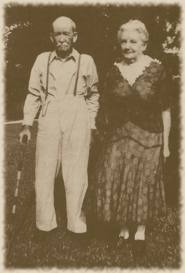
My grandfather was born in 1885 and had an idyllic childhood, raised in a large, loving family.  His father was a grain dealer with an office at the river for shipping.  He was also an insurance salesman for Aetna, so respected that they made him an honorary member of the Aetna family rather than let him retire.  He owned a farm in the area, also, which is probably where he was born.  He and my great-grandmother were the first couple married in the Episcopal Church in Uniontown and he served as Senior Warden for many years.  He was also a charter member of the Masonic Lodge in nearby Morgansfield.  They were pillars of the community according to his obituary.Scan 44My grandmother’s childhood was not quite so charming.  One of eight children, her father was a blacksmith and he drank.  He was also a farmer, tobacco mostly, and my grandmother picked worms off the tobacco along with her brothers and sisters.  Their mother died young and the children took care of each other and all of them worked.  Most of them got out as soon as they could.  My grandmother’s older sister opened a millinery shop in town and married into another more prosperous family.

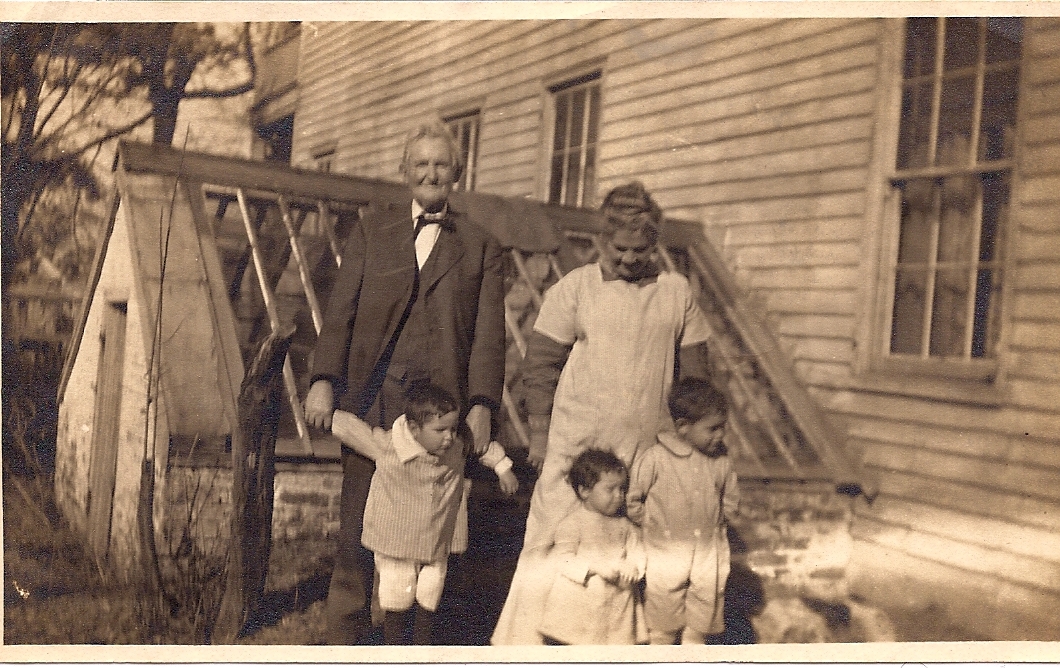
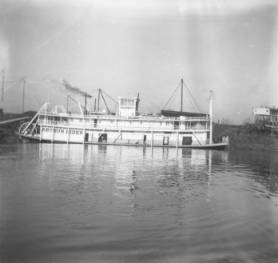
While my grandmother’s family didn’t have the luxury of a camera or a photographer, I have a picture of some of the tobacco farmers, ready to meet the revenuers coming onto their land.  One of them could easily be my great-grandfather.Scan 265My grandparents married and had their first three children in Uniontown before leaving for other opportunities.  I have these photos of my grandmother with my father (with curls), his brother and sister as babies, sitting on the lawn of the Hamilton house.  I note here that my grandfather was Episcopal and my grandmother was Catholic, not such an easy marriage in those days.  They were married for 55 years.  The story my grandmother told my mother was that they took a trip when they first got married, leaving on a train.  My grandfather gave his new bride a fur muff.  She was so poor that she didn’t even have underwear and now she had a fur muff.  That’s how I heard it, probably close to the truth.Scan 93And this photo is of my great-grandparents with their grandchildren, my father on the right.  I’m lucky to have many more precious photos.Mom & Dad Hamilton with J. C., Ed & SaraThe town was changing as the river changed and the riverboats became more obsolete.  I love this old picture of one of the riverboats that stopped in Uniontown, delighting my grandfather in his childhood.ajaxhelperAnd I realized that this photo of my father and his brother was with a sailor on one of the riverboats.  Somebody drew in the head that was cut out of the picture, making it even cuter.  Daddy was born in 1912, so this must have been around 1915 or so.Scan 248And here’s one of the ferry at Uniontown, one my father probably rode to cross the Ohio.Scan 266As I found myself with even more information, I decided to return to Uniontown, especially since I now had some people to talk to while I was there.  My new friend, Treva Robards, spent a delightful afternoon driving around the area with me, filling my head with stories of her own childhood in Uniontown and pointing out the locations of long gone buildings along with local gossip.  I was beginning to get a bigger picture of this area and how it shaped my family.

Treva’s interest in my family grew from living in the old Hamilton house when she was younger.  The house that held our large family was flooded badly in 1937 and my great-grandmother died soon after from pneumonia contracted because she refused to leave.  It was purchased years later and became home to two or more families at a time.  Treva told me that the house was haunted and she could hear the cries of babies and the clanking of chains every night.  We think the cries could be from the three babies who died as infants or toddlers, my grandfather’s siblings.  She thinks the chains could be from slaves who were kept in the attic long before my family purchased the house.  Those are our theories anyway.  I have no doubt she heard them when she lived there.IMG_3731

She also told me that she was fascinated by a room that was kept locked upstairs.  She would look through the keyhole and see the antique dolls and dress forms with wonderful clothes and trunks piled around.  I know these are the things that my great-aunt wrote about in her book that delighted her as a child.  The roof fell in, the house was deserted, looters came.  Who knows why none of the family came to retrieve those items, some priceless treasures.  The family had scattered by then.  It gave me an answer to what came next in that wonderful home.

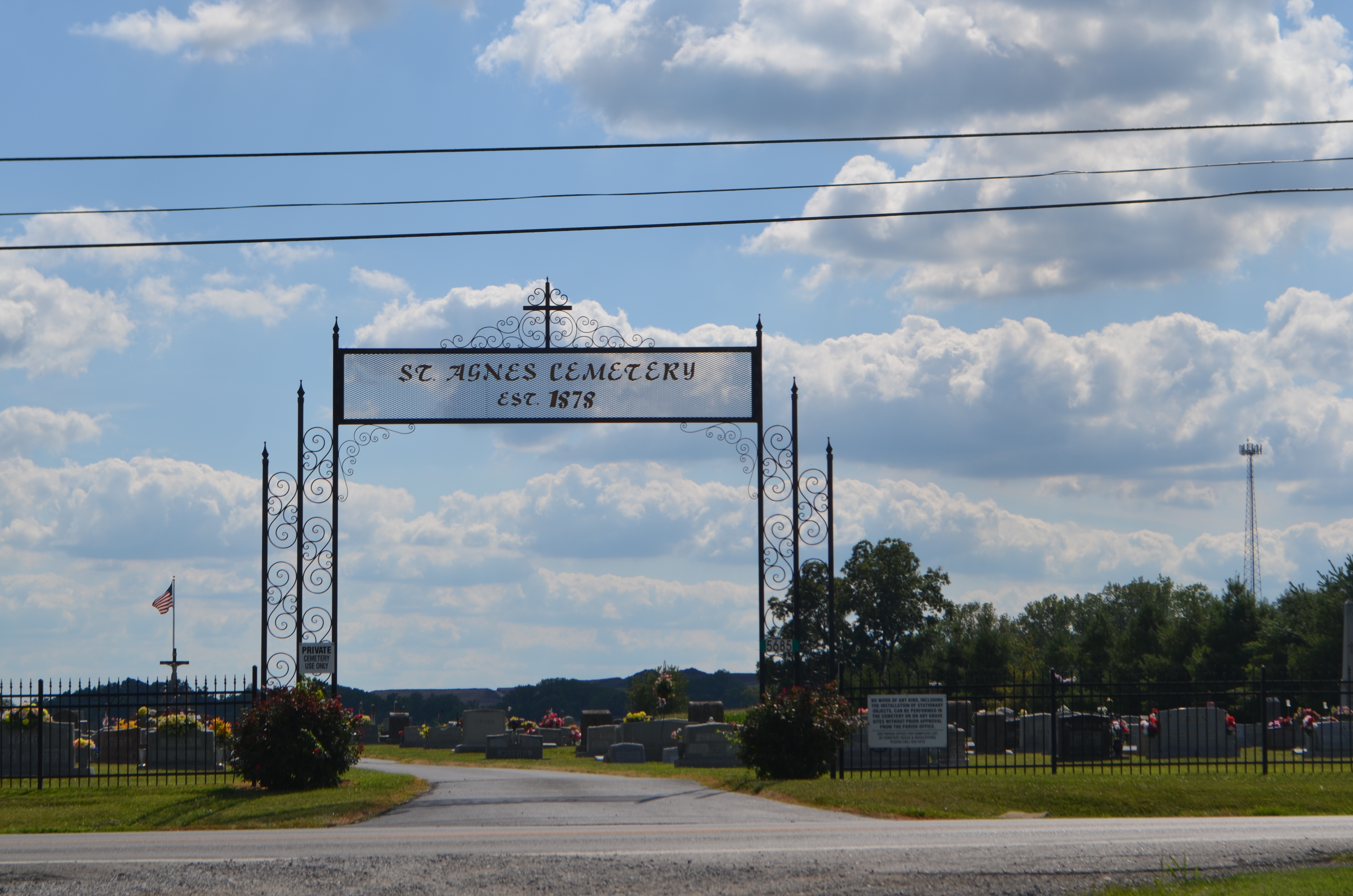
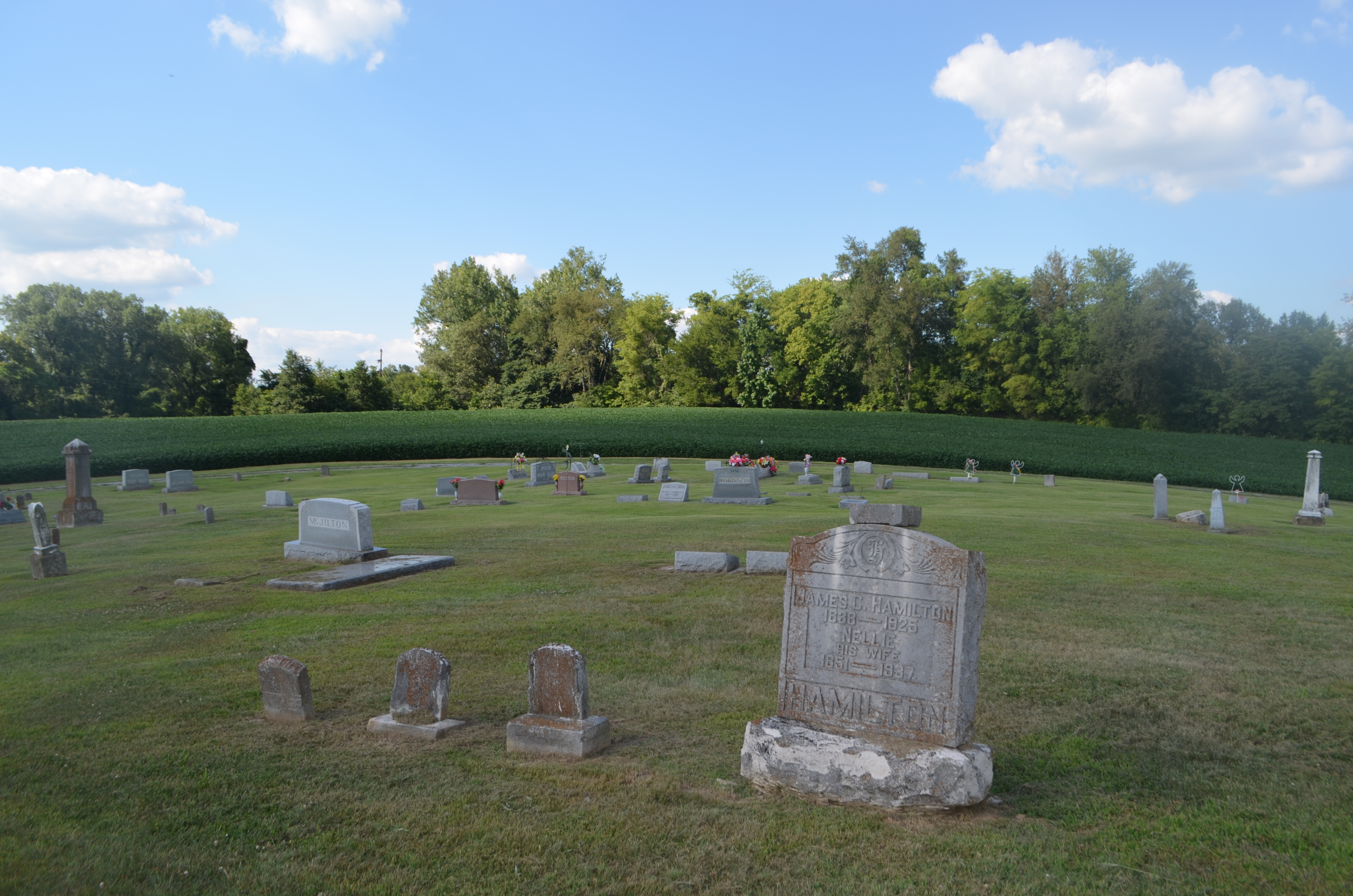
This trip I visited both cemeteries, the Uniontown cemetery where I went last year, and the Catholic cemetery, looking for my grandmother’s family.  The Catholic cemetery had lots of Spaldings, but none that matched the names I knew.   Many of the headstones were worn bare.  I also think my great-grandmother may have been buried in the potter’s field, so I paid my tributes there in the clear area by a pond at the back of the cemetery.DSC_0288The Hamilton sites were as I left them, although the cemetery was surrounded by corn last year and soybeans this year.DSC_0299There has been so much new information for me to think about this year, so much more to learn about life on the river and how my family was shaped through the centuries.  My greatest regret is that I didn’t ask my grandparents and parents to tell me stories of both sides of my family, because now I want to know and find myself searching for more clues.

We don’t tell our stories enough because we don’t realize the importance sometimes.  I think my childhood was pretty ordinary until I look back and place it in the times.  Maybe this is why so many authors tell their stories when they are older.  When we’re young, we’re busy looking to the future.  When there is less future time left, we turn back to put the past in perspective.

This is so much to take in and I share these stories for my children and grandchildren, my siblings, nephews, cousins, and all those to come.  More Uniontown stories to come…

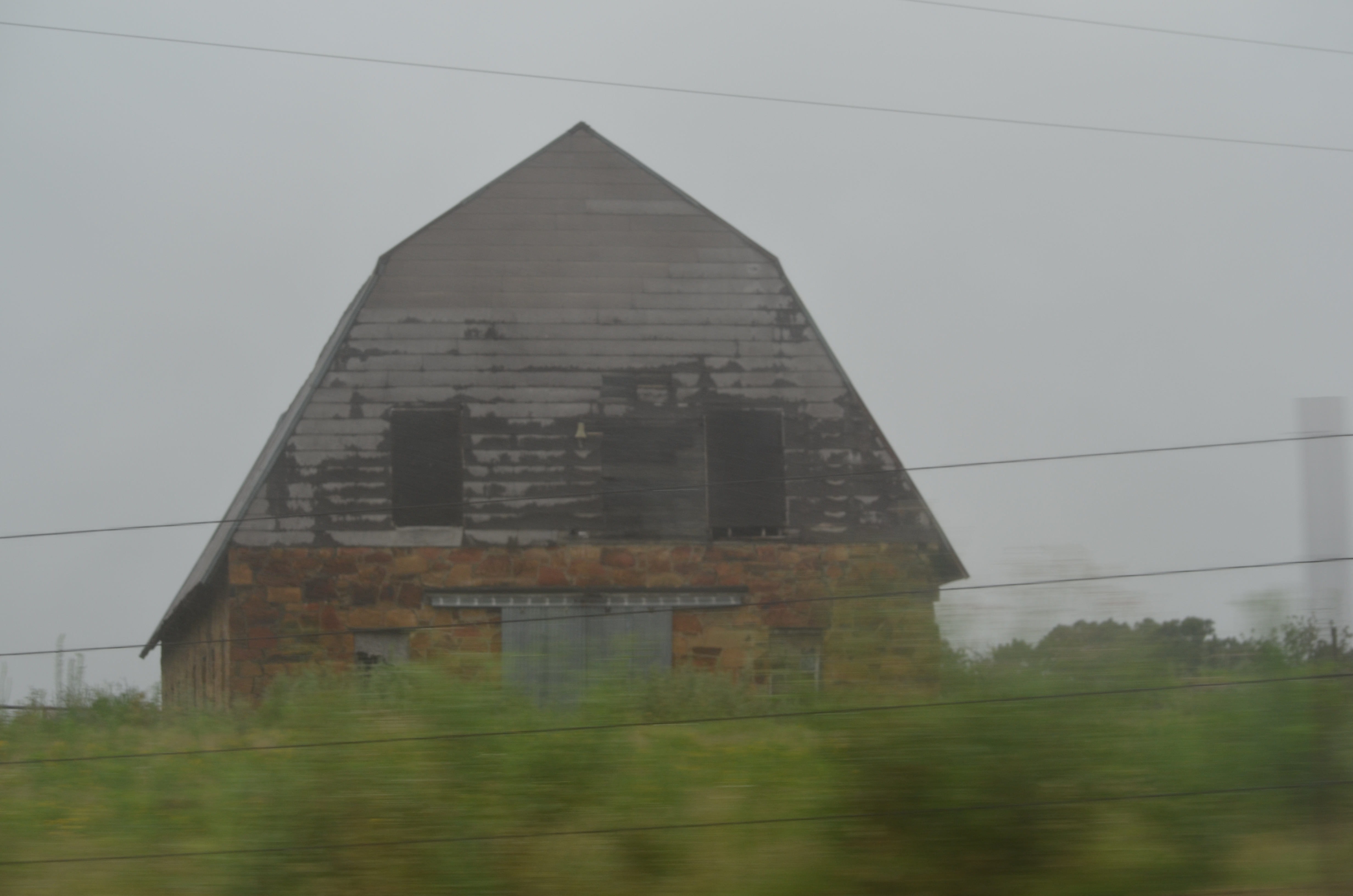
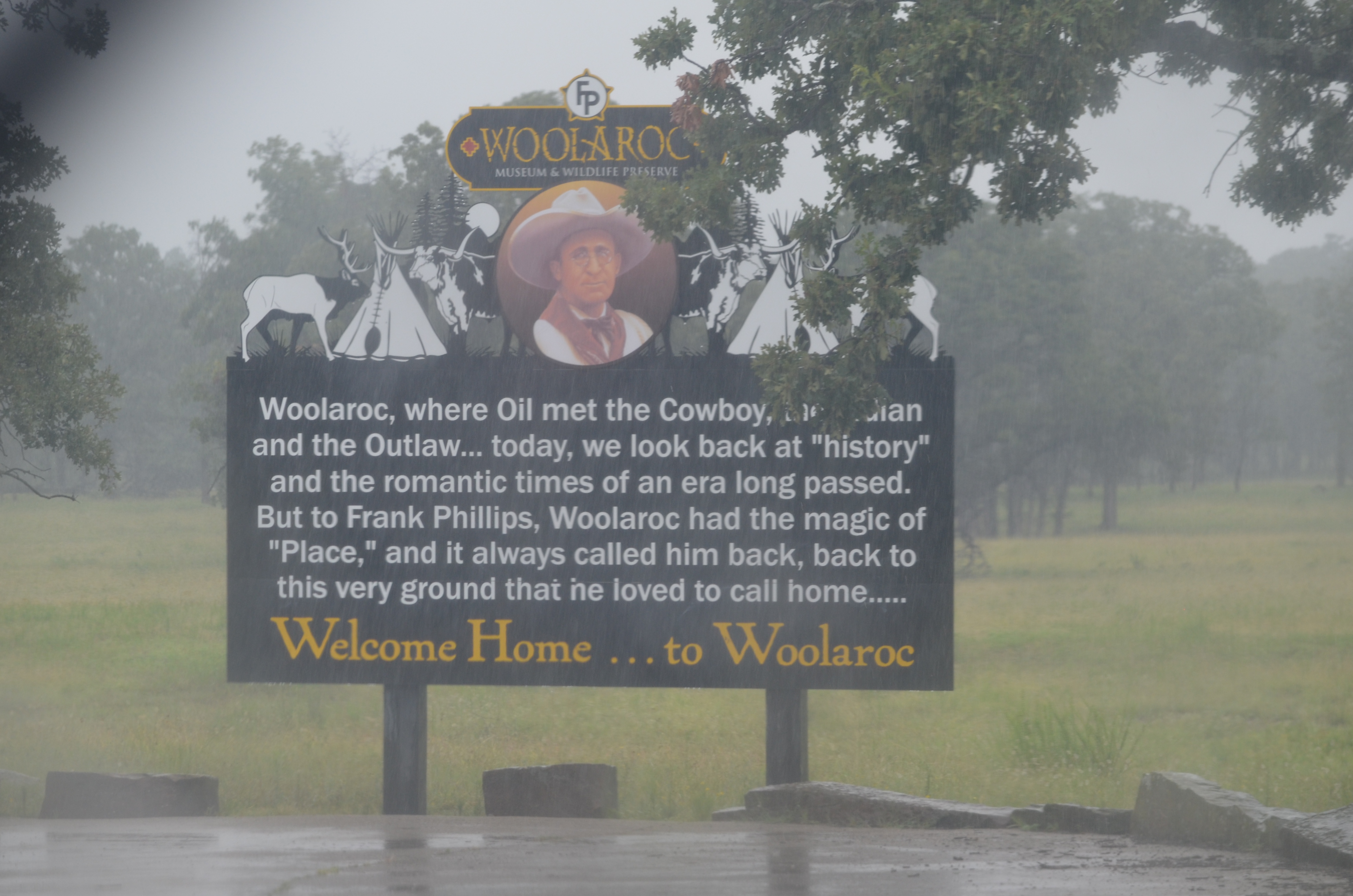
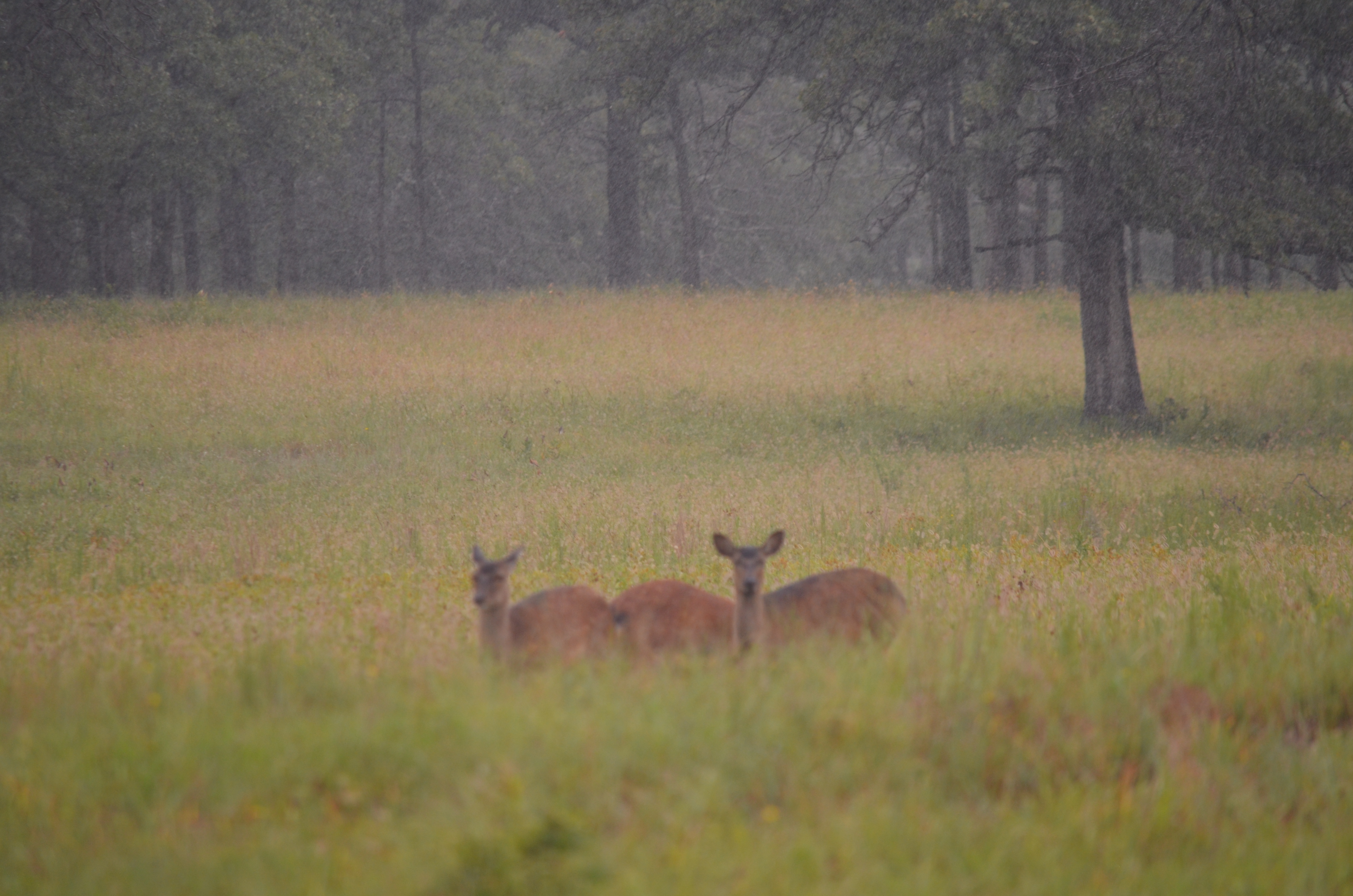
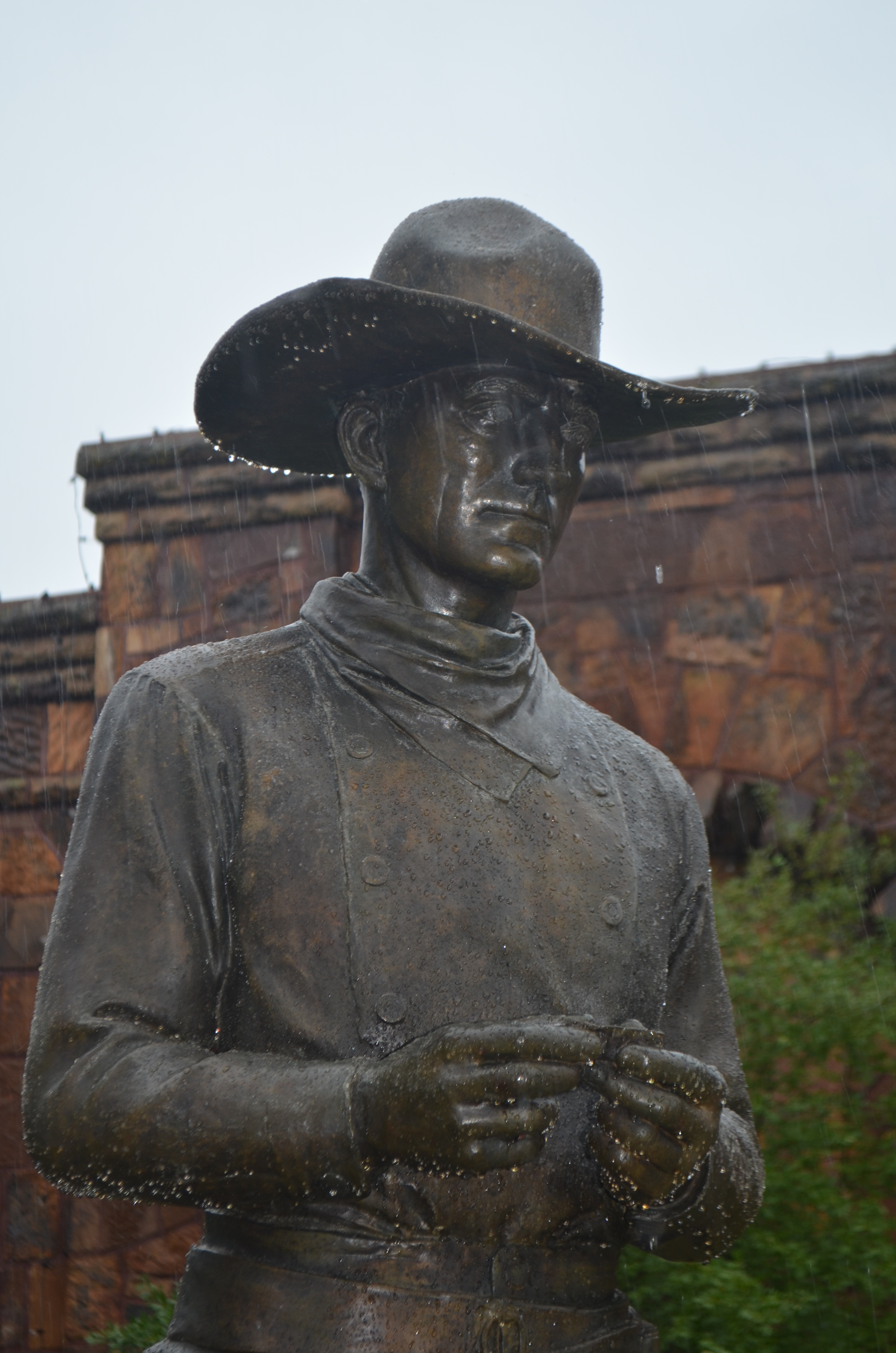
On a rainy day, a drive seemed like the thing to do.  Everything is green with the mild summer and the rain made it all the more beautiful.  There was a barn with a stone base.  I’m sure there are others of this design out there…somewhere.  I’m fascinated with weathered barns.DSC_0001There were bridges…DSC_0003…across swollen rivers…DSC_0004…and little bridges over creeks.DSC_0005Country fences and gates to go through.DSC_0009And country roads to travel.DSC_0010The animals don’t seem to mind the rain.DSC_0013We came to Woolaroc the back way on a whim.DSC_0015And were enchanted by the animals in the refuge…DSC_0017with a water buffalo swimming in the rain.DSC_0021We were greeted by an Indian…
DSC_0026and a cowboy in Frank Phillips’ magical place that celebrates the West.DSC_0031The perfect museum for a rainy day.  We said goodbye to the deer…DSC_0039

And drove by other ranches with a P…probably not Phillips.DSC_0040And left Osage County to drive home on this lovely rainy summer day.DSC_0041I love to be inside listening to the rain, but this was a special day in the country.   Good to get out there.

Traveling has always been more than just a drive to get somewhere in my life.  Looking for the details was something my parents taught us, making sure we saw all the sides of the places we visited.  When I went to Europe for the first time in high school, I was surrounded by buildings that have endured for centuries, changing uses dozens of times.

Coming from one of our newest states, where progress meant constantly moving forward and not looking back, it took the Historic Preservation efforts of the 1980s to make community leaders stop and see the value there was in the Main Streets and the historic homes.  There was money to be had in the tourist trade and civic pride to be boosted in the salvation of buildings of various architectural trends through the years.  These structures and neighborhoods became works of art to be treasured for future generations.

About 1985 or so, I attended a preservation conference that forever changed the way I looked at towns and cities I visited, especially the city I live in and the surrounding towns.  Neighborhoods that had been decaying suddenly became trendy and adventuresome investors began restoring and updating old oil mansions around town.  The payoff was immediate as property values rose and visitors responded well.  Once, just a few years ago, I was driving an international guest through town, watching him gape at the number of beautiful homes in the older neighborhoods.  We came to a neighborhood shopping area with restaurants and shops in the old storefronts and he beamed…until he saw the section where someone had decided to “modernize,”  making it just another city in his eyes.   I understood because I feel the same way when I visit another city.

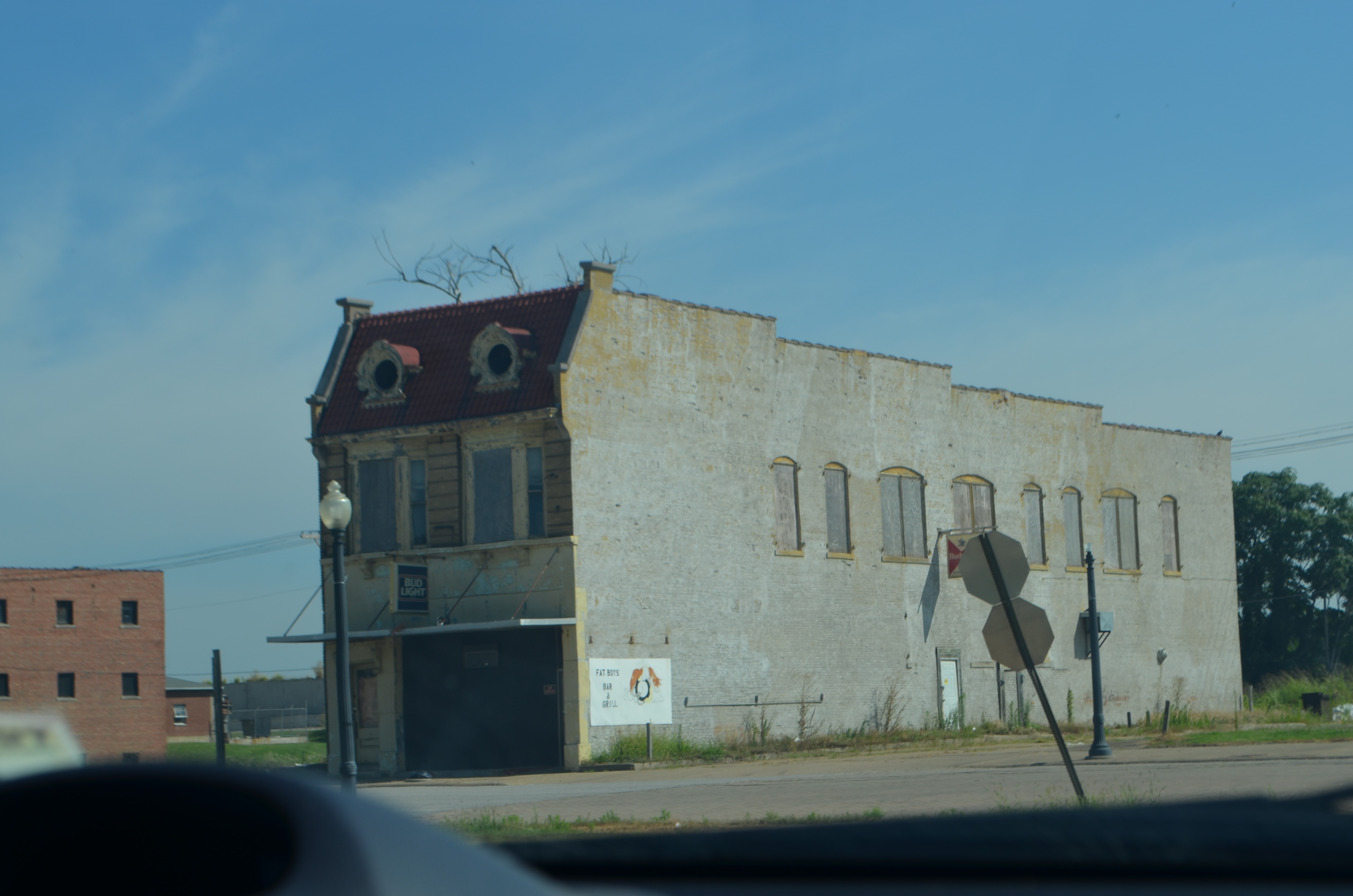
But, preservation isn’t always easy.  How do you save a town that let it all go for too long?  A couple of weeks ago, we detoured off the road to visit Cairo, Illinois.  This town sits where the great Ohio and Mississippi Rivers meet, an important location in our country’s history.  This should be bustling with tourists and historians learning about the commerce that flourished in that important time when the riverboats ruled the waterways.  Way back, money was diverted from other river communities to build levees in Cairo due to its importance so it wouldn’t be flooded and lost.

Instead, history and man dealt Cairo severe blows with racial tensions and changes in the use of the rivers and the building of the highways that went around the town.  It has become not even a shadow of its former glory.  And, yet, there are those who would like to restore it, an uphill struggle of epic proportions.

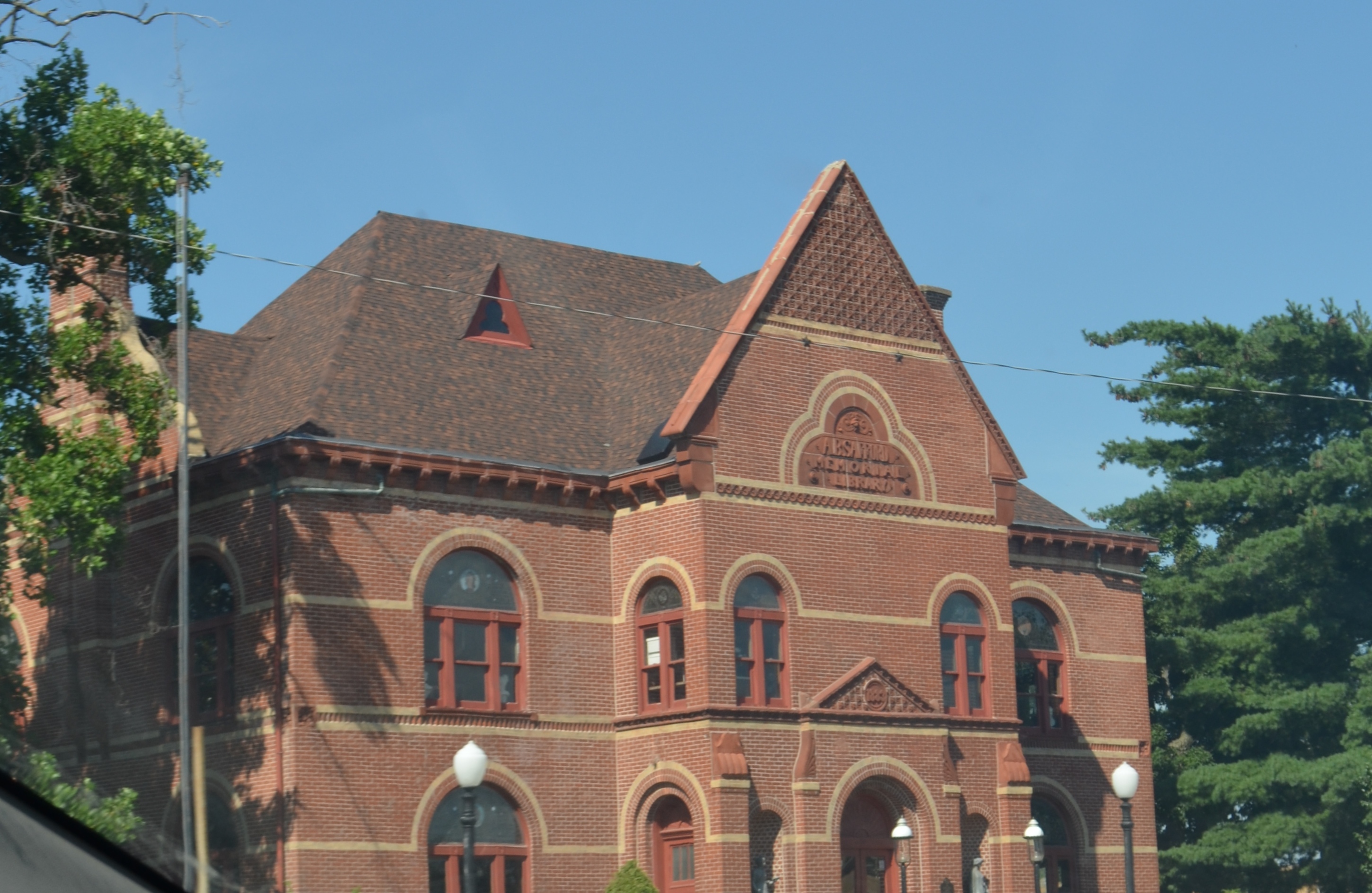
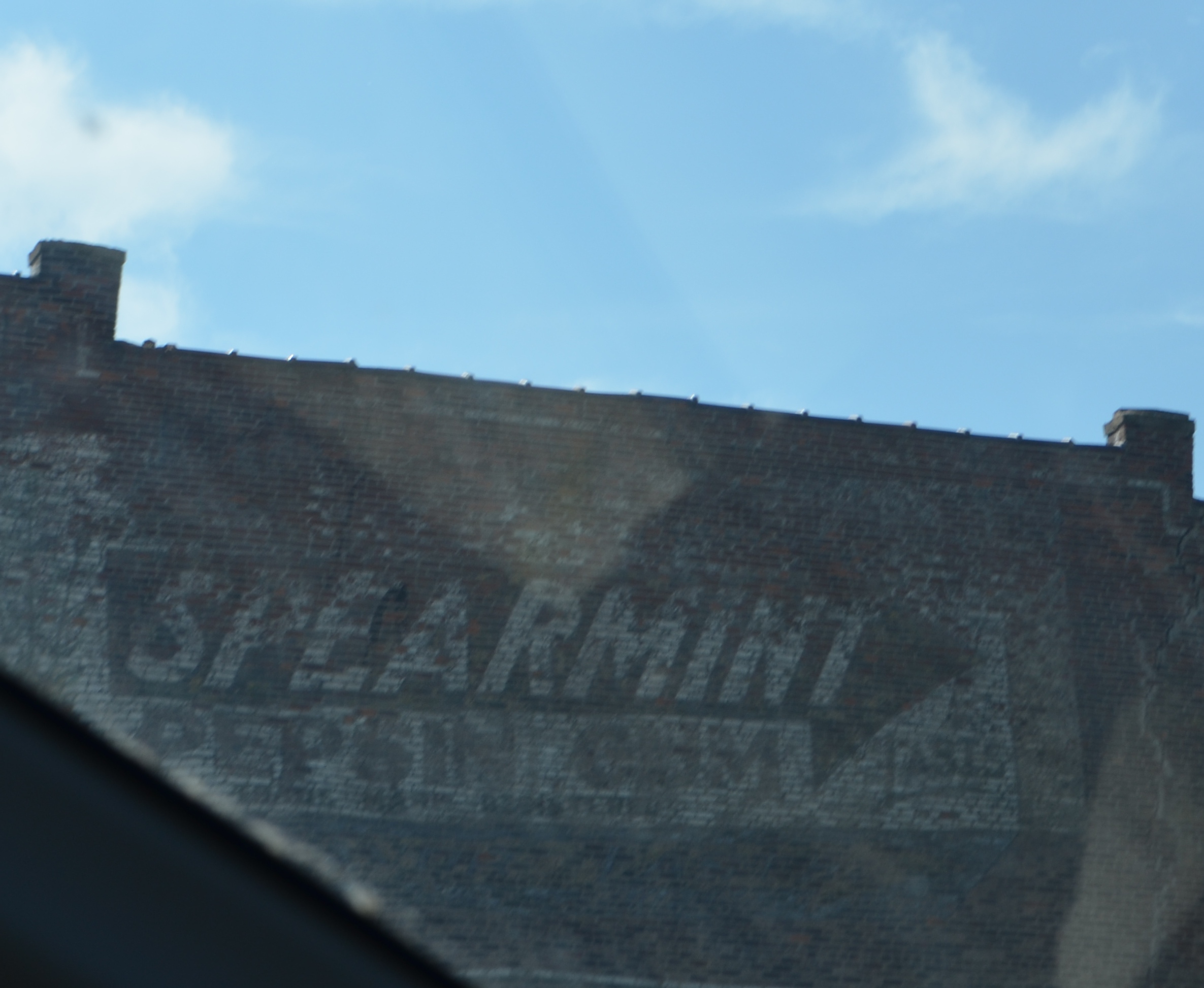
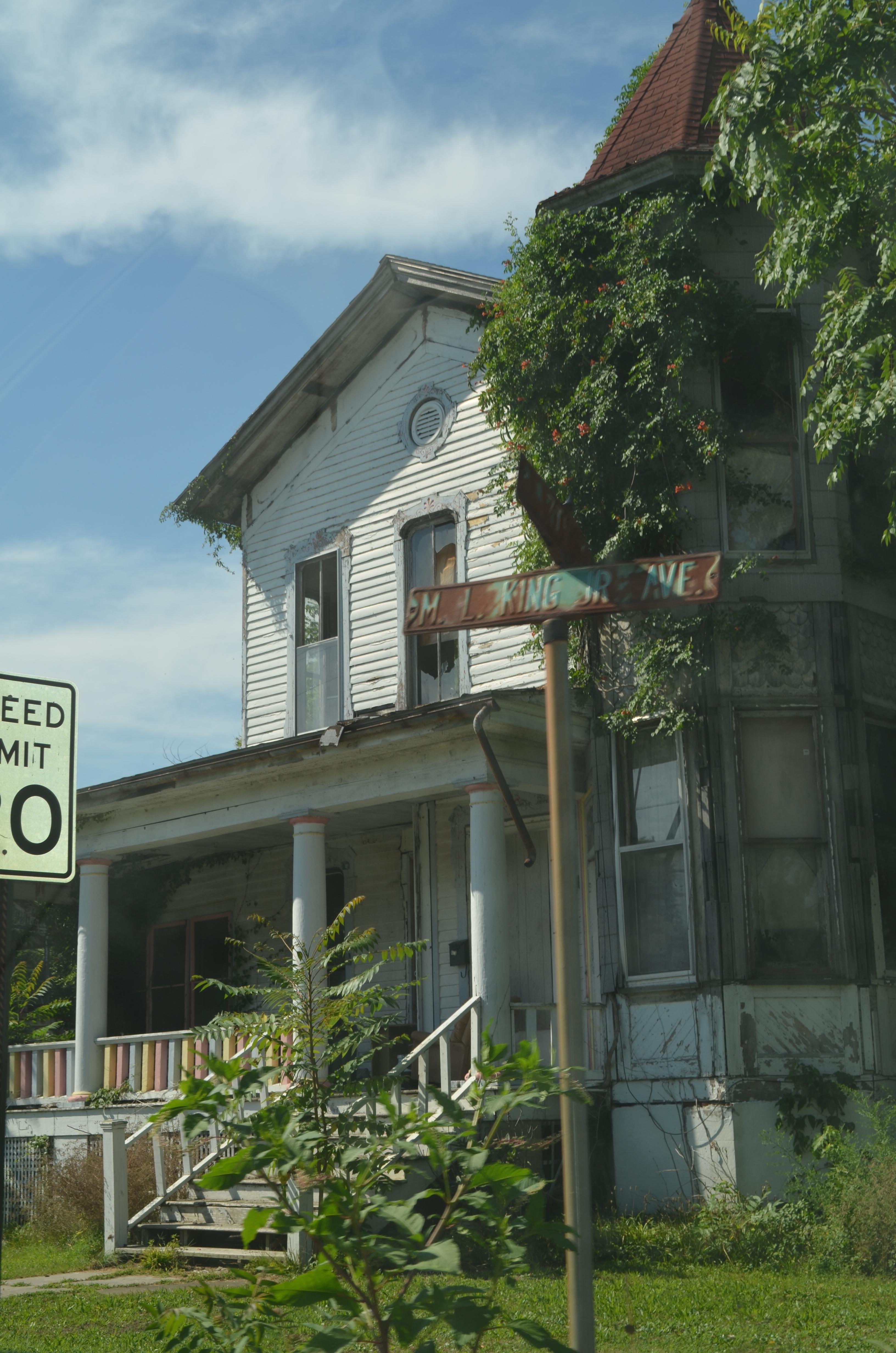
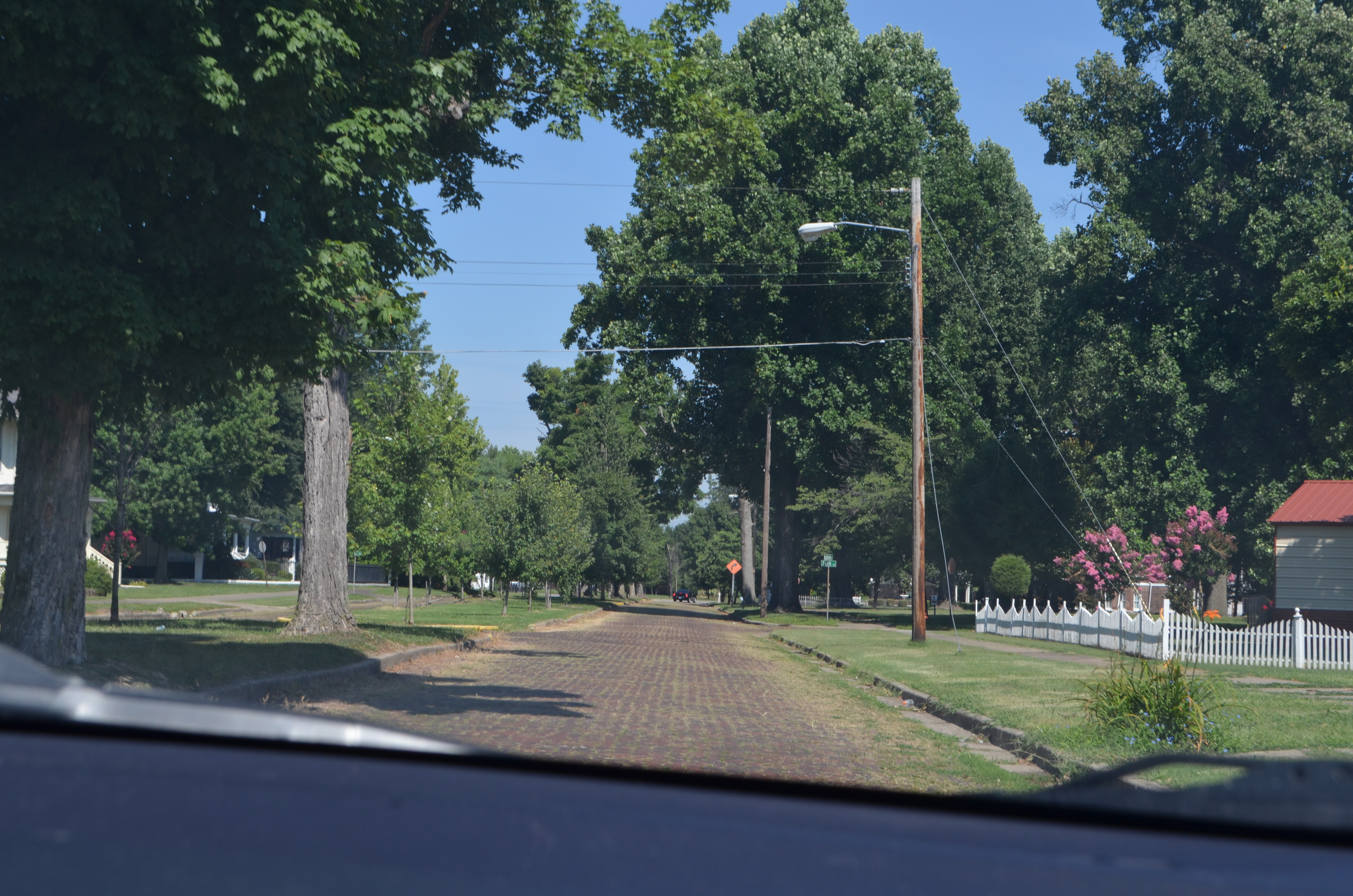
We came in under the bridge…DSC_0314…and headed along the main street.  Under a lovely sign declaring the Cairo Historic District, there was only this to be seen.DSC_0316 DSC_0317There was a beautiful old custom house, library and courthouse we’d driven by.DSC_0325A fading sign on a building gave a glimpse of advertising back then.DSC_0318Driving around the residential areas was dismal to one who loves to imagine the old homes bustling with life.DSC_0322I’m not sure I’ve seen such a stretch of sadness.DSC_0319A town that is being reclaimed by nature.DSC_0320Where would you begin?DSC_0321But, another sign had proclaimed an historic neighborhood district and we found a lovely park and a couple of restored mansions that could be toured.DSC_0338And admired…DSC_0328These are on a lovely brick, divided boulevard with a few other homes in various states of livability.  Grass grows through the bricks in different lengths.DSC_0334I salute those who are doing their best to preserve what’s left and I mourn for what the town might and should have been.  Our history is fragile and preservation is important.  We learn from where we were, where we are, and where we’re going.  At the conference I attended so long ago, a statement that stuck with me was the difference in a shopping mall that springs into existence and a downtown that has evolved through its history, showing all the difference eras through its architecture.

Here’s to those who fight to preserve and to make others aware.  It’s worth the battle.

Road trips teach you so much about the country you travel, letting you enjoy the scenery and absorb the flavors of the communities you pass through.  I always think of the first people to explore these areas and what they saw, the thick woods, the flowing rivers, the mountains and plains, pure in their abundance, beautiful in their vistas, frightening in their scope.  What courage, or ignorance, they brought on their journeys.

My recent trip through Missouri was full of summer beauty from the Ozarks to the Mississippi.  Missouri borders my home state of Oklahoma and neighboring Arkansas, so the scenery is familiar to me, but recent rains and the July bounty made it a lush vista to view as we traveled through.

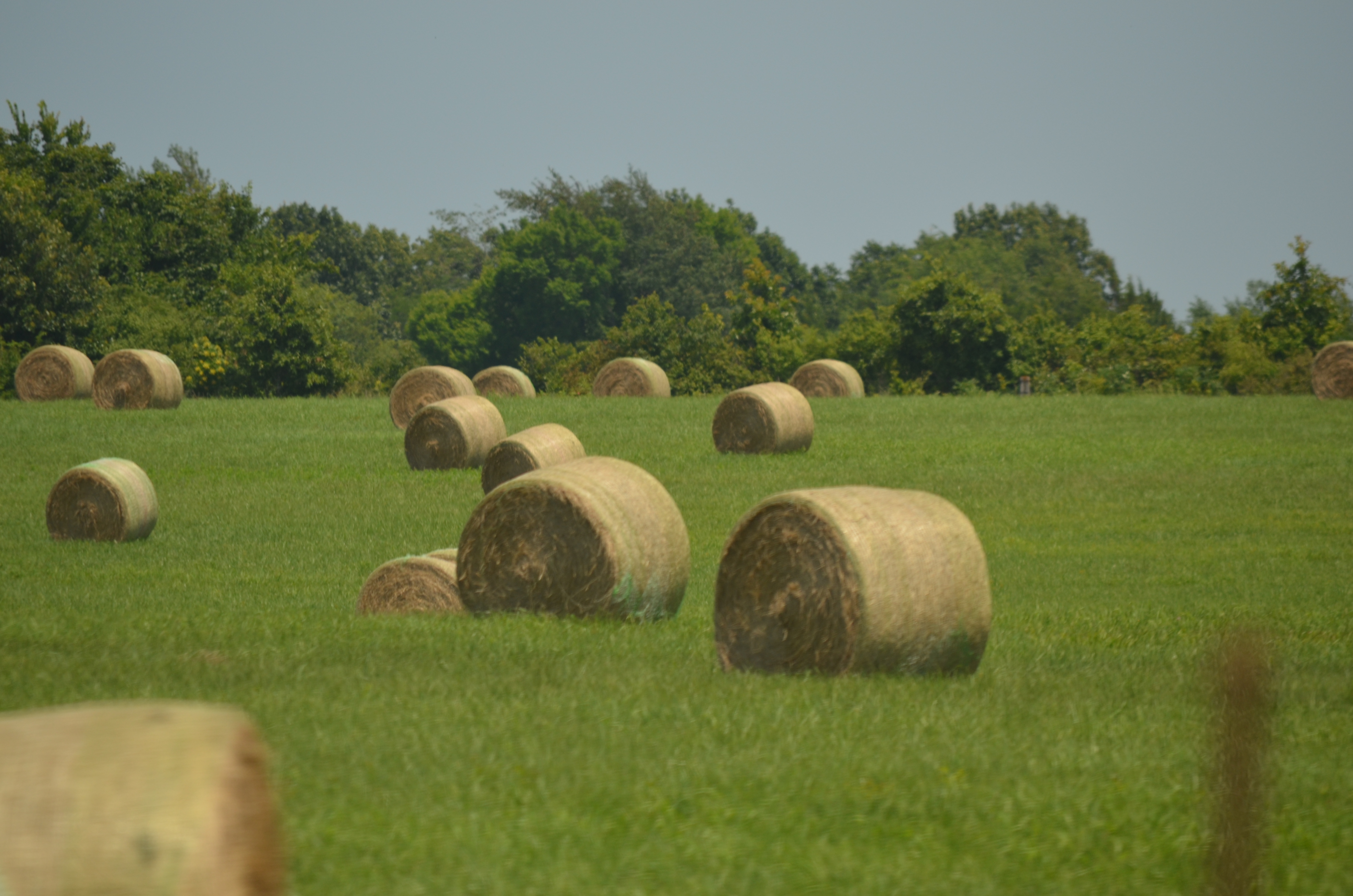
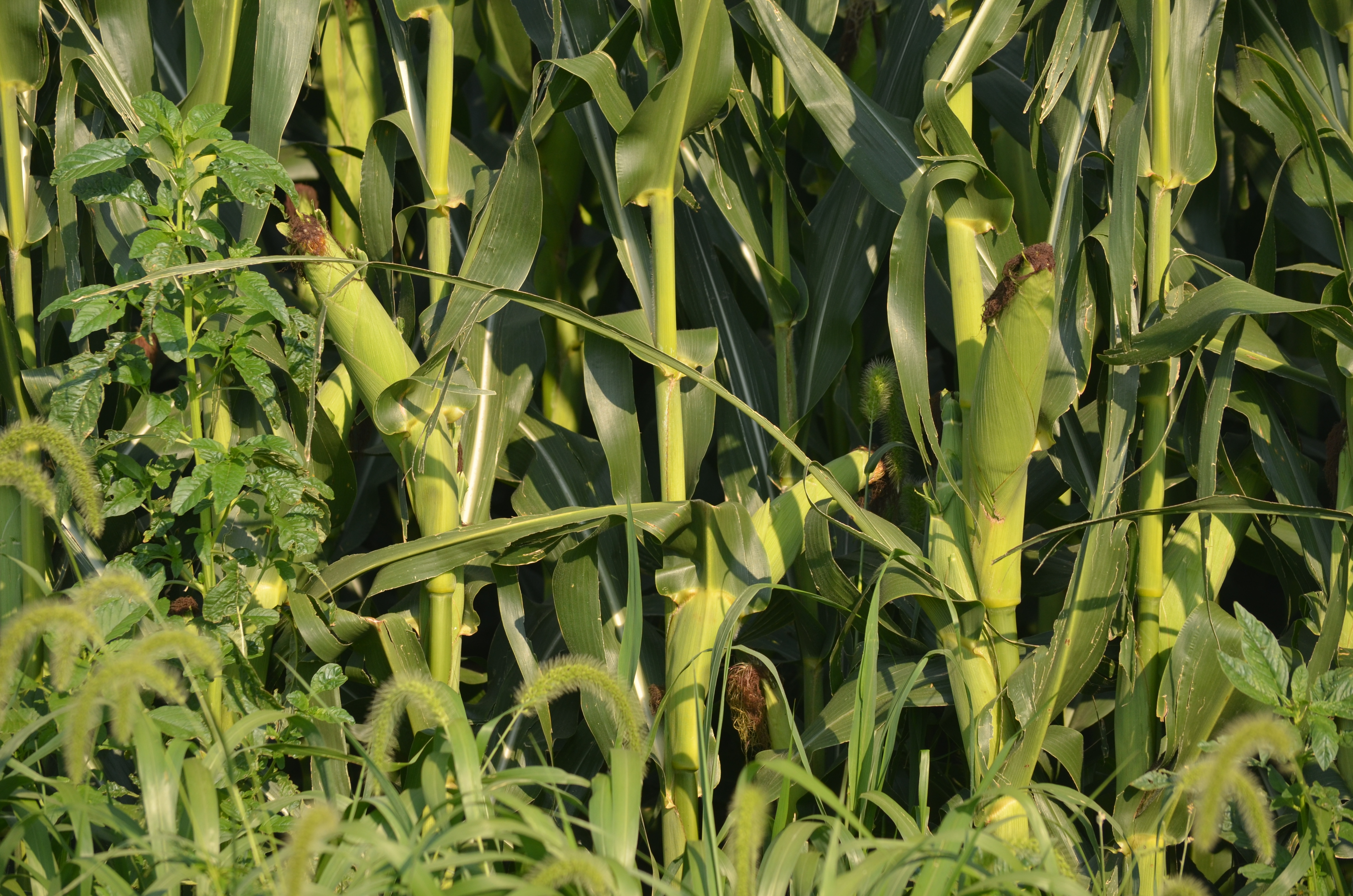
First stop was in Springfield, a wonderful city where I saw this sign that seemed so perfect for the area…DSC_0008…and ate a delicious steakburger and fries in this landmark stop.DSC_0012Leaving the interstates, which is the best way to explore and enjoy, it was mowing time and the hay bales, now round instead of the familiar rectangles, gave a somewhat festive design to fields we passed…DSC_0017…and even the medians.DSC_0033We stopped in Fulton to visit the campus of Westminster College, where two of my children graduated.  The Winston Churchill Memorial, where Winston Churchill gave his famous Iron Curtain speech now is the home of a piece of the Berlin Wall, repurposed into a sculpture by Churchill’s granddaughter and a Christopher Wren designed chapel.  The church bells chimed and I smiled at how that wakes the students across the campus early in the morning.DSC_0020DSC_0022I walked up the hill to the columns which my daughter and son both walked through twice, as they entered as Freshmen and as they graduated, a Westminster tradition.  I’m not sure what it is about columns on Missouri campuses, as there is a similar set on the campus of the University of Missouri, 25 miles away.DSC_0030Heading north to Hannibal, we left the southern Missouri Ozark regions and headed into the agricultural fields nurtured by the Missouri and Mississippi Rivers.  It’s almost harvest time and the corn was high, rippling off into the horizons to the rolling hills beyond.  Soybeans were the other crop we saw bursting in the fields.DSC_0036
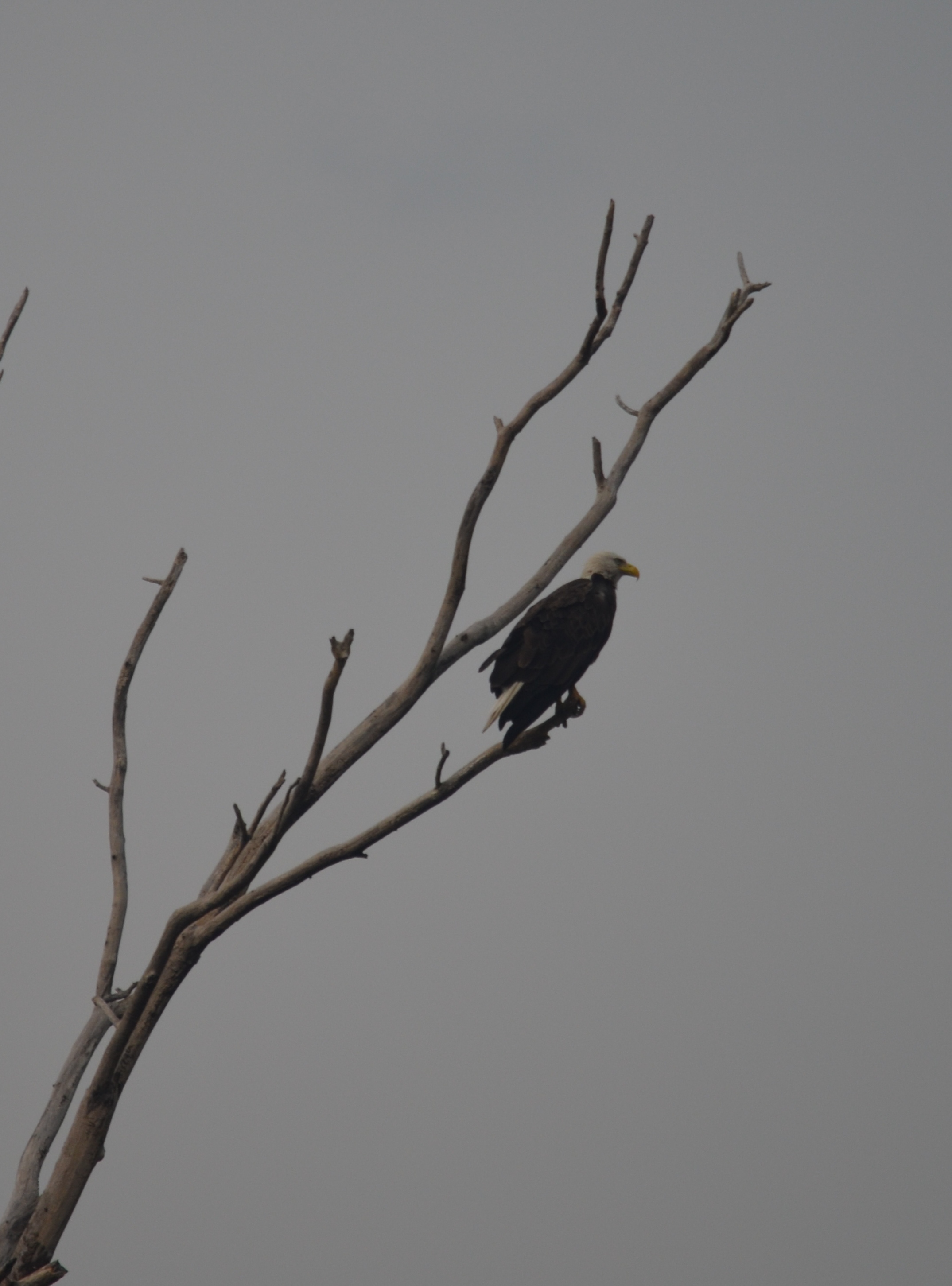
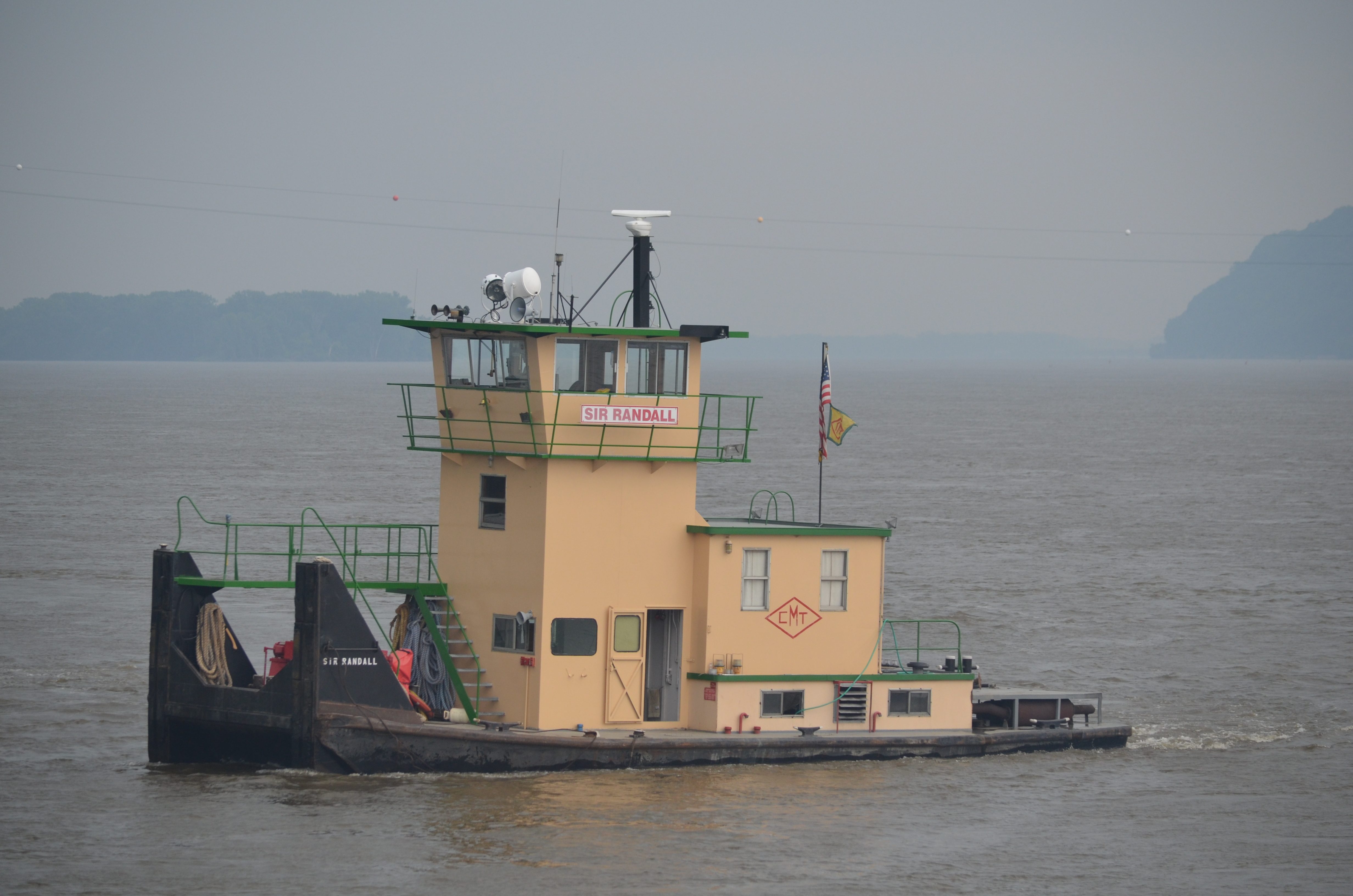
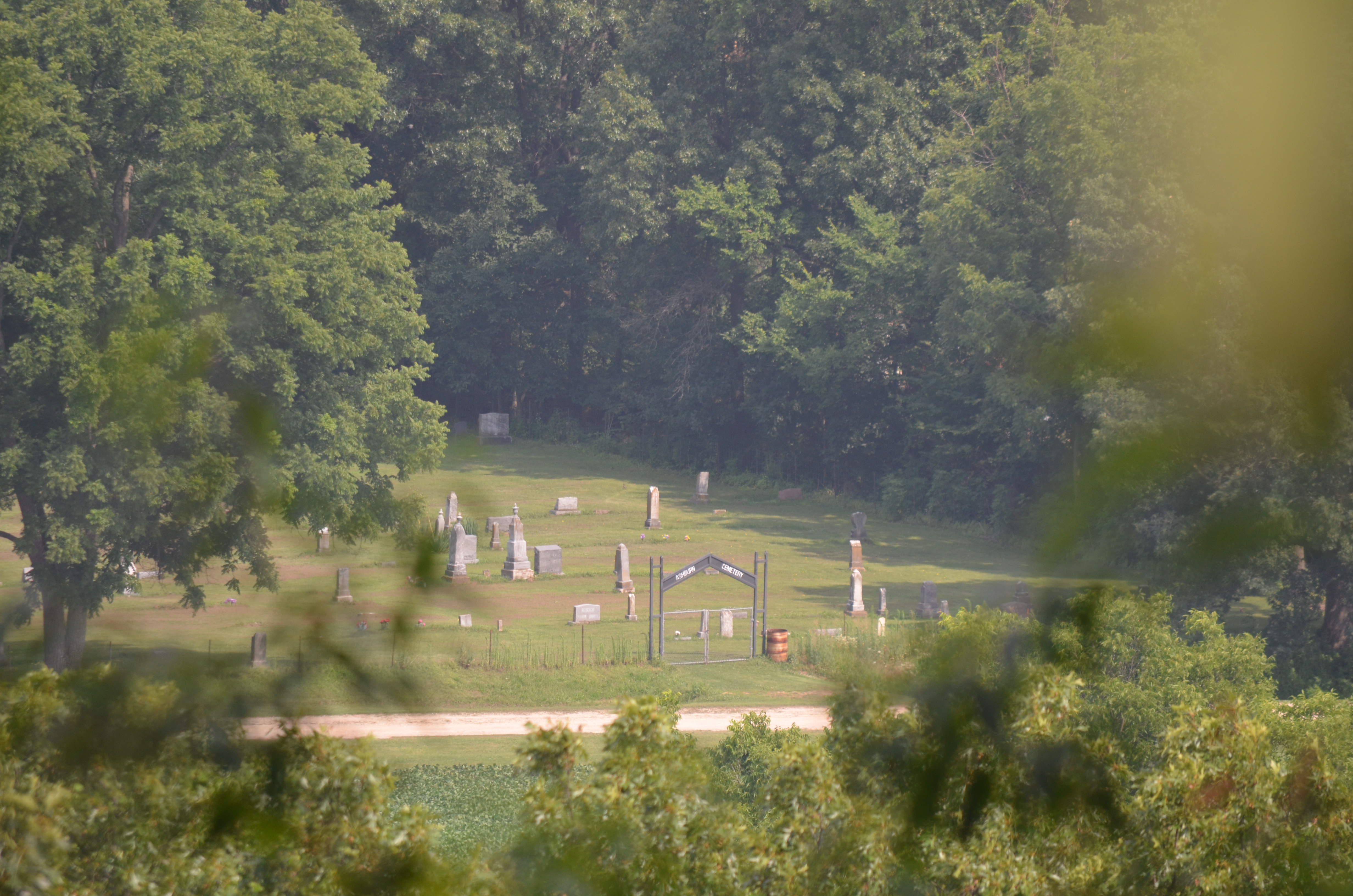
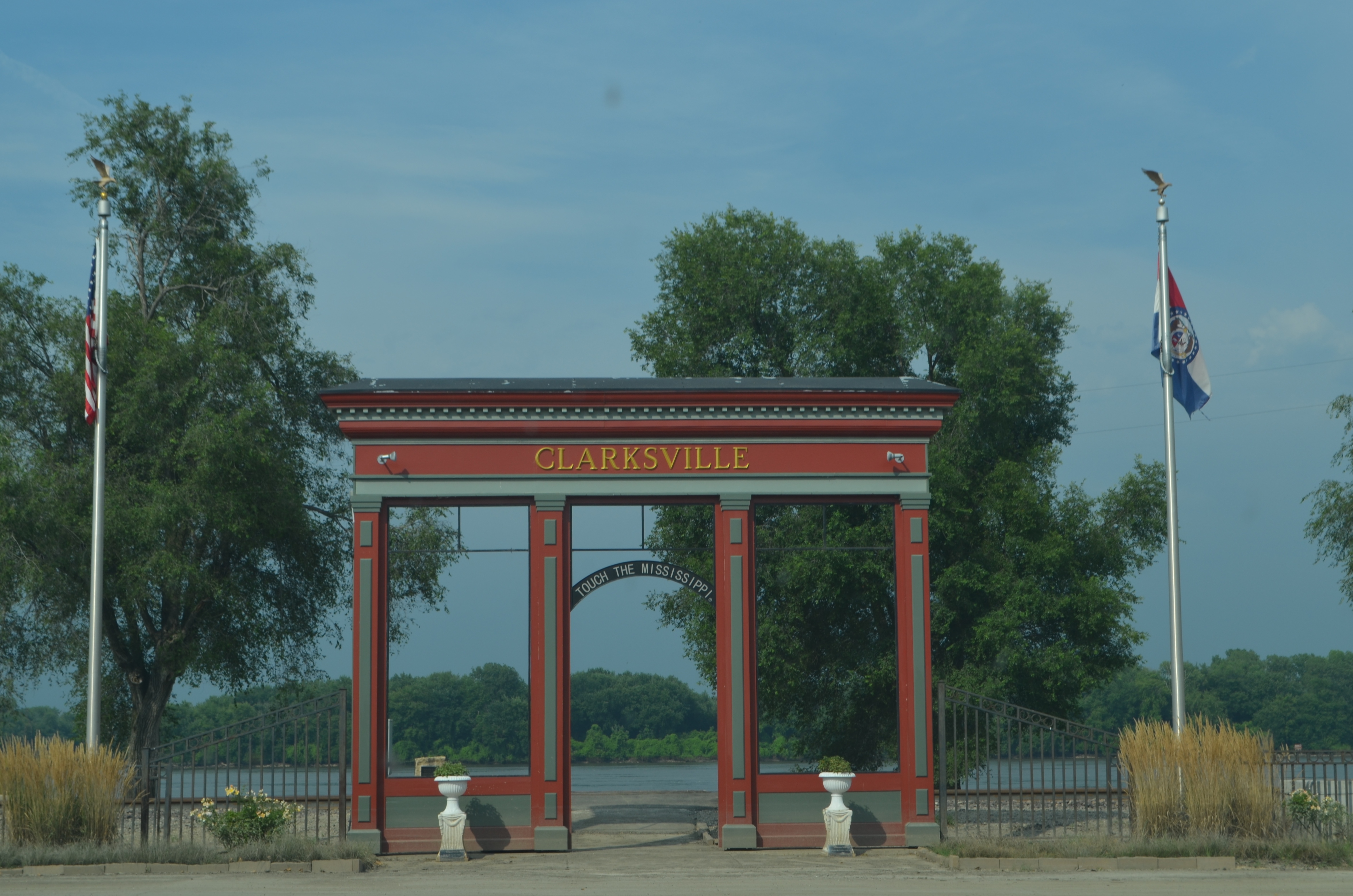
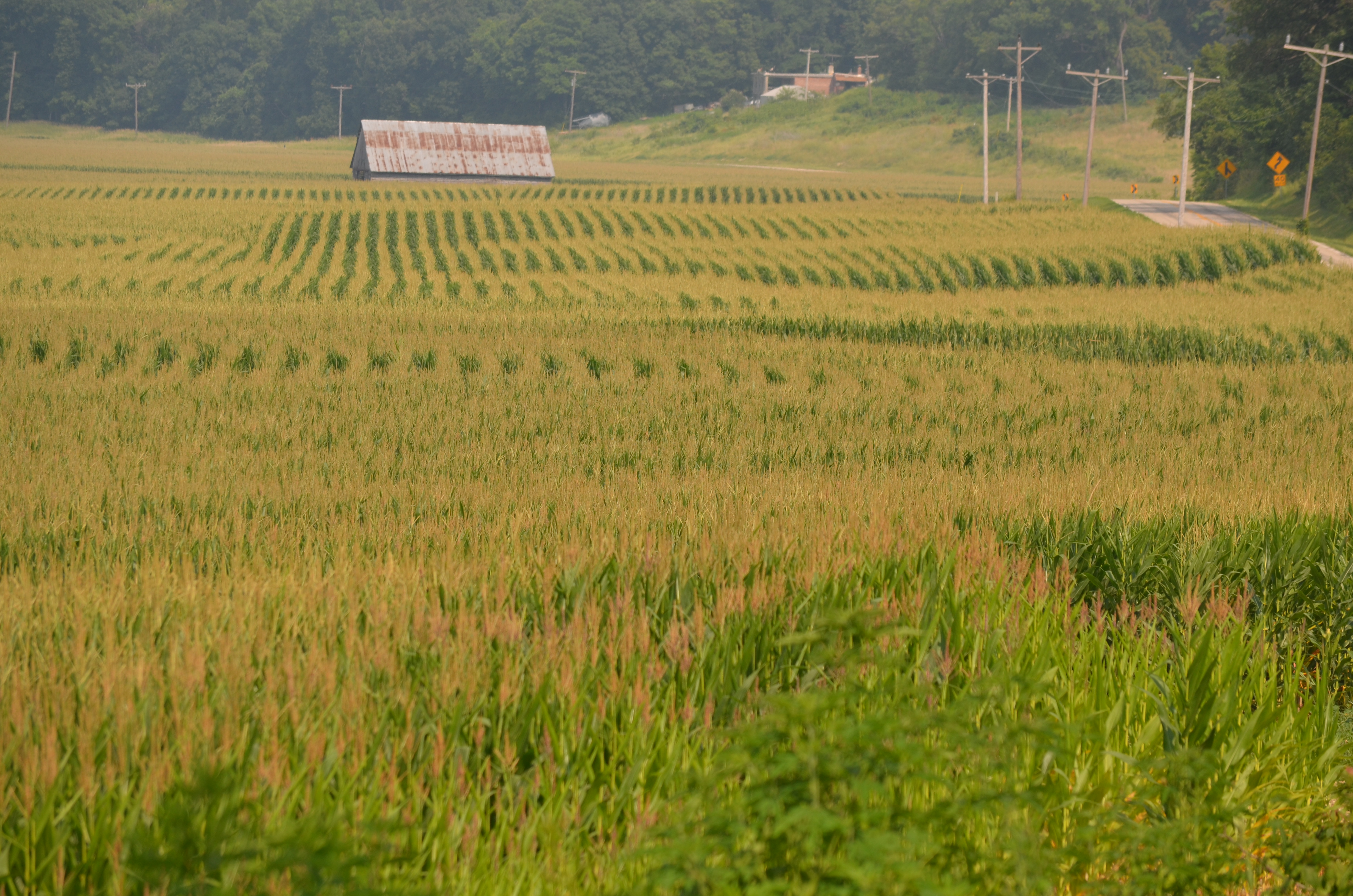
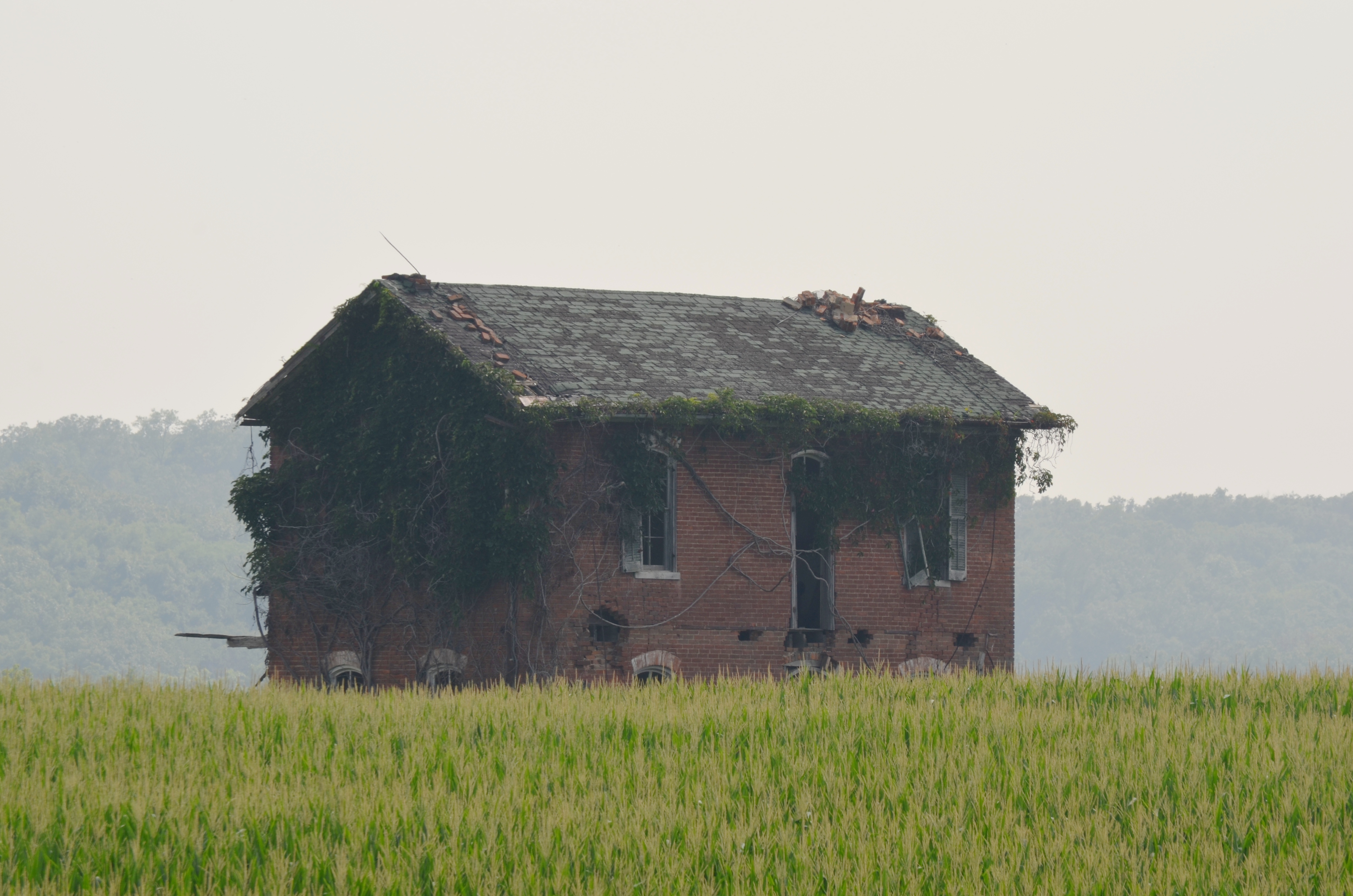
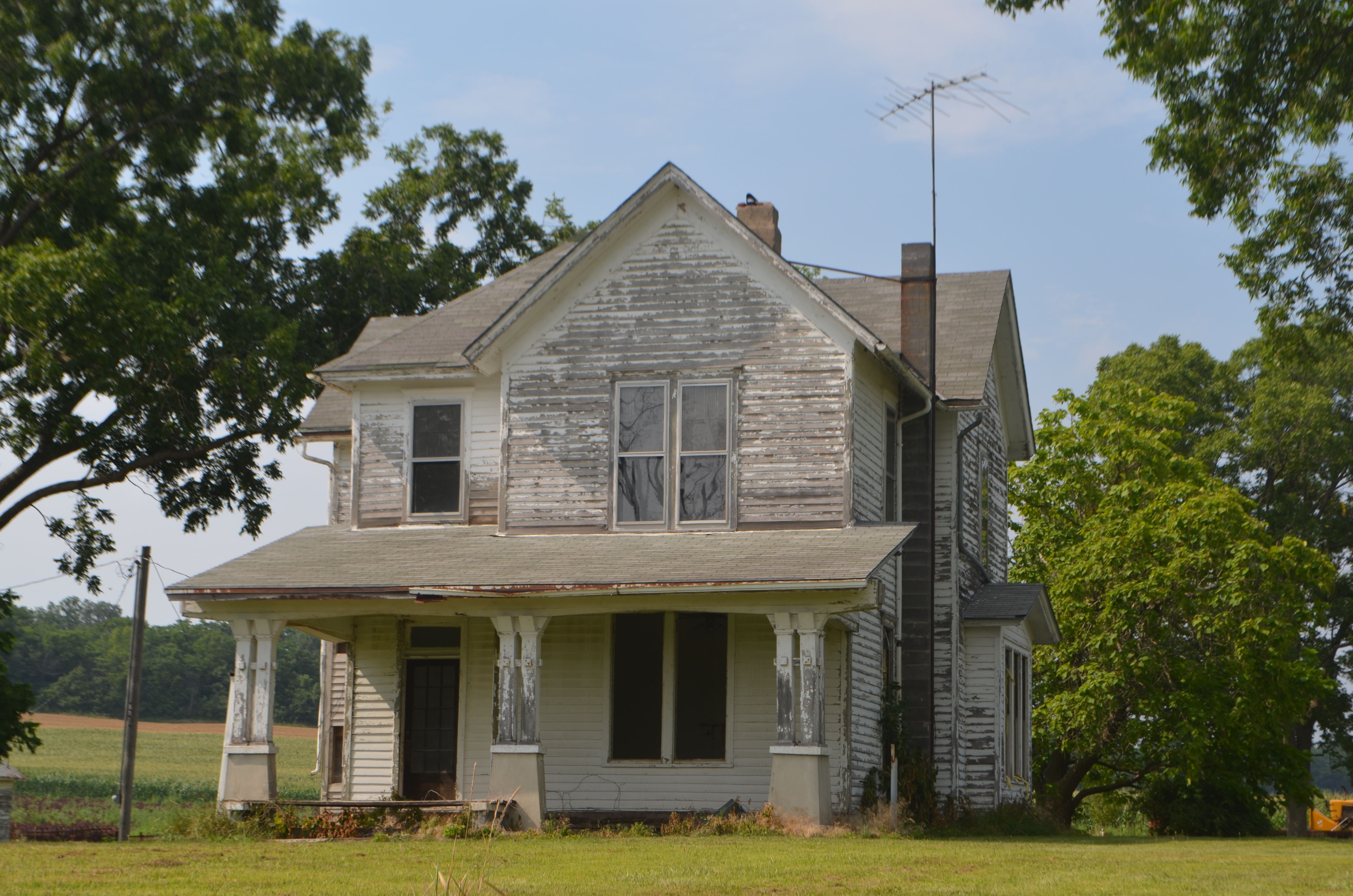
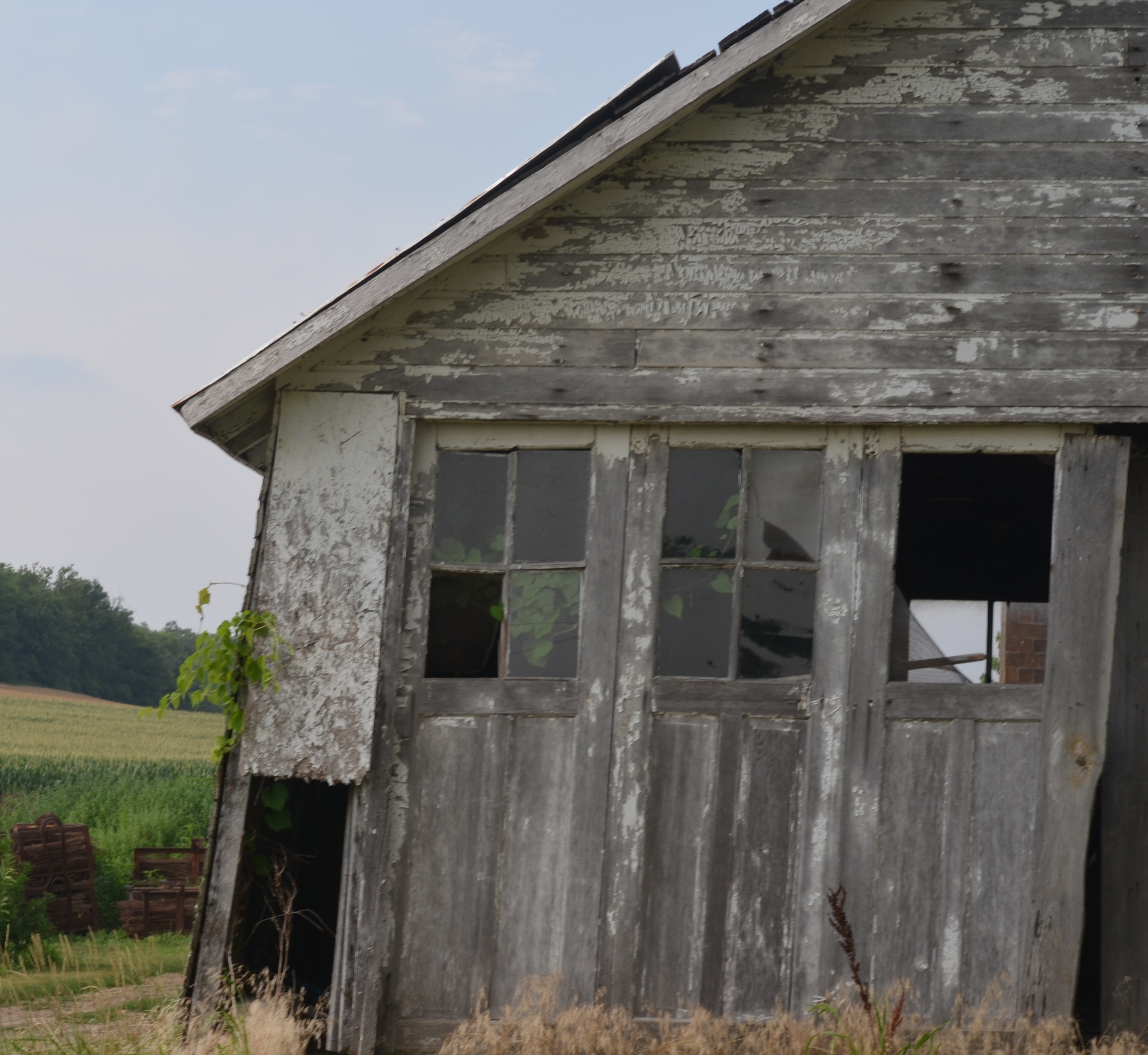
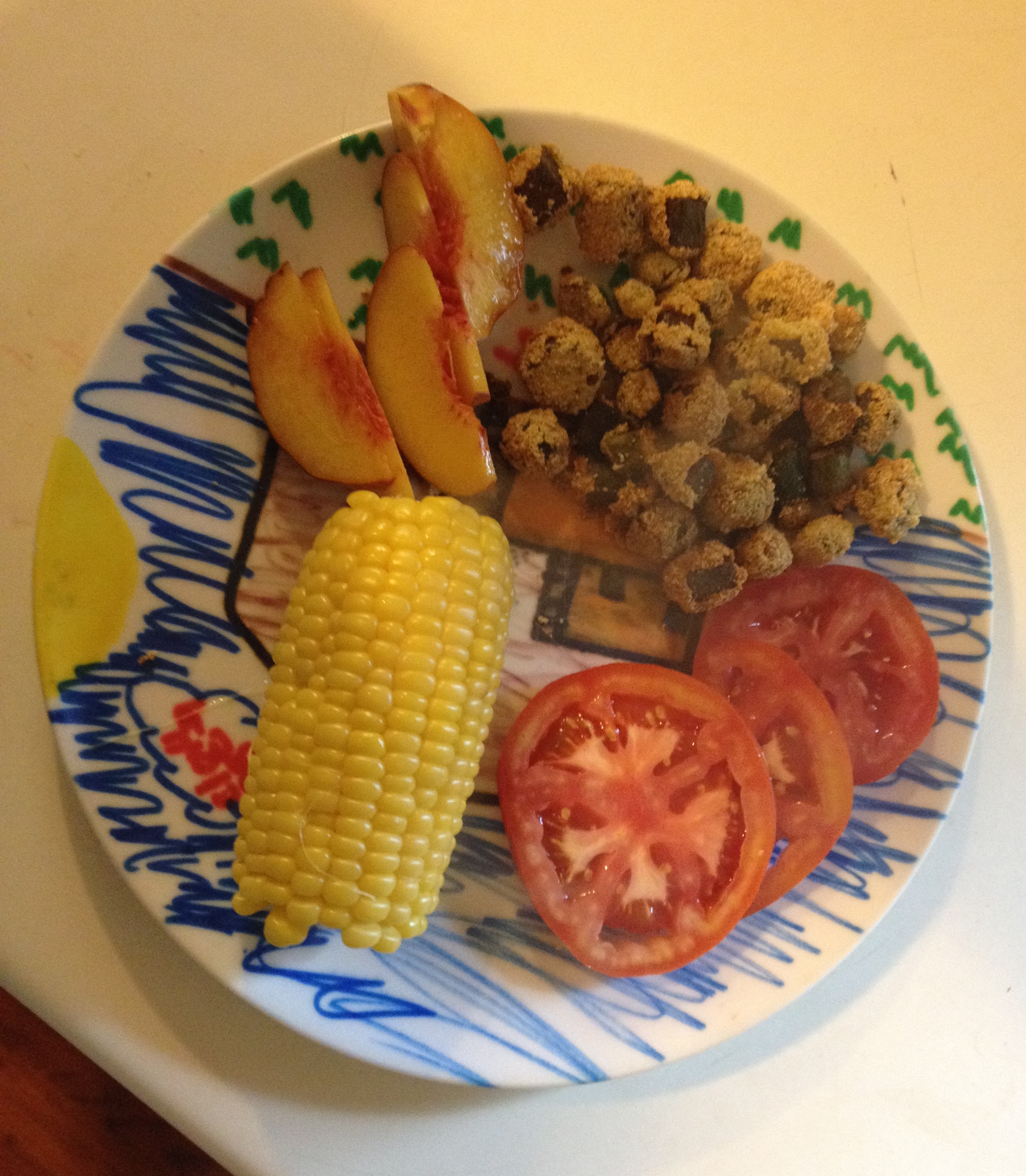
DSC_0038In Hannibal, we traveled the Mississippi by riverboat, feeling the pull of the river’s strength and its ability to lull you along on a summer day.  Eagles rested in trees… DSC_0105…and barges were pushed along by trusty boats like the Sir Randall with its two-man crew.DSC_0114Signs of times gone by when the frozen river was cut up and the ice stored in straw until summer when it could be used for ice cream.DSC_0095We left Hannibal for St. Louis, choosing to travel the road along the river.DSC_0172This route took us along the river for beautiful scenic outlooks, starting with Lovers Leap which showed the layers of the bluffs along the river…DSC_0139…and gave us lovely views of the river’s twists and turns.DSC_0162Far below us in our view of the swollen river, we spotted a bit of a town and a cemetery that seems to have survived the rages of the river.DSC_0159The reality of living along the river was apparent when we explored the town of Clarksville…DSC_0182which boasts that you can touch the Mississippi there.  I did put my feet in, but the river was high as evidenced by the sandbagging that lined the streets closest to the water.DSC_0184The richness of the soil was shown as the road took us once again into the rich farmlands with corn stretching as far as we could see.DSC_0166 DSC_0164We came around a bend and spotted this house, deserted and surrounded by corn.DSC_0178A road took us into the cornfield for a closer look at the other side with an overgrown yard of flowers.DSC_0173Across the road was this once beautiful home.DSC_0175I wonder what stories these two places, surrounded by the corn, could tell.DSC_0177We reached St. Louis, where stories of history awaited.DSC_0343On our way home, we stopped by a roadside stand, back in the Ozarks of Missouri and bought some of the summer fare to take home and enjoy a Missouri meal.  We grow all these things in Oklahoma, too, but it was a nice finish to our short trip through Missouri, where we were treated like the neighbors we are.IMG_4985Happy summer travels!DSC_0054

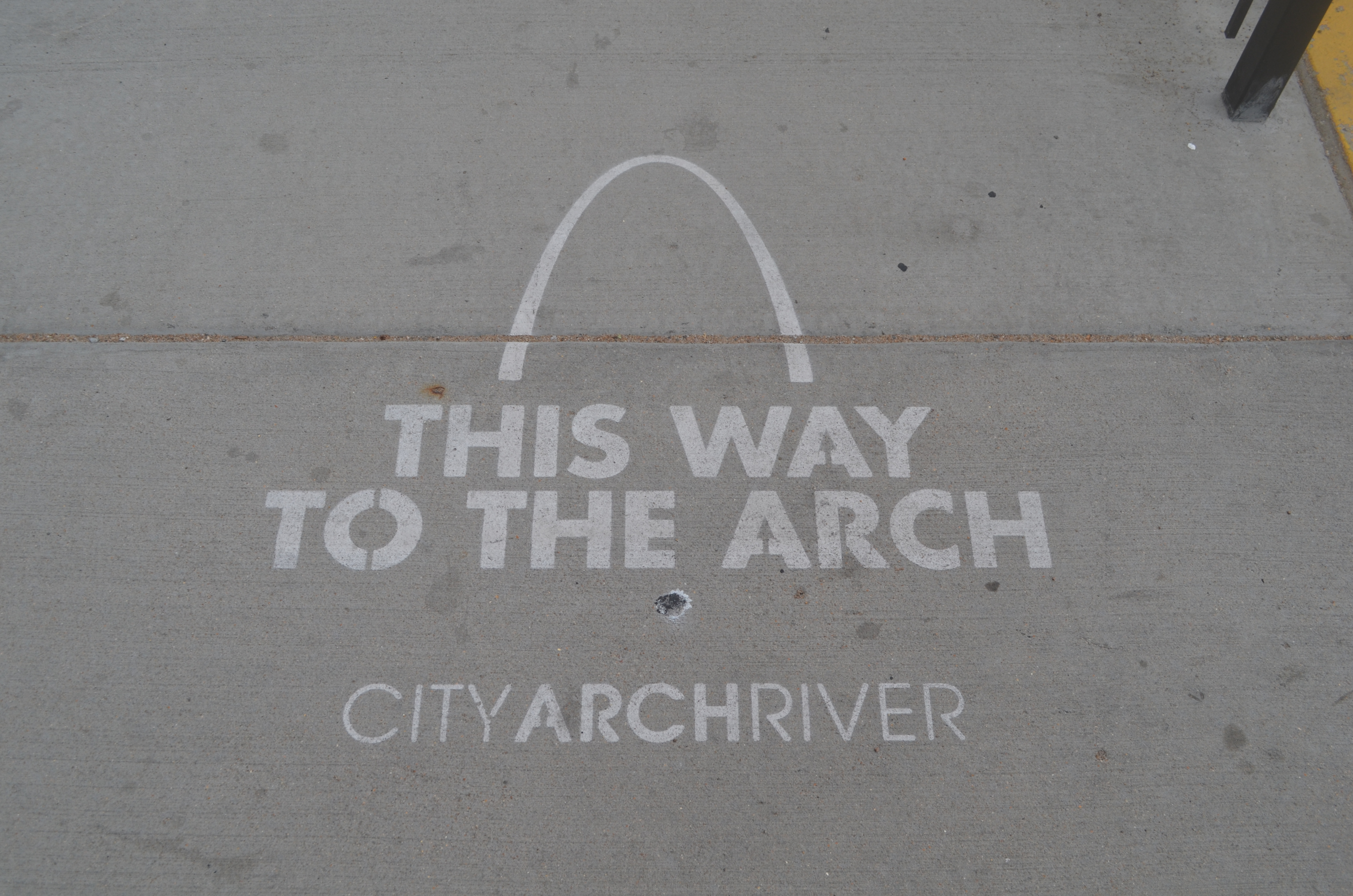
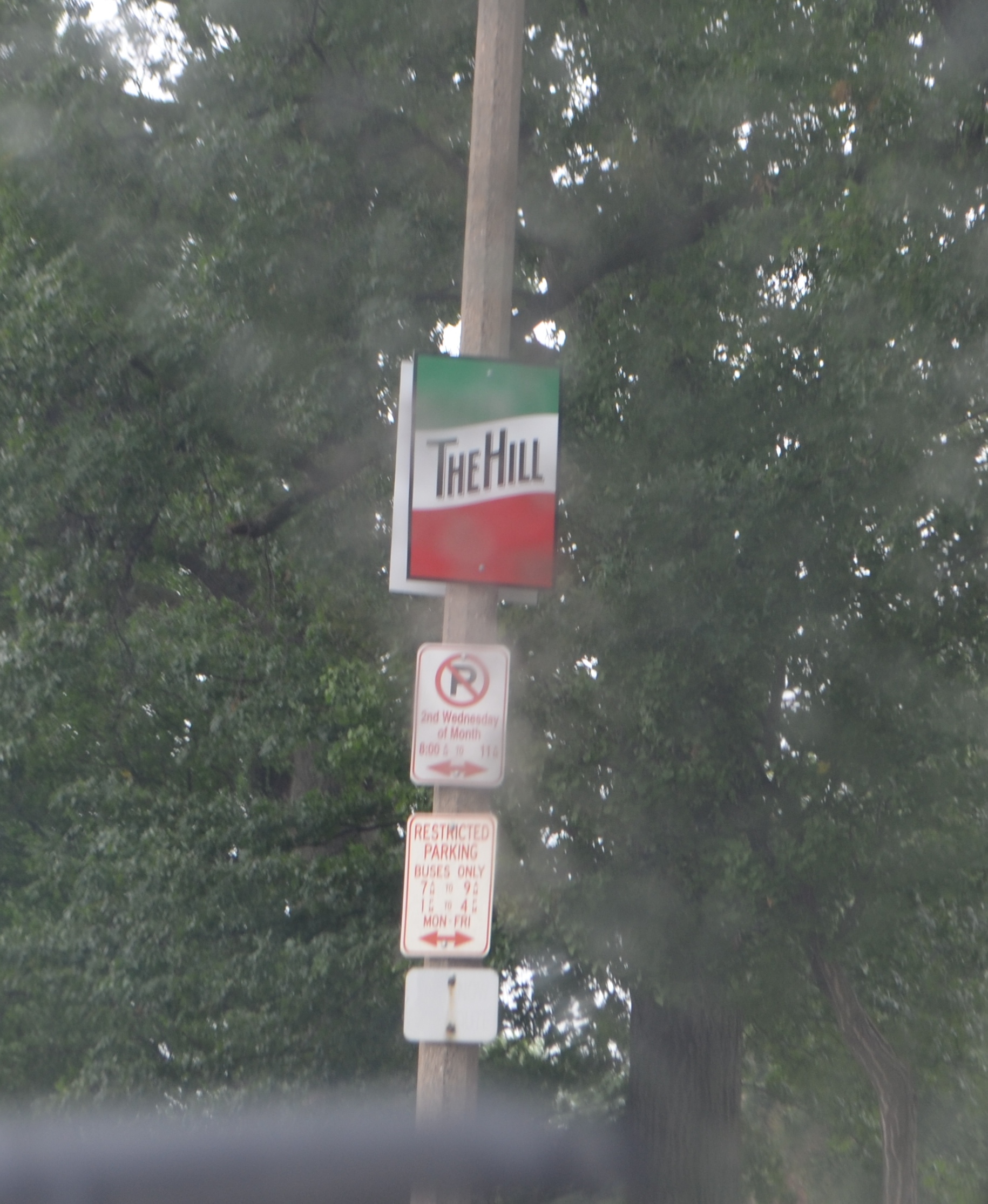
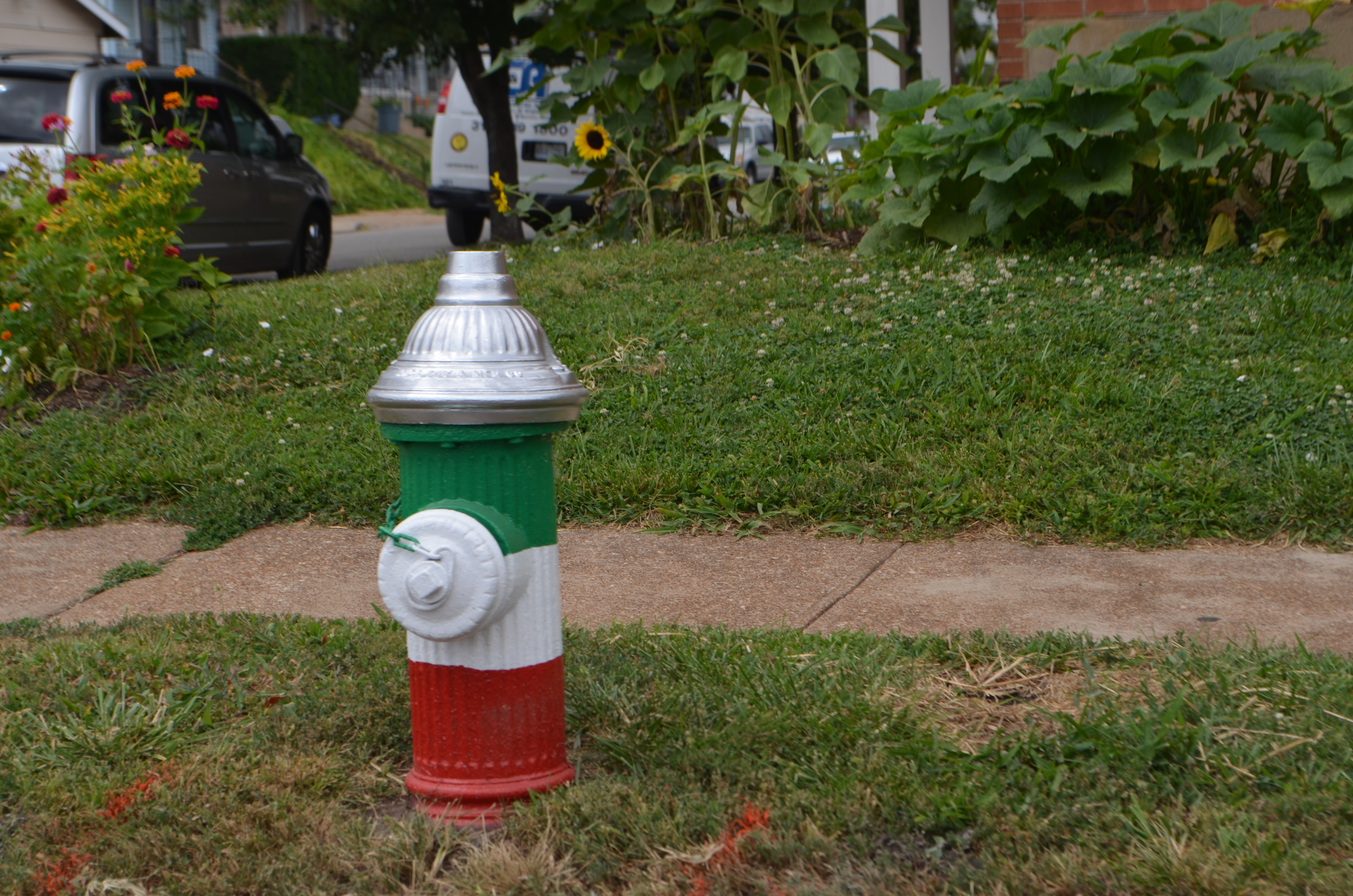
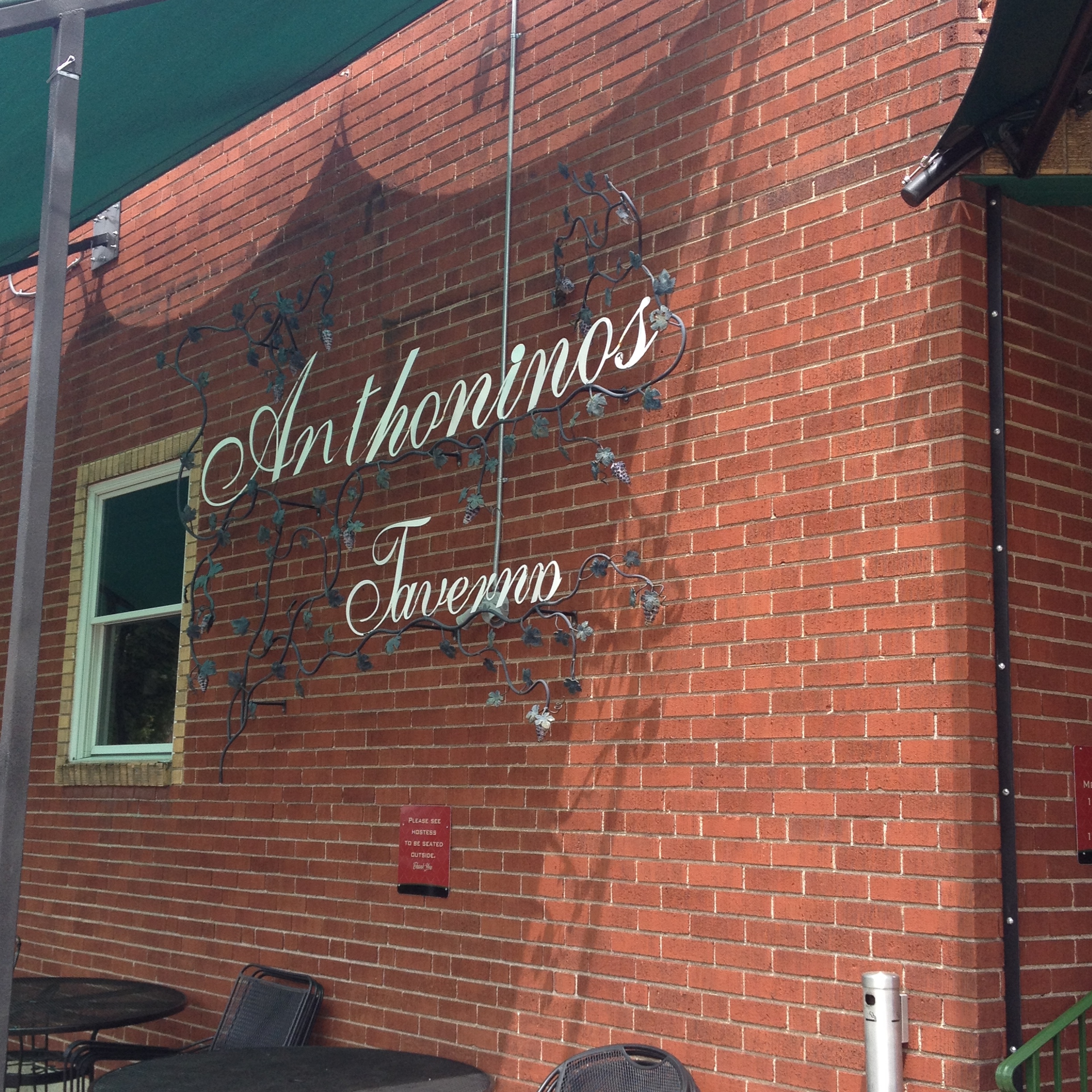
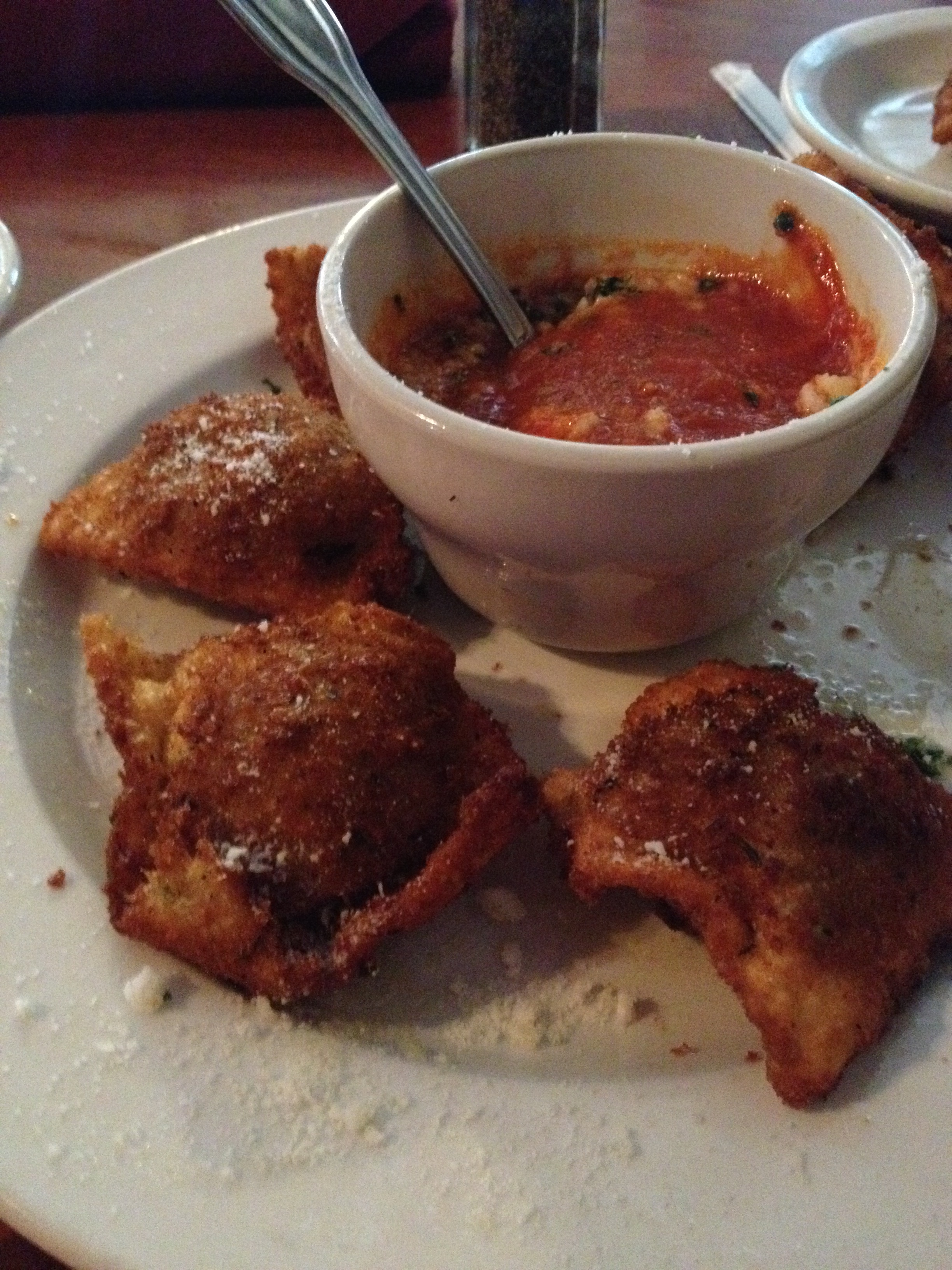
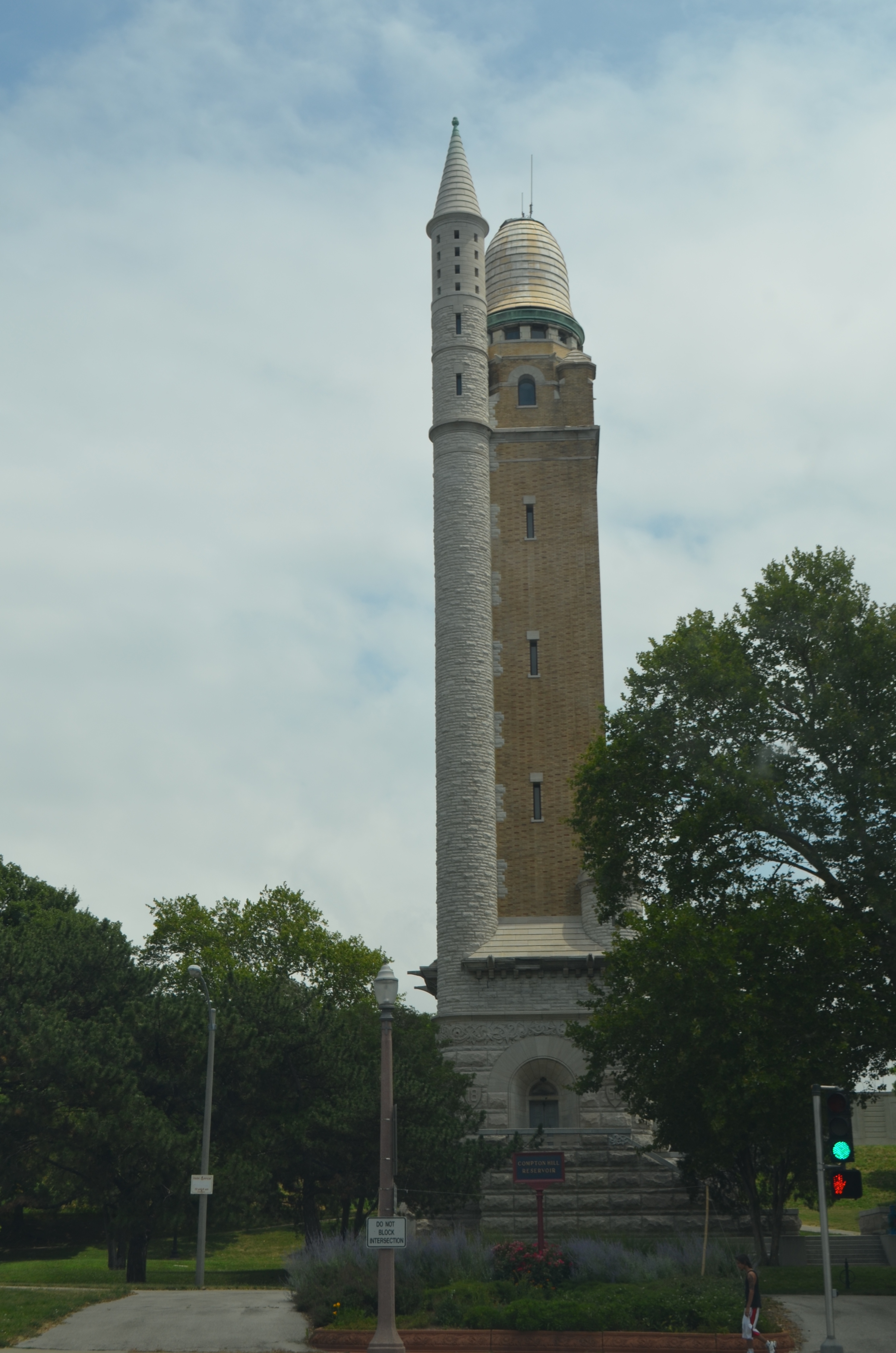
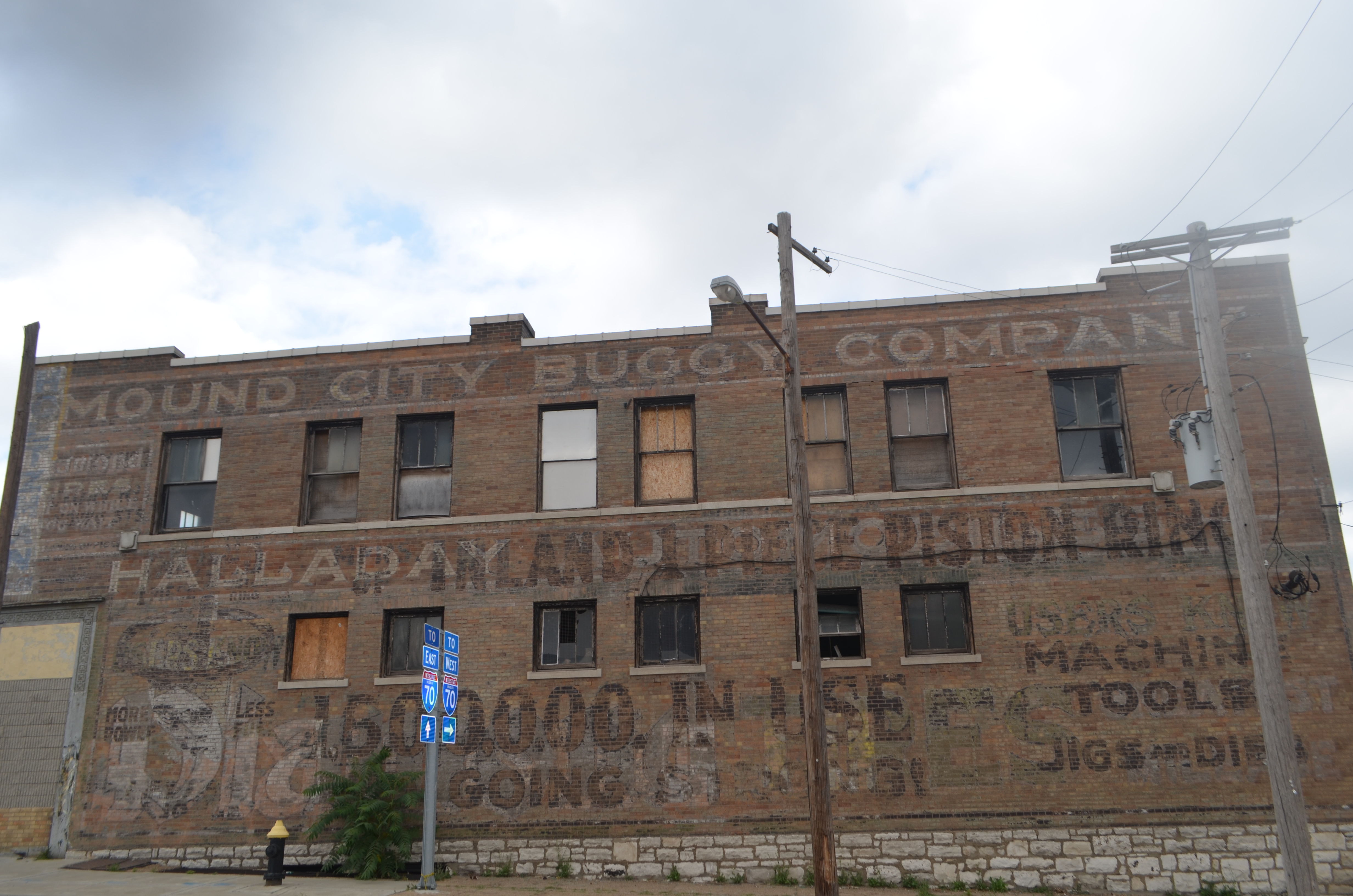
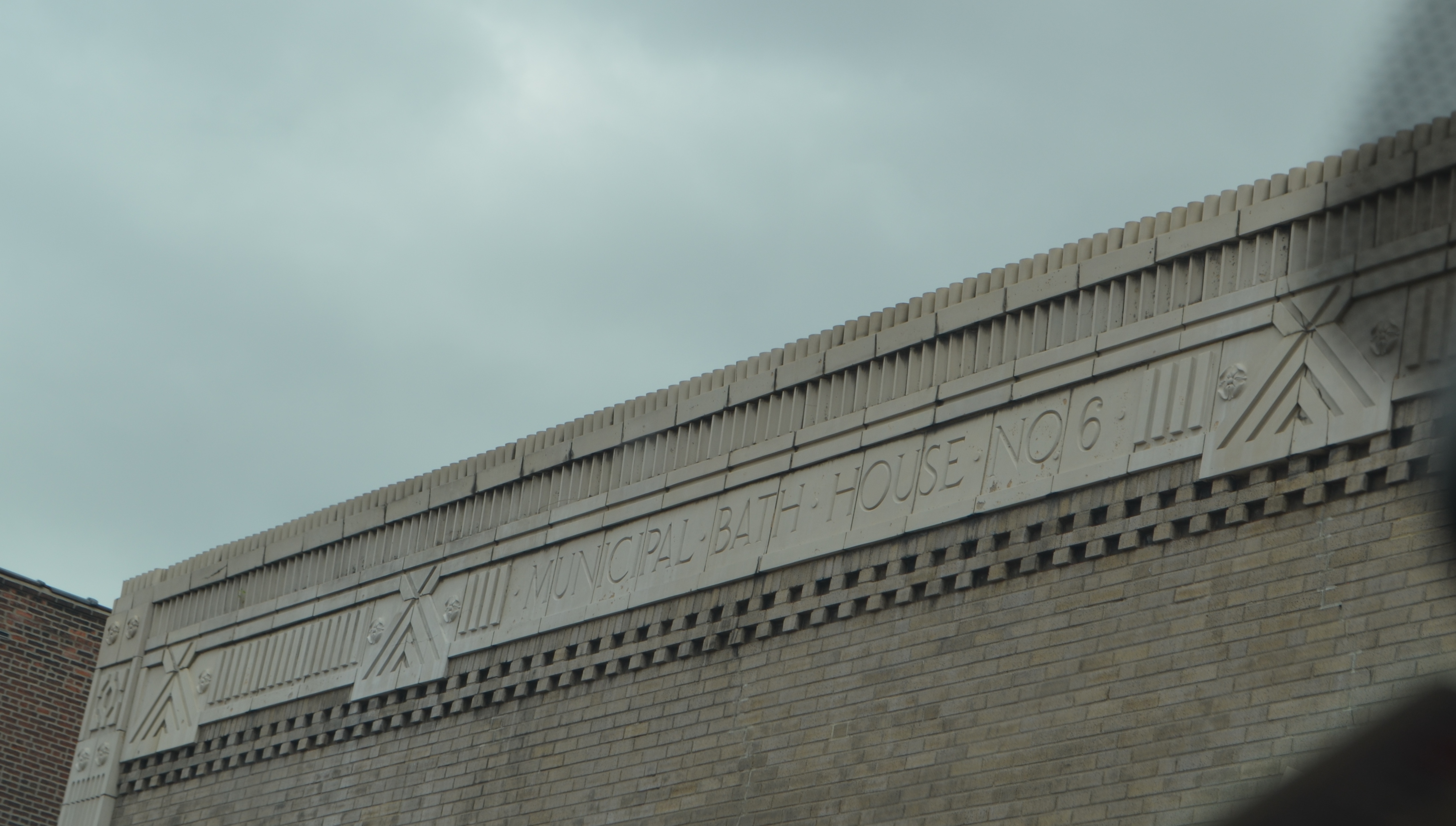
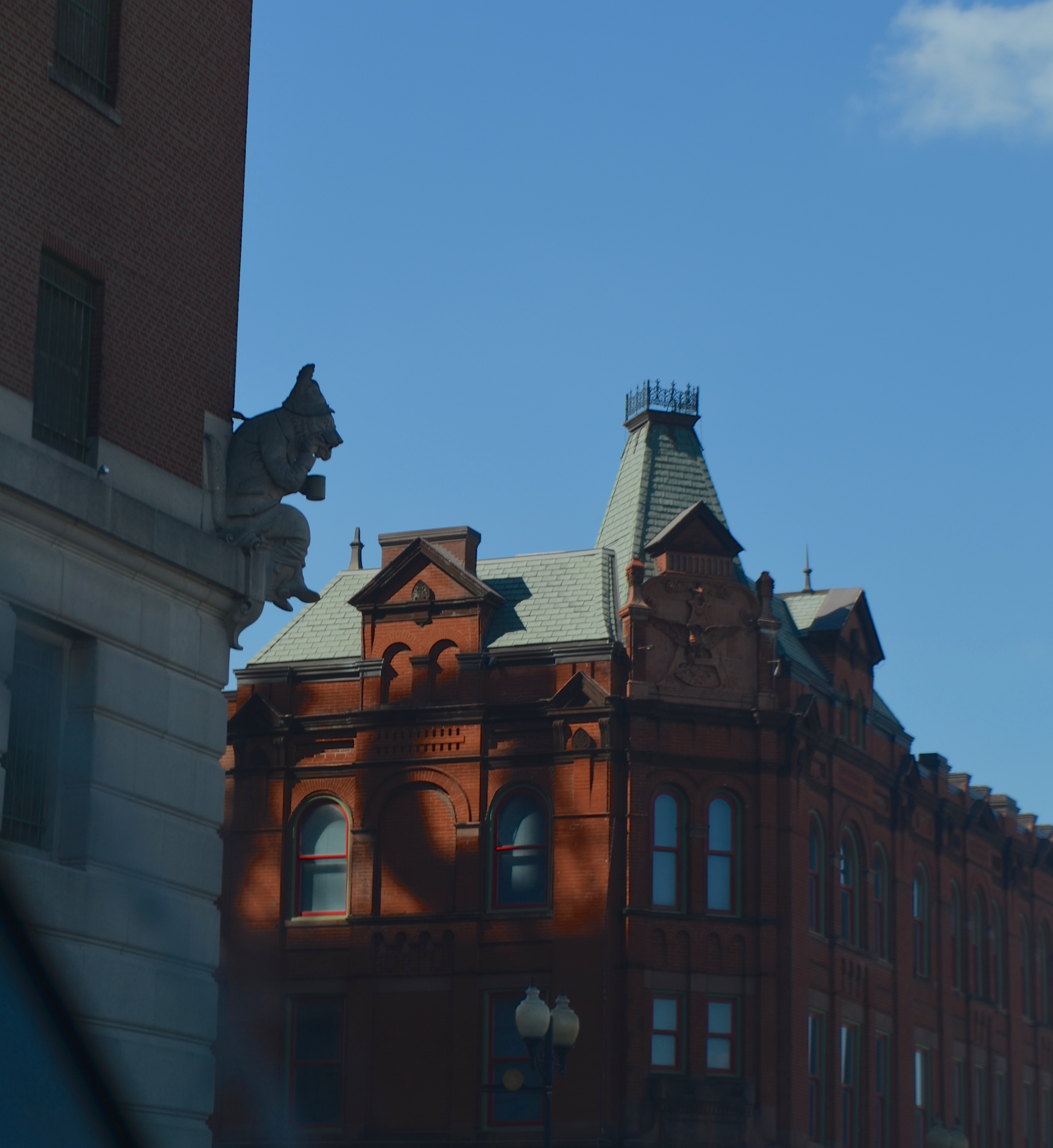
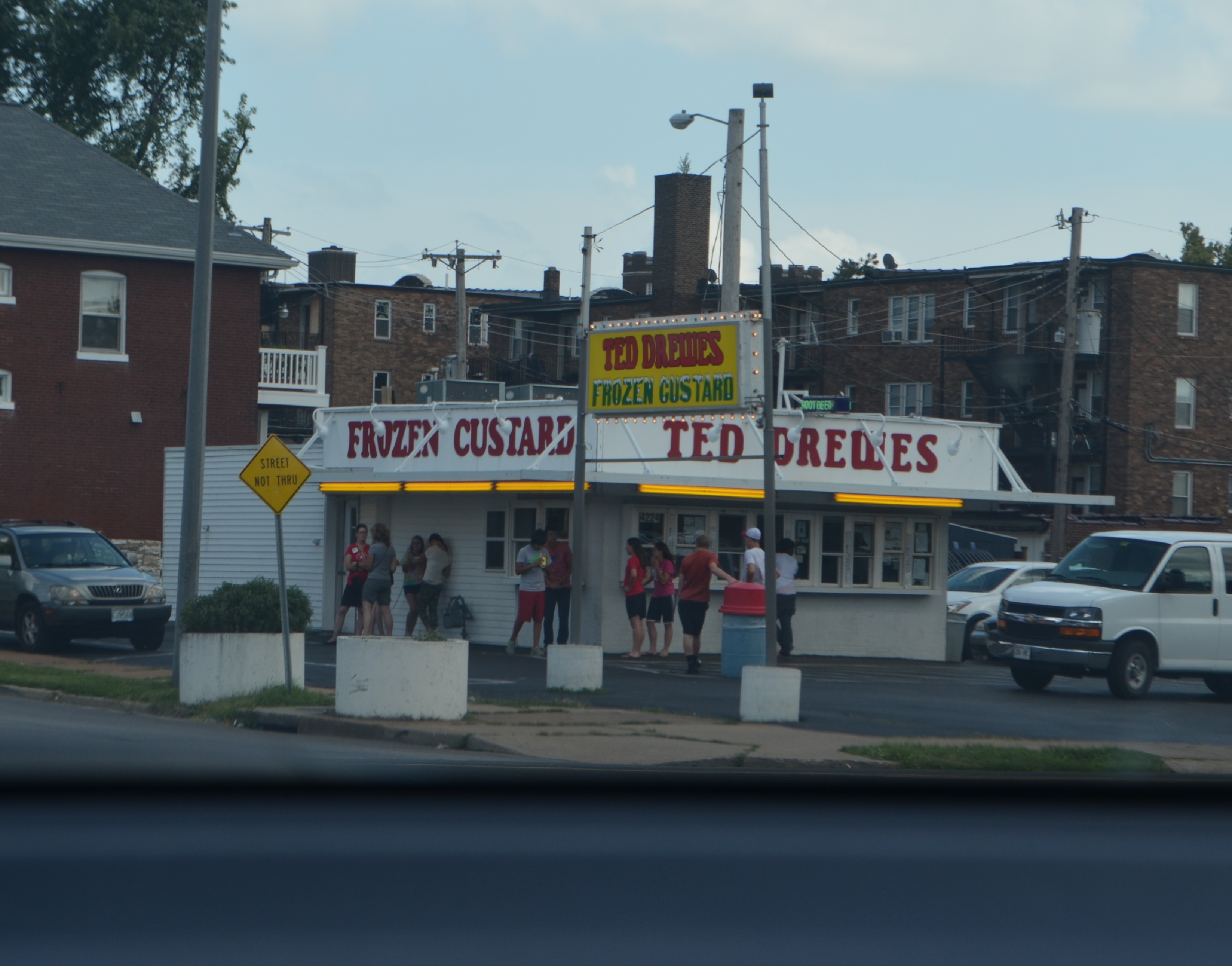
It’s hard for me to believe that I’d never spent much time in St. Louis since I’ve been by, through or around it many times, so I stopped for a quick day there, studying up on the history and geography of the city as I traveled.  First, you have to see the Arch, gateway to the West.  What a great structure, simple and pure in its message.  I’m so glad it’s surrounded by a park and all the museum, gift shop, ticketing, etc is located underground.   DSC_0220You approach the arch and look out to the Mississippi River.DSC_0192Entering the pods to go to the top of the arch is like being in a sci-fi movie…DSC_0199…but the view from the top is 30 miles in each direction.DSC_0205The arch is glorious in all lights and weather.DSC_0190The history of St. Louis is intertwined with the expansion of our country west with the Mississippi River an important part.DSC_0223From the old LaClere’s Landing, the neighborhoods expand westward, each a piece in the map of history.  The Hill had been recommended to us as a “must go to” place for Italian food.  This area developed around the Italian immigrants who mined the hills.DSC_0231  Today it is a wonderful neighborhood of extreme pride and an Italian restaurant on just about every block, sometimes on every corner of an intersection.  DSC_0234I tried to find out which ones were the best and they all got great reviews.  We settled on this one for a lunch of toasted ravioli, a local favorite.IMG_4978IMG_4979Yummy!  We left the neighborhood with its Bocce ClubDSC_0232and drove around the city with all its diversity.  There are the French homes around Lafayette SquareDSC_0240and brick homes around the city that matched my image of St. Louis from before I arrived.  Downtown is the wonderful old train station, now a hotel…DSC_0227and the beautiful areas around the University of St. Louis where this old standpipe at the Compton Hill Reservoir rose above us as we drove.DSC_0238Driving around, there were so many signs of the city that tell some of its story, like this one from the days when it was sometimes referred to as Mound City for the many ancient Native American mounds in the area,DSC_0260or this old bath house.  We know there were at least six of them.DSC_0253Or this Farmer’s Market sign.  That’s an OLD business…DSC_0274I can’t leave out the food and drink that are St. Louis traditions, starting with the beers…DSC_0263with the gargoyles on the building across from the iconic Anheiser Busch structures.DSC_0273 DSC_0272There are Ted Drewe’s famous custard shoppes with frozen custard called the “concrete” because you can turn it upside down and your spoon won’t fall out…DSC_0268and ooey gooey butter cakes.  This one was ranked #1 in St. Louis for the past six years.  I attest to its deliciousness.DSC_0270

Crown Candy is famous for its Heart Stopping BLT along with its candies.  I went in but didn’t eat anything.  An old soda shop that brings lines every day.DSC_0247We ate some St. Louis BarBQue in the old industrial area.  Their most popular item was Snoots (pig snouts).  While I stood there, every call was for snoots.  They’re kind of like pork rinds, crispy.  I figured I HAD to try them.  How bad could they be if everyone was ordering them? They were good.  IMG_4974I passed this bottle sign every day, situated at a busy place near Rams stadium.  I liked everything about it.DSC_0258We ended our day with a baseball game, watching the St. Louis Cardinals.  I’d grown up listening to the games on the radio.  The new stadium is great, easy to get around, the crowd friendly and relaxed.  IMG_4981From the stadium, you can see the Arch, a few blocks away, always framing the city.DSC_0282St Louis is celebrating its 250th birthday this year.  Decorated birthday cakes are in front of businesses around town in support of this momentous occasion.  There is so much more to see and do in St. Louis, but I’m happy I got to enjoy the birthday party.  It’s an intriguing, entertaining city.DSC_0250

Mark Twain and Laura Ingalls Wilder lived in Missouri.  He was born there, she died there.  They both wrote fiction based on their childhood.  Last week I visited both of their homes and came home with a renewed fascination with these two remarkable people.

I had been to Hannibal 15 years ago with my son.  He was working with an improv comedy group in college and I told him he needed to learn more about one of the greatest stand up comedians, Mark Twain.  We spent an afternoon in Hannibal, listening to Hal Holbrook’s tape on the way back to school, a couple of hours away.

Nothing much had changed at Mark Twain’s boyhood home since I had been there, which is a good thing.  The night we arrived, I sat on a bench at twilight in front of his home and looked down the street at the Mississippi River while I ate huckleberry ice cream.  It seemed like the perfect way to start the visit.  The white picket fence had a bucket with brushes tied to it so you could take your picture while pretending to whitewash the famous fence.  Last time I visited, the fence had extended further, but they’ve built a lovely garden on what was an empty lot.

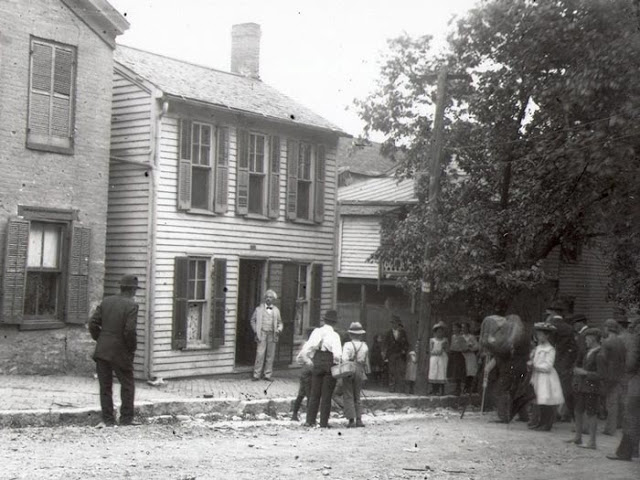
DSC_0075The house is well preserved.  I saw pictures around town of Mark Twain standing in front of the house on his last visit to Hannibal in 1902.  He’d come a long way from his days as young Sam Clemens.  My favorite picture was of the photographers and reporters taking pictures of him as he visited, while young boys and townspeople looked on.  He was a rock star in his time.mt hannibal visit boyhood home I had strolled up and down the streets and the river, taking it all in once again.  The mighty Mississippi that I first learned about through his books spread out before me.  The hill where Tom and Huck played to my left, the building where young Clemens first worked for a printer in front of me, his father’s courtroom beside me.

In the morning, I took the tour of the house again, picking out the window he climbed out, as described in Tom Sawyer.  Before you go through the house, there is a nice interpretive center that gives a timeline of his life and gives the background on what in his books is taken from his life, which people he used for the characters.

We visited the other museum downtown with its nice interactive area that would appeal to children and its collection of first editions and copies of Twain’s books in many languages.  My favorite is the collection of the Norman Rockwell paintings that were the illustrations for one of the reprints of Tom Sawyer and Huckleberry Finn.  What a match of two great artists with their sense of humor and small town living.  I only wish they also had some of the originals of another Missouri artist who illustrated the books at another time, Thomas Hart Benton.IMG_4969

This trip, I took the riverboat cruise to get the feel of being on the Mississippi.  It’s a strong, wide body of water and there is a peace about floating along its waters.  I must admit that I was thinking of kids on rafts being in the middle of this current.  I shook my head at the dangers.  Later, I captured a photo of this little town on the river from Lovers Leap bluff with the riverboat coming in and a train rolling by. I could live easily with the sound of the boats and the trains.  DSC_0133Before I left town, I looked up the street towards the statue of Tom and Huck, the first statue dedicated to fictional characters in the United States, and the hill where Sam Clemens played.  Even with the hardships his family endured, his childhood was idyllic in his memory.  I took a graduate level class on Twain in college, but my travels through the places he wrote about, Hannibal, Virginia City, San Francisco, and more, bring him to life just as he brought those places to life for all those who delight in his writing.DSC_0144
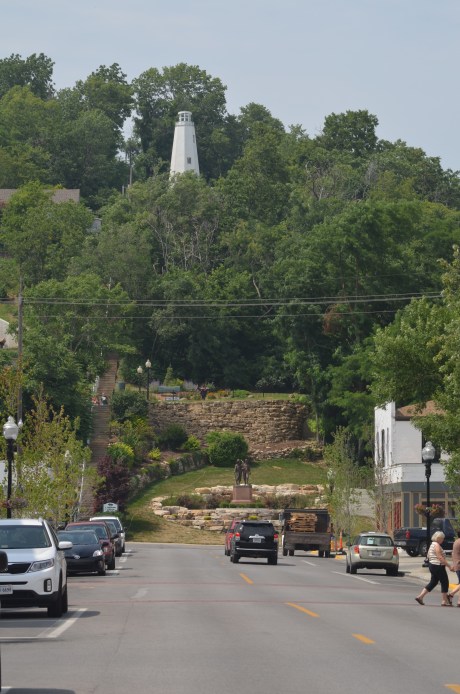
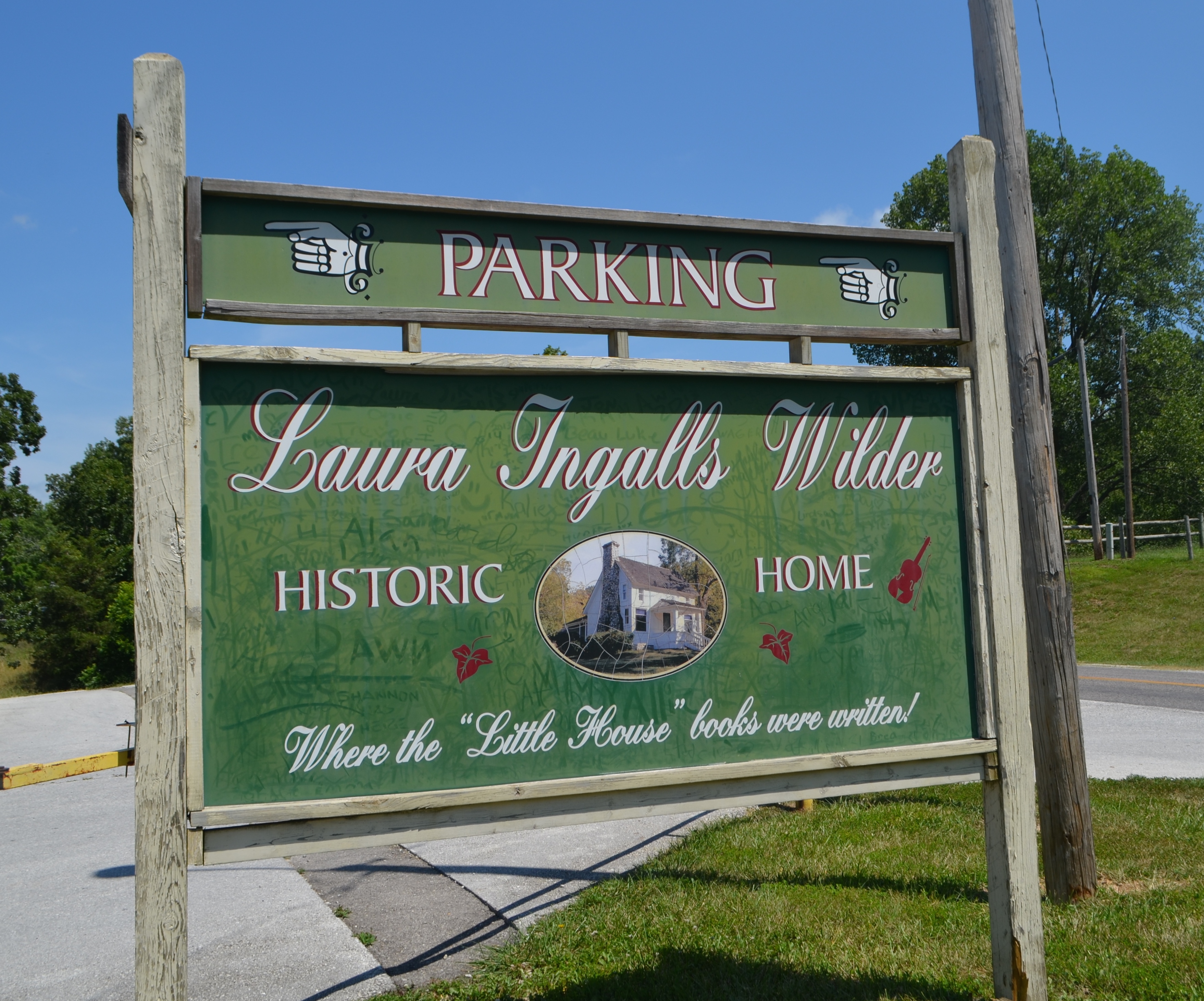
On my way home from this trip to Missouri and Kentucky, I found that we would pass by Mansfield, MO, where the Laura Ingalls Wilder home and museum are located.  I came to her books later in life when my oldest daughter was reading them.  I picked one up, read the whole series and searched for more.  I found a biography of what her real life was like, much harsher than the books in childhood.  Mansfield is where she and her husband, Almanzo, her precious Manley as she called him, and her remarkable daughter, Rose, settled.  Once again, the museum was a delight, filled with so many actual items from their lives along with a timeline of both Laura and Rose’s lives.  DSC_0344The family that got out of the van next to our car in the parking lot looked like they had stepped out of Laura’s time, but they were Amish, a family paying tribute.  Other little girls scampered around the grounds, wearing sunbonnets and long dresses, playing Laura from the books and television series.DSC_0346I was reminded that Laura didn’t start writing the books until she was 65, when the stock market crash had wiped Laura and Almanzo out of their investments in their retirement.  Then she wrote one about every two years, writing into her 80s.  Once again, the museum helped sort out fact from the written memoirs, bringing new dimensions to the stories.  And I gained new knowledge and appreciation for the accomplishments of the remarkable Rose Wilder Lane, Laura and Almanzo’s only surviving child, herself a renowned author, journalist, and political activist.

Our guide through the farm house and the little rock house that Rose built for her parents was a delight, an older woman who had actually known Laura and brought so much life to the tours.  She was all that I love about small towns and Missourians with her openness, friendliness and sense of humor.  I love the fact that Almanzo built the entire farmhouse in stages, using materials from the farm, taking 18 years to complete it.  I love that the counters and cabinets in the kitchen were designed for his small wife, who was only 4’11”.  He was only 5’4″, so everything was to scale.  No wonder she was nicknamed “Half Pint” by her Pa.  He built much of the furniture, including chairs that were low to the ground.  I felt I knew Laura after seeing her favorite collections of china and the things she treasured around her, including her beloved library.  I love the fact that she only got a refrigerator a year before she died.  We take such things for granted.  It’s typical that Rose bought the refrigerator, always wanting to bring her parents into the modern world. DSC_0348The little rock house that was a Christmas gift from Rose to her parents was built from a Sears & Roebuck plan using rocks from the property, supervised by Almanzo.  This is the house where Laura actually wrote her first four books in the Little House series, marching up the hill to the farmhouse to discuss them with Rose, who helped with editing and shaping these stories for publication.  DSC_0353I would love to have listened to these two strong willed women argue over the drafts of the books, each fighting for one change or another. And Almanzo, walking with his cane since his stroke early in their marriage, walked down the rock stairs to the field below to milk the goats and carry the milk to the other end of the field to store in the spring house.  I also love that Rose bought them a car in 1923 and they loved it, using it to take trips to California and Minnesota and nearby Springfield whenever they felt like getting out.  Almanzo and Laura were the true story of how our country grew.  Unknown
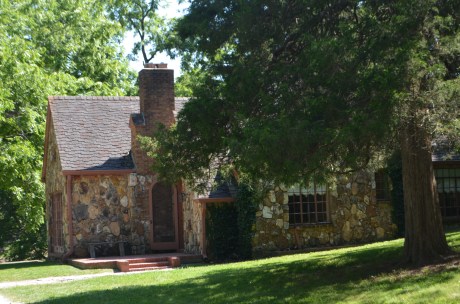
I hadn’t planned to visit both places when I left home, but they made nice bookends to the trip.  Two of my favorites when I read their works and even more beloved now that I can see them in their homes and know so much more about them as real people who looked back on their childhoods, discarded the worst memories and transformed the best into stories that continue to inspire readers of all ages today, teaching us about the strength of human nature, the joy in relationships, and the humor in mankind.  Classics in every sense of the word.

I’m on the road again for a short trip.  I’m not that young, but I still get around pretty well, love driving trips, love exploring new things.  I can keep up pretty well with my grandkids, which is my goal.

You’ve all seen them when you travel, the bus loads of old people on tour,  you’ve probably tried to avoid them when you can, along with bus loads of noisy kids.  They’re both a nuisance, you may think.

This week I was in Hannibal, Missouri.  If I have to tell you the main reason people travel there, then you need to look it up.  At the hotel where I was staying, there was a bus load of Geezers, Geezers from Kentucky.  I need to remind you that these are my people, I am one of them, some are younger than I am, I can actually relate to them.  I watched them, wearing their name-badges around their necks, waiting to go to their next meal or  their next tour, visiting with each other, laughing and telling stories.

My thoughts on the Geezers on the bus was “Good for them!!!”  They don’t feel safe driving anymore, they don’t want to deal with reservations and bags, but they want to be out seeing and doing.  Some of them had canes or creaked along, but they were out there doing it!  They weren’t sitting around thinking about their lives, they were out there experiencing it.  And laughing and learning and enjoying friends and making new ones.  Thank you for these tours, for the bus drivers who take care of them, for the people who take them.

The other Geezers I watched in Hannibal on a Monday in July were the ones who were traveling with family. A few had brought a young grandchild along.  I watched a boy about 8 rolling his eyes while his grandfather explained about Mark Twain and Tom Sawyer as we stood near the famous whitewashed fence.  Someday, that boy may bring his grandson here, too.  Hopefully, the memories will be strong when he looks back.  The grandparents were loving watching their grandchildren ride on a riverboat for the first time, taking pictures, a gift for all generations.

As I travel around, I’m grateful I can still get there on my own, but I’m happy for my contemporaries and my elders, because there are still a lot of people older than I am, who are out there.

On a Monday night, visitors gathered to listen to a band play old tunes in front of an ice cream parlor.  Many were older, sitting on benches, humming along.  Lovely.image
As Willie Nelson, a Geezer if there ever was one, sings “I can’t wait to get on the road again.”

I hope I never outgrow the joy of discovering new things, new people, new experiences.  I find myself, in my, hmmm, late 60s (GADS!) rediscovering things I remember from past years.  I’m sure my perspective is different now that I’ve got more years behind me than before me and I’m not distracted by taking care of kids or working all the time.  I’m more relaxed and more open to all there is out there.

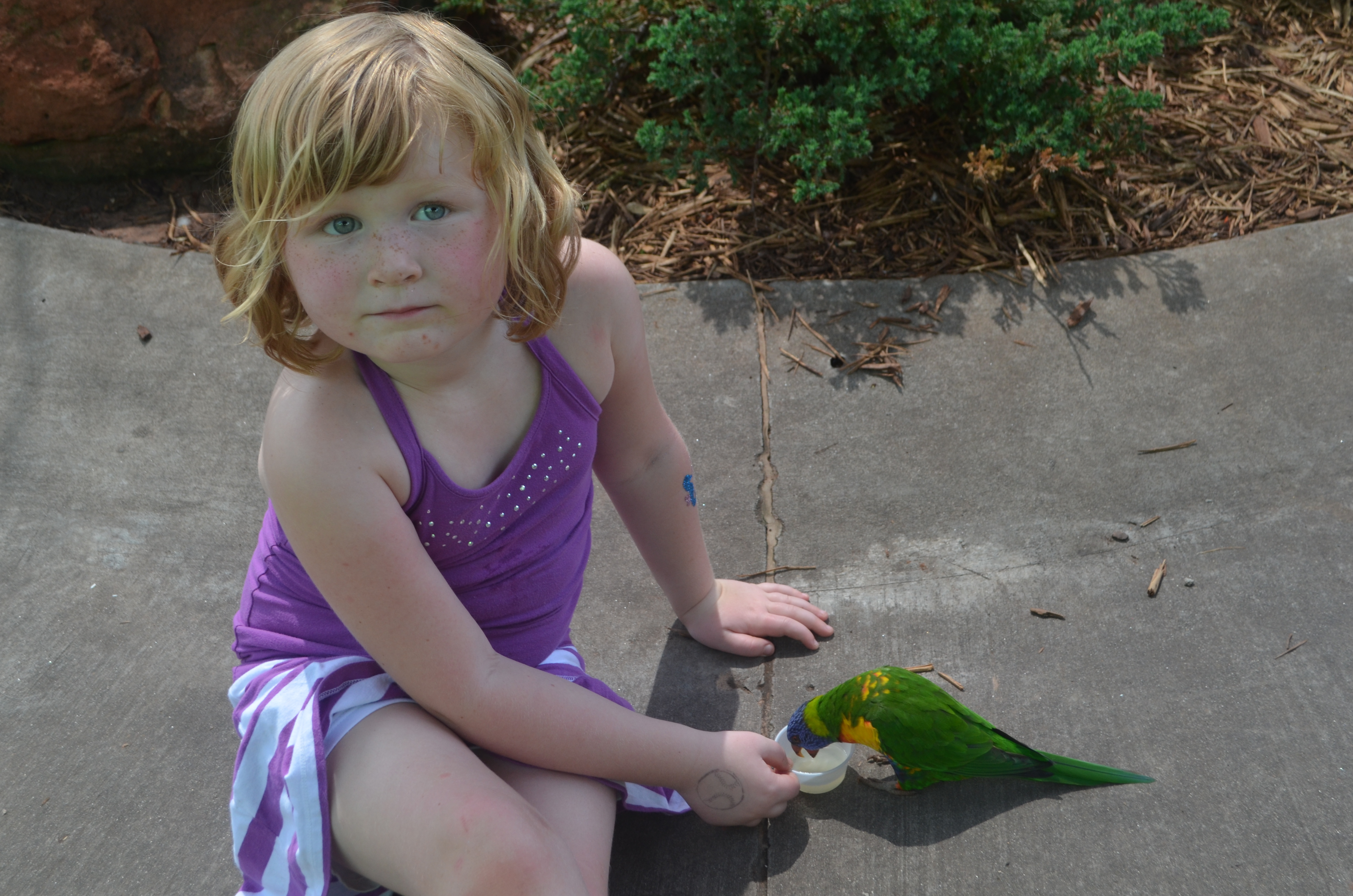
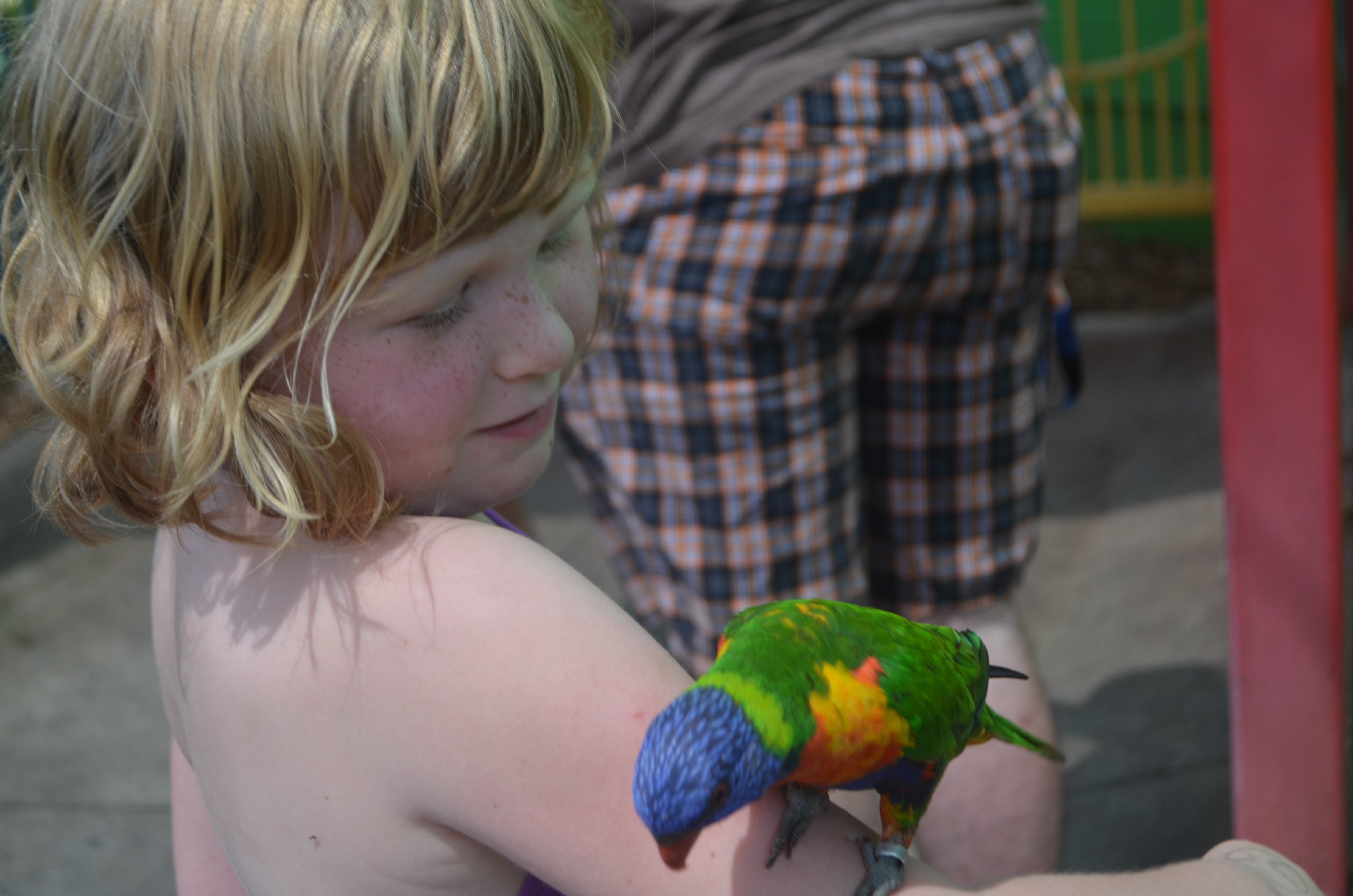
Last weekend, I took my youngest grandchild, not quite 5, on a short road trip to the Oklahoma City Zoo and then on to the Sam Noble Museum of Natural History on the campus of the University of Oklahoma in Norman.  I’ve taken my other grandchildren, but it’s been a few years, so it was refreshing for me to revisit these places again.  Watching a child, you have to wonder what goes on in their heads…

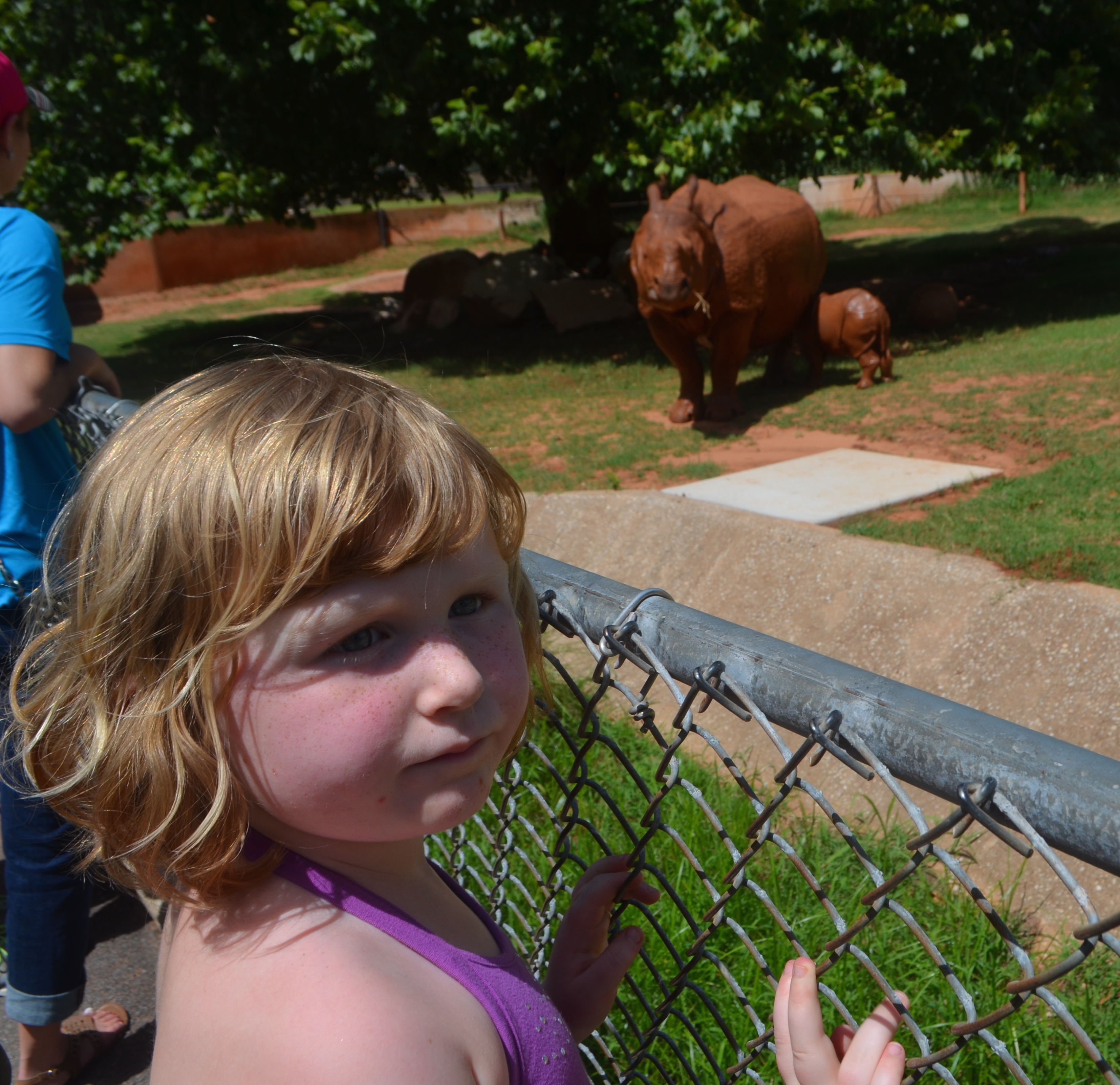
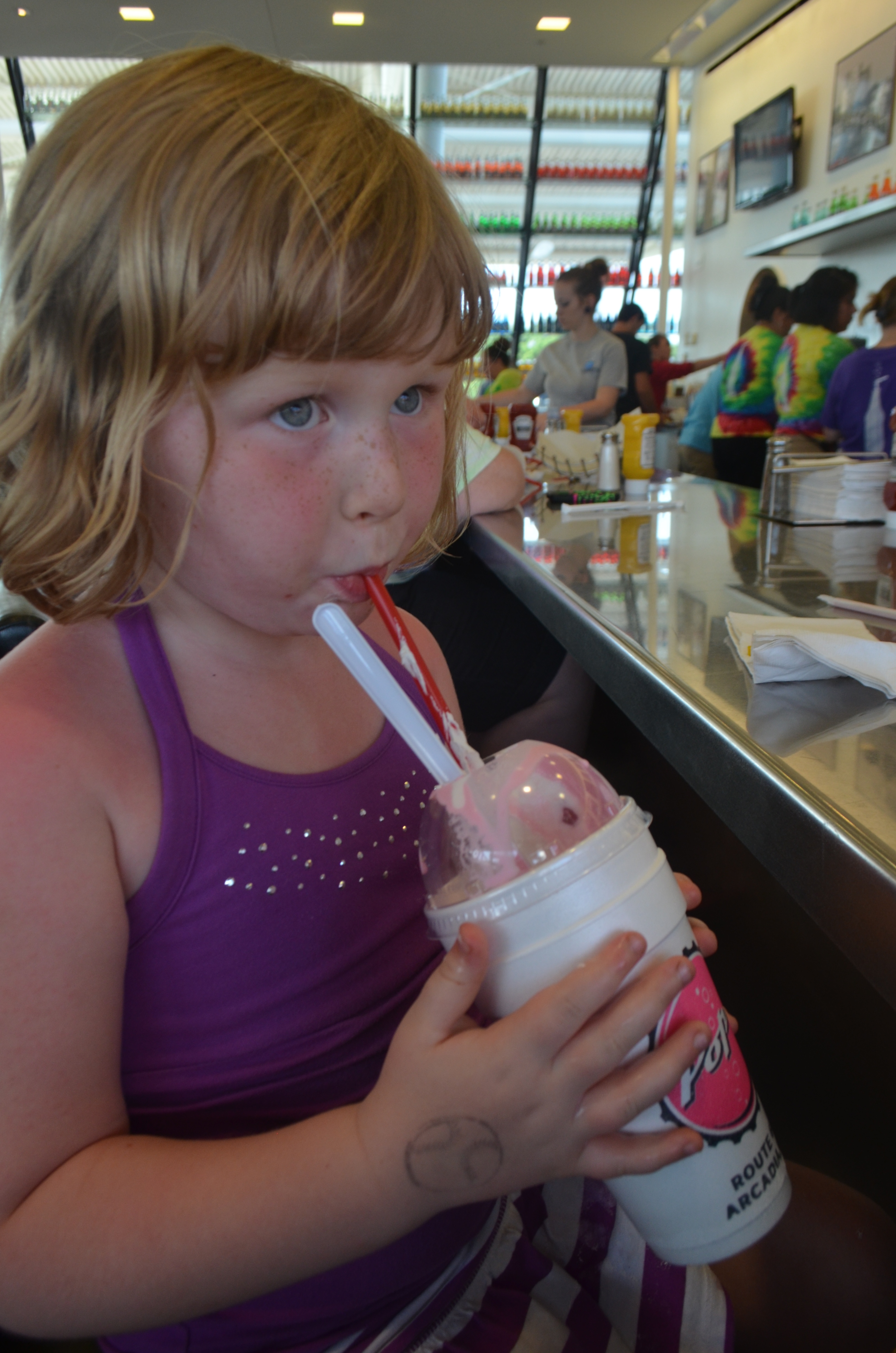
Seeing a wild bird, a lorakeet here, up close, and feeding it…DSC_0068 DSC_0071feeling it sit on your arm…DSC_0076watching a rhino baby nurse…DSC_0087or looking into the eyes of an orangutan…DSC_0112Is the concept of dinosaurs more real when you stand next to one?DSC_0150And doesn’t a strawberry milkshake help the brain process all the new experiences?DSC_0166I’m always looking for new places to go and old ones to revisit.  And then I come home and wonder at all I’ve seen in my life.  Lovely.