You climb hills in life and, after you reach the top, you face the downhill slope, the sometimes slippery one. I think I’m on the last slope as I turn 80 (YIKES!) in a few weeks. When I turned 79, I looked down at my fingers, thinking how we used to hold up fingers to show how many years old we are. Now I was looking at them, thinking how many of these finger years do I have left. One hand worth, both hands, more? The answer is I have no idea, but each of them is going to be important, not to be squandered.

Life is uncertain. We think we will reach middle age in about our 40s. My son died at 35, so he was basically in middle age while in high school. My husband died at 53, so his middle age was in his 20s. I was thinking about my grandparents and parents. My father was in his 80s when he died, as were both of my grandmothers. My mother was about to turn 86. That’s not many years left if I were to follow their path, but I don’t have some of the health issues they had or am being treated with more modern medications. There’s a good chance I can go beyond that if I’m careful – and lucky.

80 is a definitive age. There’s no way to pretend you’re young, even if you look younger than most people presume 80 year olds look. It’s a hard age to swallow. You can be proud to have made it, you can embrace it and keep going, if you are healthy in body and mind. There is no doubt that our bodies are aging because parts wear out. Your frame has weathered 80 years and how many things are still working the same after 80 years. You can exchange parts, exercise, eat healthy foods, keep your mind active, and have a good attitude only to have something break down that starts to take the rest of you with it. There is a saying among doctors that if you’ve seen one 80 year old, you’ve seen one 80 year old. We are all different.

Watching your lifelong friends and family age is a landscape of what can happen. I have good friends who have lost their vision, their hearing, their mobility, and their memories in varying degrees. Reading obituaries is an unspoken exercise in checking the person’s age. If they died younger than you are, there is a sense of thinking you have made it longer than they did. If they are your age, you think YIKES! If they are just a few years older than you are, you are reminded that you may only have a little time left. If they are a lot older than you, you think there is hope. At least, that’s what I find myself doing, even as I grieve their loss and treasure the memories of our time together.

There are some bonuses to being 80. I find that it can be a good excuse for just about anything. I don’t feel like doing that and it’s ok because I’m 80. And there are things that you actually can’t do as well. I try not to get on ladders and watch my steps more closely. We all know that a fall can be the beginning of the end. I’m lucky that I can still drive and can drive at night, so I find myself continuing a lifetime of carpooling as I drive friends to appointments and outings. That’s ok. I’m grateful I can still do that. I used to take off by myself on day trips to wherever and I don’t tend to do that now. I’m trying not to be reckless with the years I’ve been given.

It would be nice to live in a society that values their elders, but I’m not sure we get that respect in my world. I tend to get more eye rolls than anything. I have been to several protest marches this year and I always recognize those of my generation. We have been here before and are exasperated that we still have to do this. On the other hand, we need to speak out against things happening that we have lived through before and know are wrong. We are also old enough that we can speak out without having the danger of losing our jobs or our clients. Many of our younger friends are unable to be as vocal without repercussions.

It gets depressing sometimes being old and alone. I often wonder if anyone will even know if I die since I have been independent for a long time. My family is here but they are busy and don’t worry about that since I look ok. Actually, I worry more about what my dogs will do if they have to worry about me, although one dog is 18 years old and technically older than I am. I treat her as I would like to be treated. She doesn’t see or hear well, but she is feisty and wants to be part of everything even though she sleeps a lot more. I try to be patient with her accidents and her slowness, knowing that I may get to that stage. Just don’t put me down at the first sign of aging – please.

In my lifelong quest to be out there doing things, I’m making sure to get my friends together whenever we can, and planning trips while I can still take them. My maternal grandmother stayed with us a lot when I was growing up and she always wanted to go somewhere. “Let’s go!” is how I remember her. We would get up and walk to the bus stop and head downtown or walk to nearby shops or just go somewhere. The fact that she didn’t drive didn’t stop her. My mother was even more so. We used to just get in the car and go, driving into the country or planning an adventure or just seeing what was new in town. I’ve inherited this trait to the max. I love seeing new places and learning new things and sharing them with family and friends. My friends who used to go with me at the drop of a hat are mostly sidelined by lack of money or mobility. We are all watching our money in these years when there aren’t many ways to earn more, although I do have a few friends still working. This year, I took three of my grandsons on a trip, which is getting harder since they are adults and have jobs. I was lucky to share time and make new memories with them as we visited some of my favorite places. May there be time for more trips like that.

There are going to be changes with everyone I know and they may be sudden or they may be incremental things that build up. We don’t know. We just don’t. I don’t have any answers – just thoughts. We all hope our lives have made a difference, even if just a small one in our own circle of family and friends. We want to keep mattering. We keep putting one foot in front of the other and hoping we get where we are going as gracefully as we can. Or we have to keep our sense of humor and try to laugh if we do it a little more clumsily than we wish. It’s all we can do

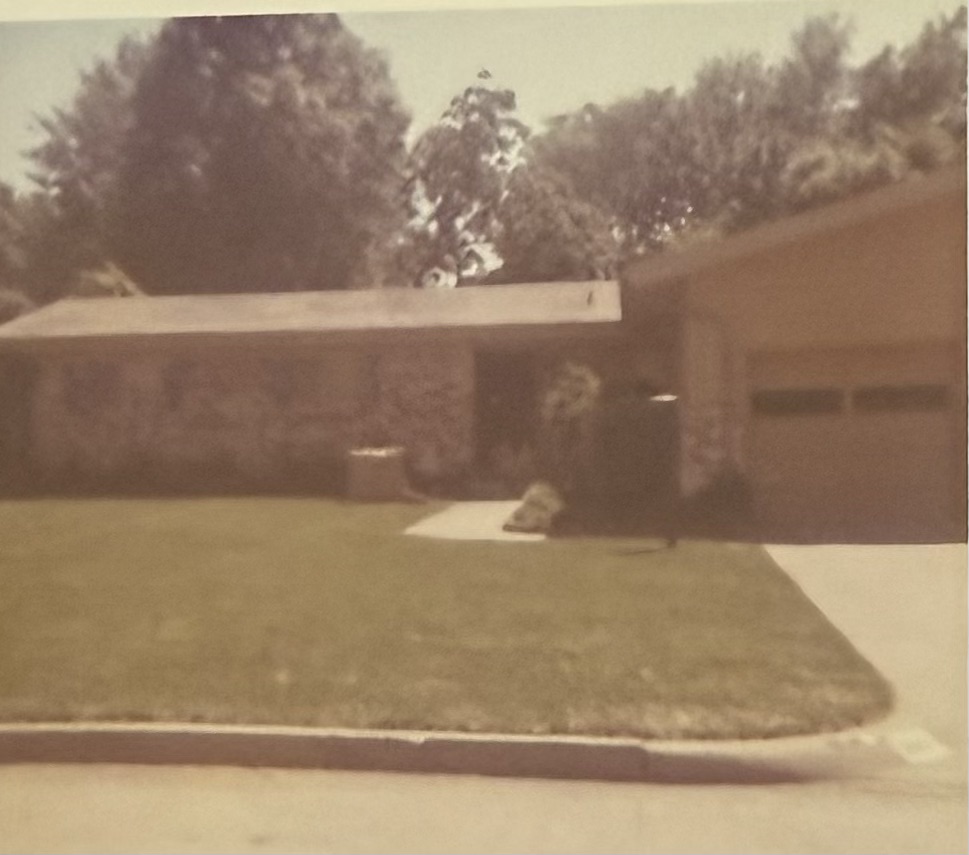
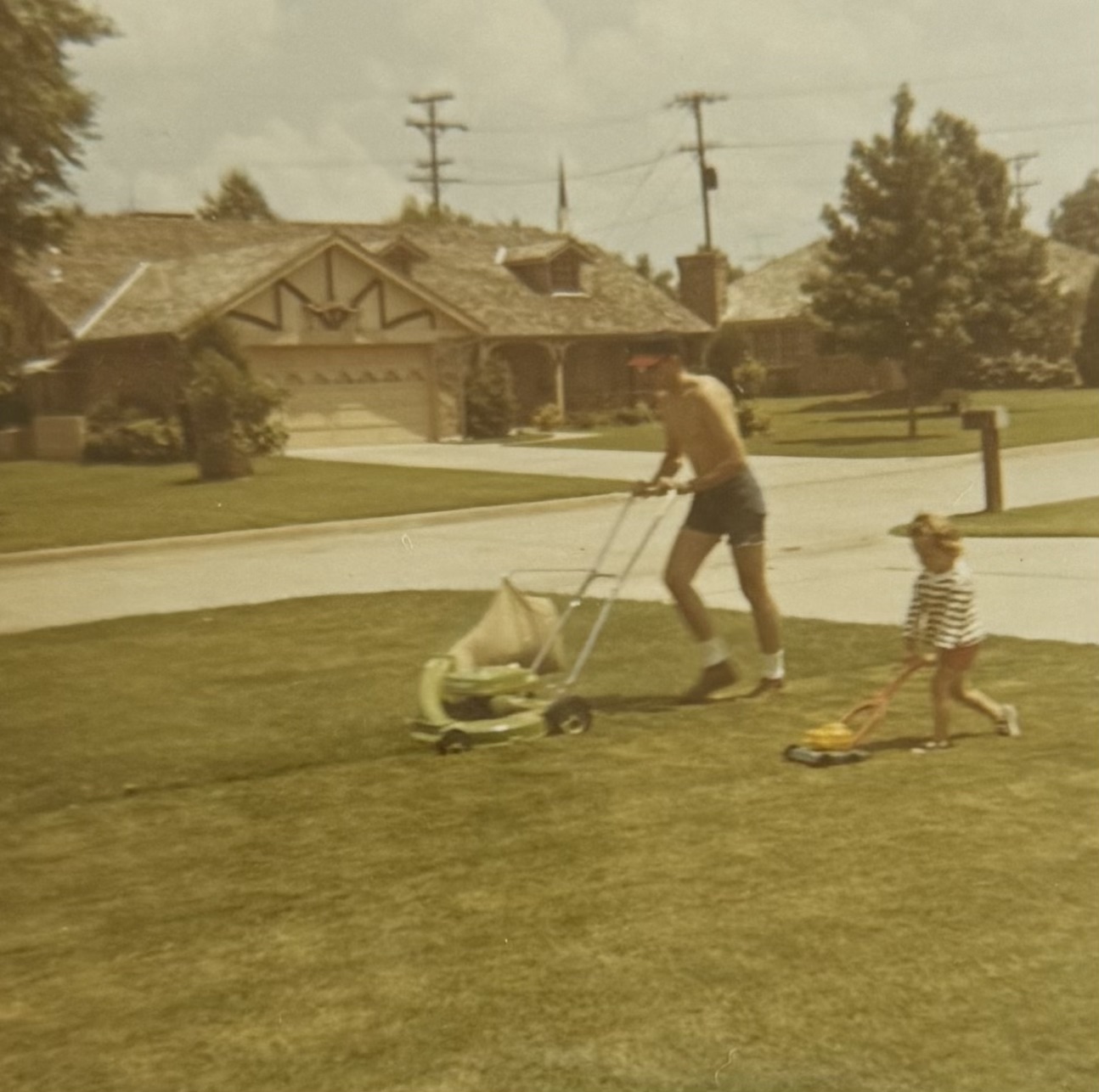
Today, I had a rare treat as I got to tour the first home my husband and I ever purchased. We lived there from 1969 to 1975. I was 23 and he was 24 when we moved in with our one year old daughter. This is rare because the home I grew up in and our other home where we spent 27 years after this house have been scraped and either left as a blank space or filled with a new home. This was a surprise. There was an estate sale in the house that my daughter noticed and texted me, so I headed over to see it. I knew the same people we sold it to, almost to the day 50 years ago, had still owned it. I got very emotional driving over – this was a place of very sweet memories.

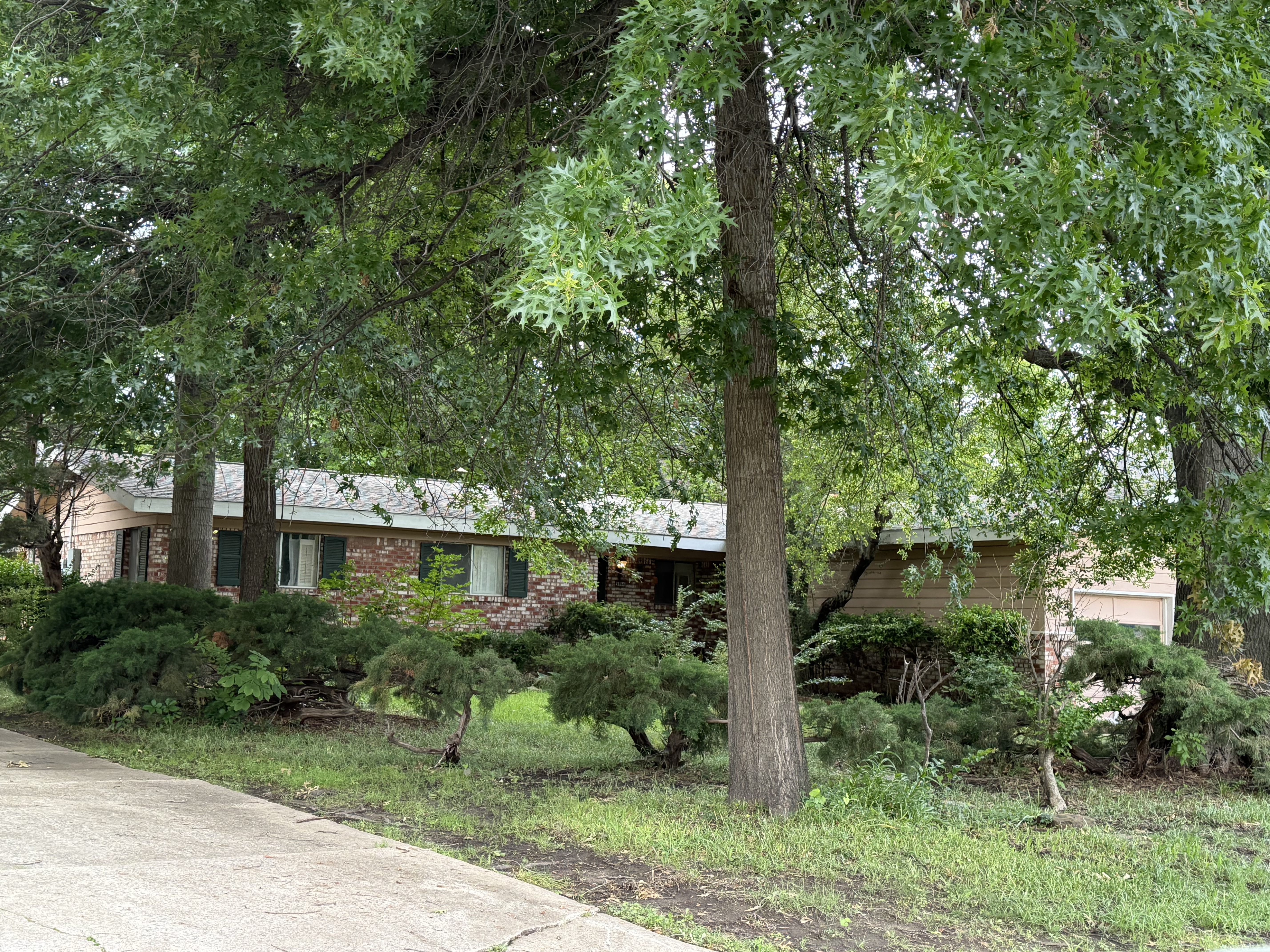
I had actually driven by the house a couple of weeks ago and took a picture of the huge trees.

As a young wife, I spent a lot of time reading magazines like “Better Homes & Gardens” for ideas for our home. I think I found this landscape design that I liked and had my husband copy it. He planted three trees and they are huge 50 years later. I have to laugh because I don’t think I ever thought they would be so big. Just the first of so many memories – my sweet guy digging those holes and planting the trees.

Walking up the house, I passed the gas light, which I think we updated way back then.

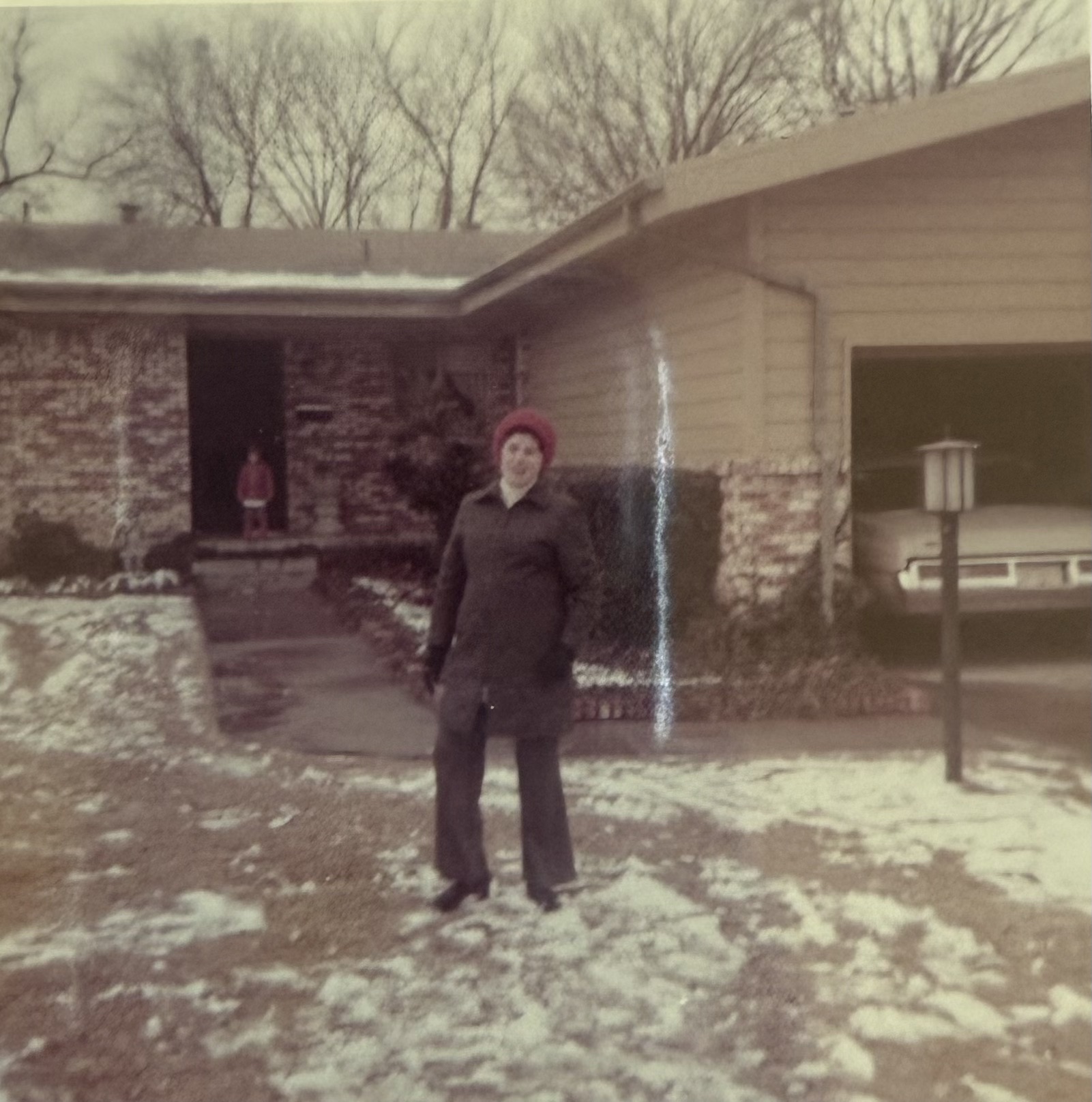
Here I am, pregnant with either our second or third daughter, in the front yard. Photos of me are kind of rare since I usually am the photographer. The lamp isn’t updated yet here.

The front porch, where we took so many photos looked incredibly the same.

I think this doorknocker used to have our name on the plate that seems to have been removed.

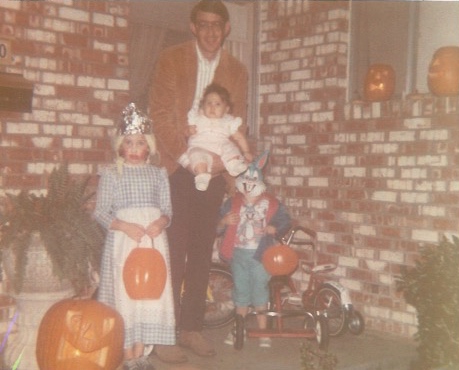
Here is one of many photos of my little family getting ready to go out Trick or Treating.

I walked inside, not expecting much & turned down the hall towards the bedrooms, which seem smaller than I remember. In our old bedroom, the folding louvre doors we replaced the sliding doors with were still there. Across the hall, in the bedrooms our two oldest daughters shared, the wallpaper threw me into a new flood of memories. It was the paper I put up when they were little – still there in all its 70s glory.

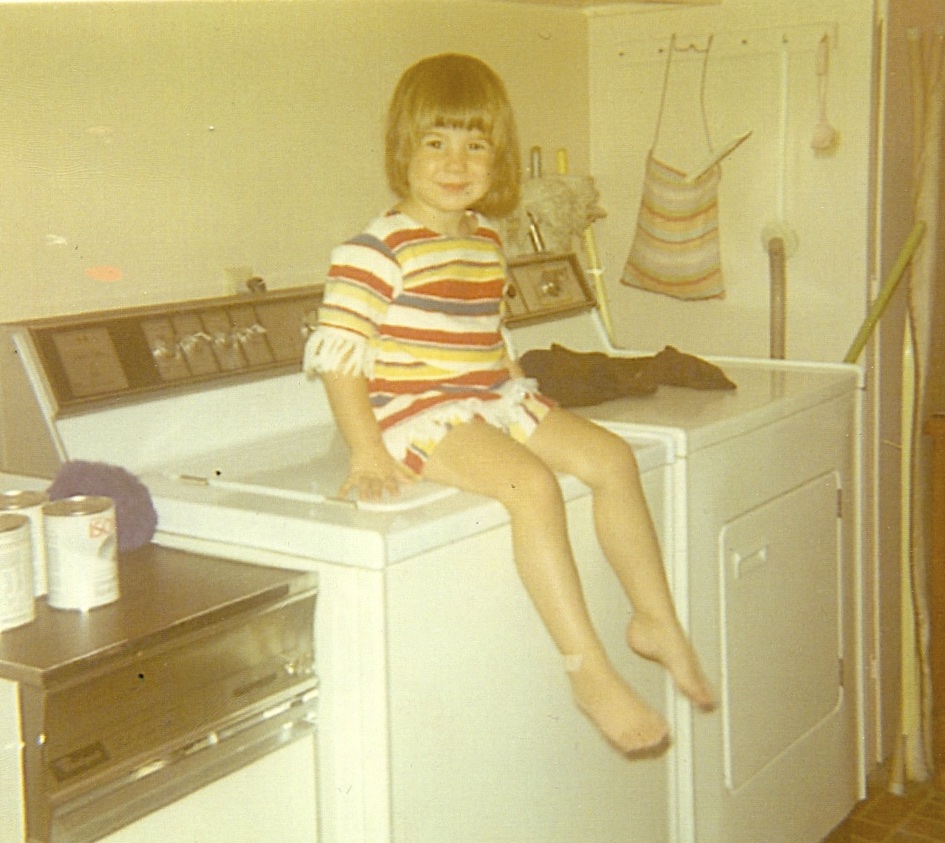
Walking through the house, the main bathroom still had the pink tiles and the laundry room looked the same as the days I did loads from diapers to my middle daughter’s beloved nitey-nite blanket that she waited patiently for.

My almost 80 year old self was suddenly that 23 year old mother and wife, trying to be the housewife I saw in the magazines. I was making a home for our family. I headed for the back yard next. My husband, Alan, was 6’4″ tall and a strong young man. He would work all day and come home to the projects around the house. We had a big yard in both the houses we owned and he loved to go out to “survey the grounds,” as he loved to say as we smiled at each other. He was the head of his little kingdom and spent so many hours taking care of all of it. Reflecting 50 years later, we had no idea that his life was half over during these years. Life is funny like that.

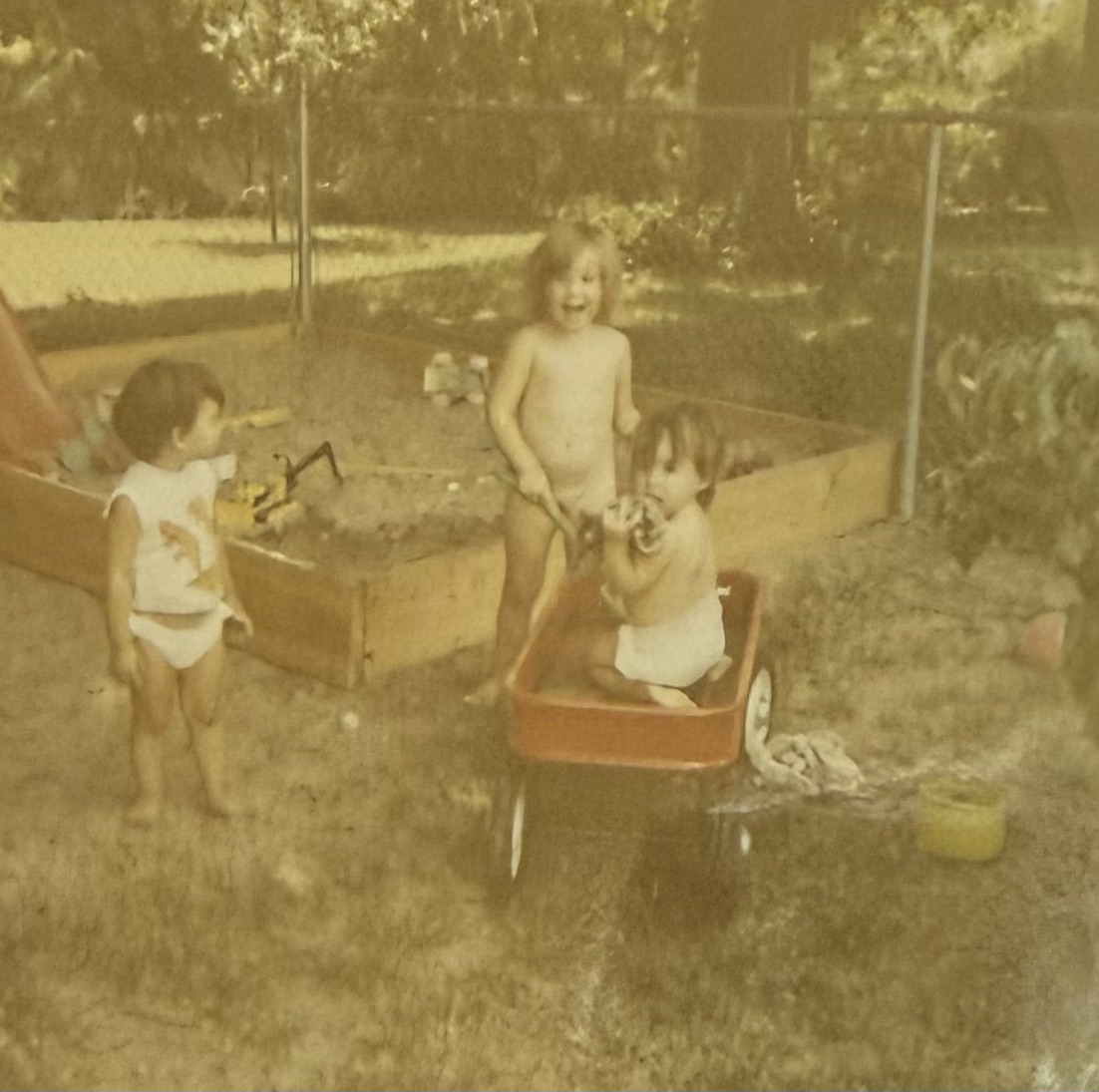
At the back of our yard, which had a chain link fence to keep the kids from the creek behind us which would flood and rush by to our delight, he built a big sandbox for the girls. Here they are with our next door neighbor who had only older brothers, so she loved being at our house. They are still friends to this day.

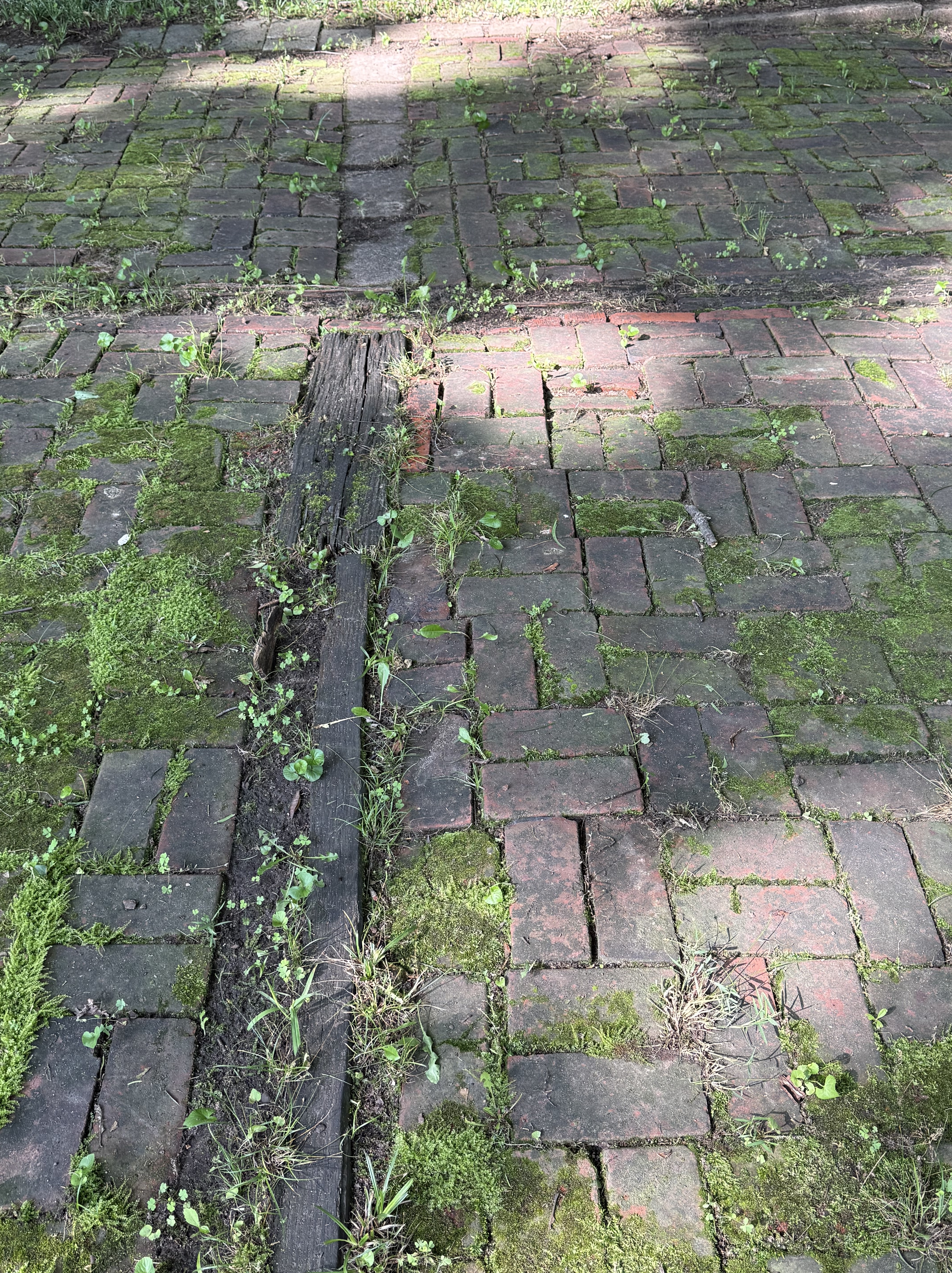
After a while, we decided we needed a patio back there, so Alan built it. I picture my big ole guy hauling the railroad ties and bricks, digging out the area and then setting all of it, sometimes into the night after work.

It is still there today, looking more like an archeological dig. I walked along the stepping stones he hauled and laid to stand in the ruins, his work still a strong memory in my mind.

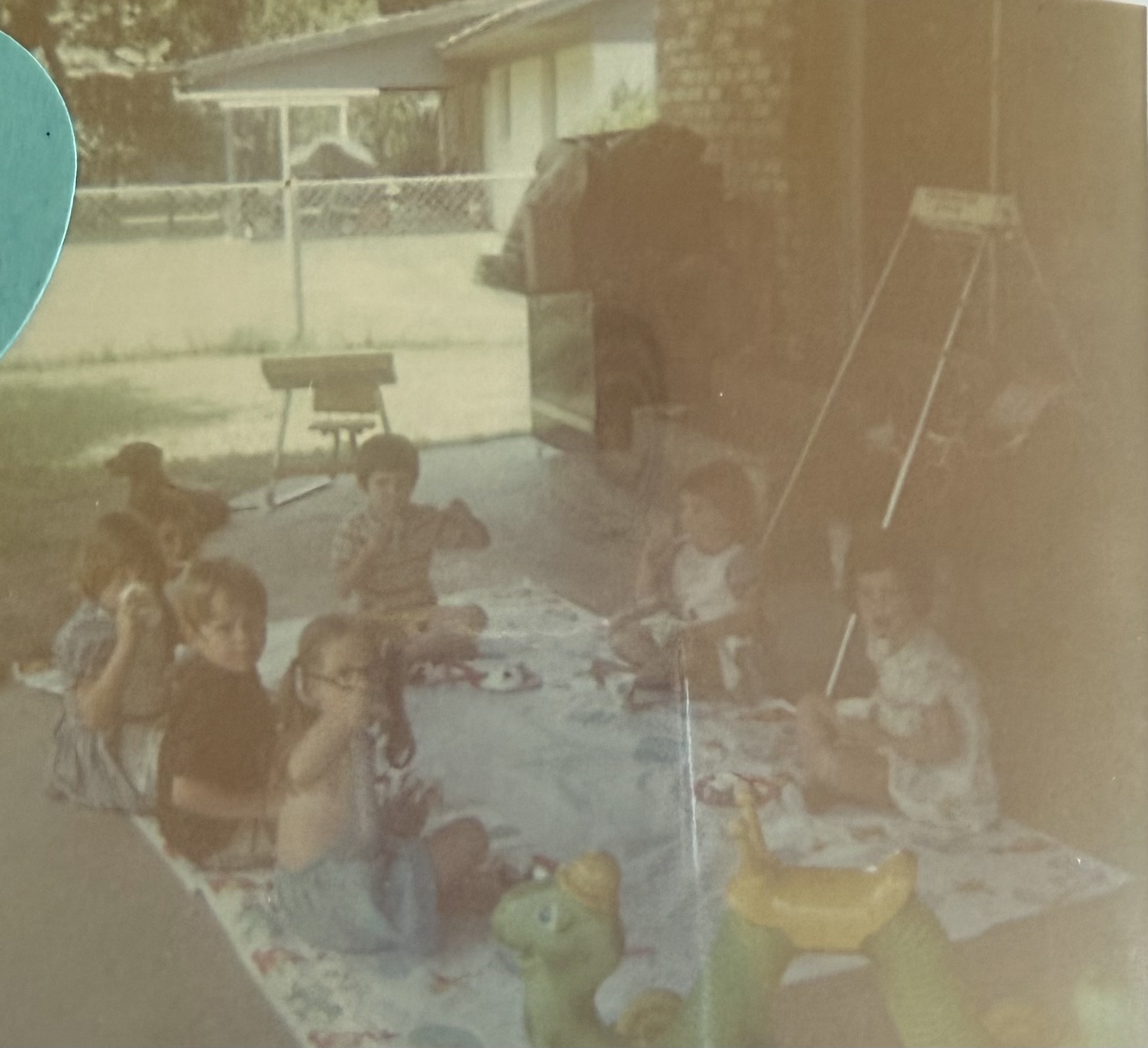
The covered patio at the back of the house where we hosted so many family birthdays and parties with friends and activities for the kids looked the same other than an addition the other owners had added. So so many memories in that area. The kids learned to ride their tricycles there, Alan cooked on his first Hasty-Bake, we laughed with so many people.

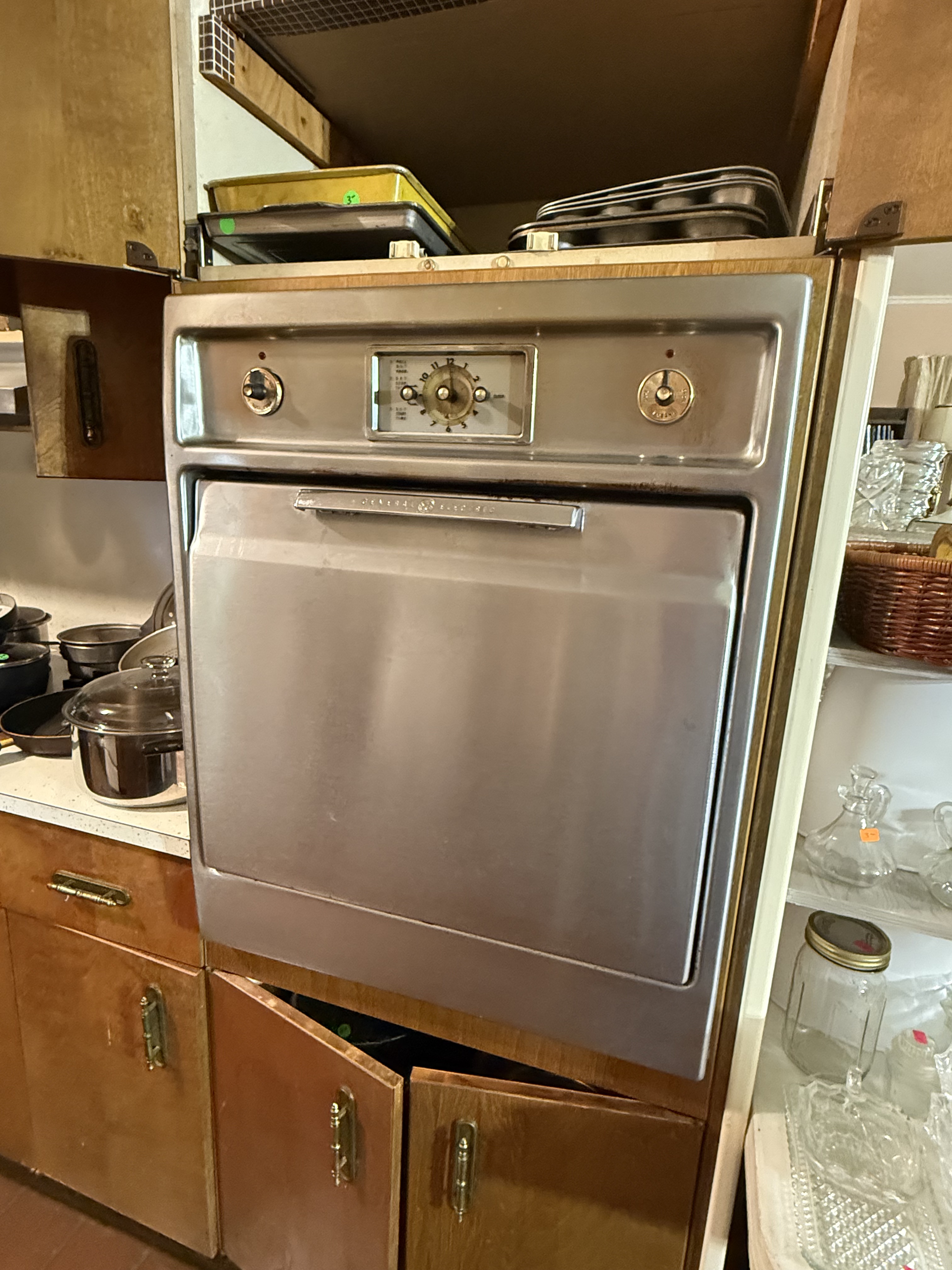
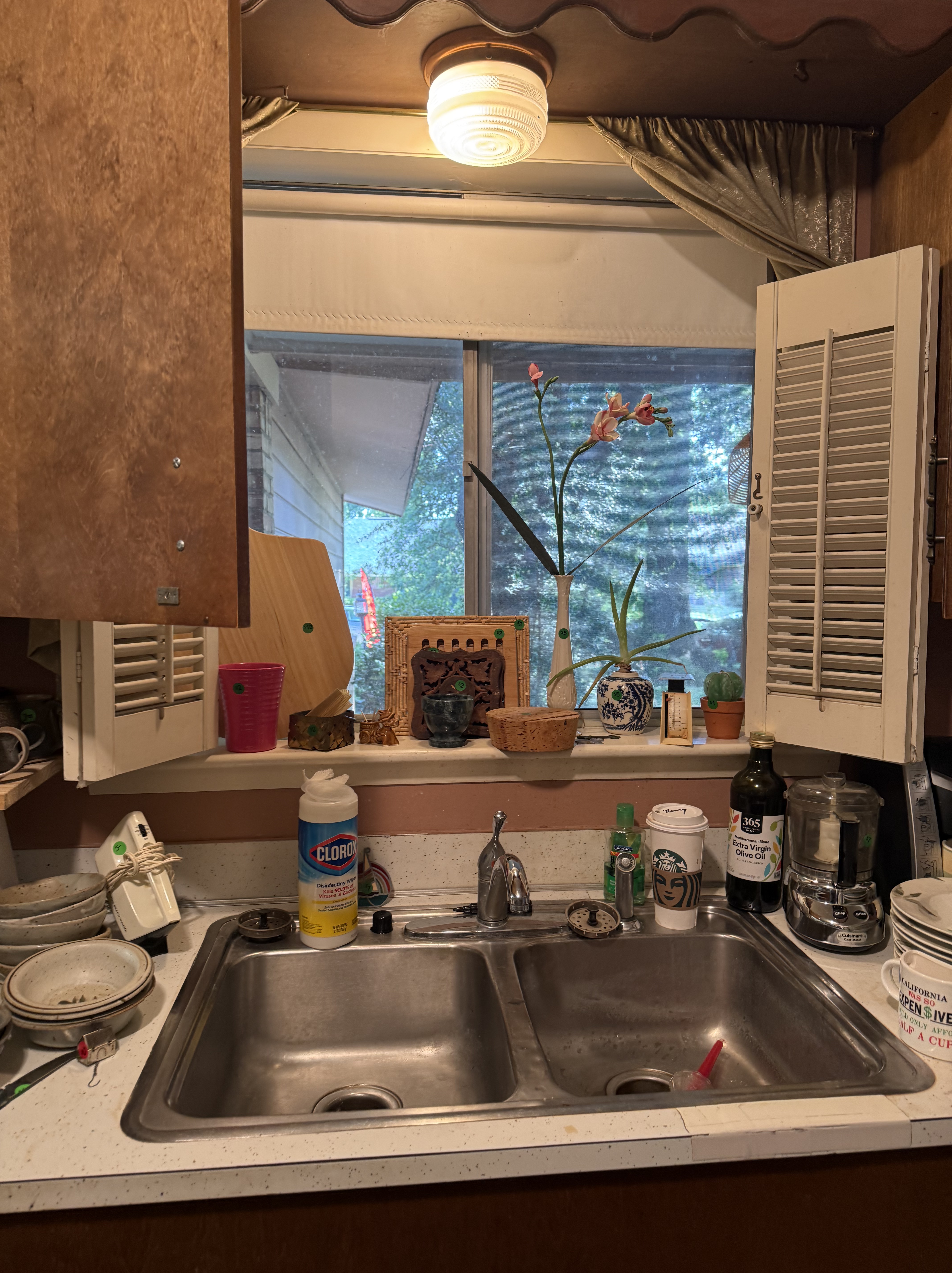
Back in the house, the kitchen looked the same. The same cabinets, the same countertops, the same stove. Wow!

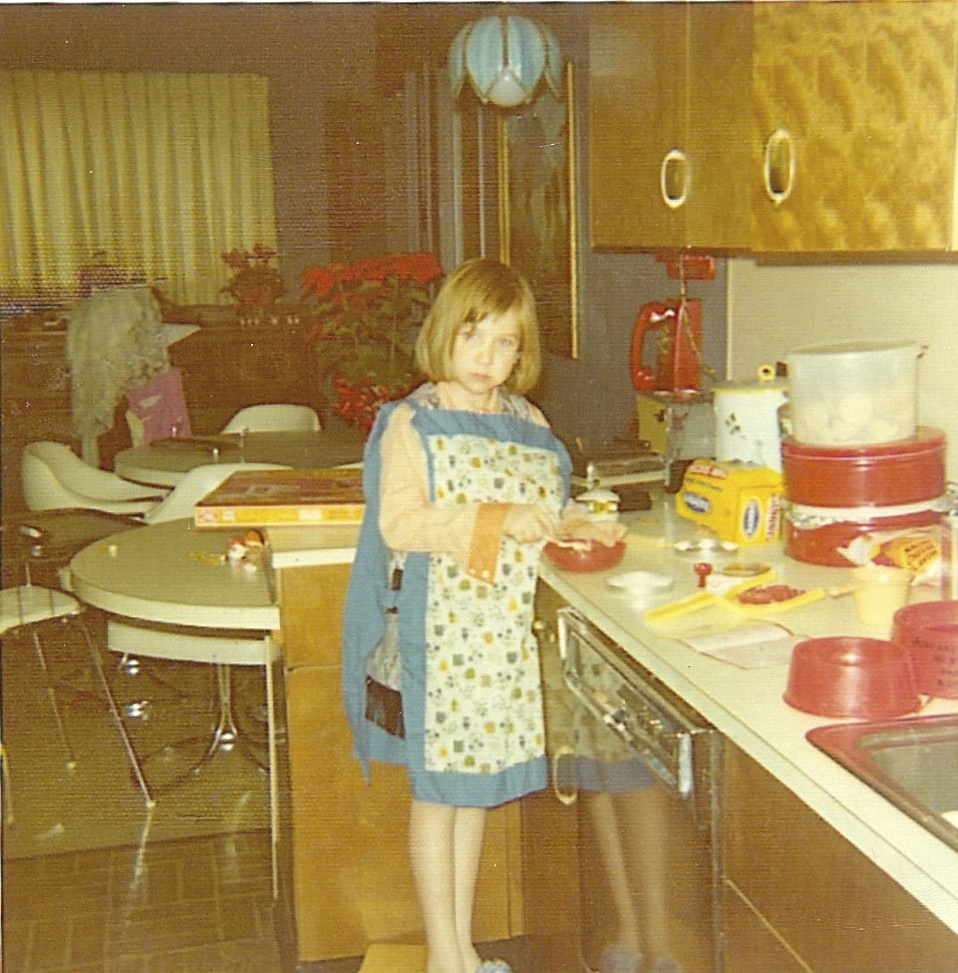
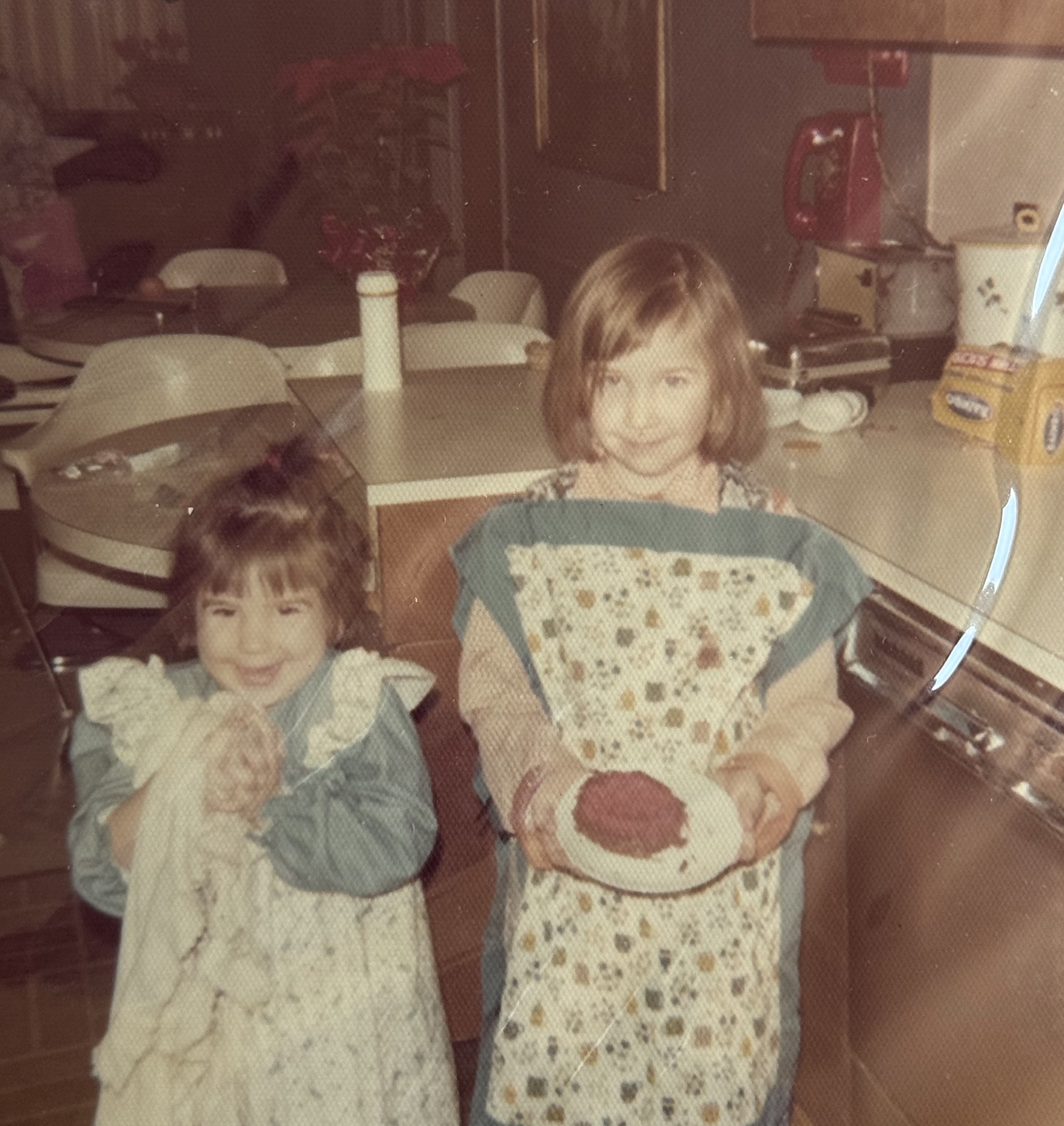
My girls had their first cooking lessons here and I baked so many cookies and cooked so many meals and filled so many baby bottles. How many times did I mop that floor and clean the sink?

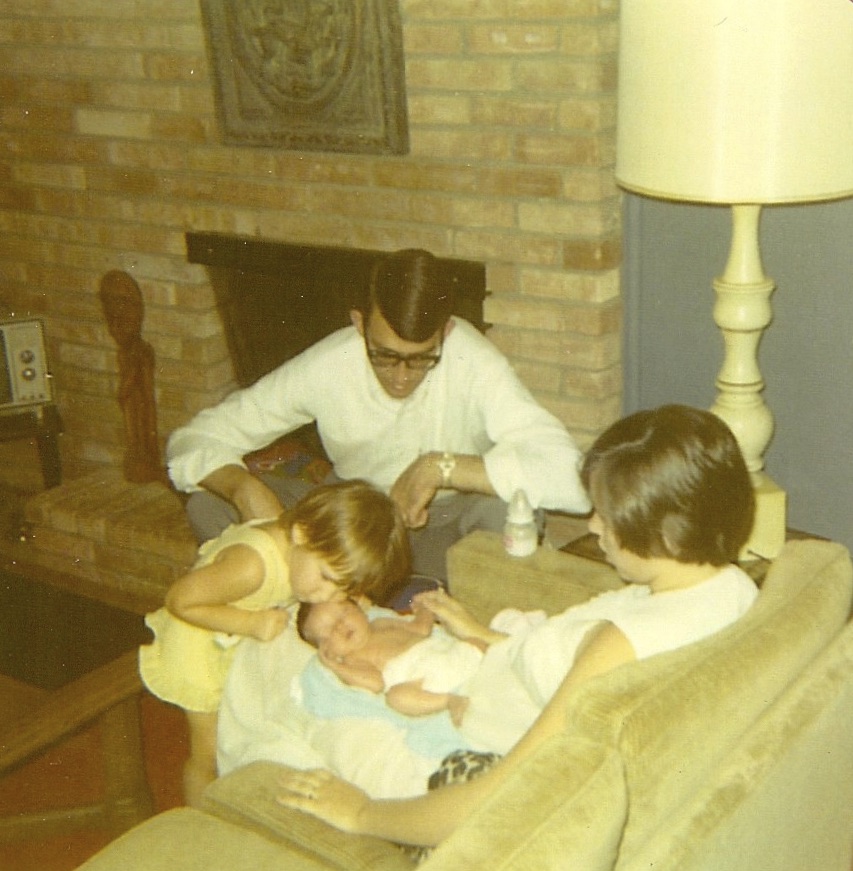
The den with the high brick fireplace was still there although the room was painted blue when we lived there. That fireplace held one, then two, then three stockings at Christmas time. We hang those stockings plus many more these days. I made them in my craft era.

I have so many pictures of special events in that den. It was a very fun room that held lots of laughter and joy.

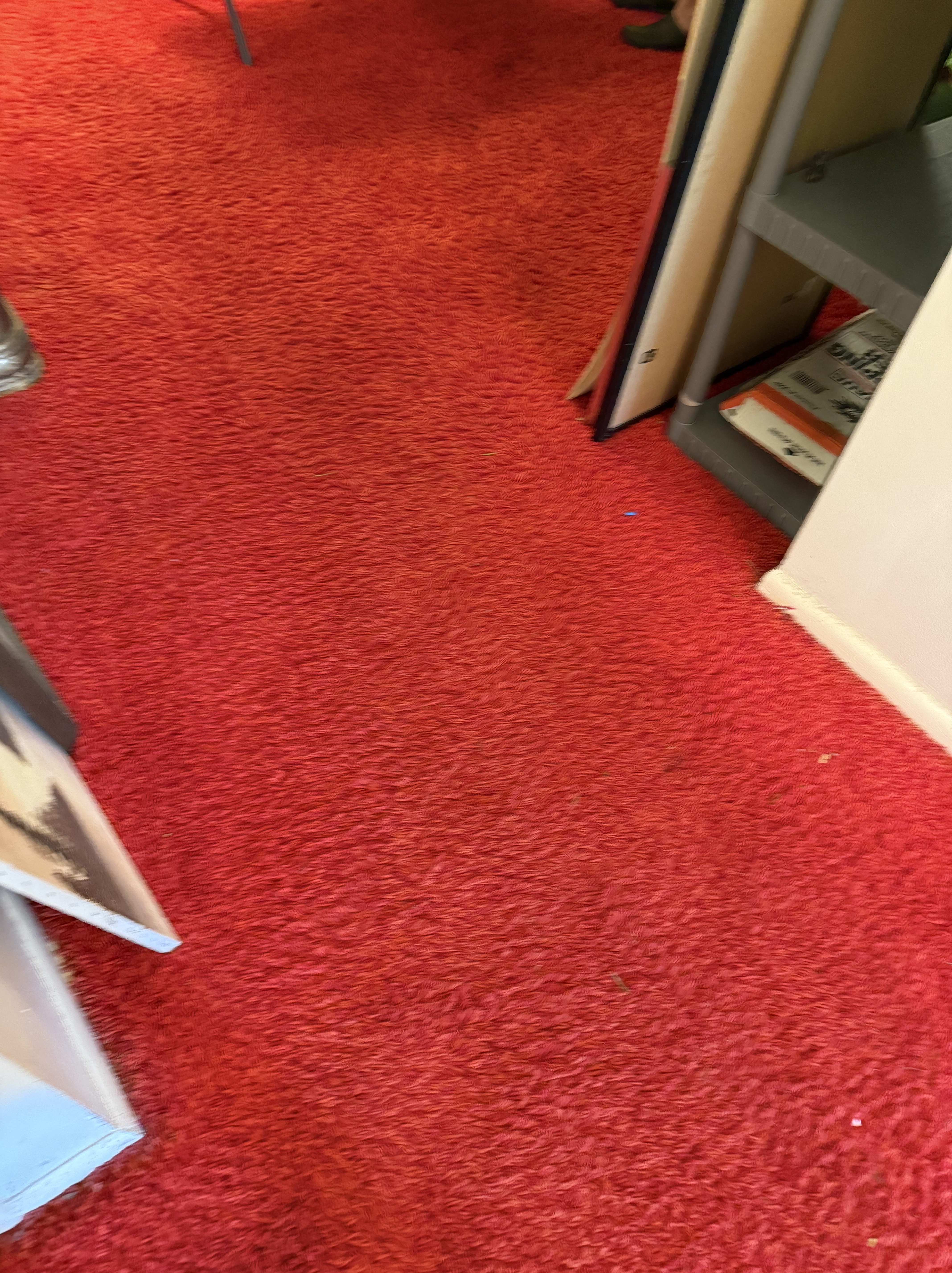
The dining room had the same doors and the same rug (Really?) after all these years. I do love red.

I left the house flooded with so many emotions and memories. I came home to look through my photos for more from those years. There were dance recitals and all the holidays and summer fun and winter snow. There was a little trampoline, tiny swimming pools and a swing set, snowmen, trikes and bikes, grandparents, aunts, uncles, and cousins and friends of all ages. It was a very special time.

It’s not often I get a surprise like this one these days. Rather than being horrified that the house looked the same after 50 years, I was literally transported back to being that younger version of myself with all the wonder of being a mother and wife and all the unknown ahead of us. I can look back with love and wonder, pasting what has happened since onto my thoughts, the good, the great and the sad, and be grateful for those sweet years that helped build the foundation that propelled our family into its own future with all that life can bring. My heart is full with all the memories of events, faces, voices from those days. Such a gift.

This thought began because my dishwasher wouldn’t start – it’s less than 4 years old. I emptied it and hand washed all the dishes because it was going to take a few days to get the repairman here. Washing dishes takes me back to my childhood and my early married days when I didn’t have a dishwasher. I looked around my kitchen and saw my old friends, the pieces I can always rely on.

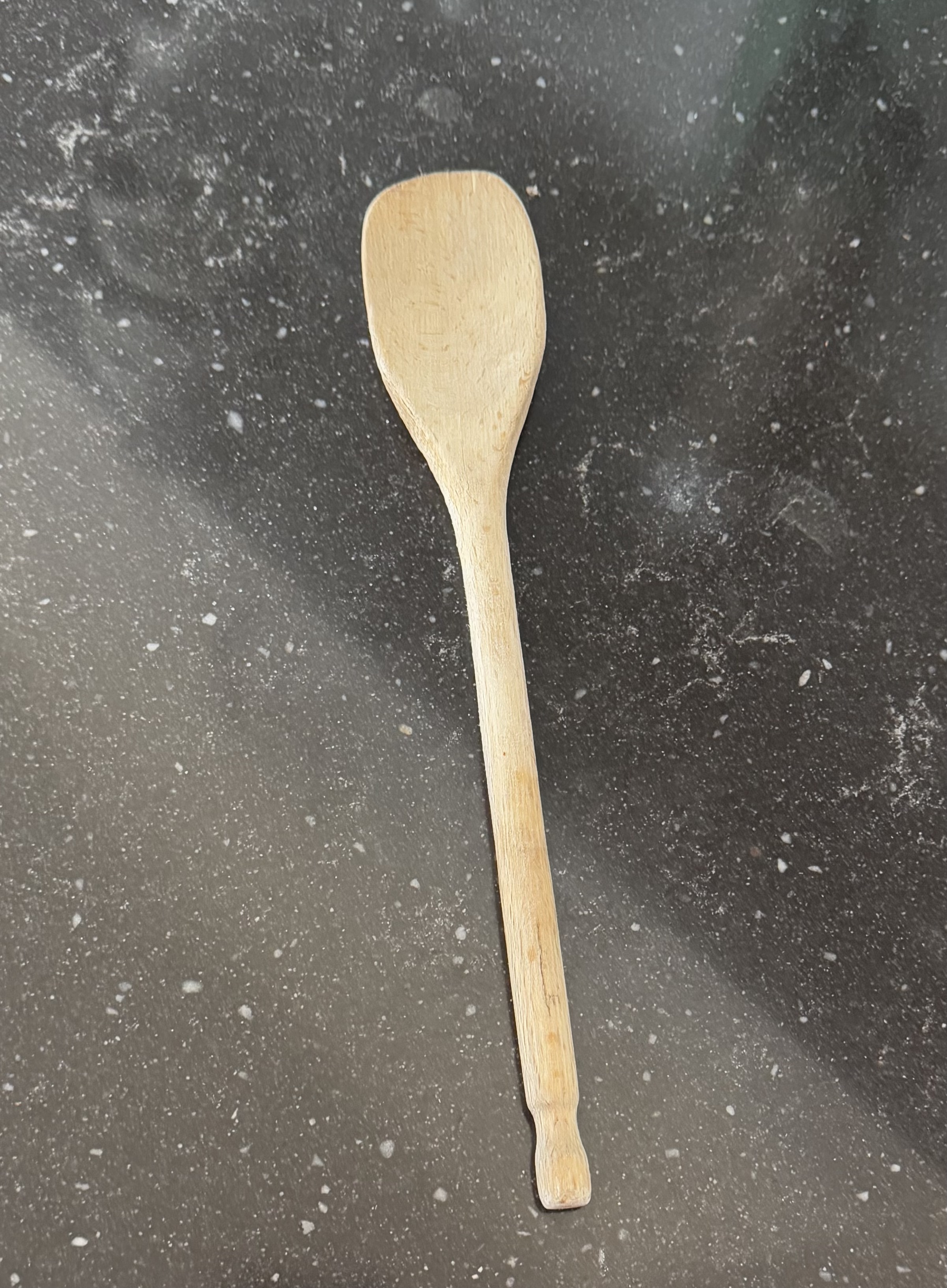
First, there is the old wooden spoon that was a wedding gift as part of a kitchen shower package. I’ve been using this spoon for over 58 years and it never lets me down. I have other spoons, but this one just feels right. I have stirred so many things with it and it just keeps going.

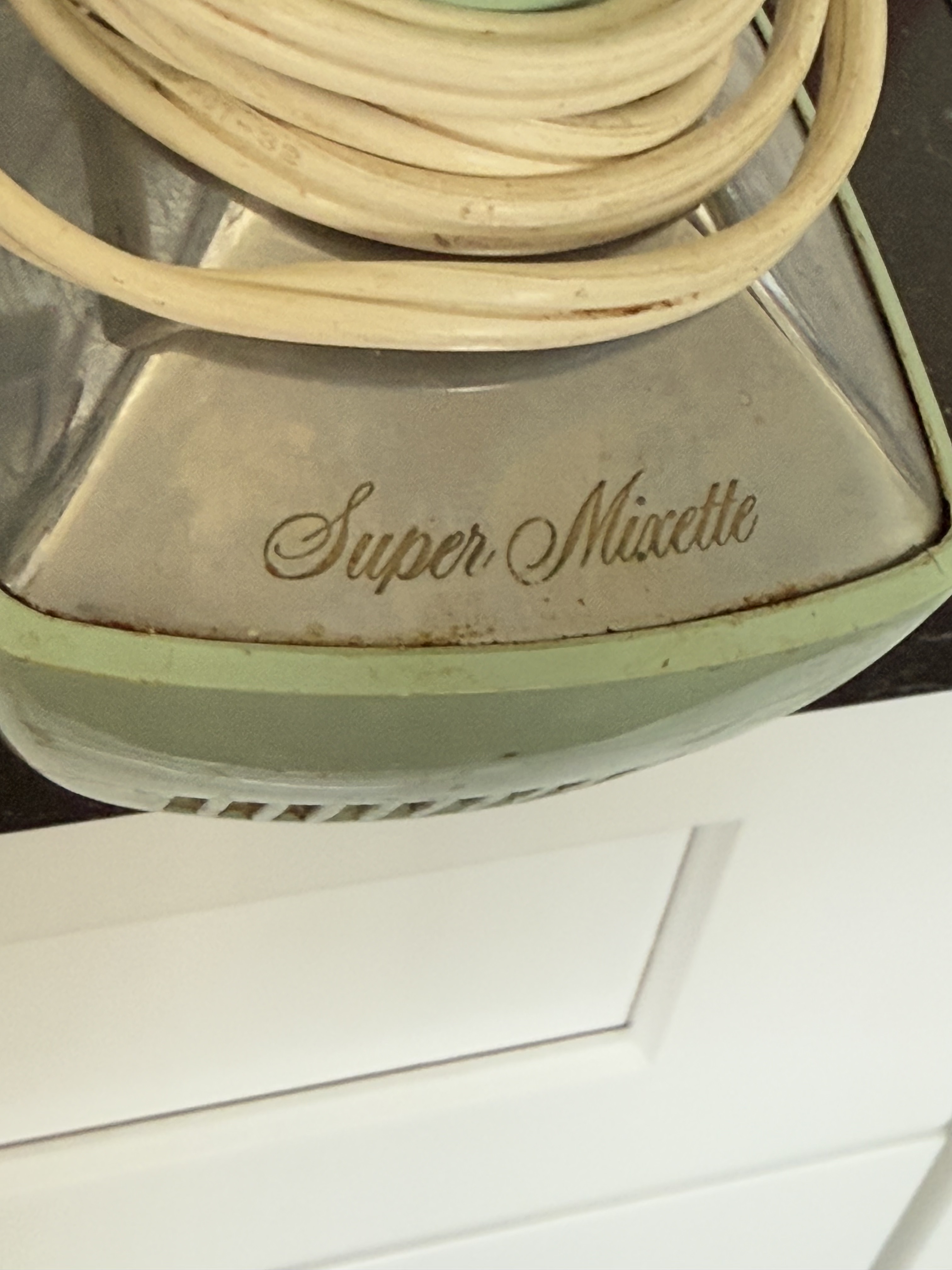
In the drawer was the hand mixer that I was also given as a wedding gift. For the first few years of my married life, this is what I used to make cookies, cakes, mashed potatoes, whatever needed mixing. I only use it about once a year now – to beat eggs to add to the German Chocolate Cake mixture for my husband’s birthday, which we celebrate even though he’s been gone a long time. The beaters don’t always stay in as well, but it functions, as it has for over 58 years.

The writing on the front says it all for a 1966 miracle appliance. It has done its job.

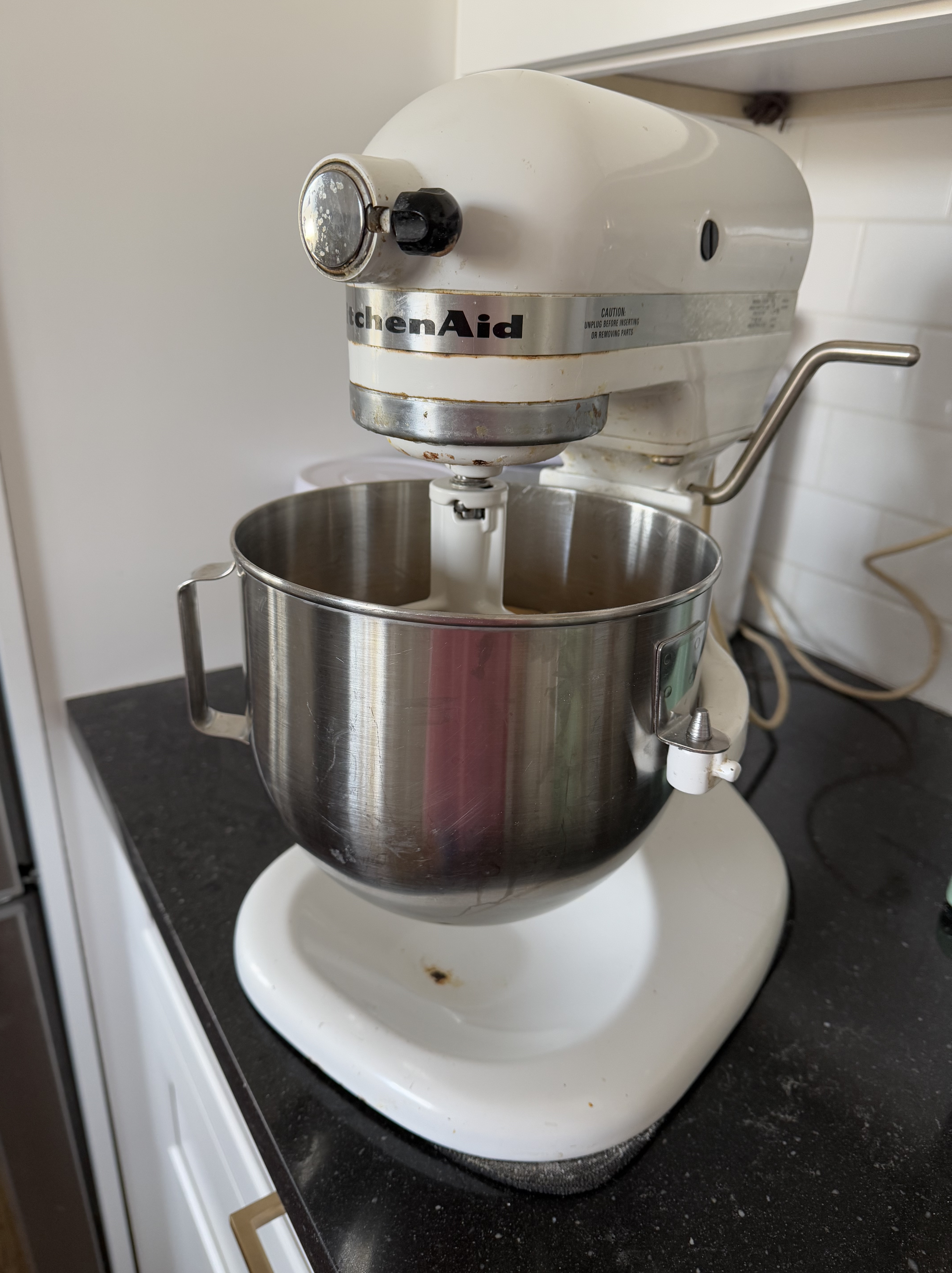
When we had been married two or three years, my husband gave me my KitchenAid mixer for Christmas. I was so excited as I had used my mother’s growing up. Unfortunately, my husband took my excitement to mean I liked getting appliances, so he was shocked at my lack of enthusiasm when he gave me an electric floor cleaner for another Christmas. He learned. Anyway, this gem is still working and is my old reliable in the midst of all the newer gadgets around.

The life this mixer has had. The dozens of cookies, the cakes (you can tell I like to bake most), all the recipes we have tried. This is the mixer that my children used as they learned to cook growing up. Here’s my middle daughter. I promise she’s not this messy now, but this is a good representation of her then.

All of my three girls learned to cook, but my son was the one who really took to it. Here is how I found him when he tried to do it without me.

Years later, after he had been treated for cancer and lost his ability to speak clearly, I told him to find something he loved doing. He went to culinary school to learn real baking skills and worked in a wonderful bakery in Seattle. This kid, who hated getting up early, went to work at 4 a.m. every day to bake wonderful cookies, cakes, tarts, pies. I snapped a picture of him when I visited once.

Having my old mixer around is a sure way to unlock more memories of my children and grandchildren waiting to lick the beaters or help make their treats. At this point, it’s a race to see if my mixer lasts longer than I do, but I’m planning to win. No matter what, those memories will last me forever.

I started the 60s as a teenager in 9th-10th grade and ended the decade as a college graduate, married and pregnant with my second child. It was a time of immense change in both me and the world we had known.

Not sure if I was a typical teen, but I was a busy one. I studied hard, learned all the social graces, dated and fell in love, got my driver’s license and cruised with my friends, went to movies and football games and laughed a lot. I was an oldest child, anxious to please adults and do the right things…and I was a girl who was taking in all the things I saw adults doing that I thought were not quite right. I wasn’t as much quiet as observant. And, I read a lot. I’m a month too old to be a legitimate Baby Boomer, which makes me the end of the Silent Generation. My parents and grandparents had lived through the Depression and World War II, which they didn’t talk too much about. I learned through digging through the photos and objects in their houses. In school, we read all the dystopian novels, “1984,” “Lord of the Rings,” “Animal Farm,” “Fahrenheit 451,” and I was absorbed with the “Diary of Anne Frank,” both the book and movie. By my senior year, I was exploring the works of Camus and Kierkegaard and other existentialists while developing my own faith and belief system.

By college, we were listening to folk music along with our beloved rock and roll, which we danced to with great joy. I spent many years rolling my eyes at my parents as they rolled theirs at the music, the slang, the way we dressed. My freshman year had barely started when we were rocked by the assassination of President Kennedy, followed by the Beatles coming to America the following spring. Everything was changing so rapidly and we were watching all the things that had seemed so stable begin to show the cracks in the systems.

I recently watched the Bob Dylan biopic, “A Complete Unknown,” and actually got teary listening to the music and watching the images of the 60s. In my Freshman dorm room, we only had one or two electrical outlets, which my roommate and I shared. We had a popcorn popper, hair dryers, lamps, and I had an electric typewriter (I think I had an electric one by then), a clock radio and my record player. I played my records all the time, listening to Joan Baez, Peter, Paul & Mary, and so many other folk singers over and over. As the Viet Nam War started to build up, we saw our contemporaries going to college and/or getting married to avoid the draft. Many of my classmates were shipped out after they graduated. One classmate was killed as soon as he arrived. Protest songs were becoming more relevant to what we were living.

The Civil Rights Movement, the Women’s Movement, the Anti-War Movement were all around us. In particular, we were seeing the inequalities for women. We had different curfews, campus rules. Once we were out of college, we had to either hope to get married to someone who could support us or get hired. The most touted options for us were Secretary, Nurse, Teacher. I went to hear Gloria Steinem on campus and read the latest feminist works. Even the women’s magazines my mother subscribed to were beginning to have articles on women’s place in society.

My boyfriend was in the Navy and we married when he got out and returned to school. We were poor and happy and welcomed our first child with complete ignorance of what to do. He joined my father’s business and I became the housewife and mother I was supposed to be. But, I found that there was so much more to do. I joined a discussion group of other young mothers, I volunteered in the community, and I kept questioning all of the norms in society. I could write more about all the things women couldn’t do, even as educated white women, but there were so many. We were basically still second class as far as many businesses and laws were concerned. By the time I had three daughters, I was doing all I could to make sure their world had more opportunities for them and their daughters. My last child was a boy and he was the one who really cared about women’s rights by the time he was in college. His mother and three sisters motivated him, as he said.

That decade of the 60s was definitely a major time period in my overly privileged, white life. From my lofty perch as I rapidly approach 80 this year, I wish that I lived in a society that listened to its elders and learned from the wisdom we have acquired, but I also see people my age living greedy, selfish lives and impacting others in negative ways. There are so many times I think we are going backwards – in a bad way.

I guess we all take different ideas from our lives. I like to think that this Child of the 60s came out of that time with a greater appreciation for those who didn’t have my advantages and a greater sense of empathy for the suffering of others. This makes it my responsibility to always do what I can for others, whether it is speaking out or making contributions or taking actions to make changes for the betterment of others. I’ll never get too old for that. Peace and Love!

There is nothing like standing on a beach to remind you of what a minuscule speck each of us is in the scope of the universe. Those are the times you recognize your belief in a greater force of nature than your own limited understanding of your place in all of the beauty and wonder of all you can see and feel.

When I was in college, a friend told me I had a great ability to see all sides of a situation. I like to think so and believe I grew in that ability through reading, meeting people from all ends of society and traveling to other countries and parts of my own country to broaden my perspective. I don’t think I have to have had every experience to try and put myself in someone else’s place when trying to solve a problem.

Through the years, I have had many leadership positions that challenged me to find solutions to problems that affected more people than just my own family or friends. When I was President of the PTA at my children’s elementary school, I spent a lot of time in the office with the Principal and visiting with teachers. Parents who advocated for their own children often overlooked the needs of the entire student body. It was advocacy in motion and sometimes either frustrating or narrow in view. There is nothing wrong with standing up for your child, but sometimes you need to look at other children and the issues that teachers and schools are dealing with to help all children. If your problem is one that many children are facing, there should be ways to find solutions for all.

The same thing happened when I was President of my Neighborhood Association. I get that, too. Our homes are usually our greatest financial investment and what is happening in our own area is important. Once again, maybe your neighbors have the same issues or maybe your grievance is something based on just your own personal beliefs or desires. There are rules and regulations for all of us and we can always come together to find solutions.

Unfortunately, I have watched meetings in many groups become contentious and ugly rather than productive. I’ve seen this in families, churches, businesses, organizations of all sizes. People get defensive when defending their opinions. After all my years of taking classes in conflict resolution and group facilitation, I am still shocked when confronted with people who are going to stand their ground no matter what facts are presented to them.

Believe me, I’m not always right and I can get defensive, too. I’m just always trying to find that way to peace. I think it comes from being the oldest child who had to sit between siblings in the back seat of a car while they reached across me to hit each other.

And so, we come to the world today, where I have never in my almost 79 years seen such division. People I know are afraid of everyone who doesn’t look or believe like them or they are afraid they will lose all their money or power. Others are sure they are right because of their religious views or their own self-righteousness over people who don’t live just like them. And, never have I seen so many people who are only concerned with what happens to them. Those who try to see another point of view are called “woke” in a sarcastic way, while I just see an attempt at empathy.

I’ve obviously got more years behind me than ahead of me, but I still like to look at the Big Picture of what might work for most of us. Not everyone has been as fortunate as I have, nor had the opportunities or health I have. Many things are out of our control and we are trying to do the best we can. Mistakes are made in life and people pay for them in many heartbreaking ways. The best we can do is look at the universe and see how we can make a place for all of us to live in peace and some happiness.
If you don’t have a beach to go stand on, find a sky to watch. Look beyond yourself and try to find a place for peace and love in your heart.

Forgive my eye roll as I listen to discussions in the news on how women are most fulfilled by staying home and raising babies. Everyone knows how much I love my children and how I enjoyed being home with them, but…here’s my story.

When I went to college in 1963, women were beginning to be expected to work really hard through high school to get into college and then…well, the options we were given were ok but really an excuse to stay in school and find a college educated husband. If you had to work after college until you found one, that was ok, but you were still kind of expected to start a family as soon as possible.

I’m not sure I really had a goal of any kind. I was smart, observant, in love, and thought my life would mirror my parents’, which was pretty nice I thought. I was very naive about how the world was going to work for me and my friends. I got married right after I turned 21, finished school, started grad school so I could teach while my husband finished up, and had my first child. Our life progressed as we thought it would and I stayed home and had three more kids before I turned 30. My husband worked with my father, I loved the babies (which I had never even thought about before I had them), and we were happy.

But, there was the fact that I got bored when the kids were asleep or at day care, preschool, school. Housework and playing bridge weren’t really doing it for me. I started doing volunteer work, as was expected of those of us who had it so seemingly easy, and found an unpaid career that filled my time, brought me new friends and taught me more than I ever imagined. I learned new skills and attained new leadership positions. My thought was that I couldn’t be out saving the world, but I could save my own little world, one day at a time, while still doing all the mom things, which I loved.

By the 1980s, I had edited a cookbook, a magazine, planned for city growth, worked with the arts, helped educate people on Historic Preservation, served on Boards of Directors and was feeling pretty good. It was the 80s and women were speaking up more and more. I had heard Gloria Steinem speak when I was in college and read all the women’s and new magazines and current books and was up on Women’s Lib, as it was called, sometimes not in a nice way. I understood and empathized, but I was busy driving a billion carpools and leading committee meetings and selling popcorn after school – all things that were needed. I wasn’t out marching for Women’s Rights. I didn’t have time.

The Equal Rights Amendment was in the news and states were ratifying it and dismissing it. Would it ever get passed? Nope. Women were slowly gaining more rights but were still not considered equal under the law in the United States. That’s the truth and still is to this day. It doesn’t mean that we can’t get more rights, but it means that they can more easily be taken away. Eventually, it was out of the news and women were content with small victories along the way. NOTE: we never should have stopped fighting for it.

I thought of myself as a person who was good at bringing people together to make decisions and finish projects and get things done. I was aware of inequities for women, but I wasn’t much of an advocate – yet. The Junior League of Tulsa was a bastion of educated women who spent their time trying to make the city a better place. It was the epitome of what women, even women who were proud homemakers and mothers, could do to make change. In 1983, two projects were proposed for the coming year. One was to work with domestic violence advocates and organizations to increase awareness. This was a new movement at the time.

The second project was to collaborate with The University of Tulsa to open a resource center for women who needed help as their lives changed due to numerous upheavals and changes of direction. This included women who needed to go to work, women who were widowed or divorced and left to fend for themselves and would help women who didn’t have the opportunities and contacts my friends had at the time. I first heard the term “displaced homemakers.” For some reason, the Catholic community decided that this project would be doing abortion counseling and there was a big uproar with even the Bishop becoming involved, articles in the paper about it all causing much division in the Junior League membership. After all of this, when it came time to vote for new projects to give our time and money to, I wasn’t sure if we should do something that was causing so much friction. I’m not sure how I voted, but both projects passed and were ready to go. Then it was time to choose chairmen for the projects. I was more than shocked when I got a call to chair the women’s resource center project. My first inclination was to say no, because why did I need to have stress like this, but a good friend convinced me that I was the right person precisely because I didn’t have a side in it and could work to bring everyone together. Flattery and a new challenge were appealing and I took off on a year that would be life changing in so many ways.

Our joint committee of volunteers and representatives from TU worked for nine months to set up the policies and hire a professional Director for The Women’s Center, as we decided to call it. We had a converted house donated by the university to furnish and set up, materials to collect, and publicity to generate. By the time we opened in January, 1984, women were pretty much lined up for the services. I’m proud to say that the center, under a different organization, still exists in Tulsa today. I met women who were desperate for job counseling, looking for places to live, needing just anyone to talk to. Nobody was asking about an abortion, by the way.

A couple of years after this project, I was asked to chair the domestic violence project as the new shelter was opened and new programs being developed. After that year, I continued to serve on the Board of Directors for six more years, including a year as Board President. In all those years, I never spoke to a community group without a woman or women coming up to me afterwards to tell me their story. They were beginning to break free with education about the issue.

This was becoming personal because I was the mother of three girls and I felt like I needed to be a role model in the fight for other women. I needed to expose them to the things that happen to women. And, I was the mother of a son who needed to be a man who respected women. My son was the one who worked for women’s rights while he was in college. Hopefully, they all absorbed some of what I was doing.

Another reason this was becoming more personal was because at the same time, my friends were also going through major life shifts. In my parents’ time, there were few divorces, mainly because the women had no recourse. They had no education or skills, no money except through their husbands, and no support from churches, society or even family. You were expected to stay in a marriage, no matter how bad it got. Cheating and abuse and addiction and gambling and men who couldn’t provide for their families are nothing new, but nobody talked about it. It was the age of secrets. By the time I was in my thirties, more marriages were falling apart. We had married young for so many reasons. Birth control was new and only available if you were married. Girls had to either have abortions in secret places, give their babies up for adoption or get married. Guys could get exemptions from Viet Nam if they were married or couples married because the guy was drafted. You were expected to have your children young for health reasons. But now, maybe some of those reasons weren’t good enough for a sustained marriage. Guys who cheated felt free to leave their families for their new love, husbands died, husbands were cruel. I also had friends who realized that they were gay, which was fine with me. They really weren’t any different, just happier. When I wasn’t out saving the world for others, I was on the phone with friends who were facing new realities.

Those who suddenly had to find work learned that those degrees we got were pretty useless if you hadn’t been in the work force building up your resume. Many sucked it up and called people they had worked with as volunteers to see if there was a paid job they could do. Networking was key to survival. Whatever job was found was mostly at entry level and many still had children at home to take care of. Divorces were messy and many a friend became a fierce advocate for their children and themselves in courtrooms where men still had an advantage. Once you were out there, it was just becoming a thing for women to get their own credit and bank accounts. There were those who suggested that women should stay married no matter what and were no support at all.

Through the 80s and into the 90s, I did a lot of writing, speaking and advocating for these women, these “displaced homemakers.” In that time, my own children went to college. The three girls married and had their first babies and my son was in college. I had gone to work part-time, then full time and had my own business. Then, suddenly, I was one of the displaced. My husband died of cancer very quickly and, after almost a year of being immersed in the world of medicine, I was out there on my own. After putting four children through college and having three weddings, selling our family business and watching my husband have to reinvent himself, our resources were at a low. I was a widow at 52. Life happens.

In the 25+ years since, I have reinvented myself so many times, used every skill I ever had, laughed and cried with friends and watched the world changing all the time. There are so many new developments in medicine and technology for my children and grandchildren. My friends are still going through transitions and reinventing ourselves for our later years. I survived because of the experiences I had through the years, the friends and family who gave me love and support, and because of the strength of the women in my family whose stories I tell with such pride. My daughters, and daughter-in-law, mother and grandmothers and all the women I have known have made me stronger and happier than I ever expected. I ride on all their shoulders.

Looking back, I smile at the dream of the “Happy Homemaker” that we believed in so blindly. It is a great part of life, but it is only part of who we will be as women. “Children are the best thing in your life” is an easy thing to say, but they can be a challenge. Some are born with physical or mental disabilities, some become addicted, some just seem to defy everything we give them, some make bad decisions. And some die. Some women cannot have children by birth and may struggle through fertility issues and adoptions. And, some women just don’t want to have children. Children cannot be the only way to happiness.

I am a lucky girl. My children were healthy and sweet and fun and came out ok. I am a lucky, lucky girl. I will always be grateful for my wonderful children. I will also say that I also had wonderful men in my life, including a supportive husband. I will always be grateful for the loving, kind men I have known and been friends with throughout my life. Because I have been so lucky, I will aways fight for the women who haven’t been. I will write and talk and post and march and vote for the homemakers and the “displaced homemakers” and those who chose another direction.

The thing is that we cannot make decisions for other people. We cannot force them to believe as we think they should or live as we think they should. We cannot judge them for their beliefs and decisions. None of us know what is going on in other people’s lives. We need to support and love and listen. We need to live the Golden Rule. Life isn’t always easy and we don’t need to make it harder for anyone. We need to be kind.

Politics has become a way to beat other people down instead of lifting their lives up. We need to be better.

Going to the theatre has always been special and you cannot recreate the total experience of being at a live concert or play or musical at home. The same goes for movies. With new technology and streaming services and the internet, you can now watch movies at home, on your computer or even on your phone. You can’t beat the convenience of watching from home, but it’s just not the same.

Recently, I’ve been back to the movie theatre several times. We all got out of the habit with the Pandemic and some people think it’s just fine. I’m remembering my lifetime of theatre going and hoping those days aren’t going away.

The first movie I remember seeing was a Disney film, “So Dear to My Heart,” an adorable combination of live people mixed with animation. I still have a warm spot in my heart for that one.

It was all so magical in those days. We saw a lot of movies without our parents as they could drop up off on Saturday morning and we could watch cartoons, serial dramas, and a feature. Sometimes there would be a live show with someone like a yo-yo man showing us how to do all the tricks.

Movies for many years started with a newsreel, a cartoon, coming attractions and then the feature. We didn’t get our news as instantly as we do today, so I learned a lot about what was going on in the world from the wonderful voice of Lowell Thomas.

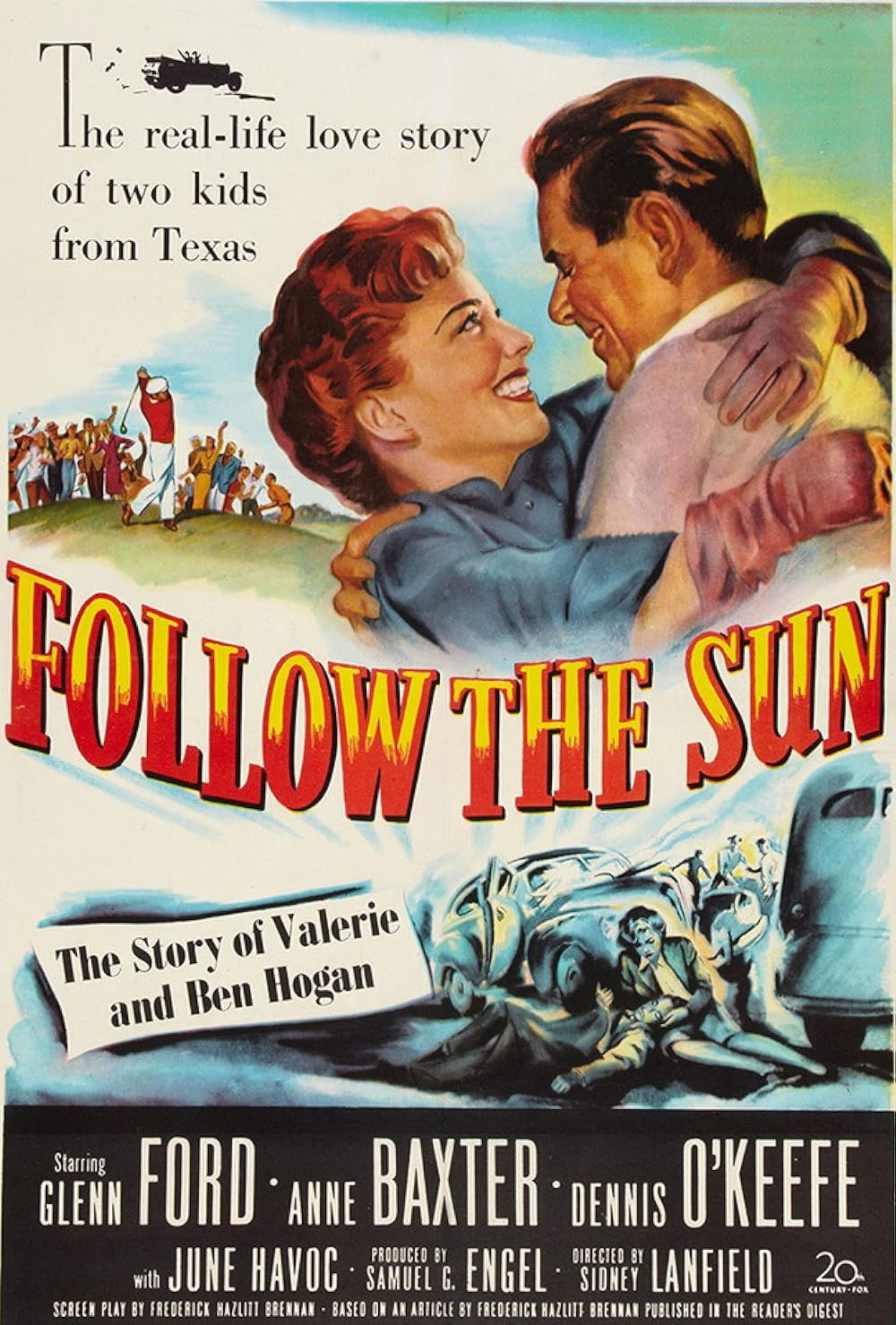
We went to local theaters, beautiful downtown movie palaces, and the drive-in movies. I don’t remember my father going to the movies very often, but I have a vivid memory of going to the drive-in to see a golf movie with my whole family (Daddy was a championship level golfer). It was the story of Ben Hogan.

I’ve never been one to go to scary movies, although I’ve seen my share. The first one I remember seeing was “The House of Wax,” which we saw in 3D and I had to watch from the back of the theatre so I could duck at the very scary parts. I’m still scared thinking about it.

Another scary one was “The Tingler,” which I saw at a theatre that had buzzers on some of the seats to give a jolt to some in the audience at scary parts. When I saw “The Birds,” they released parakeets into the balcony where I was sitting. I still think that movie was scary even when I rewatch it and see how hokey some of the effects were. It did its job on me when I’ve had birds get into my house through the years.

As we got older, going to the movies was a fun thing to do with your friends. For my 11th birthday, we took all my friends to see “Giant,” still one of my favorites. That’s one I can watch every time I see it, which is a good thing about having it so readily available (a tip to modern times).

For one of my birthdays, my little brother took me to see “Ben Hur,” which I still think was so cute of him.

In Junior High and High School in the 1950s and 1960s, the movies were one of the places we could go on a date, either meeting a guy there or being dropped off by parents or, finally, driving ourselves. We went to everything from comedies to heavy dramas like “On the Beach,” a frightening look at the future that still lingers with me. As with many movies, I also read the book it was based on.

I grew up in an era of wonderful musicals and saw them all. I think my favorite is “South Pacific,” although there are so many great ones. My husband loved the movies and we saw everything we could. It was our night out and we saw westerns, war movies, comedies, dramas. Our children grew up with movies like “Grease” and the Star Wars movies and all the teen movies of their time.

A couple of months ago, my youngest granddaughter had just read “To Kill a Mockingbird,” and the local art theatre happened to be showing the movie in conjunction with the play being in town. I took her to the movie, which I hadn’t seen on a big screen since it came out. Wow! I couldn’t help but think that the experience was so much better for her than if we had just found it on one of our many screening services. I felt the same after seeing “Killers of the Flower Moon,” which showed the horrors of events that took place less than an hour away from us. Then I saw a comedy with some friends and we laughed and enjoyed it together.

It began to dawn on me that I was missing the experience of going to the theatre to see movies. There are some that just need to be seen on a big screen with a group of people and the sounds and excitement and a box of popcorn and a drink. When I watch at home, I get up and move around and pause the action and tend to do other things while I’m watching (puzzles, looking at my phone, flipping through magazines). My concentration is not the same, no matter how hard I try to get absorbed. My dogs need out or I need to answer the phone or take the laundry out of the dryer or fix a snack. There are so many distractions.

I applaud movie makers for trying to adapt to the audience’s new viewing styles and I do think some things are very good. When I drive by the theaters, and there are just a few left, I check the parking lots to make sure people are going in person and I do seem to see more cars, although it’s not as packed as it used to be. Time changes so many things, but I hope that going to the movies doesn’t go away. There are just so many fun memories to be made, so many great stories to be thrilled by, and so many times that being with other people to experience something is still the best.

As they used to say, “Let’s go to the movies.”

We’re into a new year and I’m trying to live up to one of my own resolutions – to be a better human being by recognizing the humanity in all of us. I could preach about this, but I’m better off just trying to live up to it.

People tend to put other people in categories, which is normal. When you see or meet someone, you immediately register their size, their skin color, their voice, the way they dress, etc. It’s how we tell each other apart. The problem comes when we start to put people into categories and decide if we like them or not based on what we are seeing. I know we won’t like everyone we meet, nor should we, but we at least need to try and understand them and recognize that they are human beings.

Human beings are capable of such kindness and such cruelty and it doesn’t seem to take much to push us to either extreme. The extreme of cruelty crosses all peoples throughout history. Robert Burns wrote of “man’s inhumanity to man” in his dirge, “Man was made to Mourn” in 1784, but there are examples we are all too aware of, from the cruelty of slavery through the ages to the torture and mutilation of people by almost every culture.

“The Purpose of Propaganda is to make one set of people forget that other sets of people are human.” Aldous Huxley

We’ve seen the use of propaganda by Nazis and the Ku Klux Klan in more recent years. Elie Wiesel wrote of the “Dehumanization in Night,” where the concentration camp guards shaved the heads and branded the prisoners with numbers to make them less human so they could more easily torture and murder them. The Ku Klux Klan considered so many groups to be inferior that it’s difficult to understand who the members who considered themselves so pure were. They were against Blacks, Jews, Catholics, Irish, Italians, and anyone who didn’t fit their image of who they thought they were.

My daughter and I were in Ponca City, Oklahoma a few years ago and visited the statue of Standing Bear, a Ponca chief who sued the United States government and won. In 1879, he argued that Native Americans were “persons within the meaning of the law,” which was the first time that Native Americans were recognized as human beings by our government. Let that sink in. This did not stop the injustices that they were subjected to, but it was a beginning.

Several years ago, I worked for the American Red Cross and did educational programs in several counties in Oklahoma. The Red Cross is very focused on serving diverse populations as its mission is mandated by the U S Congress and they must give aid to everyone, regardless of who they are. After each program I gave, I needed to give the racial makeup of my audiences. I usually got this from teachers when I was in a school setting. I found that there were so many combinations of races in our state, a true melting pot of white, black, brown, red and yellow. For such a “red state” politically, we are certainly one of the most diverse.

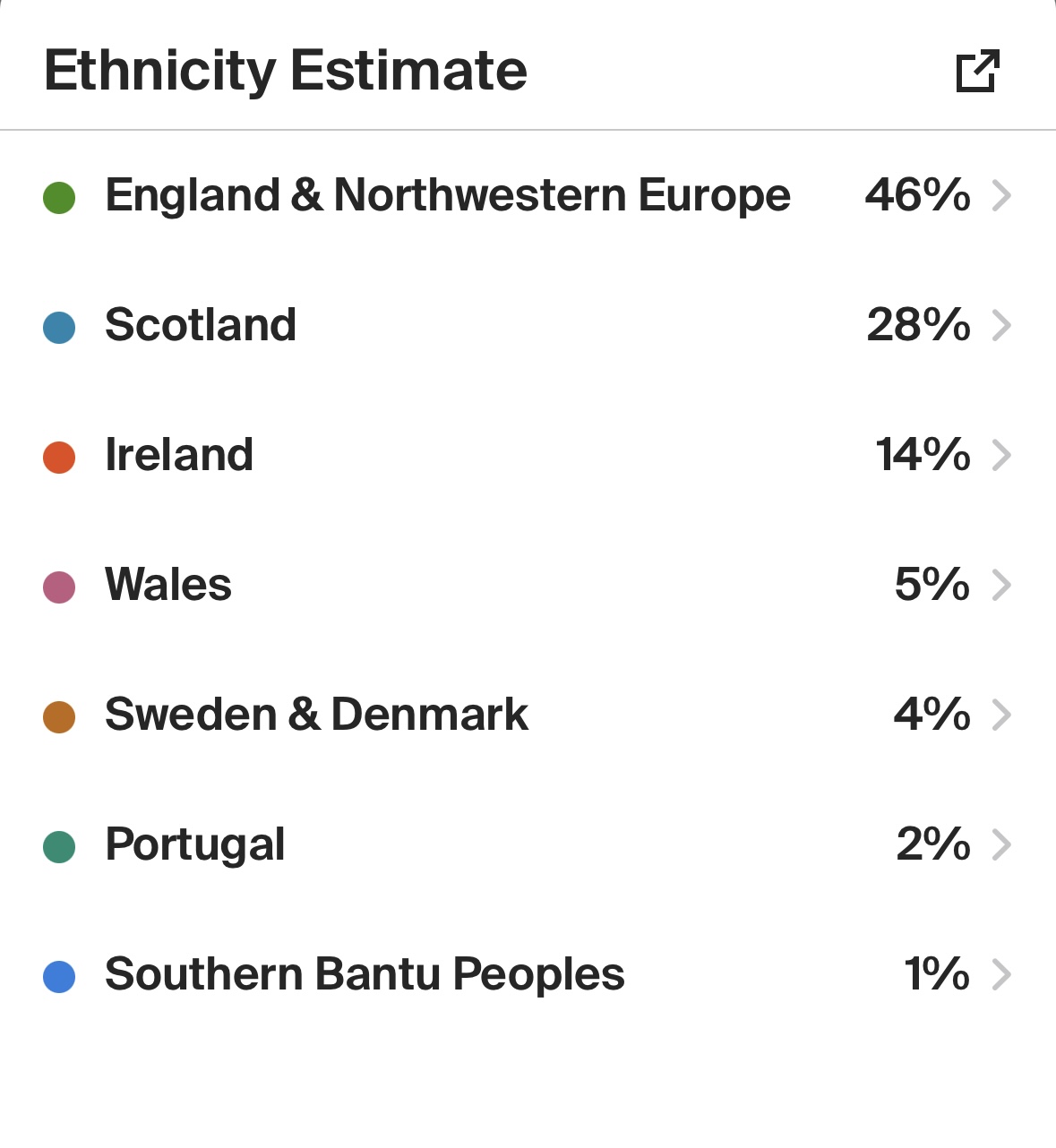
Looking at my own DNA, as broken down by Ancestry, I am pretty white, although through various decades, I would have been hated for being Irish, Scottish, Catholic, and poor.

As the DNA tests become more sophisticated, I started seeing that I had some people in Northern Africa, which could mean all kinds of things. As I check the latest findings, I see that they have narrowed it down to the Southern Bantu peoples. I looked them up and here are my new relatives.

I’m really fascinated about the stories that brought so many cultures into my own personal DNA. Ancestry says that the Bantu are from my father’s side, where I know that there were some slave owners along the way. My ancestors range from well to do to Catholic nuns and priests to poor farmers just in the most recent times, so digging into the past yields all kinds of possibilities. I have a very rich heritage of all kinds of traveling people who merged with other peoples along the way. I’m a purebred nothing.

The point is that we all have stories in our ancestry and who are we to think we are any better than anyone else? Why are we afraid to embrace all that those various peoples contributed to who we are today?

Friedrich Nietzsche wrote “The surest way to corrupt a youth is to instruct him to hold in higher esteem those who think alike than those who think differently.” We need to celebrate all views and all cultures and quit being afraid of anyone who is the slightest bit different than we are. We are missing so much when we shut out the possibility of what other people can give us or the fact we could learn from what they have to say.

I’m going to work hard to ignore the propaganda that surrounds me telling me to think this person has no idea what they are talking about and this person is not worth my time and that person is just plain horrible and try to see each person in their own place in their own life. I still won’t like all of them, but I can at least open my ears and my heart and see them as human beings just like me, just trying to make my way through this life we have been given.

“Nothing is more important than empathy for another human being’s suffering. Nothing – not career, not wealth, not intelligence, certainly not status. We have to feel for one another if we’re going to survive with dignity.” Audrey Hepburn

And, I’m going to take these words and try to be the best human being I can be. It’s sad that it takes any effort at all, isn’t it?

Driving down a familiar street on a hot summer day, I was hit with a wave of memories of summers past. Once they started, it was hard to stop them.

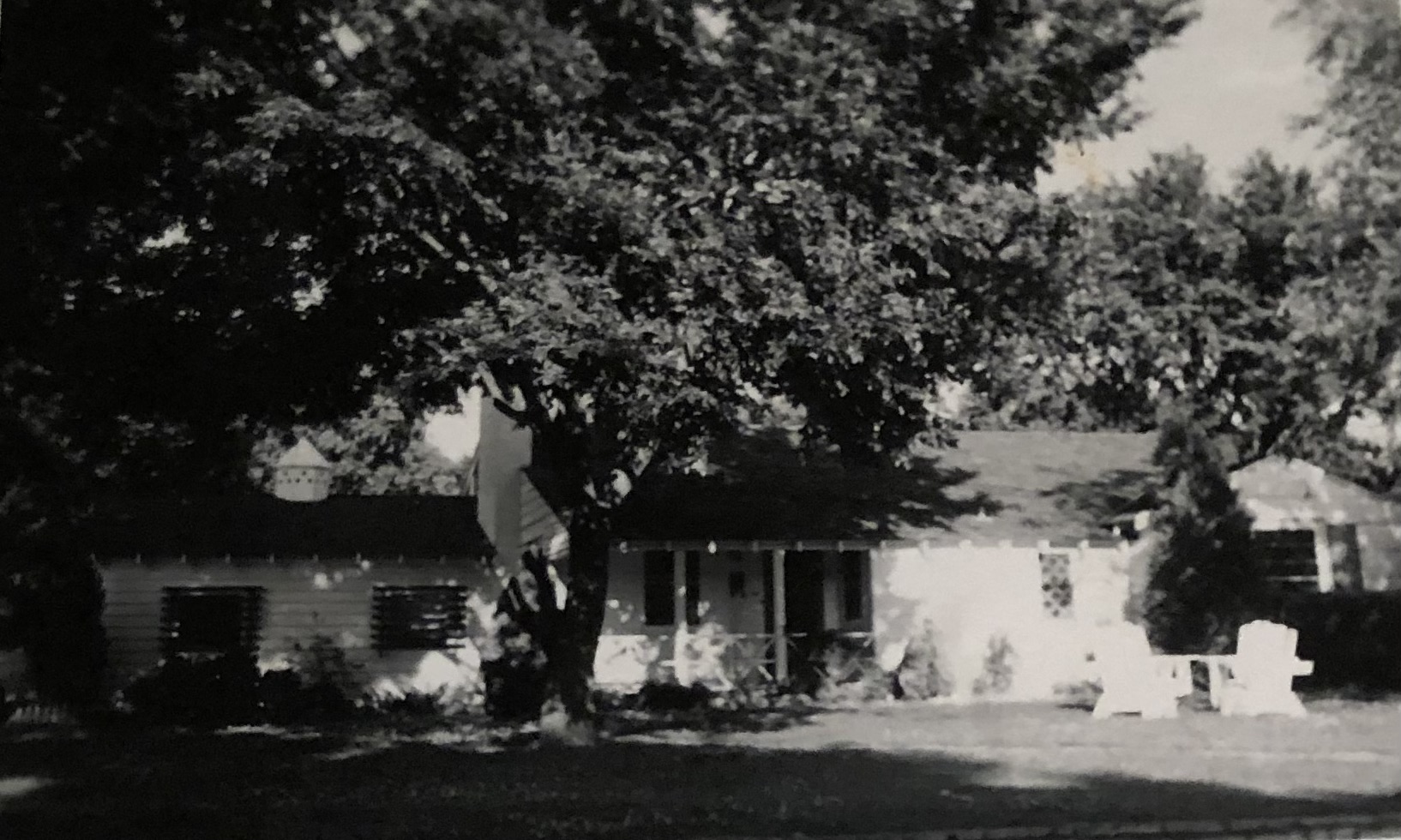
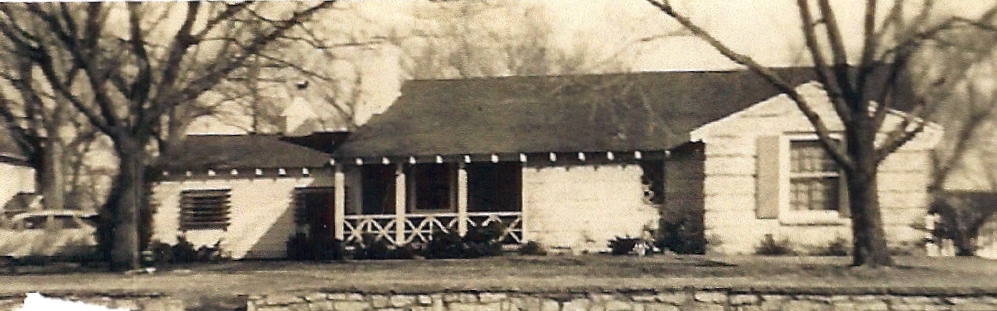
We moved to Tulsa sometime in 1948. I was about 2 1/2 years old and my brother was a baby. We lived in this house until late summer 1955 when we moved to a new custom home where I lived until I was married. But those 7 years in that first house, when I was ages 2 1/2 to 9 1/2, packed in a lot of memories.

In the summer, we played outside before there was air conditioning. We played in the sprinklers, went high on the swings until we pulled the poles from the ground, played work-up and Red Rover in our big side yard. We looked for fossils in the gravel on the street until they paved it. I learned to ride my bike on that street and attempted to roller skate with the skates that you hooked onto your shoes and tightened with the skate key.

In the evenings, we looked at the sky for constellations before there were so many lights to make the skies not so bright. We caught lightning bugs, June bugs, lady bugs, roly polys and put them in jars with a few leaves and holes we punched in the top. Sometimes there were locust shells to collect and crunch. We walked down the street to the school where I went to play in the creek. There was trumpet vine on the back fence to use for cups for my dolls and honeysuckle to drink the nectar from.

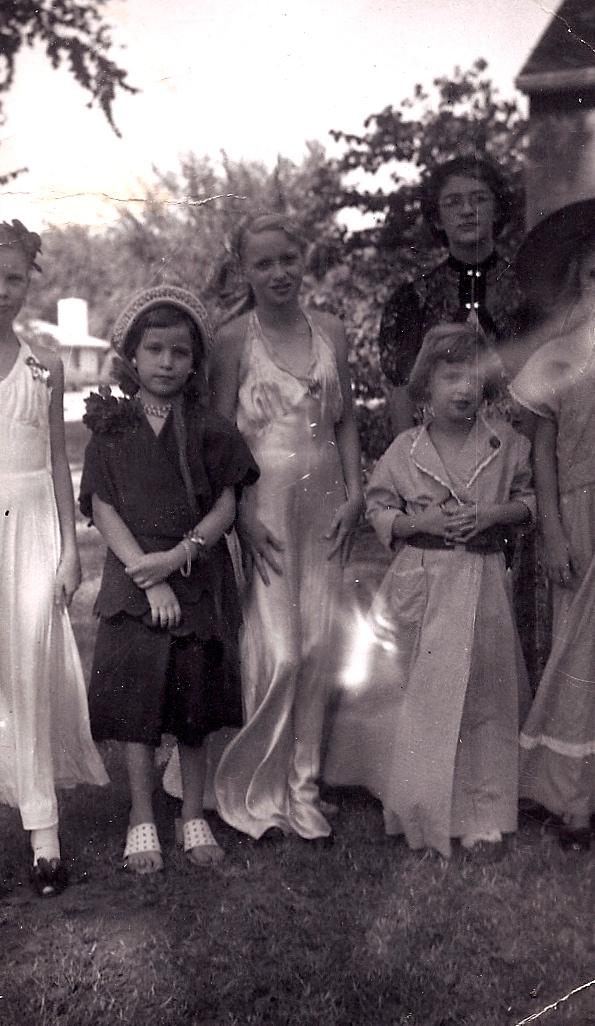
i played with my dolls and cut out paper dolls. I loved Betsy McCall in my mother’s monthly McCall’s magazine and kept all the clothes in a box in my room. I played dress up with the other girls in the neighborhood, raiding our mothers’ closets.

My mother worked in the garden, washed the clothes and hung them on the clothesline in the back yard. I loved the clothespins in their little bag that hung on the line.

In this house, my brother and I shared a bedroom with green chenille Hopalong Cassidy bedspreads and welcomed our little sister home. I think we listened to Hoppy on the radio as we didn’t have a television yet. I loved seeing him in person one year at the Tulsa Horse Show.

When I got bigger, I had my own bedroom at the back of the house with a door to the screened in porch. On hot summer nights, I laid spread eagle on top of my covers in my seersucker babydoll pajamas, hoping for a breeze from the fan and the open windows. We drank Kool-Aid (made with lots of sugar) and waited for Jack the Milkman to come so we could run to his truck for ice chips. Sometimes he would let us get in and ride around the corner with him. And the ice cream truck would bring us popsicles and ice cream bars to cool us off.

We had a patio in the back for picnics and Daddy got a grill to cook hamburgers and hot dogs. It was the 50s as you imagine.

In the summers we went to the library and I brought home stacks of books that I read quickly. There were biographies with orange covers, fairy tales, the Oz books, Nancy Drew mysteries. I read anything I could. One time I wrote a play sitting under the big elm in the front yard. It was about kings and princesses, I believe. I still have it somewhere in a spiral notebook, written in my careful printing. We played cards, spending hours with Old Maid, Crazy Eight, Go Fish. We collected comic books and read them, loving Lulu, Donald Duck, Superman and Batman and all the superheroes.

Time went on and my parents converted our garage into a “family room.” There were big couches and my mother had an artist paint a scene of cute barnyard animals on the concrete wall. And, we had a television there and an air conditioner. It was a new world. We watched tv when it came on at 5:00 with the news. If we stayed up late (10:00), you could watch the newscaster sign off and the screen turn to the overnight screen picture. On Saturday mornings, we watched all the shows. Winky Dink was an interactive show where you placed a piece of heavy plastic over the screen and then used the special crayons to finish pictures or images that were part of the show. We watched Sky King, Lassie, Rin Tin Tin, The Lone Ranger, Hopalong Cassidy, and cartoons like Popeye.

I learned to cook in this house, making little cakes in tiny pans, first in a toy oven and then in my mother’s big oven. I cooked my first dinner from my first cookbook, proudly serving it to my Daddy, who was always amused by my attempts to be a big girl. That kitchen had a corner booth where we had breakfast and my grandmother would bring us homemade french fries with little cups of ketchup when she visited. We got our first dishwasher, which was pushed across the room where the hoses were connected to the kitchen sink.

School started in the fall and we walked down the street to our school. My parents sent me there because my birthday was past the cutoff for the public schools and, besides, it was down the street.

When the leaves turned, we raked them into piles to jump in and burn in the incinerator in the corner of the back yard. We loved the smell of the burning leaves and watching the embers that escaped and flew into the sky. For obvious reasons, this was banned in the city at a later date. In the fall, Daddy brought his hunting dog home where he lived in his pen in the yard unless Daddy was training him or we were playing with him. Early in the mornings, they would head out in search of quail which Daddy would bring home to eat later.

When school started, so did our Brownie troop meetings. My mother was one of the leaders so we often met at our house where we learned to give tea parties for our mothers, how to sew on a button, how to sell cookies and took fun field trips.

For Halloween, we donned cheap costumes purchased at the dime store or dressed as hoboes or ghosts and grabbed a pillow case and went for blocks and blocks, trick or treating. When our bags were full of caramel apples, popcorn balls, and full size candy bars, tootsie roll pops and bubble gum, we headed home to dump the load and head out again. We kept our piles of candy under our beds where we would bring them out to count or trade or eat.

In the colder weather, we lit the floor furnace, which we quickly learned to step over so we didn’t burn our feet. The bathrooms were heated with little gas furnaces on the walls to keep us warm after our baths.

In the cold weather, we had fires in the fireplace in the living room where we listened to 78 records on the big record player and toasted marshmallows and drank hot chocolate. For Christmas, we hung our stockings and waited for Santa. My favorite gifts, maybe ever, were the Madame Alexander Alice in Wonderland doll in her blue trunk with other clothes and my first puppy, a red dachshund named Mr. Schmidt. We also got sleds for the small hills in our neighborhood and made snowmen in the front yard and had snowball fights with the neighbors behind the forts we built.

With spring, we planted zinnias in the back yard and dyed Easter eggs. We found baby chicks and ducks in our Easter baskets along with eggs to hide and hunt. One baby duck used to follow me everywhere until he died even though I tried to keep him warm and well. I’m sure our back yard had many graves of turtles, parakeets, chameleons and other little creatures we brought home from the dime store or the fair. We didn’t mean to be rough with them.

I had many parties for my friends at this house. There were birthday parties and slumber parties. This must have been my last one there and everyone seems to be happy with our comic book collection. I remember the noise and the giggles and the patience of my parents.

This was the house where I lost my first teeth and the Tooth Fairy left a dime under my pillow. This was where I had chicken pox, the measles and mumps. Those diseases were no fun and I can remember days in bed, the calamine lotion all over me with chicken pox and not scratching so we wouldn’t have scars (I only have one) and staying in the dark with measles so we wouldn’t go blind. Our pediatrician, Dr. Reece, would arrive at our house, driven by his chauffeur, wearing his dark coat and hat and carrying his medical bag. He walked up the steps to check our hearts and lungs and look at our tongues. He was one of the last of that kind of doctor.

In the living room, there was a little room/closet for the phone. In those days, you had to call the operator to make a long distance call. Calls were billed by the minute so they were kept short and you waited until after 7 to make calls when it was cheaper. When I was 8 or 9, I wanted to talk to my grandmother, so I snuck into the little room and called the operator as I had heard my parents do. I can’t remember if I knew her number or just gave the operator her name, but I got to talk to her. I felt very brave and grown up and sneaky. Did I get in trouble? I don’t think so. Daddy probably didn’t realize I made the call, unless my grandmother told my parents. She wasn’t one to tell on me though.

One time I was mad at my mother, so I packed a peanut butter sandwich and an apple in my little suitcase and ran away from home. Was I 6? I made it to the other end of our block and sat down to eat my sandwich. I really didn’t know where to go, so I turned around and went back home. Home wasn’t that bad.

Were those the “good old days” of my life, the years in that house? They were definitely good for us, but they were just a part of my life. I’ve lived long enough to have perspective and to have learned history. Those days were good for us, but they were unrealistic for both my parents. Women had few rights and men had unbelievable expectations. And we were white. Needless to say, the world wasn’t fair then for so many others. I’ve met people from different backgrounds who lived at that time and shake my head at our ignorance and ability to not see what was in front of us. We also didn’t understand the lives of those around us who were dealing with infidelity, substance and alcohol abuse, spousal and child abuse. These things just weren’t talked about, much less dealt with. I was one of the lucky children.

I’ve lived most of my life within about a square mile, so it was easy to drive by the house now and then. It was updated through the years, but it was still the house. A couple of months ago, I happened to turn that way and arrived just as the last piece of the house was demolished before my eyes. I was shocked, but shouldn’t have been surprised. Such is the world.

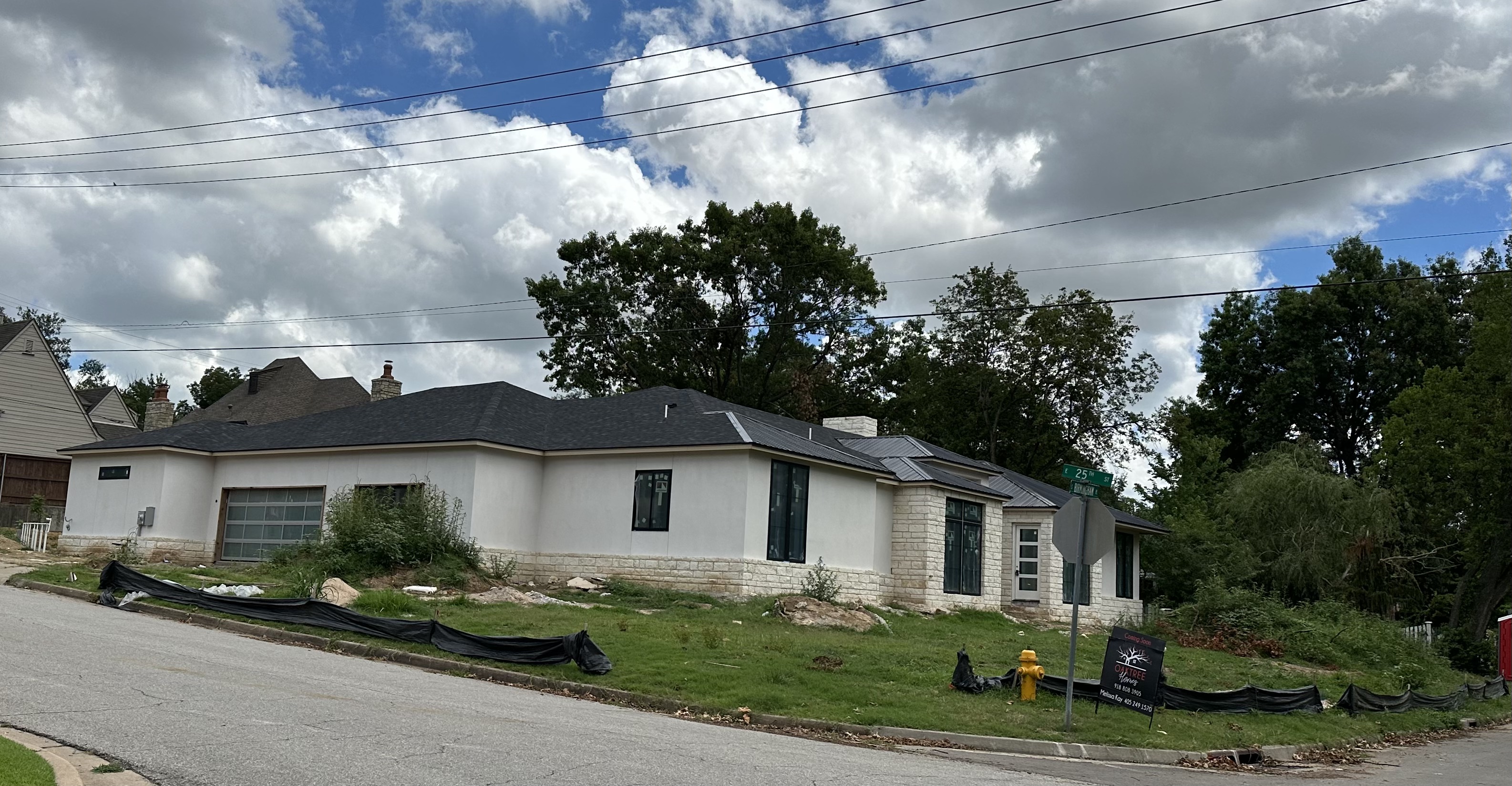
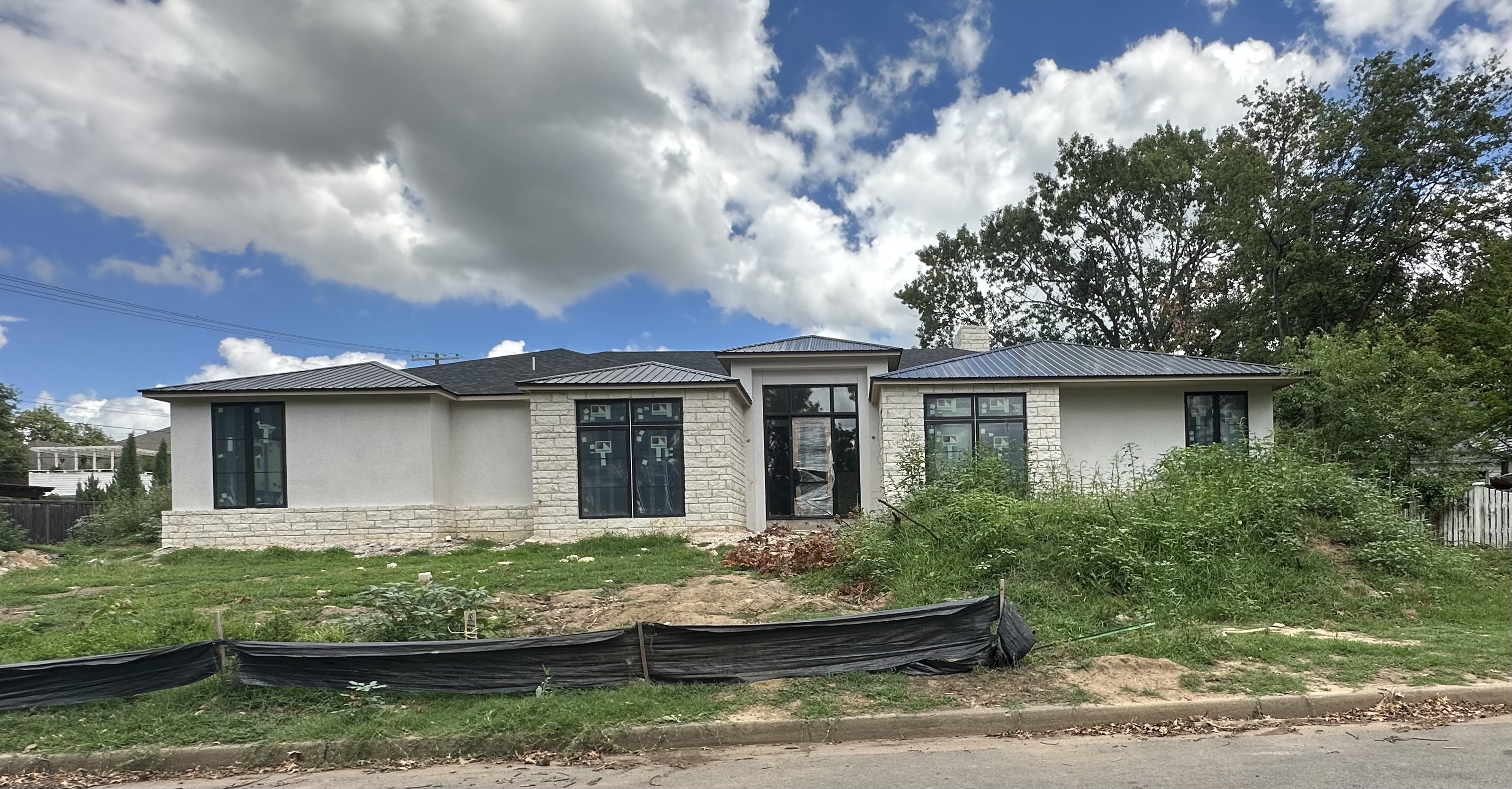
Here is the house being built there now.

It isn’t the worst it could be, but there is no side yard for playing and I’m sure the back yard is a carefully planned outdoor kitchen/patio. It will be a nice home and I hope that the families who live there make special memories.

For me, I have the memories of my years there that helped to make me who I am today. I’m basically still that little girl with the big imagination and the urge to explore and hoping to be brave enough to jump off that wall.

Recently, I came across this children’s book first published in 1929. I recognized the illustrator’s work from books I had as a child and started looking through it.

The author’s note inside tells the purpose.

There are pieces on children from almost every culture and the author talks about the physical differences in the way the children look as well as what they eat and wear, and shows the cultural customs of each country. It’s pretty straight forward and well done.

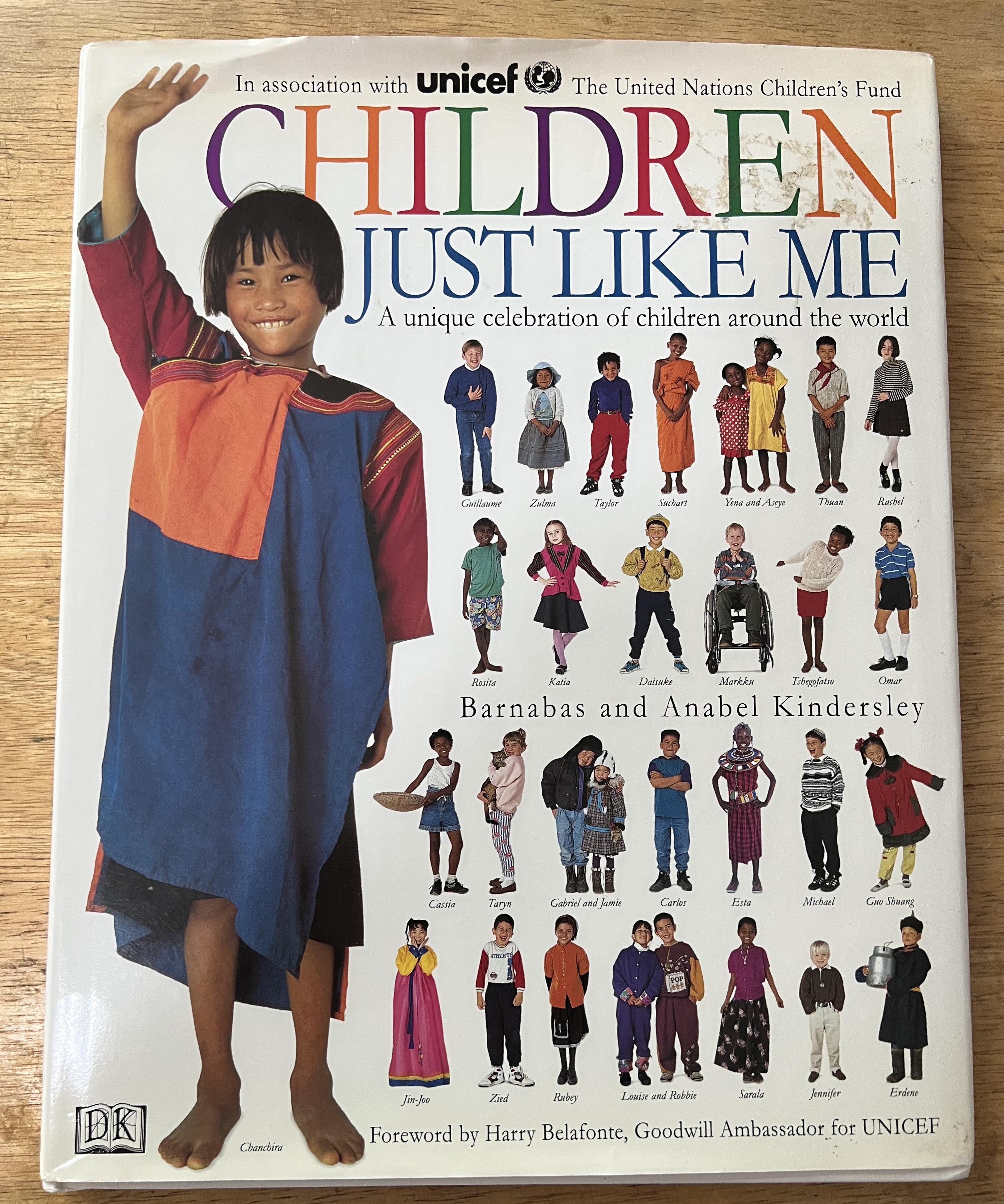
This reminded me of another book that I have and used when I used as a supplement to lead discussions from the programs in the “Different and the Same” curriculum for 2nd and 3rd graders developed by Fred Roger’s company. I was doing this when I worked for the American Red Cross, which must serve all people regardless of any differences. This book was developed by UNICEF in the 1990s:

The forward is by Harry Belafonte, the late, great entertainer and Goodwill Ambassador.

This book looks at over 30 countries and shows the children’s homes, food they eat, clothes they wear, along with photos of their families. I remember when I first saw the book thinking that we all just want to take care of our families no matter how we achieve it in our individual societies.

When I was a child, I loved the song “Jesus loves the Little Children” and it became a central part of who I am. Nothing I ever learned in all the decades sense has wiped that fact from my mind. Jesus loves the little children.

Jesus loves the little children

All the children of the world

Red and yellow, black and white

They are precious in his sight

Jesus loves the little children of the world

So, how did so many people who are afraid of anyone who looks different from them, or was raised in a different way, come to populate much of our society, spreading hatred and fear everywhere? When you watch little children play, they don’t see the differences such as color of skin unless someone points it out to them. The Rodgers and Hammerstein song, “You’ve Got to be Carefully Taught” from the musical “South Pacific” sums it up easily:

You’ve got to be taught

To hate and fear.

You’ve got to be taught

From year to year.

It’s got to be drummed

In your dear little ear.

You’ve got to be carefully taught.

You’ve got to be taught to be afraid

Of people whose eyes are oddly made

And people whose skin is a different shade,

You’ve got to be carefully taught.

You’ve got to be taught before it’s too late,

Before you are six or seven or eight,

To hate all the people your relatives hate,

You’ve got to be carefully taught!

After thinking about this, I realized that all of these things I have mentioned were geared for white people. That’s not to say that people of all colors don’t have prejudices, but, except for the UNICEF book, these were mostly for white people, like me. I was thinking about how my own prejudices developed because I don’t remember my parents or grandparents saying anything about other races. One of my first dolls was a little baby doll that was a black baby and I didn’t think anything about it, even back in 1948-50.

There were no people of any color but white in my school or neighborhood. The only black people I knew worked for us and we loved them. I don’t think we felt superior to them other than we knew they worked for us and didn’t have as much as we had. But neither did my grandmother, so that didn’t mean much either.

I didn’t really meet any people of other races or nationalities until I went to college and, even then, there weren’t too many. We had a big TIME/LIFE book of all the religions at home and I had studied it through the years so I wasn’t against other religions. My first Jewish friends were in junior high and many of them are still good friends 65 years later. I didn’t have gay friends until I was an adult because they couldn’t admit to the world who they were. Where did I get my prejudices – because I have to admit I absorbed some of the stereotypes through the years.

At 77, I have met people from all over the world and have friends from many cultures and races and sexual orientations. I’m not being sanctimonious because I still look at strangers warily. As a woman, I’ve been taught to be aware of my surroundings and regard any person with suspicion. Our 24/7 media alerts and ever present internet outlets, along with groups who promote hate and fear of anyone different, are bound to make people more afraid. I will say that for the past couple of decades I have been more afraid of white supremacists than any other group, but I live in Oklahoma and saw the first hand results of hate and evil in the Oklahoma City bombing.

So how do we get to the place where we all love the children of the world, red and yellow, black and white? How do we work towards this ideal as people? Here are a few suggestions…

Go out of your way to meet people who aren’t like you. One of the best ways is to travel, but that isn’t possible for many people. If you see someone different, smile. Start a conversation. Find things you have in common. Anything.

Learn about other people’s countries, religions and customs. We live in an age where you can find so many resources in the library, on the internet, documentaries on television, movies. Be curious and unafraid to learn about how we are different – and how we are the same. And learn to mind your own business about other things in other people’s lives that have no bearing on you.

I don’t have all the answers, but we really must look at each other in different ways. We need to open our hearts. We need to be kinder to each other. Those precious children are our future and our hope. Those precious children are us.