Archives for category: History

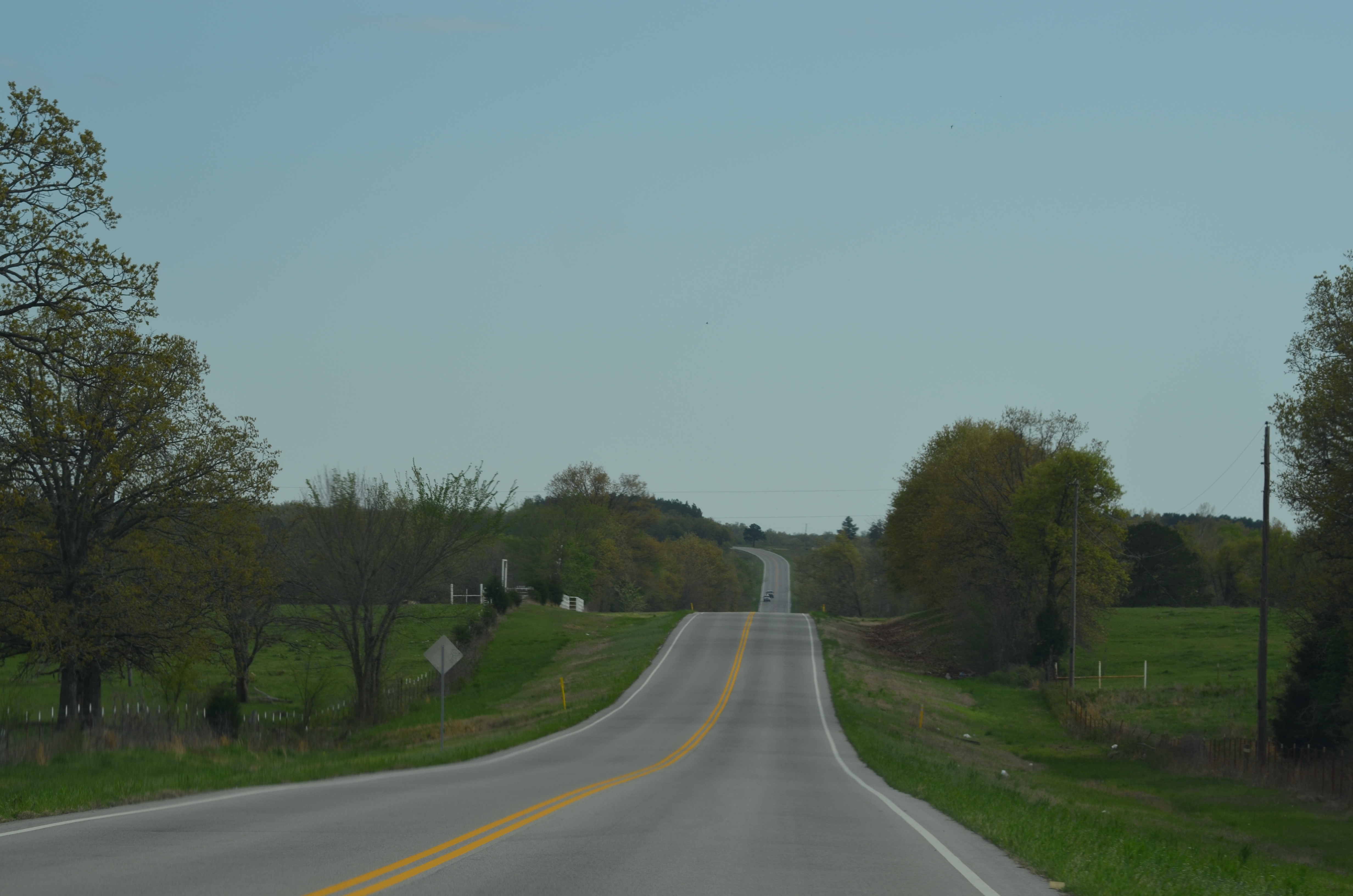
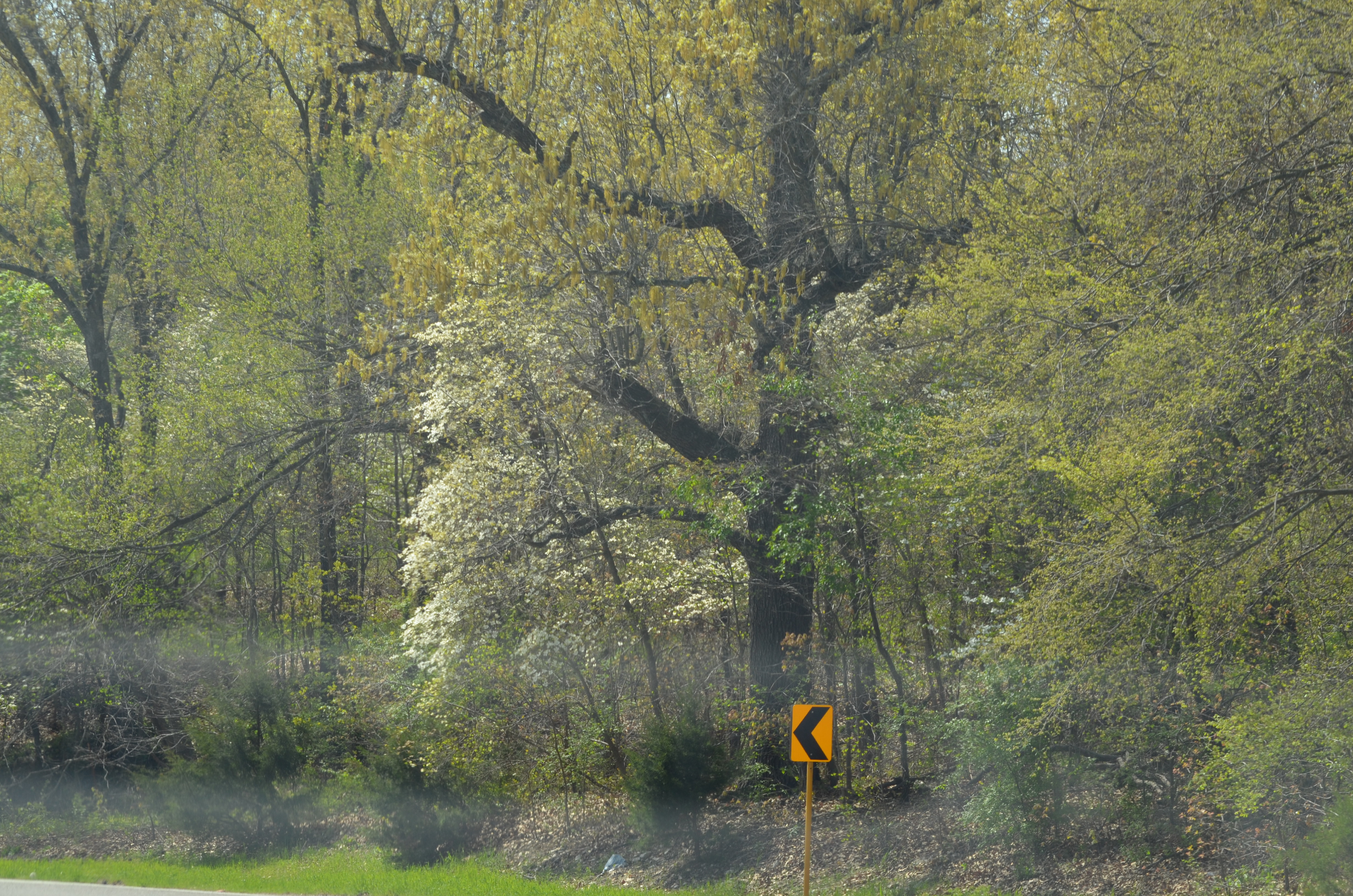
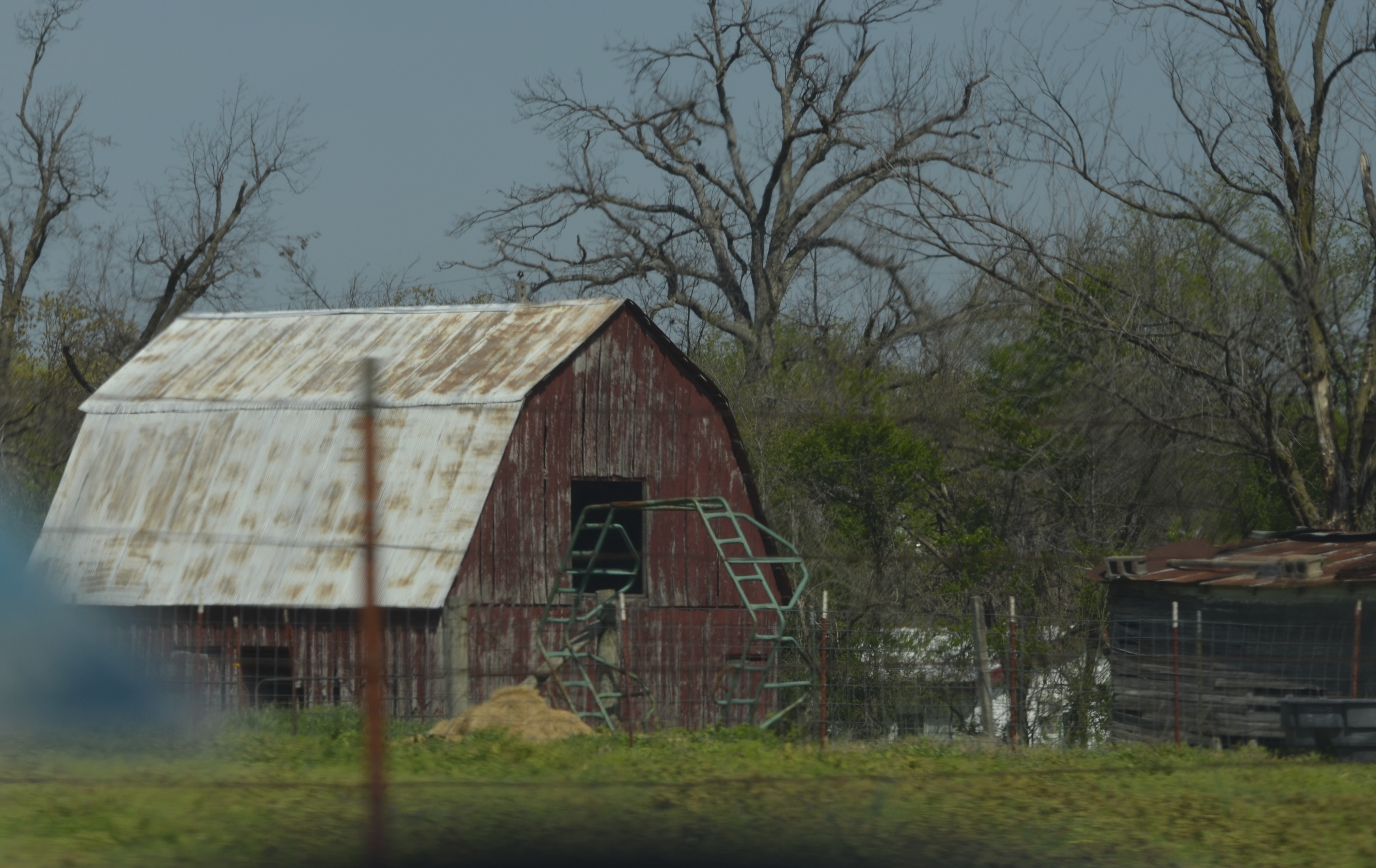
Monday, on the drive to Bentonville, Arkansas, my friend and I drove the scenic part of Highway 412 and then veered off onto country roads to take the back way into Bentonville, missing the interstate, traffic, consumer mess of a drive. It was a beautiful spring day to journey through pasturelands and little towns in Delaware County, named after the Delaware Indians who settled there, heading over to Arkansas. There were still some dogwoods and redbuds in bloom in the wooded areas along the way.

DSC_0003

DSC_0018

I’m fascinated by the rural areas, being a city girl. Every state has them, so don’t go getting snobby on me. It’s just a different lifestyle, some things better than the city, some not so much. I always try to imagine life out here or what the area has been through in its history. You can see the stories in the buildings that are standing in various stages of decay. Sometimes you see a barn falling down right next to a new one. Or a house that has been deserted by its owners. You see them quite a lot, actually.

DSC_0001

DSC_0008

DSC_0009

Traveling with my iPad, I look up the history of towns as we go. You learn a lot reading about why people settled here and what happened to make it rise or fall. Most of the towns aren’t growing. It’s a tough way of life out here in the country. The little community, hard to call it a town, of Colcord, with a population of 819 used to call itself “Little Tulsa.” I’m not sure, even in its thriving days, where they got that unless none of them had ever been to Tulsa. I guess the town leaders hoped…

I think it was in Decatur where we saw the Iva Jane Peek Library. I take photos zipping by areas so pardon the mistakes sometimes. I’m constantly trying to capture something that catches my eye as we whiz by. I love the name of the place and wonder about Iva Jane and her influence. I haven’t found out who she was…yet!

DSC_0017

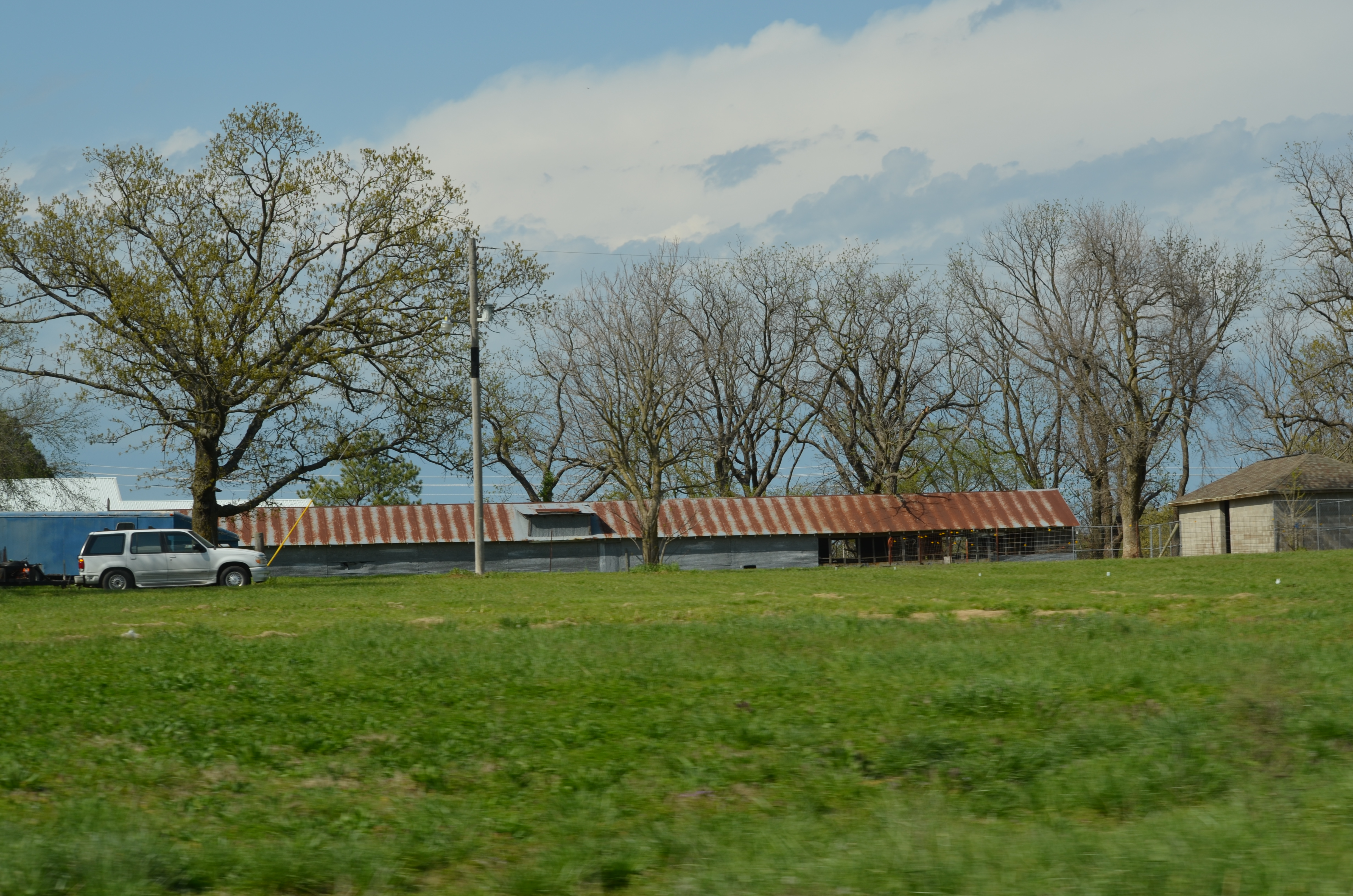
Chickens were and are a big industry in the area on into Arkansas, where we began to see Confederate flags every once in a while. If you look at a google map from above you see rows of thin silver roofs, chicken houses, all along the way. We saw a lot of deserted ones, but lots still active.

DSC_0076

DSC_0070

Bentonville was known as Osage after the Osage Indians who came from Missouri to hunt the area for months at a time. Eventually, the white settlers took over and named the town after Thomas Hart Benton, a Missouri senator who fought for Arkansas to become a state. At the turn of the century, being the 1900s, apples were the main resource, followed by chickens until WalMart was added to the mix to make that area a pretty bustling area for a town of 35,000. I’ve been to Bentonville from the interstate and from the backroads, which gives you a picture of the growth surrounding it. I like entering the back way best.

There’s something about traveling the backroads, seeing the honesty of it where you live your home is what you make it. You don’t have to worry about what the neighbors think about your well manicured lawn if you don’t want to. You can have it any way you want to. If you want to leave the remnants of the house or barn and build right next to it, you can. I kept thinking that some design person would drive through and make a nice offer for the reclaimed wood that they could sell to an upscale business or homeowner for an authentic look. I’m all for that and there’s a treasure trove out there for the clever and creative.

DSC_0078

DSC_0075 (1)

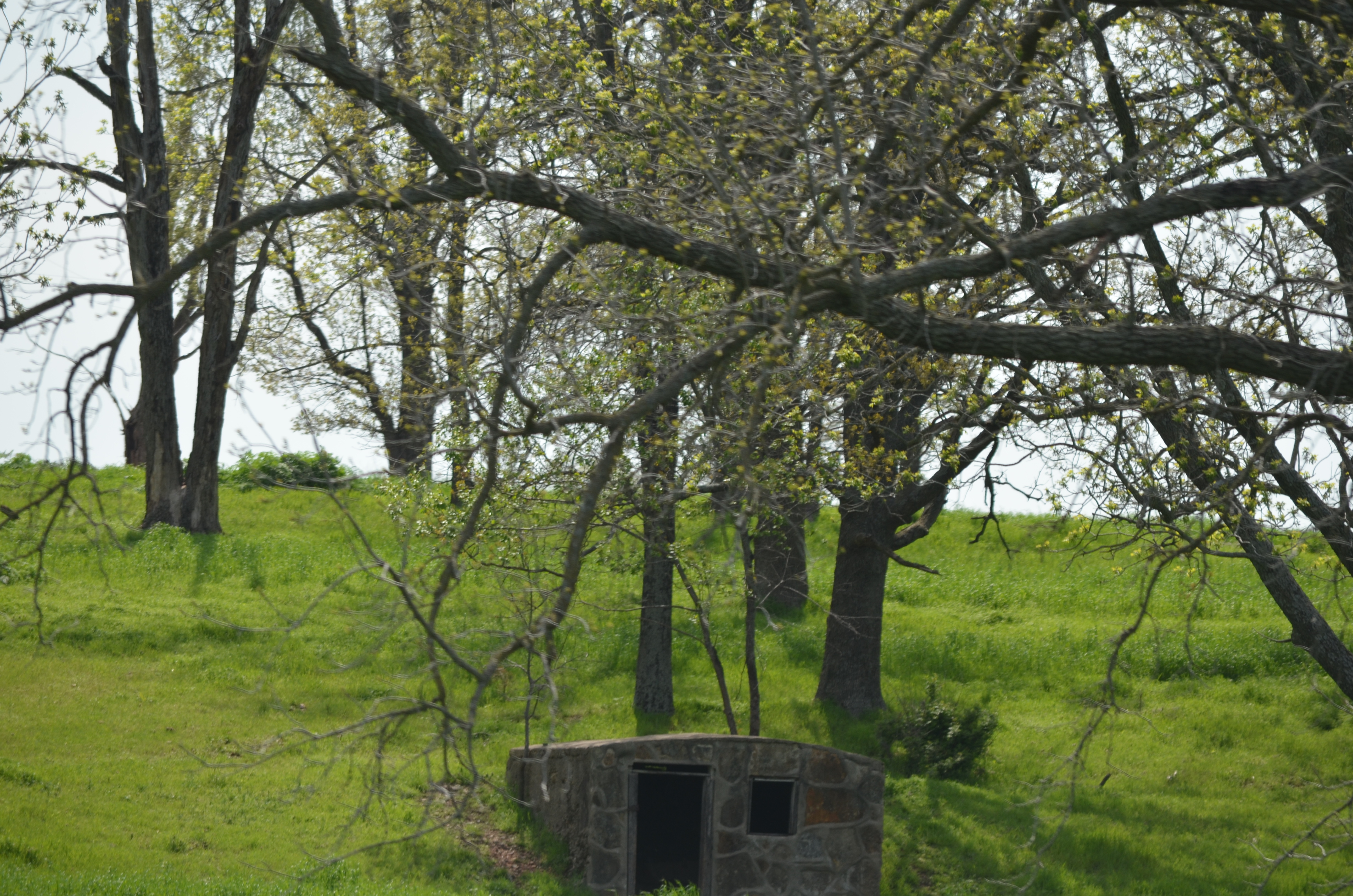
The rural roads fuel my imagination, writing stories in my mind of the families who came before, the individuals who lived in tiny houses in the side of a hill. There are so many questions you have driving by.
DSC_0012

And then you just enjoy the wide open views of the sky,
DSC_0081

the rolling roads,

DSC_0080

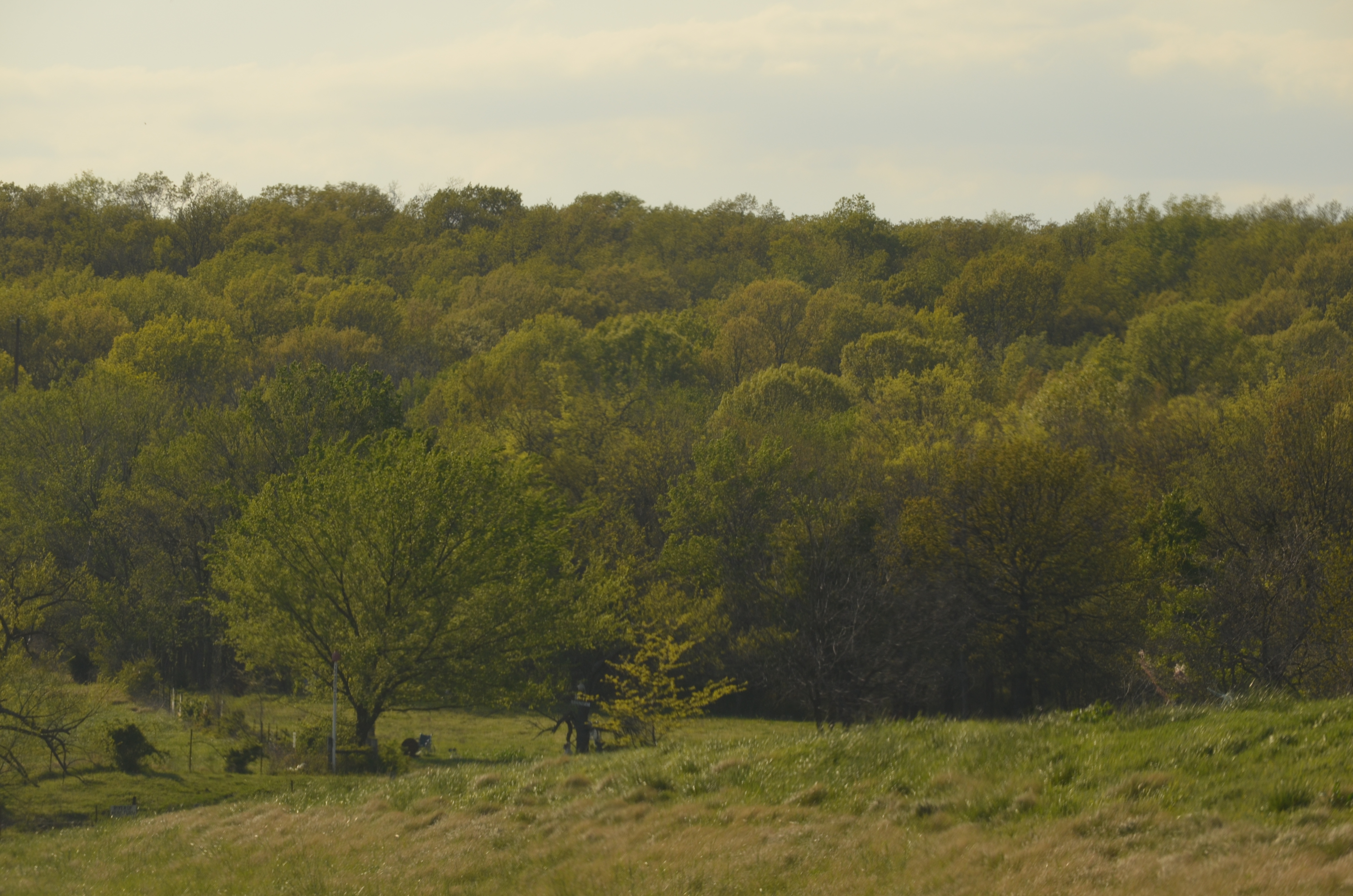
and watching the variations of spring greens in the hills which will turn darker as the season goes on.
DSC_0085

When I see the skyline of the city in front of me, I know I’m heading home to bustling streets and landscaping and order of a sort. I’m comfortable with that life, but I love the spirit of the countryside I’ve traveled. Everyone should get off the main highways now and then. We’re in such a hurry and look at what we miss…

When I was growing up, my parents subscribed to lots of magazines, and I read all of them through and through. Many are gone today, but there was Look, Life, Readers Digest, Ladies Home Journal, Newsweek, McCall’s, men’s magazines, women’s magazines, kids’s magazines like Highlights for Children. One of our favorites was the Saturday Evening Post. The Norman Rockwell covers were something to look forward to, knowing they would be something we studied carefully for all the clever details. We were used to his work as an illustrator for ads for Colgate, Kellogg’s, and other companies, instantly recognizable.

In 1999, my son and I took a day trip to Mark Twain’s hometown, Hannibal, Missouri. We were fortunate to arrive during an exhibition of the original paintings for Norman Rockwell’s illustrations for Tom Sawyer. I remember they were large paintings and so much richer than the flat pictures we were so familiar with in our day to day life. They were amazing works and their beauty stayed with me.

tom-sawyer-whitewashing-the-fence

Yesterday, I went to see the Norman Rockwell exhibition of over 50 of his paintings and 300+ of his Saturday Evening Post covers at Crystal Bridges Museum in Bentonville, AR. I’ve not a professional art critic, even though I studied art history in college and worked in an art museum for over 7 years, but I do know that Norman Rockwell is a great artist. As is typical for artists in their own era, his work was scoffed at in art circles as too sentimental, too idealistic, although I don’t see what’s wrong with that myself. There are many great artists who included humor and sentiment in their works throughout the ages. An artist in his own time, alas…

The gallery was packed yesterday, mostly with older people (and I have to include myself in that group, shockingly), but it was a Monday. I watched their faces as they listened to the audio guides, studied the paintings. There were tender smiles, chuckles, pensive thinking. The main thing is that everyone was relating to the paintings. What more can art do?

Here are some of my favorites and the reasons why…

This one just made me laugh. It was Rockwell’s take on the recent idea that small towns should use speed traps to raise revenue…

7cm113

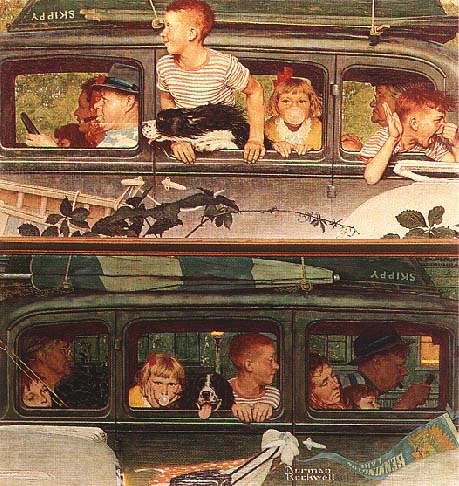
This one also made me laugh and smile and study the details…the grandmother in the back who never changed expressions, the tired parents, the kids in various stages. Who can’t make up a story with these images?

8am283

Saying Grace is so sweet that you are silent with them, you want to bow your head. Then you see the details in the curtains, the clothing, the grandmother’s rear sticking through the chair, the grandfather’s cane on the floor. Another story for us to all fill in the extra lines…

images-2

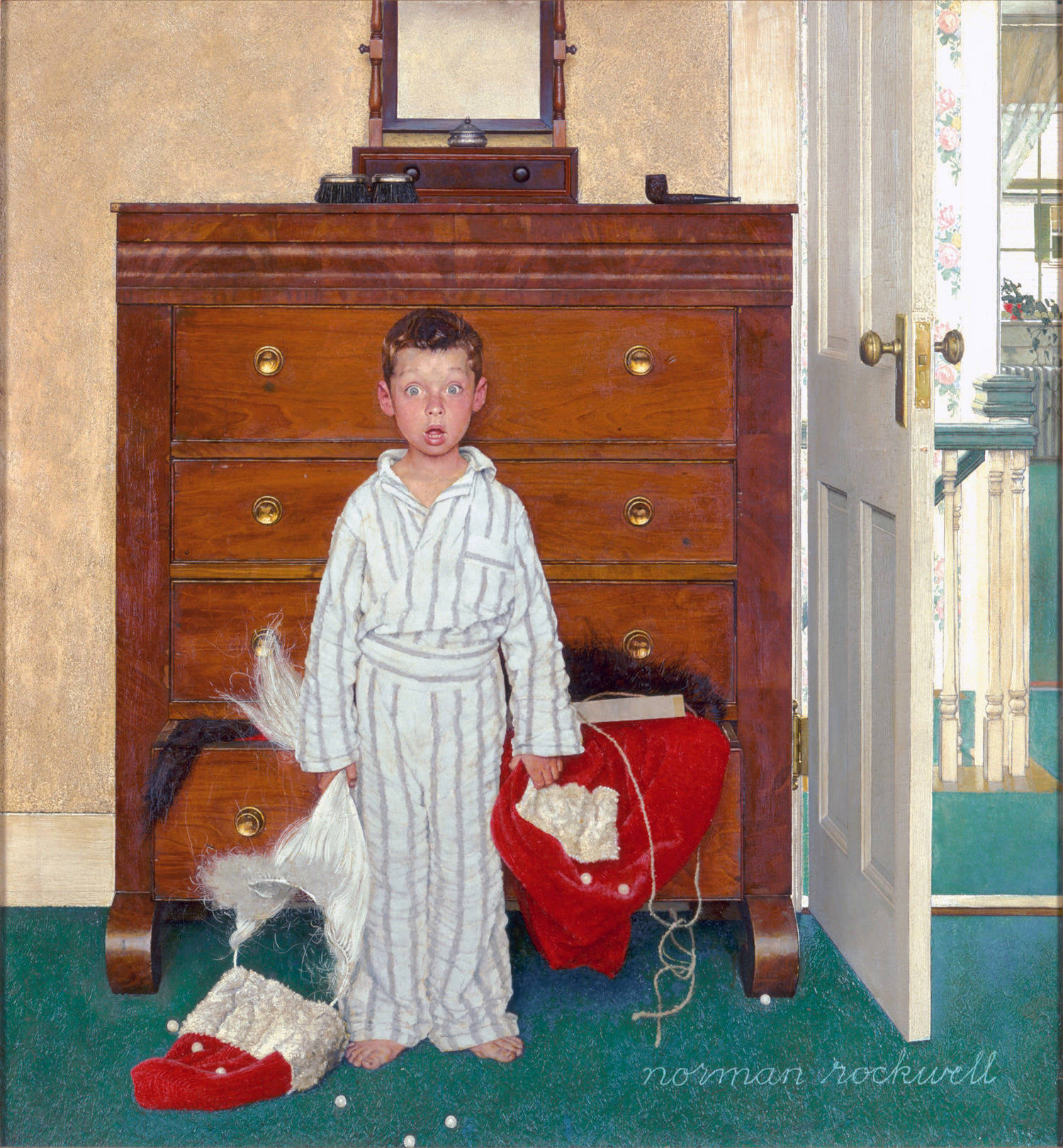
My love of Santa is well known and there were some lovely Santa portraits along with all the Christmas covers of the Post. This is still one of my favorites for all of us who keep believing even knowing the evidence…

Norman-Rockwell-The-Discovery-1956

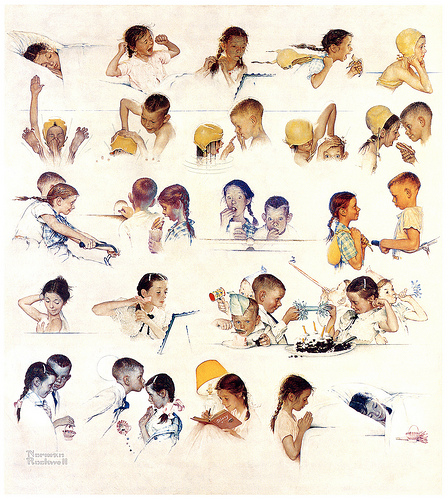
A Day in the Life of a Girl is so fun, so sweet, with elements that all females will remember. The boy version wasn’t on display, but it’s just as great…

4020719914_032de2af38

Rosie the Riveter is part of the museum’s collection and a whimsical look at the women who worked at home during World War II. This was a bonus after the travelling exhibition.

IMG_3623

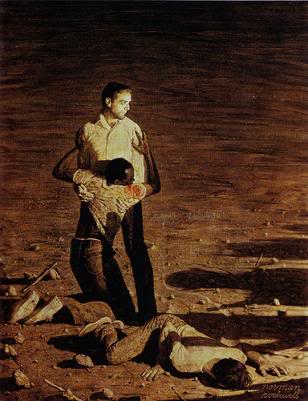
Besides the fun, sweet portraits of America as we were at times and would always like to be, there were powerful portraits of Presidents Eisenhower and Kennedy, and two of Rockwell’s most important works during the Civil Rights Movement. The exhibition had preliminary drawings and different drafts of his painting of 3 Civil Rights workers for a powerful, haunting, not-so-pretty picture of a moment in America’s history…

mississippisouthjustice

The iconic The Problem We All Live With was so beautiful in person. It was so familiar, such a powerful statement. But, the thing that struck me so strongly was the beauty of the painting, of the work itself. Norman Rockwell was a fabulous painter. His work is so real, so detailed, so skilled. The concrete wall behind the girl felt like real concrete, making me want to reach out and touch it. I didn’t of course – I know my museum manners. But, I’ve been up close to many of the world’s great paintings and these were as good as any I’ve seen. That’s to my untrained eye, but I do know what I’m looking at and it’s honest, thought-provoking, greatness.

the-problem-we-all-live-with

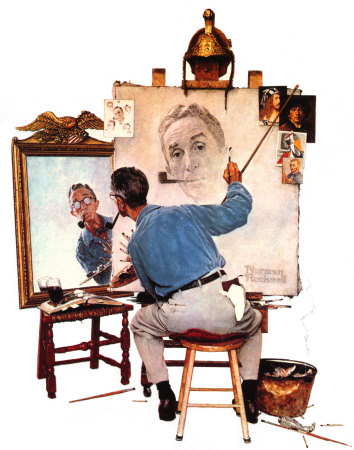
Rockwell’s self portrait is so famous that you almost go by it, having seen it reproduced so many times. Looking at the details, I was taken with not only the cleverness, the originality, the self-deprecating humor, but also the skill. On his easel, he has small paintings, homages to some of the greatest painters, all painted beautifully. That’s not easy to do either.

norman-rockwell-triple-self-portrait-posters_7833

I recommend that you find the closest place to see this exhibition or go to the Norman Rockwell Museum in Massachusetts to see more. It’s such a treat for those of us who grew up loving him and for those just discovering his incredible legacy. I think that future critics will be kinder and hopefully, recognize his important place in art, American history, and the American heart. I understand his personal life was not always as rosy as his portraits of life, but that’s what being a human is all about. We thank him for the vision of our country that he shared to make us think, feel, smile and laugh, remember, care. There should be more geniuses with a sense of humor, shouldn’t there?…

At the time of 9-11, I was working for the American Red Cross, trained in more disaster response areas than I could believe. On that day, I was working in a branch office in Owasso, OK and was paged to come back to the main office in Tulsa. My first job was taking calls from people trying to find family in the Twin Towers. I can remember trying to sound calm as I took the information from a man whose brother was on the 105th floor. We were there to calm as much as to help the callers find answers.

In the months following 9-11, the American Red Cross developed a curriculum for students in grades K-12 called Facing Fear. It was designed not only for terrorist attacks, but for natural disasters such as tornadoes, floods, hurricanes, and fires. As I learned, a fire in a home is as big a disaster to those people as a large scale disaster for many.

4619_thumb

I was one of the first to take Facing Fear to the schools, working with sixth graders at first and later with eighth graders. What I learned from that experience was how much our children absorb from us, how great our responsibility is to our young people. There were lessons on understanding that this is not the only tragedy in history. I sent the students home to ask their parents and grandparents about World War II, Viet Nam, Kennedy’s assassination, and other shocking and tragic historical events. It was a good exercise for all the generations to help each other put the latest horror against mankind in perspective. We weren’t the first or the last generation to face terrible things.

With the eighth graders, we had a session where we discussed Picasso’s painting, Guernica. I was impressed with their insights as they interpreted the images of a war they knew nothing about. It was a strong lesson for us all.

Pic1937Guer465

In another lesson, we talked about listening to the media and learning how to interpret what you were hearing. Most of the students got their news from very short segments of local news programs. Their parents’ prejudices and political views were very evident in the classroom as I heard statements that were shockingly full of hate and obviously directly from what they heard at home. I encouraged them to get more than one report of the news, to read news magazines (this was 2002, when there were still a lot of them around), to watch other channels, to go online to news sources. I hope they learned to broaden their views, to listen to more than one perspective before forming their own opinion.

The other lesson that stands out in my mind is when we talked about what we could do to make changes. We talked about ways that everyone can get involved in their community to make sure it is safe and secure for everyone, whether you were going to be affected by a terrorist attack or a tornado. It helped the students to know that they could have some power over their environment and could make a difference in the lives of others.

Facing Fear was an excellent curriculum and I learned as much from the lessons as the students did. I realized that facing our fears is about not feeling so helpless, about feeling like there is something we can do, whether it is a contribution of time or dollars. It also helped all of us put it in perspective as an event that was horrible and shocking, but that those events had happened before and would likely happen again. We need to live our lives in the best way possible, treasuring each moment with our family and friends, making a difference whenever we can. If we help one person, we have made a difference for that person.

After watching the reports of the latest event, the Boston Marathon bombing, I can only think of these lessons learned. We keep living and learning…and hoping for a world of peace and love.

A friend asked me to write a blog about Annette Funicello, who died earlier this week. We met her on TV when The Mickey Mouse Club first aired in 1955. It’s hard to describe to generations who always have had TV and have multiple 24/7 channels what this show meant to us back then. It was in black and white, or gray, as my kids used to call it, because we didn’t have color TV yet. Amazing, isn’t it?

The Mickey Mouse Club was on every day after school and we waited eagerly for it every day, like clockwork. If you missed it, you missed it. No videotape or DVR. Probably not even reruns. This was a variety show for kids in the days of Ed Sullivan, Milton Berle and numerous adult or family variety shows. This one was just for us. We also weren’t as sophisticated as 9 & 10 year olds today. Unless you had older brothers or sisters, you weren’t really exposed to the teenage things. By some odd coincidence, almost all of my friends were the oldest in their family, so we were pretty much kids. We didn’t hit puberty as early, we didn’t dress like small adults, and we didn’t talk about adult things very much.

The Mickey Mouse Club was part of the magic that was Walt Disney. It was a world of imagination and fantasy and innocence that we loved. I found this photo online of the Mouseketeers from those days.

mouseketeers

It seems so silly today that these kids clowned around with mouse ears, singing and dancing for us. Annette was adorable, a sweetheart both inside and out. You always knew that. She stood out from the rest from the beginning.

One of my favorite things on the show were the serials, continuing “dramas” featuring Annette, Tim Considine, Tommy Kirk. We couldn’t miss an episode of “Spin & Marty,” “The Hardy Boys,” “Corky and White Shadow.” The serials were fun, starring kids our age or a little older. They were the perfect way for us to have star crushes. Who didn’t think Tim Considine was just way too cute and Tommy Kirk was so funny and fun. And then there was Annette. I’m sure there were boys our age who were still watching The Mickey Mouse Club long after they had outgrown it just to see her. This Mousketeer was blossoming and it wasn’t hard to see what the boys were watching. She graduated on to her Beach Party movies, where that fully developed body and her singing were on full display. But, before that, she was the Mouseketeer all the boys loved and all the girls wanted to be. Always sweet.

We all outgrew the show and moved on to the boys and girls in our real lives, but those days with The Mickey Mouse Club are special memories. Who doesn’t hear that music start up and begin to sing…M-I-C-K-E-Y M-O-U-S-E. We really did have sweet childhoods way back then.

Here’s some Spin & Marty for you…

These quiet winter months have given me a chance to read more and I’ve met some interesting people between the pages – including electronic as well as paper pages.  I’ve been reading biographies the last few weeks and, as always happens in my case, I start looking for more information on the subjects I’ve met.  By coincidence, I’ve been reading about men and found that the women who shared their lives are every bit as fascinating, maybe more so.  You hear about the women behind the men, but I’ve learned that these women almost always are right there beside them, often through thick or thin in the every interpretation of that phrase from their wedding vows.

The first biography I finished was Steve Jobs.  Using his incredible creations made me more interested in the man with all the quirkiness and brilliance we have heard about.  I didn’t even know he was married, which was my ignorance but also due to his desire to keep his personal life private.  Laurene Powell Jobs is a remarkable woman who totally understood her husband.  He must have been hell to live with, but she accepted all sides of who he was and together they raised a lovely family.  She was also the philanthropic member of the family, giving her time and resources to educational interests of hers.  No matter what conclusion I had come to about them as a couple, the most touching thing I read was a description of the last meeting of Steve Jobs and Bill Gates, when Jobs knew he was dying.  One of their topics was how lucky they both were to find wives that understood them so well.  Thanks that they recognize it!  I don’t think there are biographies of Laurene, but all who marvel over Jobs and his Apple products in our lives should also be thanking the stars for this beautiful, strong woman who stood right beside him.  They were a unique and modern love story.

Unknown

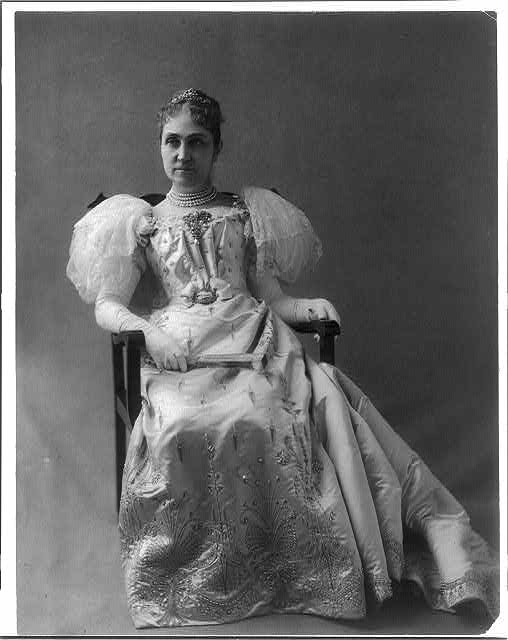
The second biography I read was The Hearsts, which I had purchased right after visiting Hearst Castle last summer.  While touring that incredible home, I was as intrigued by William Randolph Hearst’s parents as I was by him.  George Hearst was an uneducated genius at mining who lived in the right time and was in the right place – much as Steve Jobs was.  He became one of the richest men in the world through common sense and hard work.  One of his greatest decisions, at the age of 41, was to return to his hometown in Missouri to find a wife and come back with 19 year old Phoebe Apperson, a girl of some education and some teaching background.  Maybe his skills at mining taught him to spot something valuable in this young girl or maybe he just got lucky.  Her accomplishments influence us today as much as either her husband or her only son and her influence on both of them made them the men they became.  She did it all through the ups and downs of health and wealth.  We should all know her story without thinking as she helped bring us kindergartens and the PTA.  She was instrumental in helping the University of California develop and grow, and marched for women’s votes when she was seventy.  Essentially also a private person, she lived a large public life in a marriage that was based on love and respect, if not too many shared interests.  Who would have ever suspected all that this midwestern girl would become?  Another unconventional love story for the ages.

hearstphoebe

The next book I read was The Aviator’s Wife, a novel about Anne Morrow Lindbergh.  I’ve read many of Anne’s books and diaries and consider A Gift from the Sea to be a must read for all women.  Once again, the husband was a man larger than life and the wife was a young girl who loved her privacy.  If we think that the media hounds political or other public celebrities today, we have to look at the horror that was the life of Charles Lindbergh and his family as they dodged the press.  The handsome aviator was a rigid, demanding man who could not be wrong and that is the worst to live with.  Fortunately, Anne also loved him and was willing to meet the challenging demands he made of her.  She became the first woman to receive a first class glider pilot’s license and learned to navigate for her husband on their world wide flights.  Nobody could imagine what the kidnapping and murder of their first child would do to the world’s most glamorous couple.  It contributed to making him colder and more withdrawn and her stronger, for sure.  They persevered and held together, with Anne truly into her own when she wrote A Gift from the Sea and became a recognized author, all while raising their five children.  This was not an easy man to be married to, but Anne stood beside him to the end, becoming truer to her own dreams.  I’m not sure his star would still have shined as brightly to the end, even with his accomplishments, without her.  Even with his hidden families, I do believe he knew she was always there.

images

After reading these books, I was also remembering Mary Montgomery Borglum, the wife of Gutzon Borglum, sculptor of Mt. Rushmore.  I saw a horrible show on him on the History Channel this week which only skimmed the information I had learned from a stack of books I read about them after visiting Mt. Rushmore.  Once again, this quiet wife stood beside this giant genius man and kept life sane in his larger than life quest for his art.  There are days I’m very glad I wasn’t married to a creative genius!  Hugs to these women who stick with that life.

Bluebonnetboquet

There are so many of these women, some standing beside men who wish they would step back, while others were proud to have them there.  The message of the stories of the famous should be to look around us at the women we know who do the same.  I know women have come a long way, but most of us still take our responsibilities as wives and mothers seriously.  Most of us give little thought to prioritizing our lives with family first.  What I’ve found, like the women in these stories, is that having that as a priority often brings us knowledge and opportunities that we use to become even stronger women than we would have without that husband and children.

The joy of discovery is that one inquisitive thought leads to a discovery that uncovers new information which leads to new insights.  Thank you to all the women I continually discover who have inspired me throughout my life.  Today, I salute Laurene, Phoebe, Anne and Mary!  There are so many more…

One of the books I got from my mother was her 1946 book of household information.  My mother threw herself into being a housewife when she got married in 1945.  When I open this book, I like to think of her reading it intently and picking the hints she would use.

IMG_3448

I love these old books for their everyday wisdom, the simple illustrations, and to see how far we’ve come.  I also learn a lot of useful tips even for today.

Obviously, this book will be used in other blogs because it’s too funny and interesting not to share.  Today, I picked two tips that stood out.

The first is timely since we are still in cold and flu season.  I absolutely never thought of making pockets for my sheets.  Maybe because I hate to sew and don’t have scraps of old sheets around to use like my grandmother did.  I don’t feel guilty because I do send my old sheets to Goodwill where they probably ship them off to Africa for re-use there.  Also, I don’t sleep as neatly as this person must have.

IMG_3446

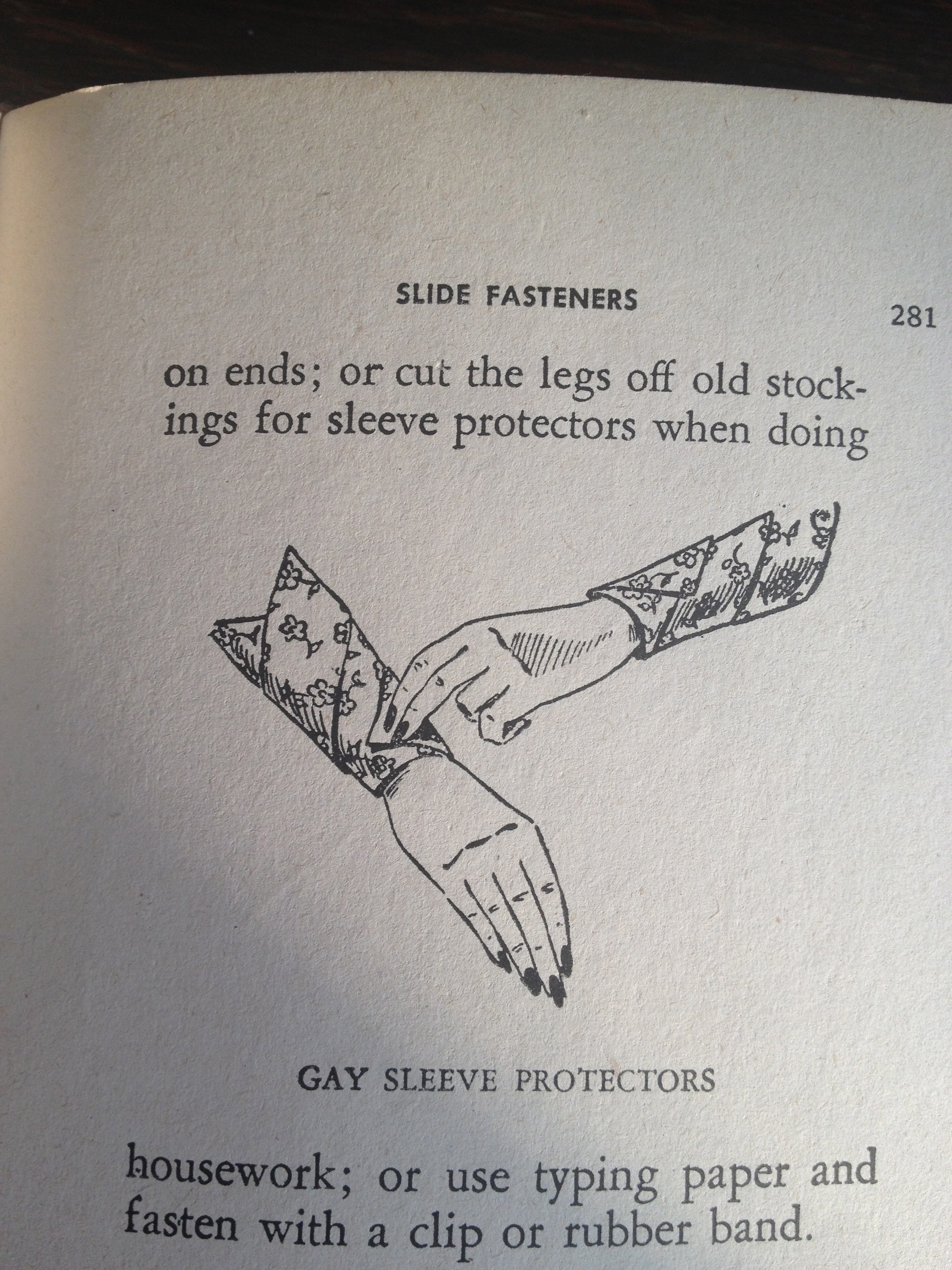
The second tip is for sleeve protectors when you are doing housework.  This one blows me away.  Obviously, these women were dressed in long sleeved blouses or dresses, but couldn’t they just push up the sleeves?  The “gay sleeve protector” is made from colorful fabric, once again found around the house, with snaps sewn on so you could wind it around your arm.  This was the fancy version.  I’m trying to envision this one and the trouble they went to making it work.

IMG_3447

When I’m trying to explain to my kids that I ran a house without an answering machine, computer, or cell phone, I have to remember that I grew up in a time when we didn’t have clothes dryers, barely a washing machine (my grandmother had a wringer washer), dishwashers, electric vacuums, much less television.  By the time I was married, we had all of those things.

My huge respect for the women in my family who preceded me continues to grow.  I remember hanging out the clothes with my mother and grandmother, using the push sweeper, and washing the dishes (which I’m actually doing now since my dishwasher isn’t working).  None of those things was horrible, looking back.  But, we love our progress that lets us spend less time cleaning and more time….doing what?  I think we trade one set of chores for another as women.

The Beatles are forever linked in my memory with my freshman year in college.  I was 17 when I left for Oklahoma State University with very little preconception of what the experience would be.  I picked that school on my own, probably because of friends going there, and was adjusting to all the freedoms and adventures that go with it.  I had never lived anywhere like the dorm with a stranger for a roommate, community bathroom, little privacy, and a whole lot of new and old friends.  In that time, there was a phone in the hall and pay phones on the first floor.  We did have a sink in our room, but no big technology or major appliances other than a lamp, hairdryer, popcorn popper, clock-radio and record player.  Yes, record player.

In November, just as we were settling in, President Kennedy was assassinated.  I can’t tell you what a shock that was to kids away from home who had never felt unsafe before.  I heard about it in badminton class and we sat in shock.  Don’t laugh at the badminton class.  We had to have four gym credits for our well rounded education.  I did quite well in badminton.  Anyway, the assassination made us call home to check in with our parents, stay up late discussing it with our very new friends, and watch it over and over on the television set in the basement of the dorm. Our world had changed forever.  Looking back, everything changed that day in ways that became more pronounced every year since.  From a life of innocence and tranquility (at least to us), every year brought more violence, more disruption.  Nothing was ever the same.

After the holidays, we heard about a new musical group that was going to be on Ed Sullivan.  I think I read in the paper about The Beatles and the uproar they were causing in England.  The only thing close in our lifetime was Elvis, but we had been younger when he was starting out.  The boys we knew had crew cuts, the Twist had been popular the year before, and we had embraced folk music, listening to the Kingston Trio, Peter Paul & Mary, Joan Baez.  We went from coffee shop to rock and roll.  The Beatles came at a good time.  We needed a pick me up after the darkness of fall.

On the Sunday of that Ed Sullivan show in February, someone brought a portable TV from home.  The closest station was out of Oklahoma City, so we balanced the set on the window sill of a fourth floor dormer window and wrapped the antenna with foil for better reception on that tiny screen.  All the girls who could cram in that dorm room, girls from towns of a few hundred to girls from the cities, were waiting to see.  Our first view brought exclamations.  Their hair was long!  I remember commenting it looked cute.  We all thought they were cute…wonder what the guys who were watching thought that night?  And there was the music and the girls in the audience screaming and the boys singing to that seemingly simple beat.  We loved it.  We somehow knew that this was another historic night, another milestone we would talk about in terms of where we were when we first heard them.

Could two events be so different and so important in such different ways?  That was the year I went from being 17 to 18.  That was a year to remember and learn from.  My freshman year in college was an education of a different kind it turned out.  I remember it well.

Yesterday was a trip to Van Buren, Arkansas.  Yes, I am truly a senior when I am traveling to see fall foliage and ride trains!  The historic part of Van Buren is charming and well preserved.  They only messed up a few buildings when the siding salesmen came through trying to modernize it back in the 60s.  It was fun to walk down to the Arkansas River and see the wide water, unlike Tulsa where it is pretty dry right now.  I liked the old Anheuser Busch building with the original eagle logo still intact.

Riding the train up to Winslow, the highest incorporated city (pop 399) in Arkansas, was a trip back in time.  We were on a 1948 car called the Silver Stream and there were other cars from the 1920s.  You could also ride in the caboose.  It took a bit to slow down from the fast paced ways we usually travel, but it was worth it.  The drought has hit all the states, but we still saw beautiful fall colors as we went higher.  After traveling at 8-9,000 feet in the Sierras this summer, it seems funny to think of 1,729 as up in the mountains.  The conductors were train buffs of all ages who volunteer their time and kept it lively with their commentary.  There was a car full of second graders from one of our stops.  On the way back, we stopped to let them out at their school – how fun is that?  That must have been the noisy car, especially going through the tunnel when they tell them to scream!  I tried to imagine traveling across country like this a century ago.  As always, it depended on which kind of car you were able to afford as to whether you were scrunched in with strangers, loud conversations and interesting smells or whether you could ride in style in a private car.  It beat the stage coach or wagon.

Coming home, we detoured north from Vian and took the scenic route past Lake Tenkiller towards Tahlequah.  What a beautiful drive!  Every place has its own beauty and this is one of my favorites in my home state.  It’s pretty wild and wooly in those hills, but it’s gorgeous country. There’s another drive where you go by the lake more, but I loved the trees.  I’m so grateful to get to enjoy a perfect 75 degree, cloudless day without anything pressing….

DSC_0006

DSC_0016

DSC_0030

DSC_0038

DSC_0059

DSC_0070

DSC_0075