
Today is the 25th Anniversary of 9/11 and I am struck by the millions of Americans who weren’t alive when it happened or are too young to remember, including my 8 grandchildren. It’s too important to forget, impossible for me and I was just a 55 year old widow in Tulsa, Oklahoma at the time with seemingly little direct connection. But, we all have stories and they are all a piece of the history and its lessons, so I will share my memories that I want my grandchildren to know.
In Oklahoma, we had already been through the Oklahoma City bombing where almost everyone knew someone who was impacted directly. We had experienced what an attack does to a city, state, nation. I remember standing before the wreckage with my husband, maybe a week later, looking at the damage that spread miles away to the high school my father had attended, looking at the teddy bears and messages hung on the fences surrounding the building. The city where I was born was showing the world how to take care of each other in a disaster. To this day, I still fear homegrown terrorists more than people from other cities with good reason. There are little camps of them throughout our country, filled with hate and anger.
By 2001, I was widowed and had five little grandsons. I had made changes and was now working at the American Red Cross, where I had once served on the Board of Directors. I was the representative in two counties outside of Tulsa, with offices in each. My three daughters were busy with their little ones, with my two youngest daughters ready to deliver babies within two months. My son, my youngest, was in Seattle having treatment for a rare cancer at the University of Washington Medical School.
On the morning of 9/11, I was in my office in Owasso, Oklahoma, a Tulsa suburb. I placed a call to Southwest Airlines to book a ticket to Seattle to bring my son home after his treatment ended. One still had to call the airlines way back then. When the agent at Southwest answered from the office in Dallas, she told me that an airplane had just crashed into the World Trade Center. My initial thought was that she was talking about the World Trade Center in Dallas, part of the market centers there. I pictured a private plane hitting a building I had been in many times. When she explained it was New York, I was confused. When I got off the phone, I tried to get on the computer, which was dial up access and slow. Of course, all access was extremely slow that morning as the whole world tried to log on. Then my Red Cross pager, which I had with me 24/7, beeped and I was told to come back to the home office in Tulsa. On the 15 minute drive, I listened on the radio, all the time watching an airliner coast to a landing in Tulsa with the backdrop of the BOK Tower in downtown Tulsa behind it. The BOK Tower is a replica of the Twin Towers, much smaller, of course. It was a surreal image with what I was hearing reported.
Arriving at the office, I found a television to watch what was happening. The towers hadn’t fallen yet and I was assigned to the Call Center, one of the Red Cross functions in any disaster. The American Red Cross works as a center where families can reach out to find out the status of relatives affected by a disaster. We were all trained in this function. The calls were coming in quickly to our office full of staff and volunteers. The best we could do was collect information so that they could be notified when anything was confirmed. We filled out a lot of forms that day. The call that will forever live in my heart was talking to a man whose brother worked on the 105th floor of one of the buildings and wanted to know if I thought he was ok. All I could do was try to be calm and hopeful and take the information. We watched the towers fall soon after that and I don’t know his brother’s fate.
The day of the disaster, a long time friend of mine’s older son was working as a non-military person at the Pentagon. Of course, she was scared, but he and others were led away from the building and a thoughtful officer made sure he could call his mother to let her know he was unharmed. A sigh of relief for all of us who have known him his whole life.
The American Red Cross is an organization mandated by the US Congress to assist in disasters, which means any disaster from a single home fire to a mass disaster. They are all the same to the person or persons involved. The Red Cross is also an organization comprised of highly trained staff and volunteers, with the volunteers outnumbering the staff. Because everyone must treat people affected by a disaster regardless of their religion, race, nationality, sexual preference, etc, we had a lot of diversity training. My good friend, Dannette, was the Director of Diversity in Tulsa at the time and wrote much of the curriculum used nationally then, including working with Native Americans, Hispanics, elderly communities and others. I learned so much from her. The attack happened on Tuesday and she was sent to New York on Saturday, one of the first people allowed in. She was stationed at Ground Zero for the next three weeks with the responsibility of going to apartments in the area to check on residents. One of our group of Red Cross friends called her every night so she could unload the enormity of what she was experiencing. She described the sounds, the smells, the dust, the people. It was crushing her inside, I think. When she returned, we greeted her with a welcome home party to give her hugs and hear the stories. In the following years, she developed health issues that were connected to those weeks in New York, but it took years to get her approved for government assistance. Yesterday was her birthday and she is in a memory unit, probably connected to her experience there.

Disasters don’t stop the day of the event. The consequences multiply and keep affecting everyone. I have a dear friend since junior high, Robert W. Jordan, who is an attorney in Dallas. He had done some work for George W. Bush, who remembered him and appointed him as Ambassador to Saudi Arabia on September 10, the day before the attack. Bob went at the worst possible time and I remember emailing him (no texts or other ways to reach him back then) to make sure he was safe. He later wrote a book about his years of service, “Desert Diplomat: Inside Saudi Arabia Following 9/11.” Talk about being thrown into a situation he had never expected. He’s still involved with leaders in Saudi Arabia and think tanks here working on peaceful solutions to world problems.
When the attacks happened, I was terrified for my son, who was in Seattle and hard to reach. Cell phones were new and long distance calls were expensive. We relied on email and calling cards to reach each other. He would go to a little computer cafe near his temporary apartment near the campus to check in. When the world realized it was a terrorist attack, nobody knew if there would be more attacks and he was in a coastal city. Everything was unknown then. I wasn’t even sure he knew about the attacks since he didn’t have a television where he was staying. I reached him and kept in touch until the time came for me to come move him back home since his treatments were over. The whole world had changed from the time I flew out there with him in late August. There were security checks at the airports which we had never had before. We took a cab to the airport and were stopped in a line before we got close for security checks. He had a lot of luggage, which wasn’t a big deal when he left, but he had purchased things and accumulated while he was there so we were dealing with bulky bags and things. It was much more complicated to travel immediately after 9/11 and hasn’t gotten much easier. We came home to my first granddaughter/his first niece, who had been born while we were gone. My sixth grandson was born the next month and my second granddaughter, my son’s child, was born eight years later in Seattle. None of my grandchildren is old enough to remember.
Following 9/11, the American Red Cross developed a curriculum for students in grades K-12 called Facing Fear. It was to teach students of all ages how to deal with events in the world. I was trained to teach this and took it to schools in our area, which I’ve written about in an earlier blog on this site, “Facing Fear,” which you can search so I won’t repeat myself. I don’t know if those lessons are still used, but it was a well thought out way to help students. I think it would be useful today, thinking about the lessons we used.
Another memory that popped up today was of my Red Cross friends and me working at one of the local television stations to take donations for victims of 9/11. We stood outside and people drove up to hand us money – and teddy bears. The generosity was incredible. People who didn’t have much themselves handed us the coins they found under the seats in their cars. We got small bills and large checks. One family brought a teddy bear so big that he took up the whole back seat. They wanted to help so badly, in any way they could. We had seen this before after the Oklahoma City bombing, when people gave teddy bears for the children, which was sad since the children had been killed. I assume they went to siblings or others, but I know there was a warehouse full of them in Oklahoma City. You can’t refuse people who want to help and I guess giving teddy bears is a way to send a hug or comfort. The people who had been so helpful in Oklahoma City traveled to New York City to give back with what they had learned from their experience and I think they shipped a lot of bears that direction, too.
Huge events such as 9/11 affect everyone in different ways. Even though my involvement was very remote, I’m sure it is similar to many who knew someone or were affected at work or lived in New York or the area. Everyone in America felt it and it was a time of massive patriotism. There were flags everywhere and gratitude for our leaders and protectors. We were one country united within the horror. I still remember being grateful that President George W. Bush took great care to ask the nation not to blame our Muslim neighbors for the deeds of a few. We took great pride in our country while we faced a world where we now knew we were vulnerable.
Those are my memories, which are such a tiny part of what happened. I suppose this is my version of “what were you doing during the…”. Like horrors that happened in other times, this one needs to be remembered so that we learn how to prevent, how to respond. There is no limit to man’s inhumanity to man as shown throughout history, but we must always hope that we can be better. We can at least read all the stories and find ways that we as individuals can treat others as we would like to be treated. It’s the only way we survive.





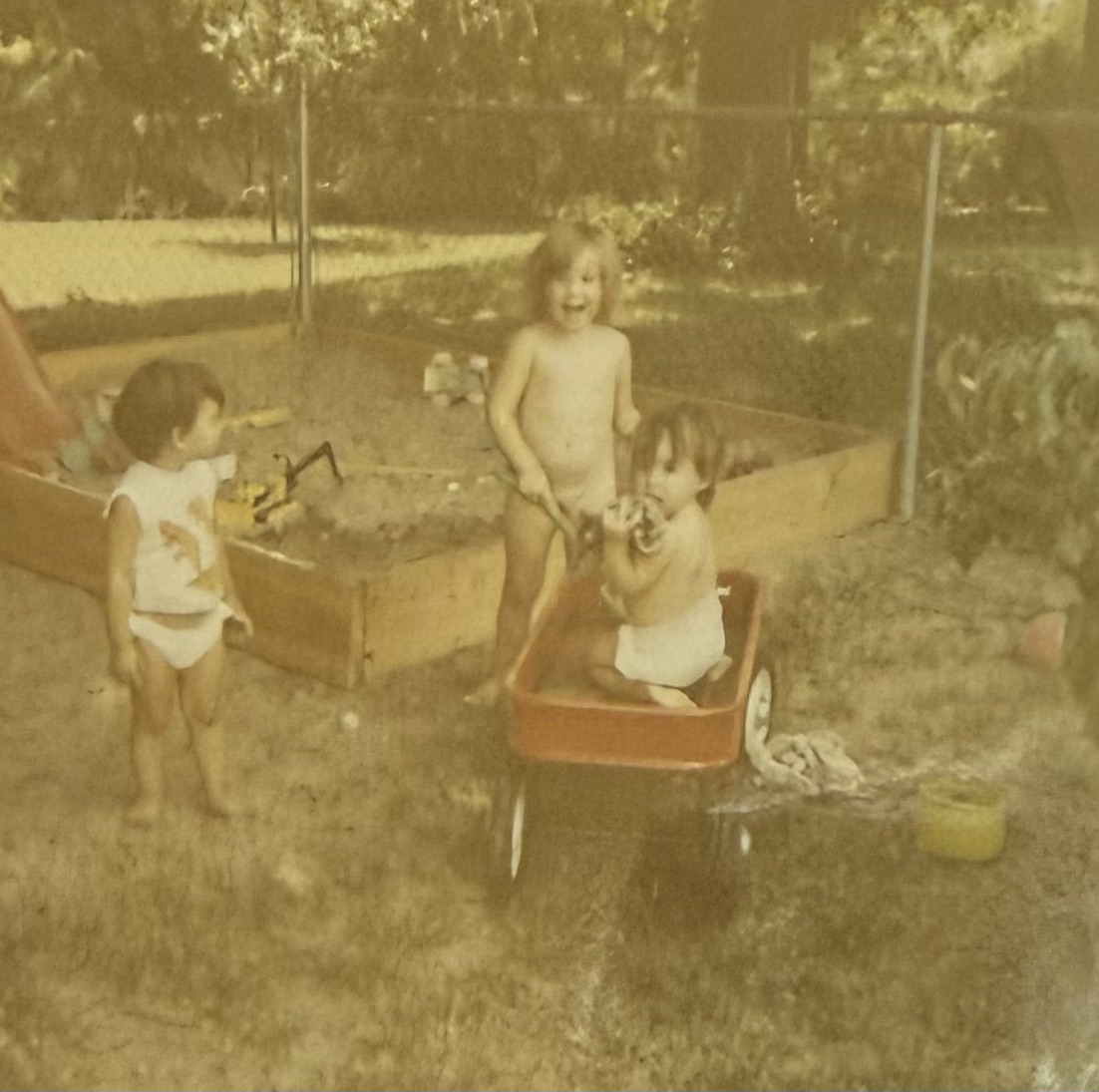



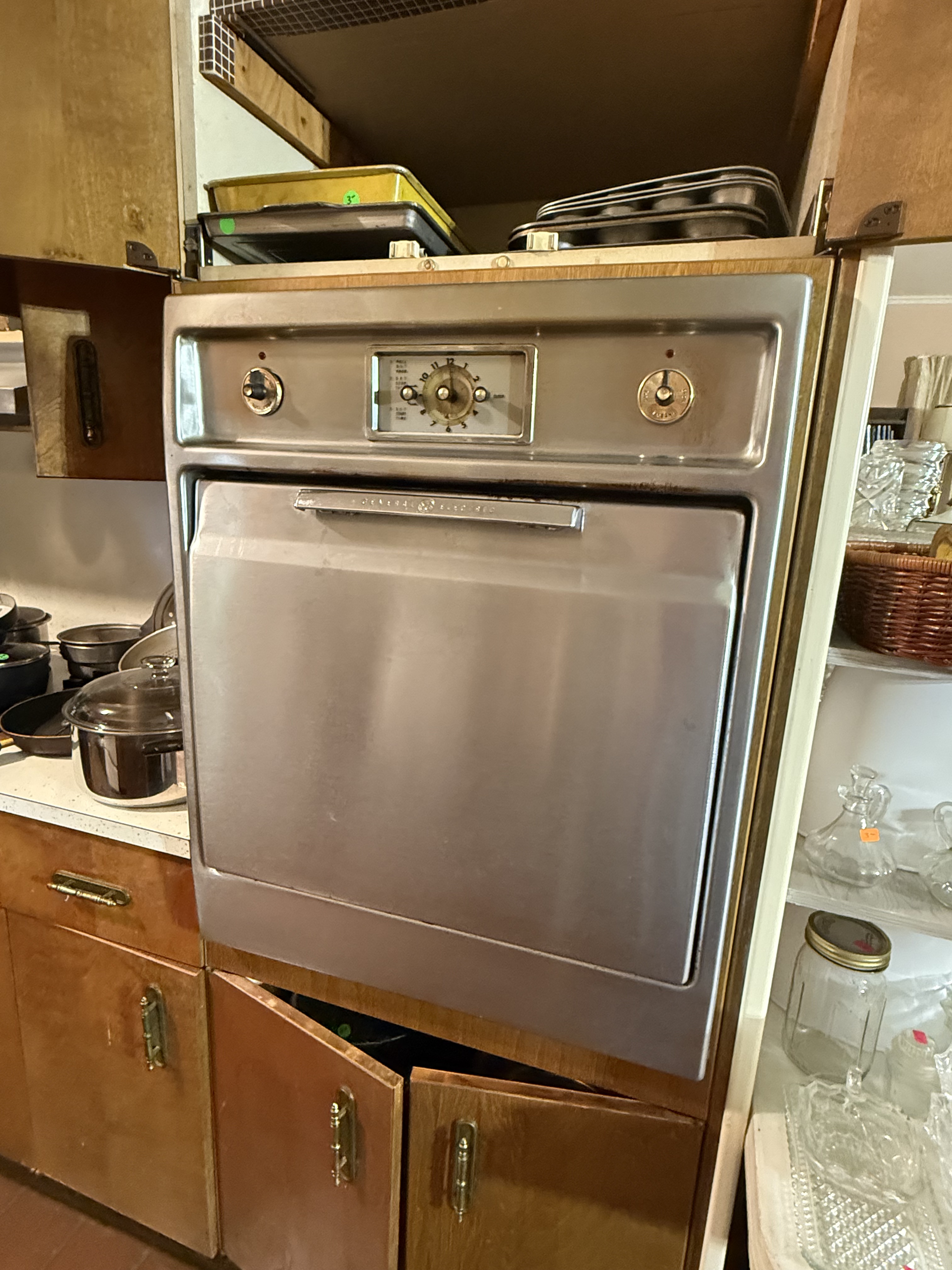
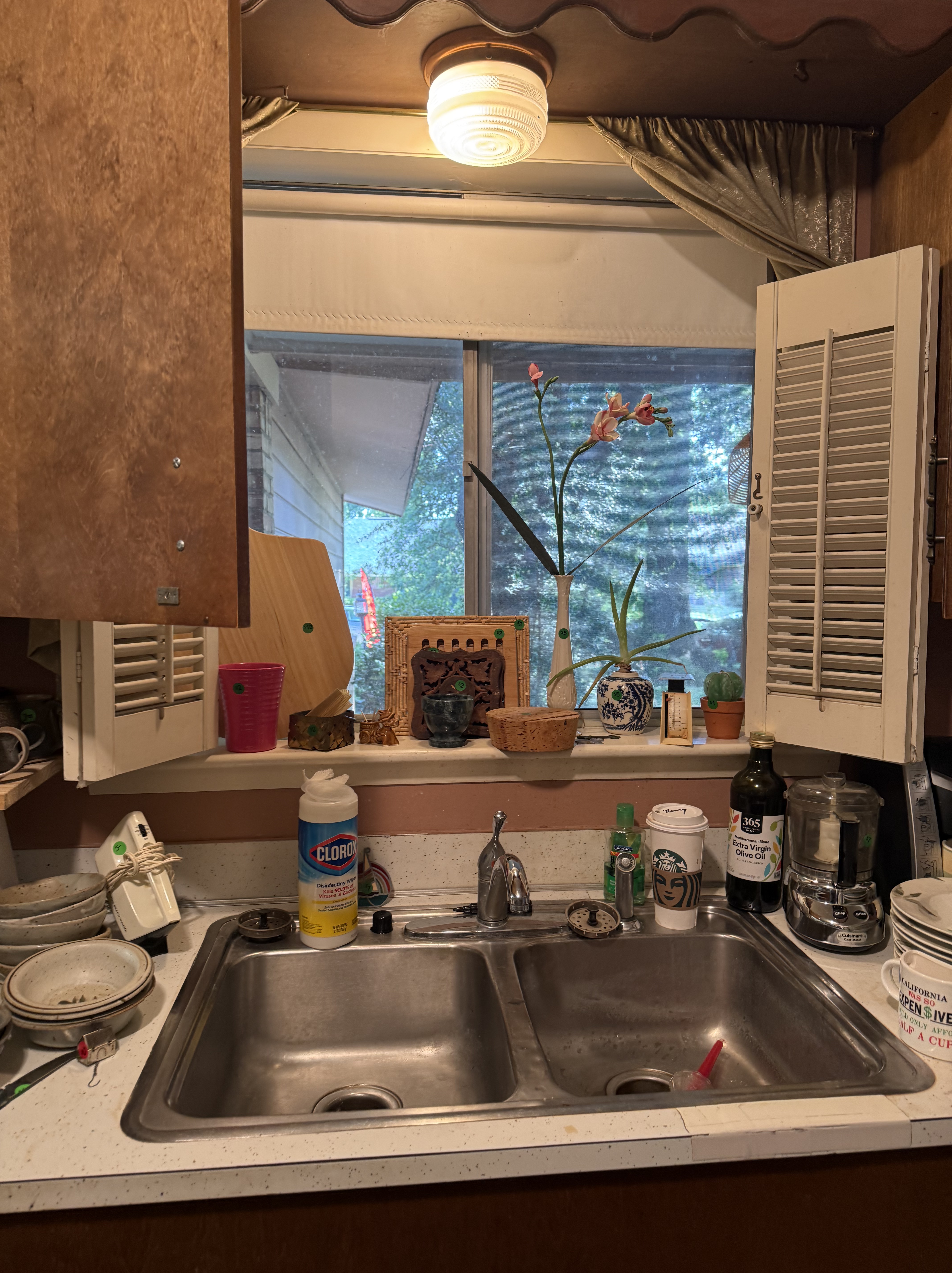
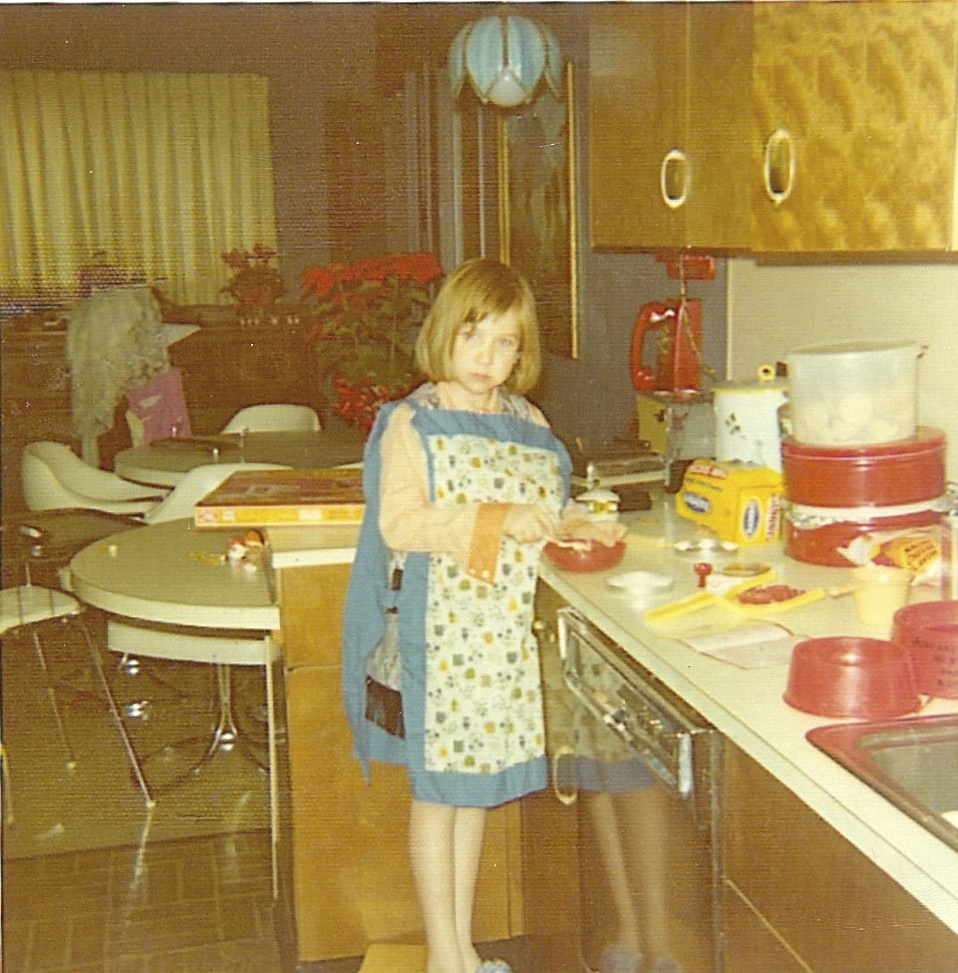
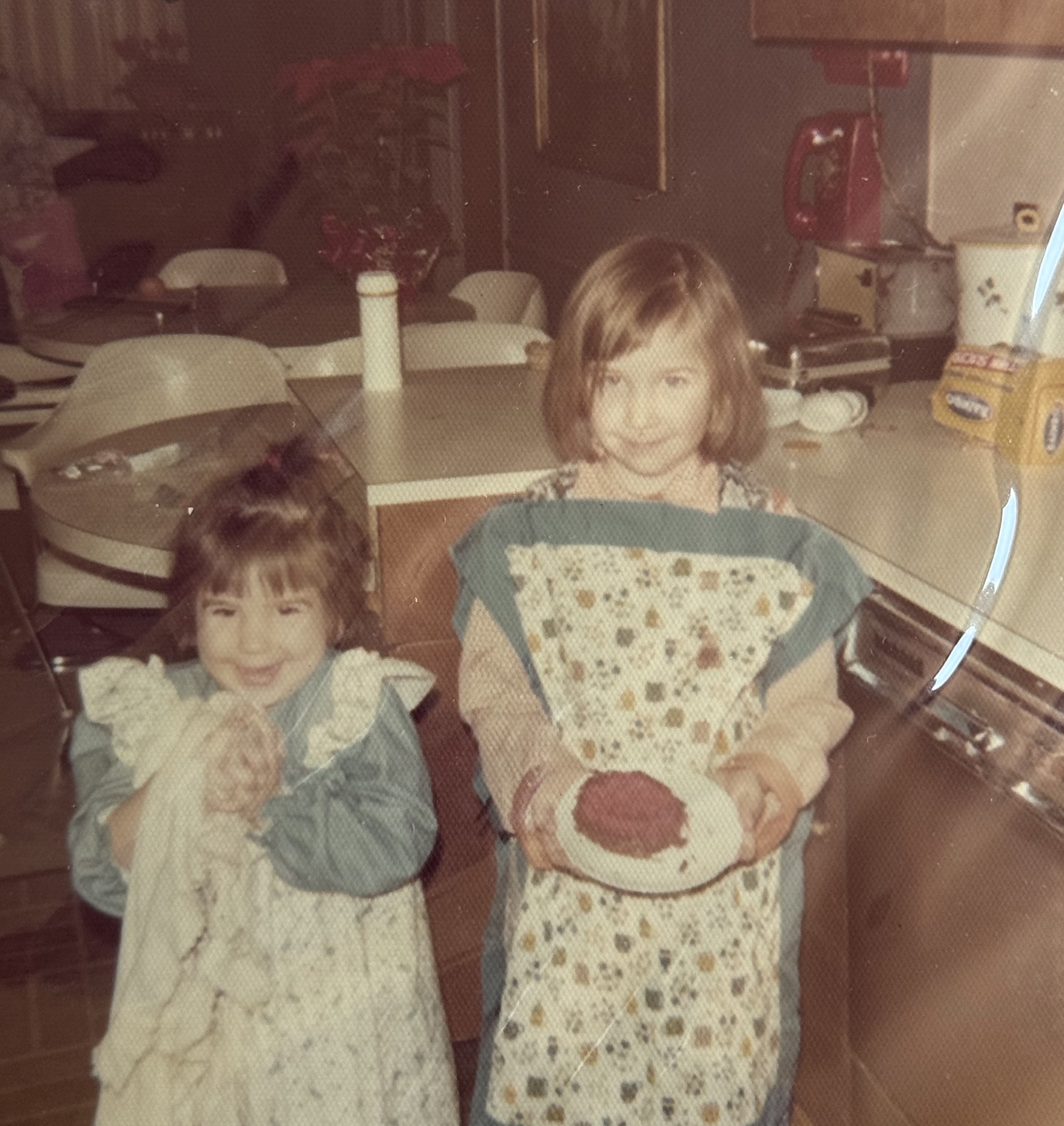


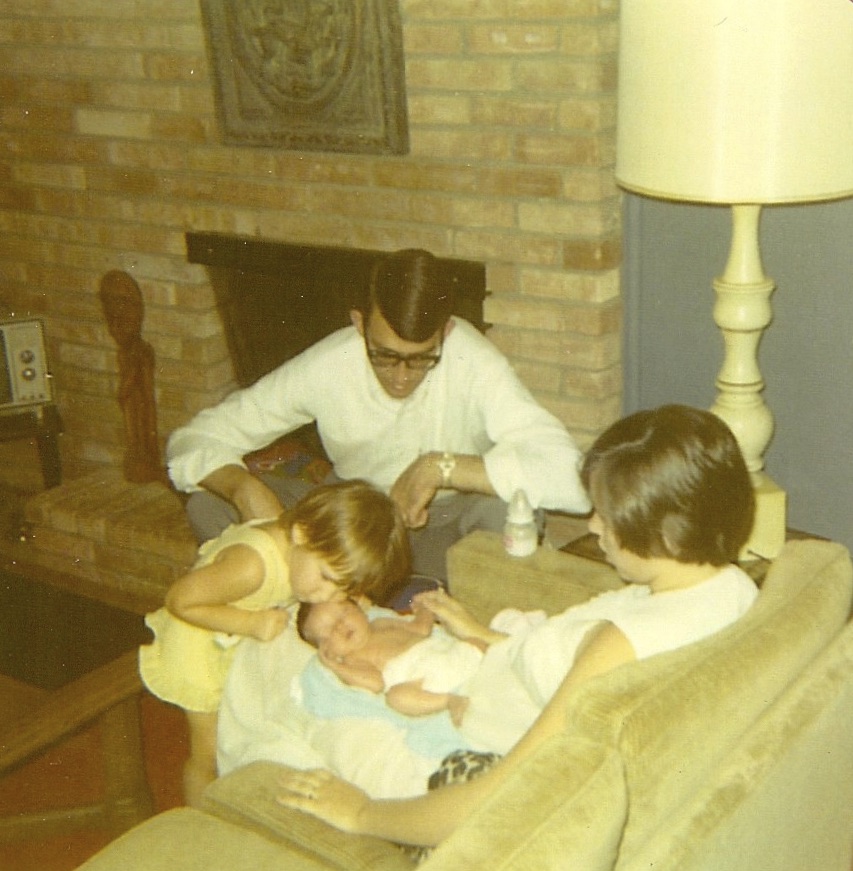









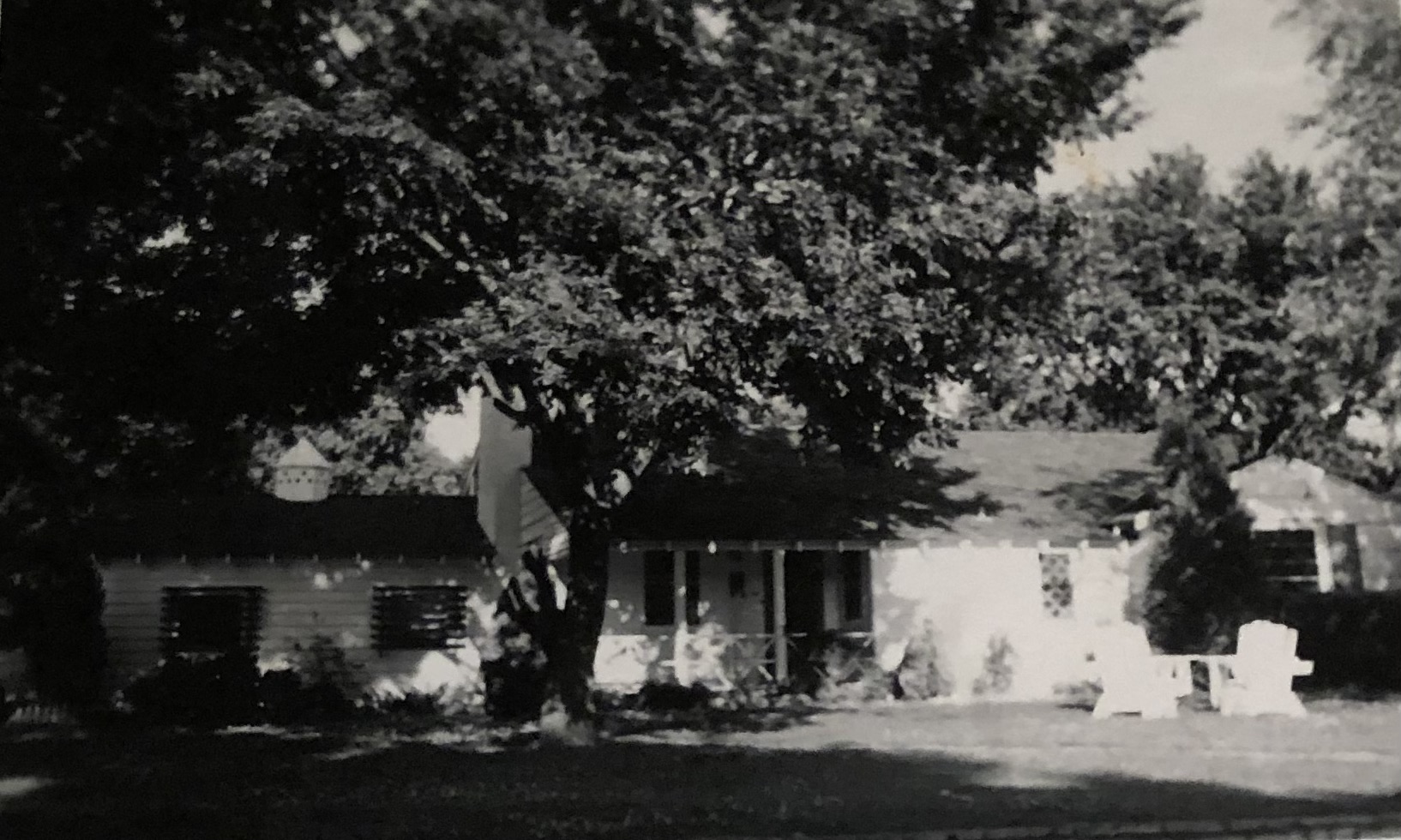
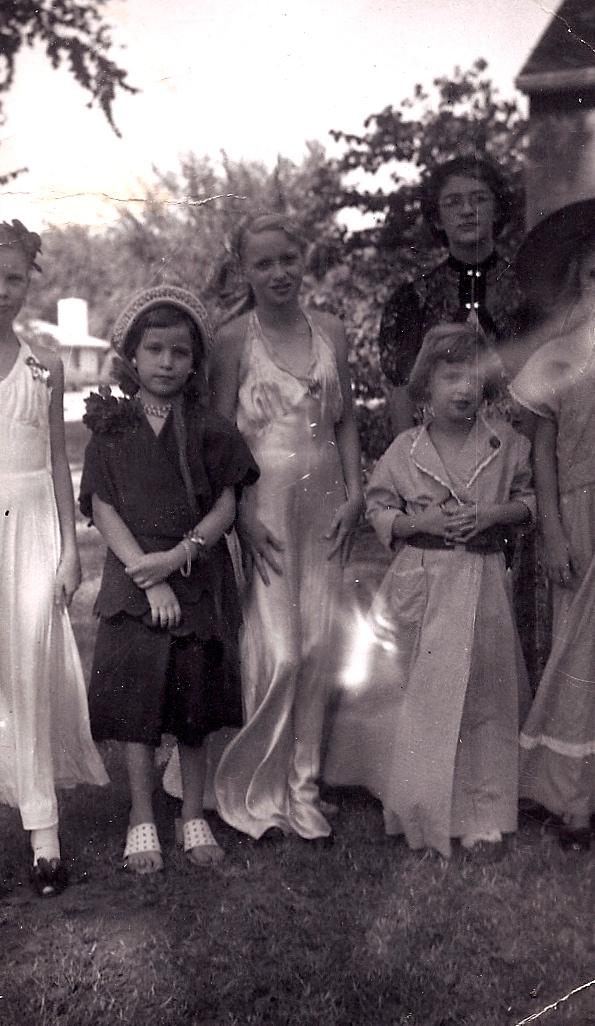


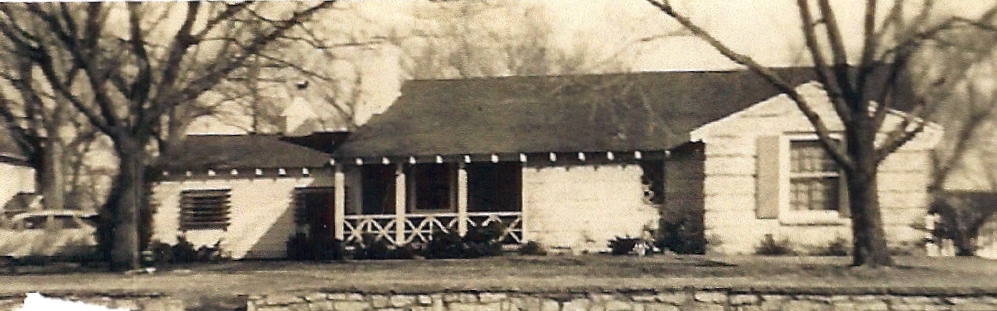











 At some time, between 1930 and 1940 (according to census records), my grandmother moved her family to the house I always associate with her. My great-grandmother owned property around town and made sure that each of her grandchildren owned a house. My mother told me they had dignity during the Depression because they owned their home, even when the gas was turned off. My mother also spent a lot of time with her grandmother and could describe her, her clothing and everything in her house and yard in detail. My great-grandmother died in 1940 so I never got to meet her.
 My mother left home after high school and sent money home to help her mother for the rest of her life. Mommy went to business school, returning during World War II to work at Ardmore Air Base, where my grandmother worked packing parachutes. My father was a Squadron Commander, a Lt. Colonel, assigned to Ardmore after he had completed his 50 missions, for which he was awarded the Distinguished Flying Cross. They were a glamorous couple when they married and moved to his home in Oklahoma City, where he was in business with his father, brother and brother-in-law.
 By the time I was 2 1/2, my family had moved to Tulsa and lived in a nice house with modern appliances (well, modern for 1948). We were comfortable, my parents each had a car, and my mother had help with my baby brother and later my sister. It was a different life from my grandmother’s, but I didn’t really think too much about it. I realize now how much I learned from my visits with her.
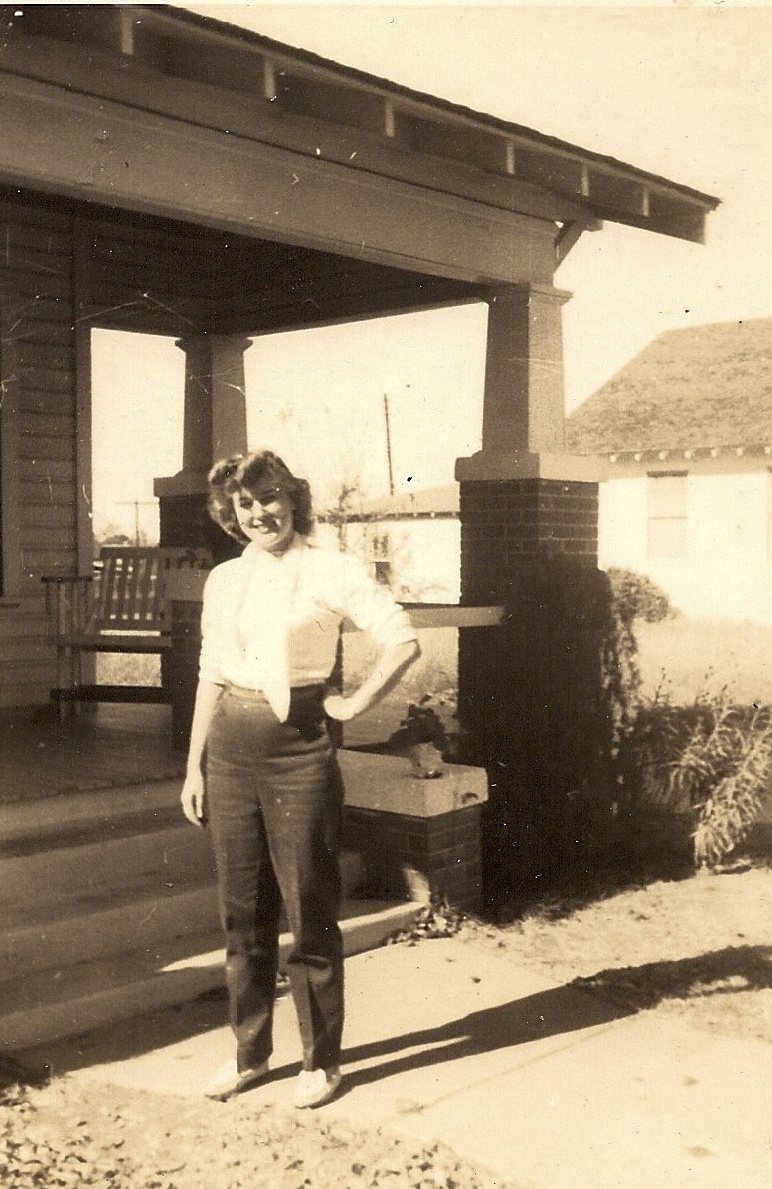
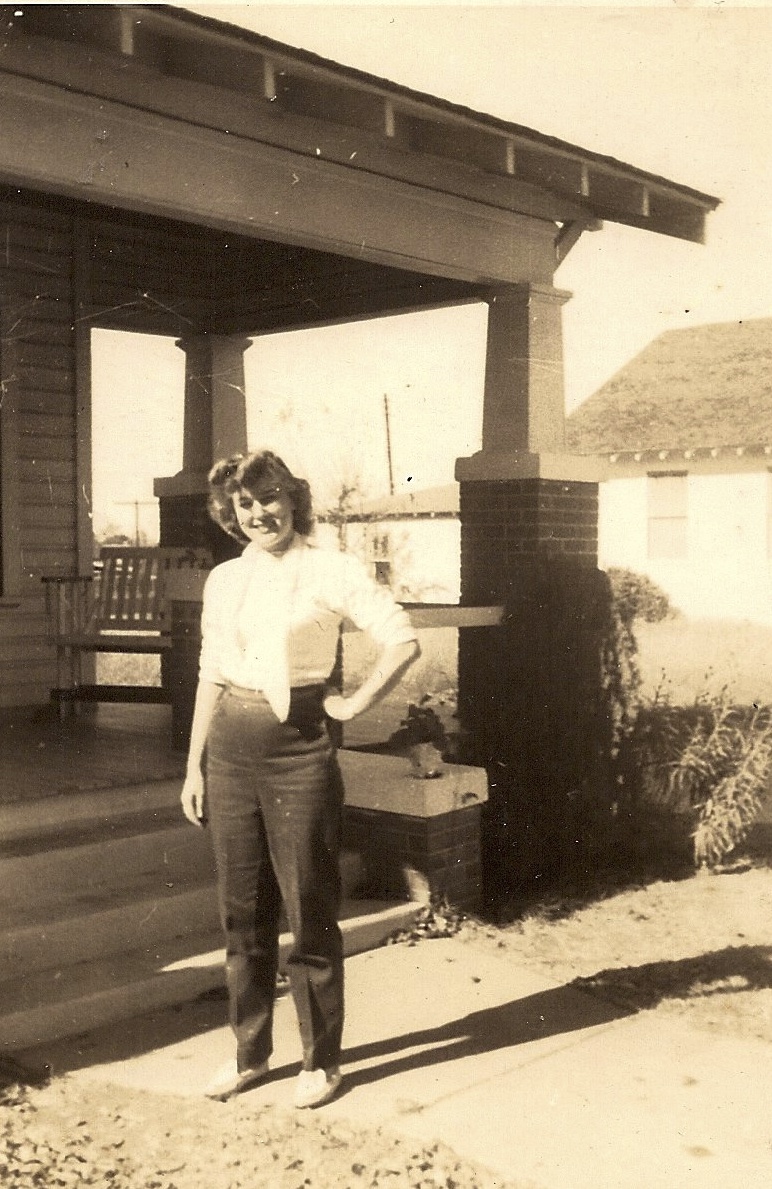 I spent hours alone, with my brother and sister, or with my cousin, swinging on that porch swing, playing on those stairs, catching horned toads in the yard. In the back yard was a pear tree where we ate the juicy fruit right off the branches. She even had chickens for a short time. Her garage was another source of amazement, where we could explore the boxes and trunks. My grandmother also had a wringer washer and a clothesline in the back yard. We had a clothesline at home, but the fun of running clothes through that wringer out in the yard never ended for this kid from the big city. We walked down the street to the ice house for chips of ice in the summer, visited a neighborhood store nearby with the nickels my grandmother gave us, or walked downtown to see the big stores or visit my uncle at First National Bank where he was a clerk and later Vice-President until his health made him retire early.
 I don’t remember what else my grandmother cooked in that kitchen, but I know she made Kool-Aid and poured it into ice trays before we arrived. We called them squares and we could take a couple of the frozen treats in a bowl to suck on while we pushed ourselves as high as we could on the porch swing. I spent my days listening to her old 78 records or looking through her cedar chest where she kept a fur stole and a tissue wrapped piece of her hair. I don’t know how she got a fur stole and why people kept their hair when it was cut, but it was endlessly fascinating to me. Her cedar chest is in my bedroom. I can’t remember if the fur stole is still in there or not, down at the bottom.
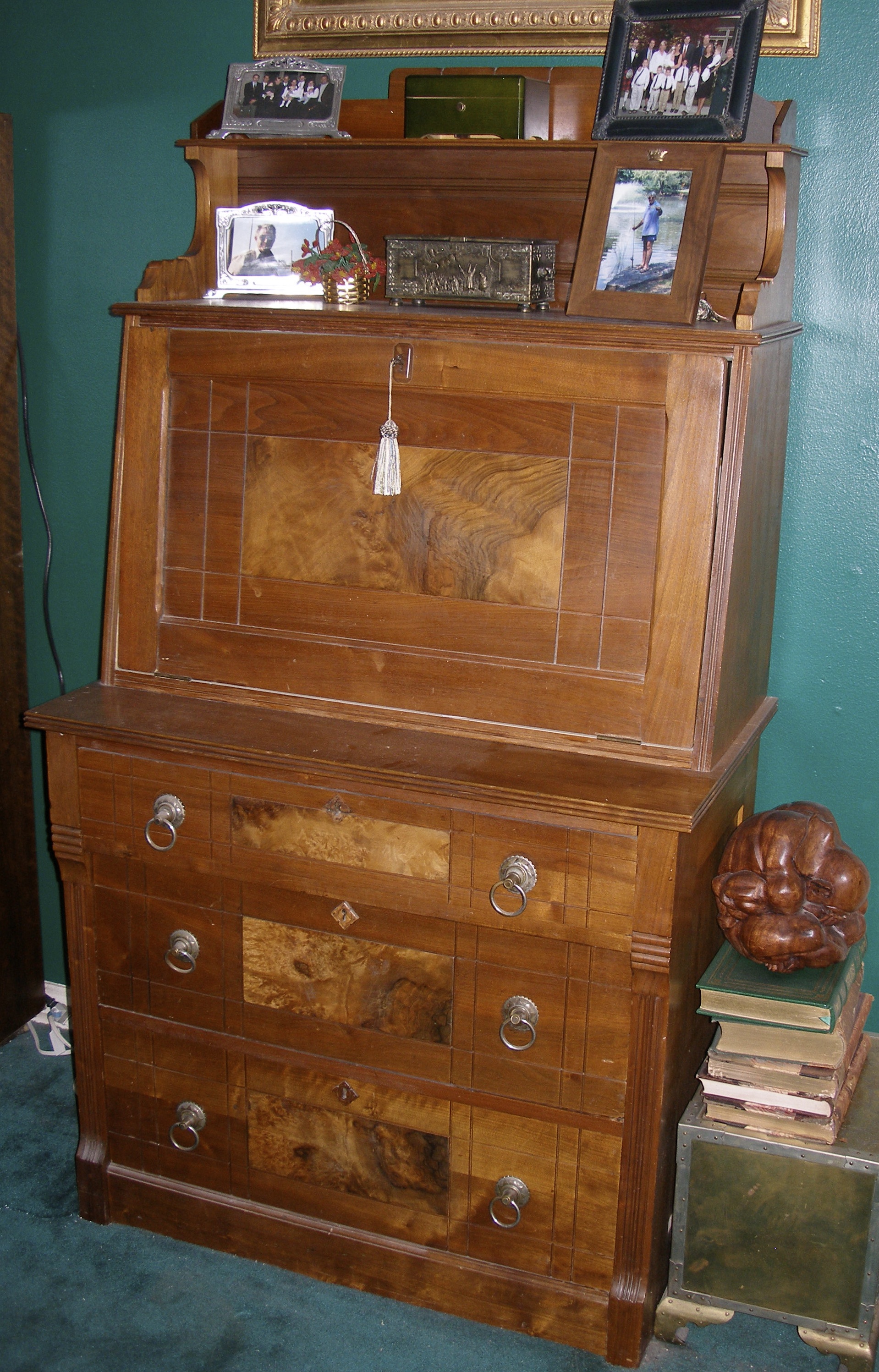 As you can tell, I am more than sentimental about my family. The older I get, the more fascinating their stories are to me because they explain so much about who my parents were and who I became because of my ancestors. I like the links to my ancestors and I like having them around me.
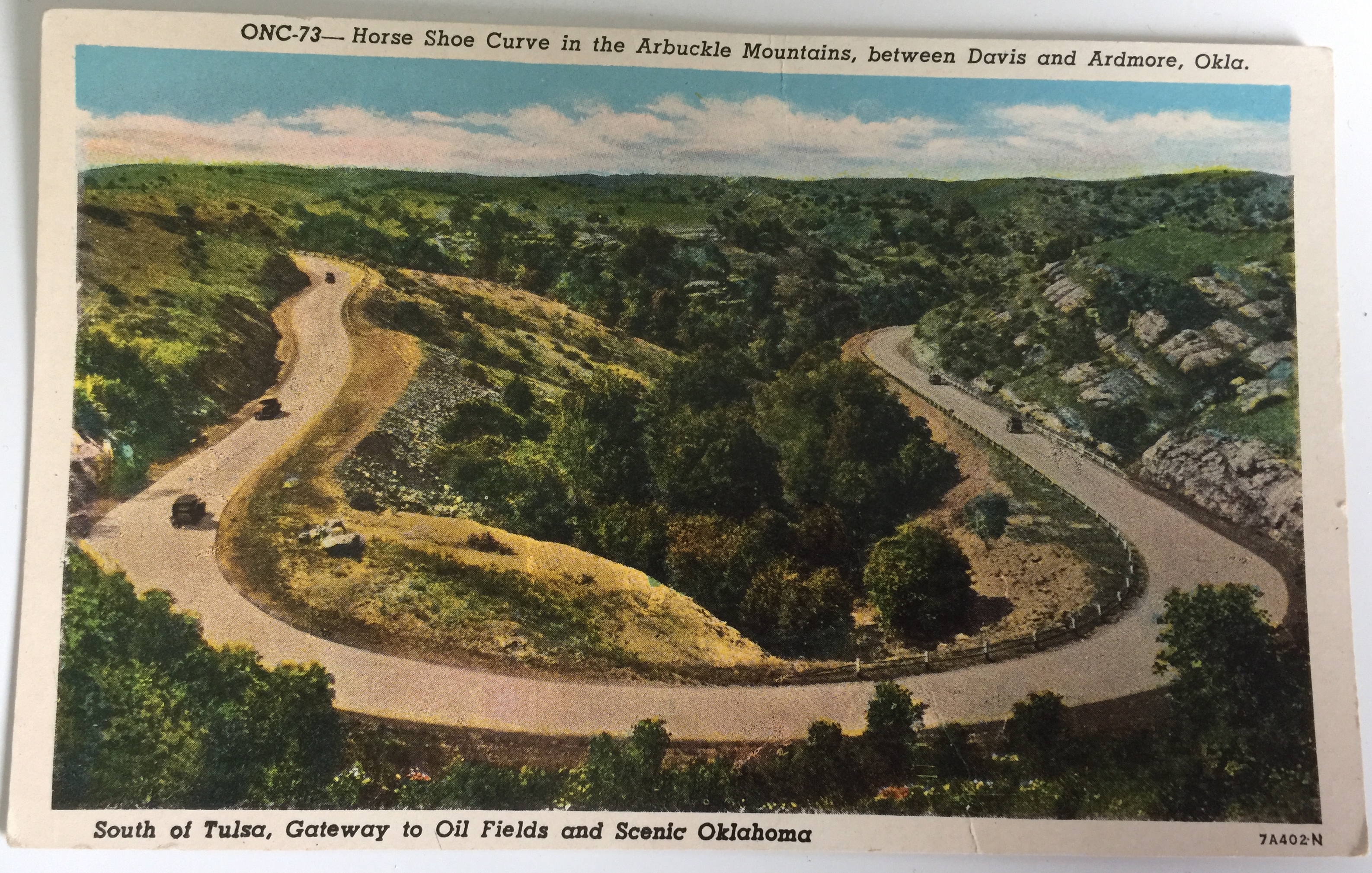 Once we got through the Arbuckles, we kept our eyes open for the standpipe, signaling that we were in Ardmore. I can’t tell you how it delights me to see it to this day, even though the highway is located a few blocks away.
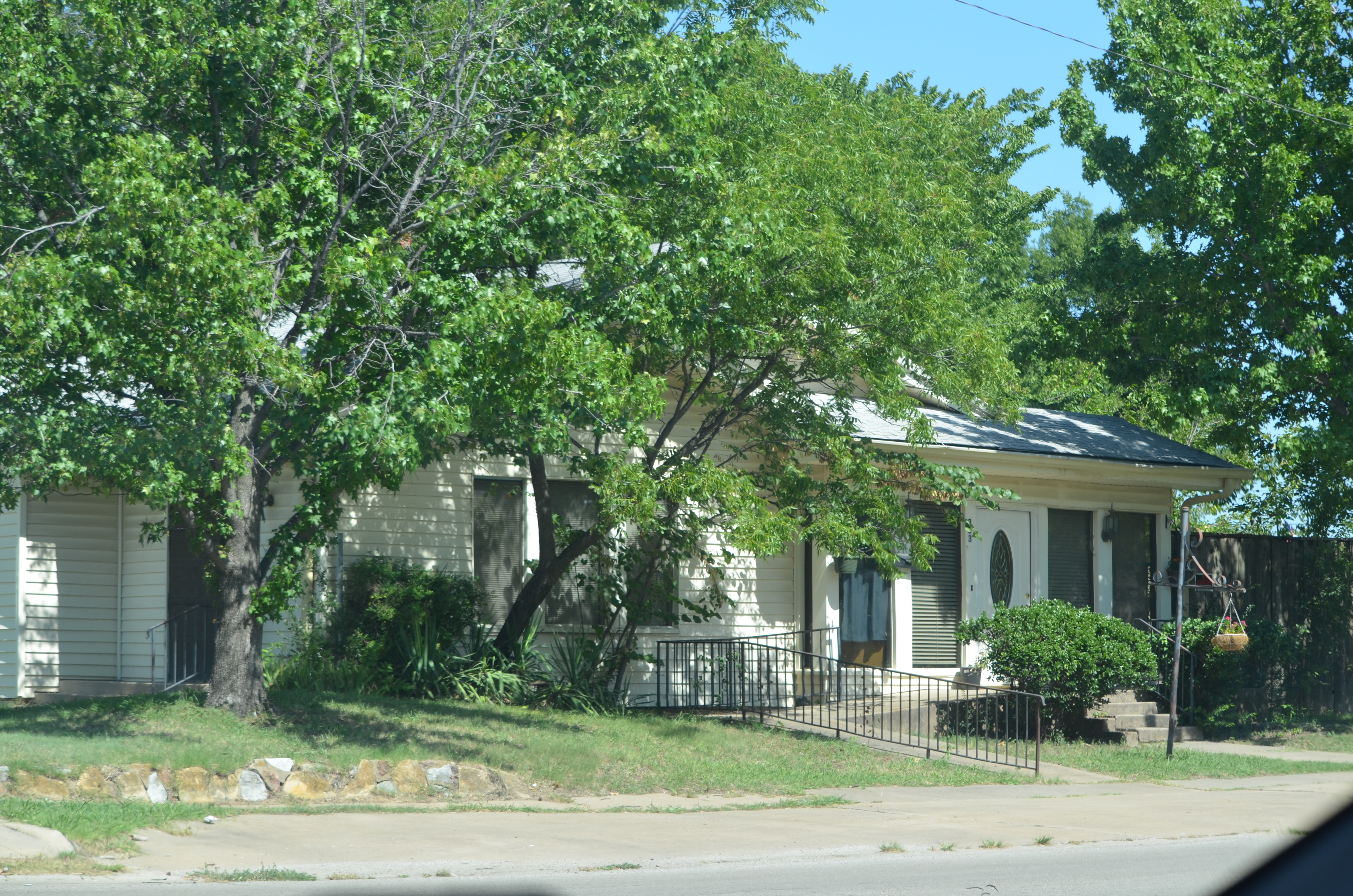
 My summer stop this year left me with an evening of daylight, so I drove to the cemetery and then looked for the houses once again. To my delight, my grandmother’s house looked like someone new had moved in and was taking care of it. The whole neighborhood was starting to look a little better. They closed in the front porch years ago, but I can look at the house from each side and see how it used to look.
  I have no idea what possessed a 71 year old woman, me, traveling alone to suddenly stop and ring the doorbell. I was greeted by a man who wasn’t unfriendly, but was surprised to see me. I started pouring out the story of my family and the house to him and he took interest. He had to leave and I wasn’t going to intrude, but he asked questions about the house and I told him I would send him some more information. He told me his family had moved to Ardmore from Central American and found the house taped up. I think they were able to get it if they agreed to fix it up.
 I had a sense of the old days when I left the interstate. Back to the fried pies. They come in every flavor from meat to fruit to custards and are warm and yummy.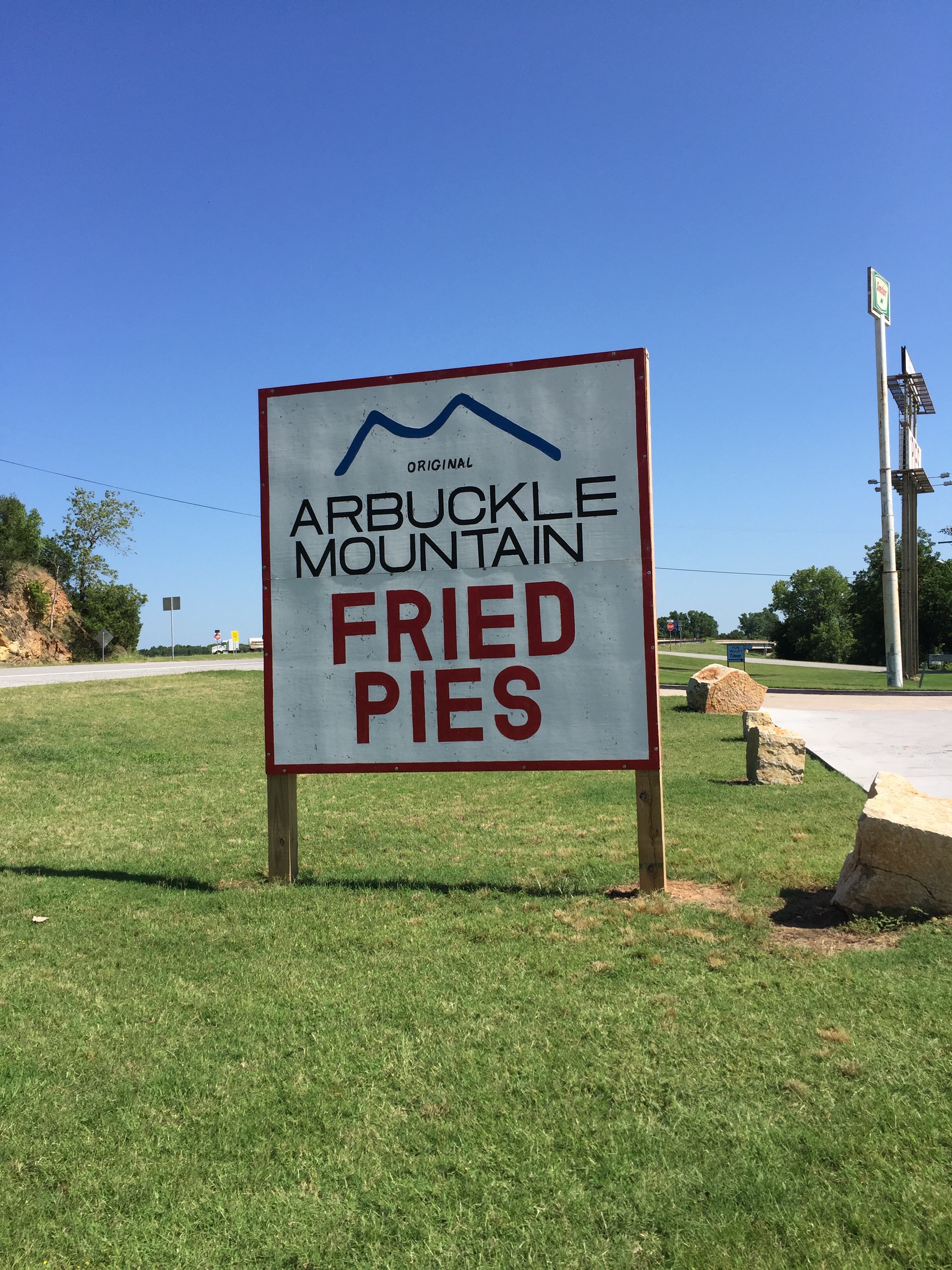
 I wound through narrow roads, passing old fashioned cabins where hot Oklahomans excepted the brutal heat of summer in the cool waters in these hills (well, mountains). I stopped at the Turner Falls lookout for a glimpse of the people playing in the water below the falls. There was so much more water after the spring rains. It looked like Niagara then.
  The playground goes above and below the falls in a family favorite place to visit. Delightful!
 Leaving the falls, I was surprised to see that wind farms have taken over. I’m not sure what my feelings are, but I do think they are mesmerizing to watch, like giant pinwheels. I hope they prove to be a great alternative to the dirtier fuels we use.
 The Arbuckle roads are carved out of rock and I remember my mother telling us how geologists studied the layers that had been cut through for the roads. When we left these curves, the drive was a straight shot into Ardmore, where the first thing I looked for was the standpipe. It almost makes me cry to still see it, even though it’s surrounded by new business and development. There was a sign saying Happy 108th Birthday on it. You like some things to never change. In the olden days, you could see it from a long way away and it meant we were almost there…
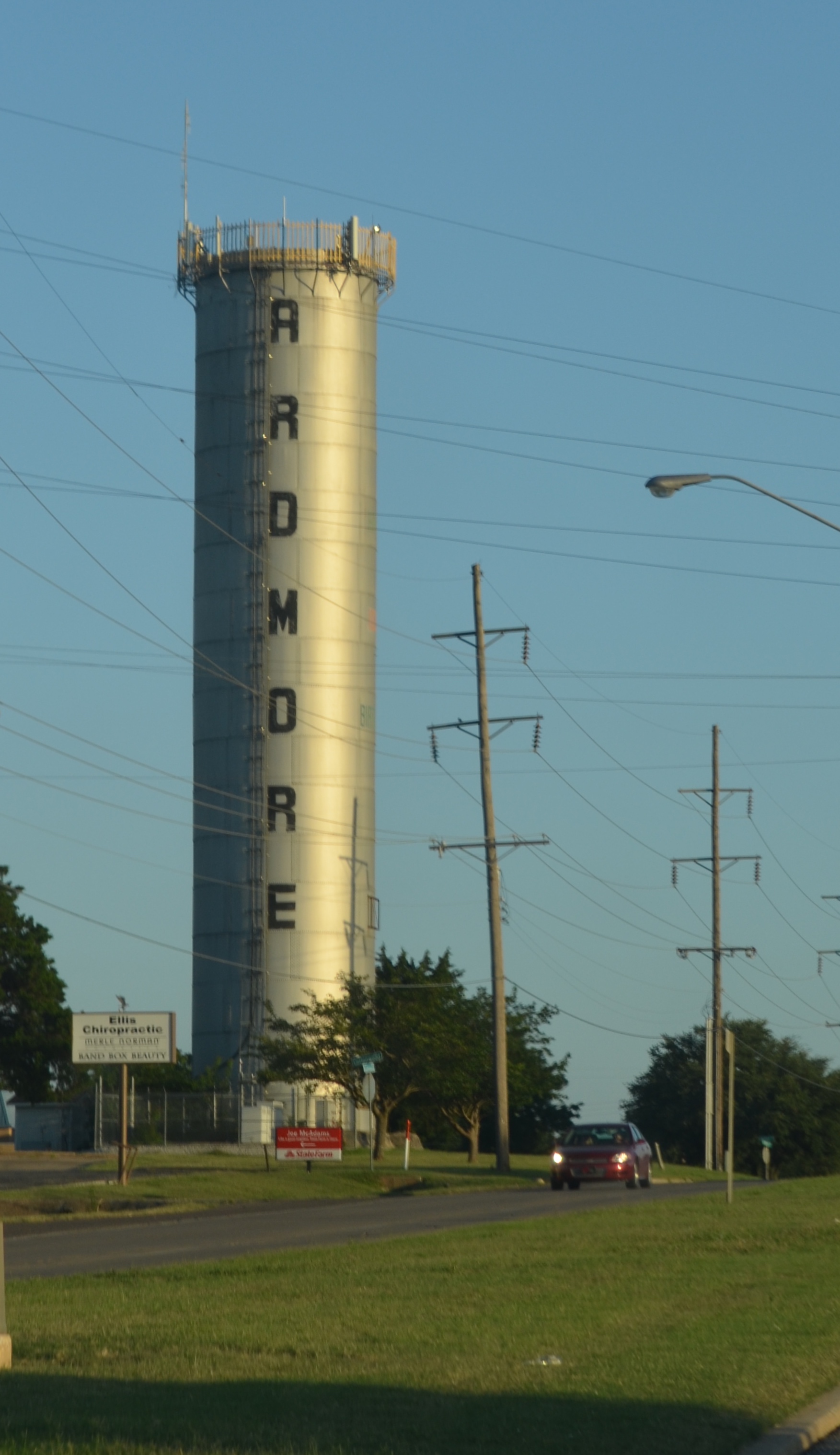 Having started later than I planned, I found a motel, checked in and then left to see Ardmore, where I spent many a happy summer day catching horned toads, walking to the ice house, walking downtown with my grandmother, picking pears from the tree in her back yard, swinging on the porch swing, sucking on Kool-Aid squares (made in an ice cube tray, but we called them squares). My aunt and uncle lived in my great-grandmother’s old house, across the street from Central Park with it’s old fashioned band stand. Before they were born, the house was attached to the West Wagon Yard, owned by my great-grandfather and my grandfather. The Wests were early Ardmore settlers and owned property around town.
 I drove around town, looking for places I remembered. There was the bank where my uncle worked, first as a teller and then as vice-president before he had to retire early with health problems. It still looks like it did when I was a child, although I didn’t want to spoil my memory of the fancy teller cages with the brass and iron by going inside.
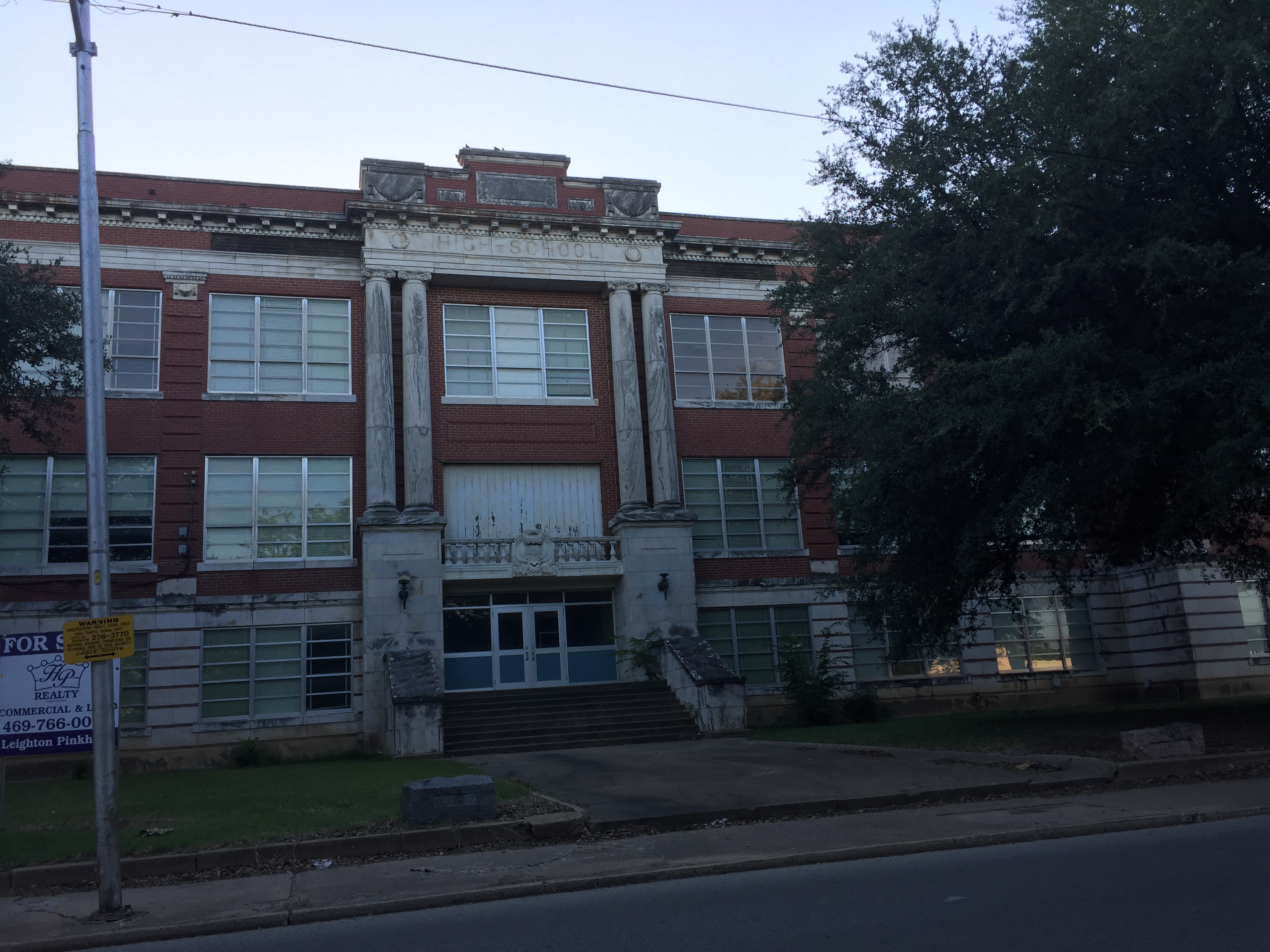
 The high school my mother and uncles attended is run down and for sale. I hope they repurpose the structure to save the history, but I’m one for historic preservation.
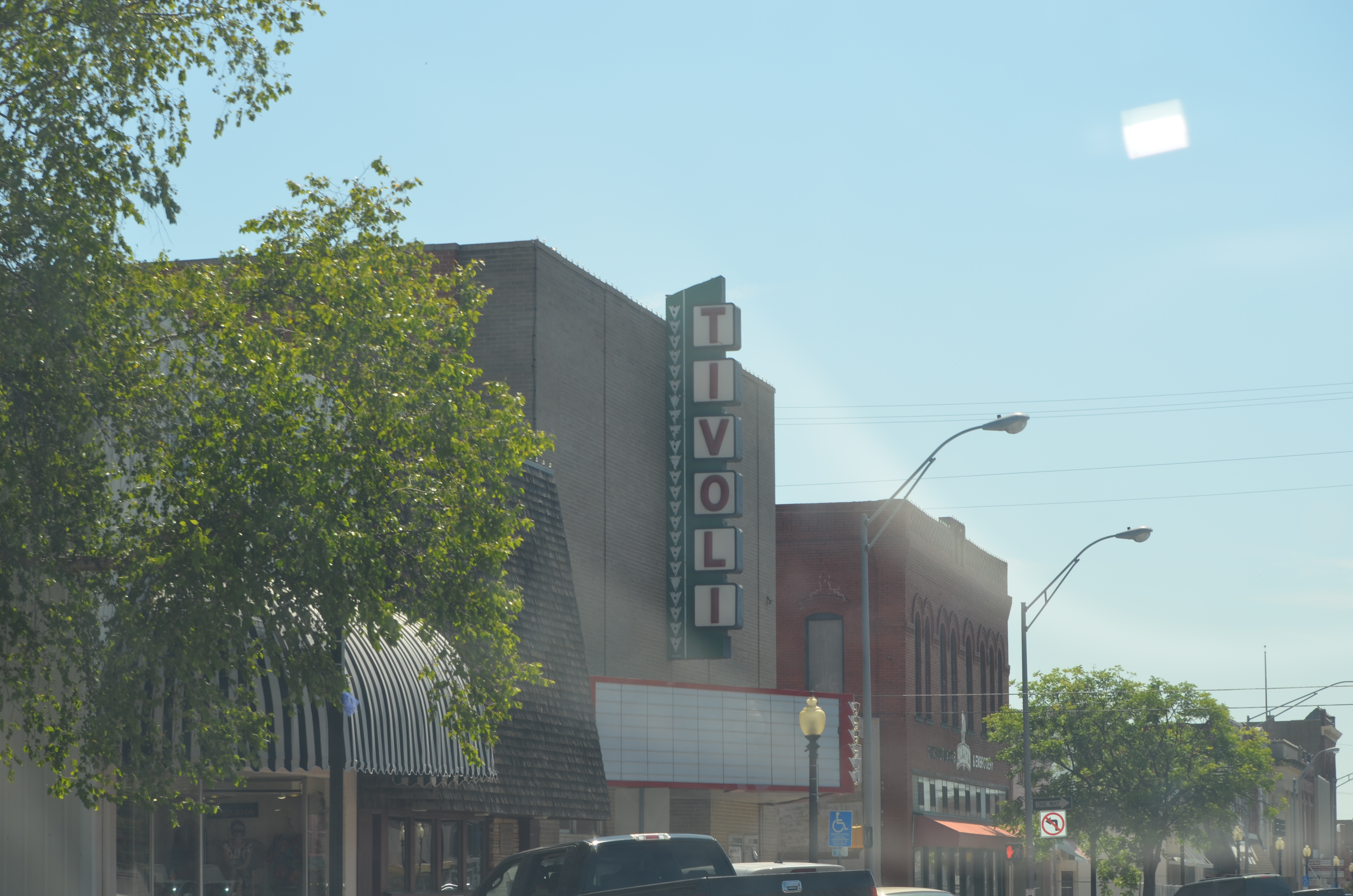
 The Tivoli theatre still stands, but not for movies. Daube’s Department Store is long gone but was one of our favorite places to go with my grandmother.
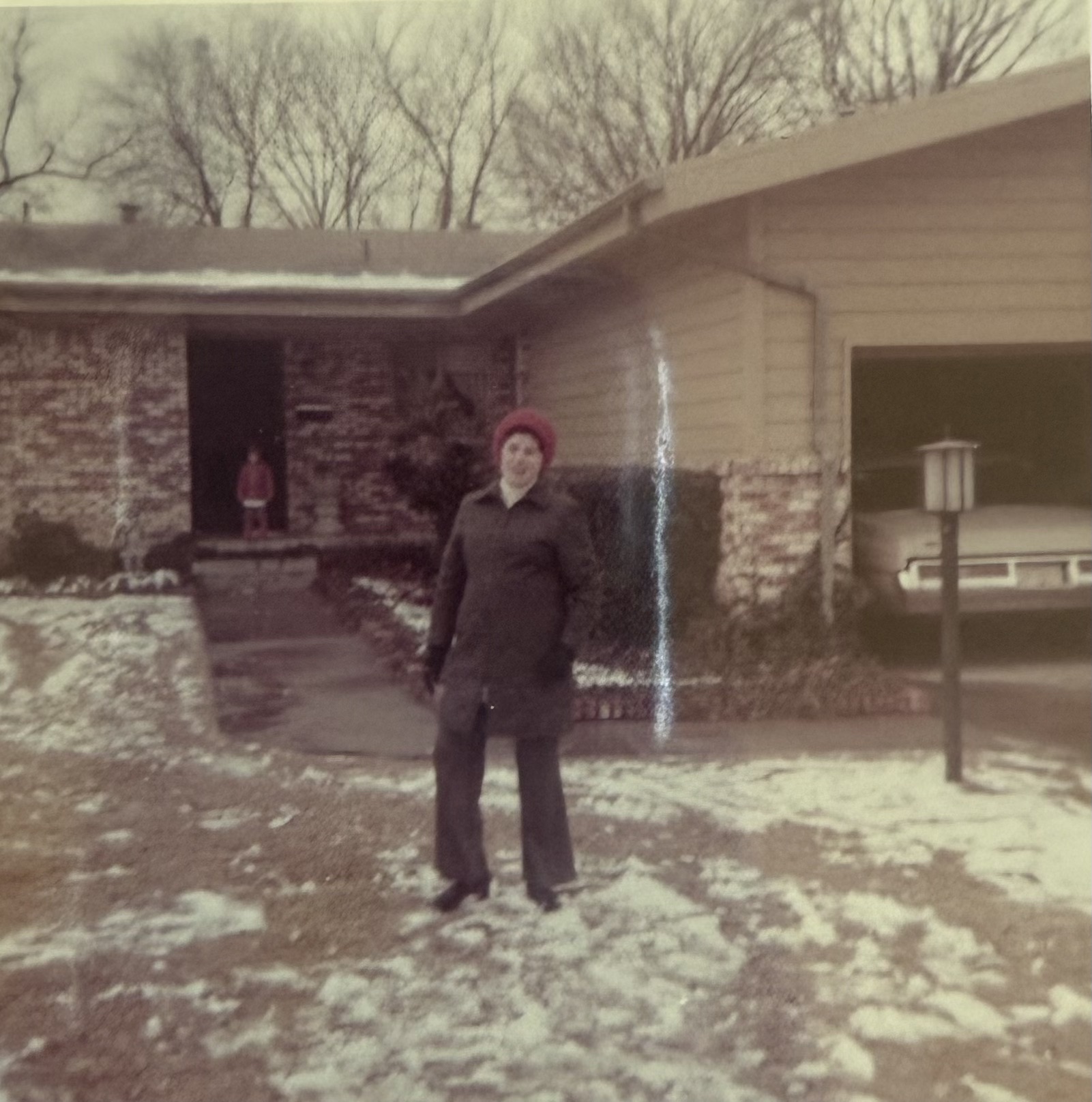
 My great-grandparents’ home was sold years ago and is now an art center, which is nice. I found both the houses my grandmother lived in. One looks much the same, while the other one is dramatically changed. I can still tell it’s the house and its familiarity warms my soul. Here is a photo of my mother in front with the porch swing and steps I remember so well. This was maybe 1940.
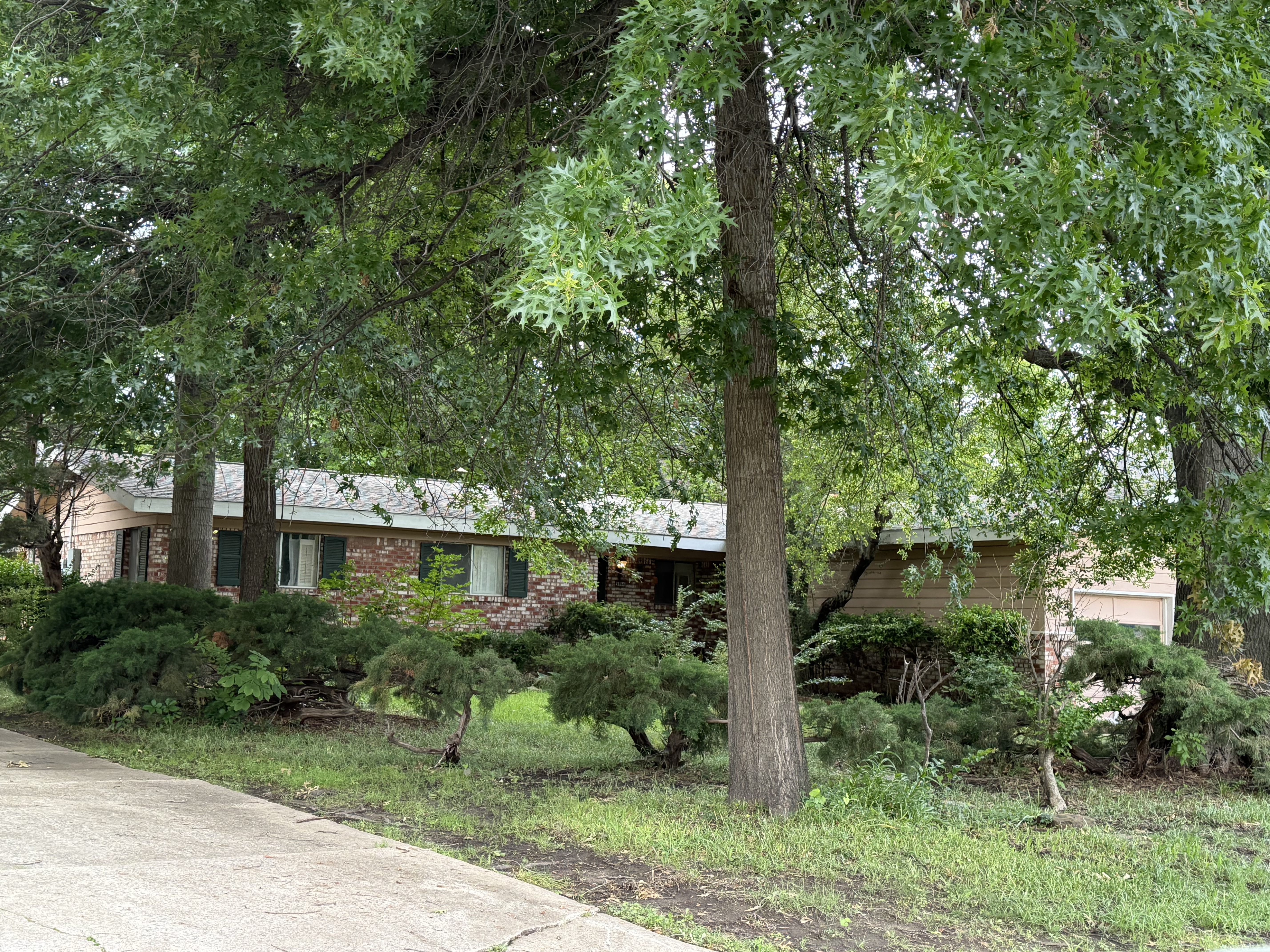
 Here’s the front of the house today. Driving to see all sides, I can place every room even with the dramatic changes. The biggest mystery is how the street is so much narrower than I remember (Ha), but, it’s been about 40 years since the changes started.
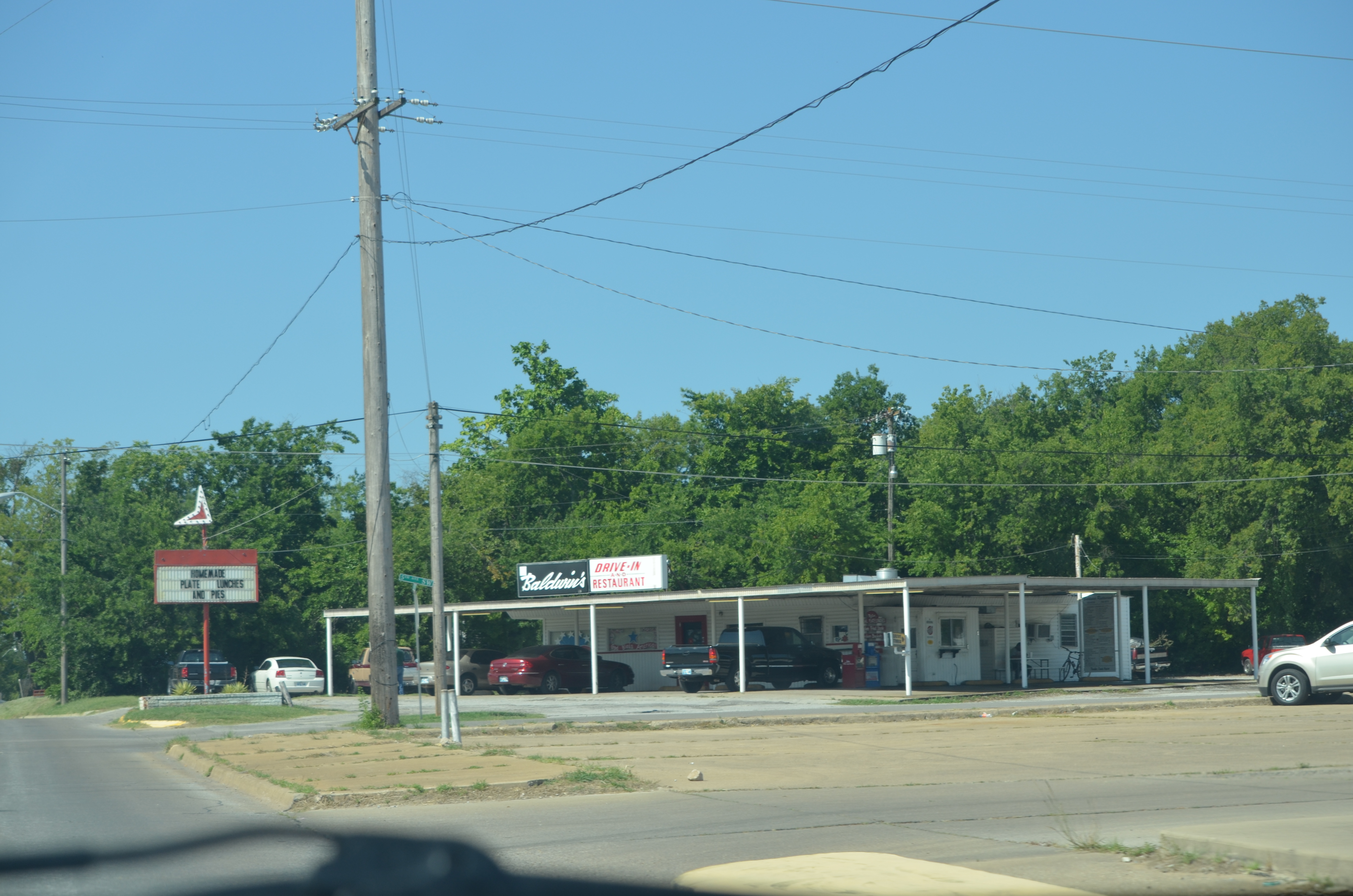
 Really, I saw this house a couple of years ago and it looked much rougher. I was taking pictures on the corner and someone told me it was probably a crack house. I was so delighted to see that it was being taken care of again and still standing that I pulled up and rang the doorbell. Here is the amazing story of that conversation.
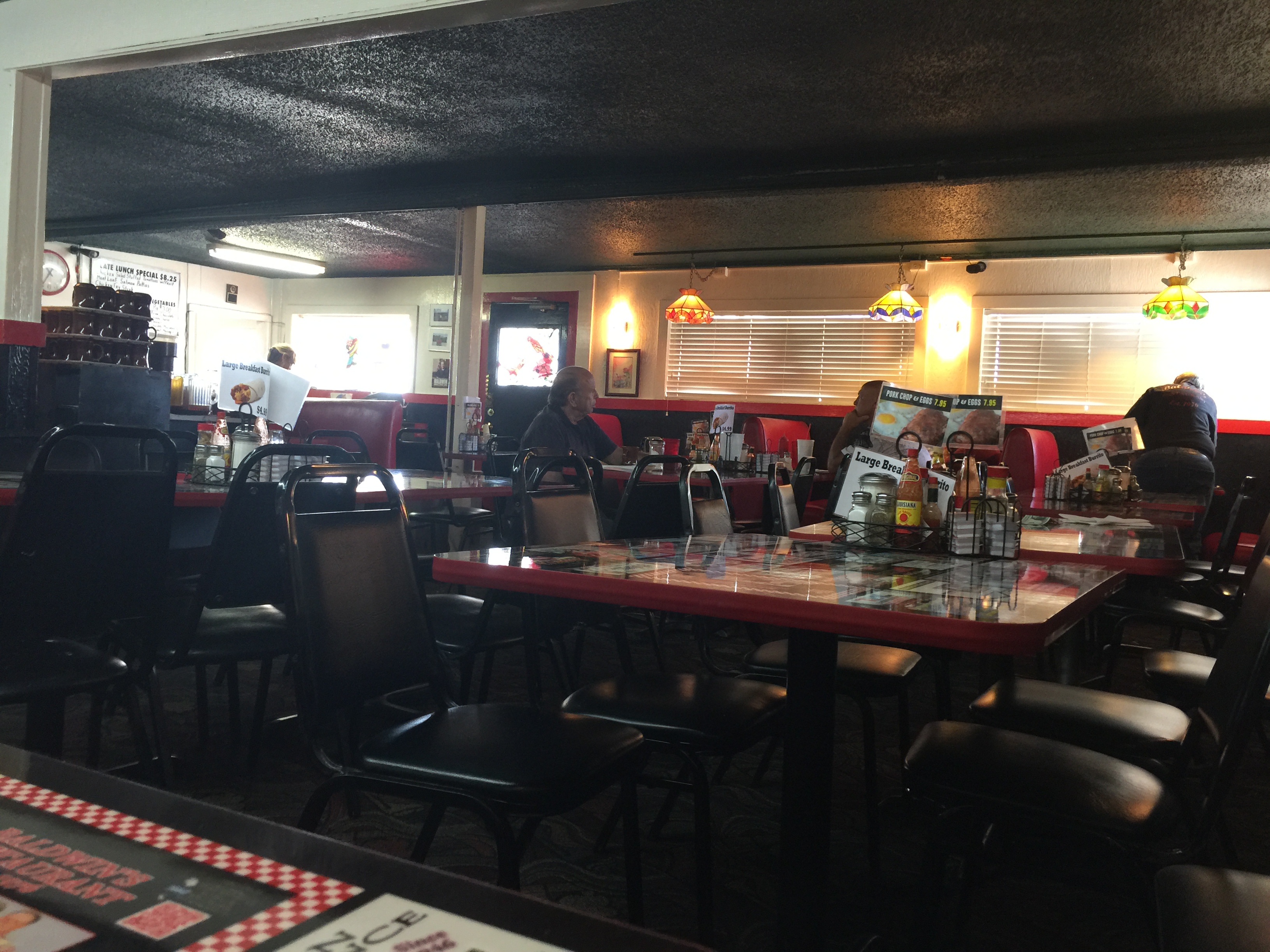
 Now it’s a cafe, the kind of place that you know is good by the locals who are there. The biscuits were lighter than I have had in years. The folks were talking with friends and I warmed to the lyrical sound of their voices, the sweet sounds of my childhood. When’s the last time you heard someone say “my land” to show surprise? Or talking about gittin’ to work?
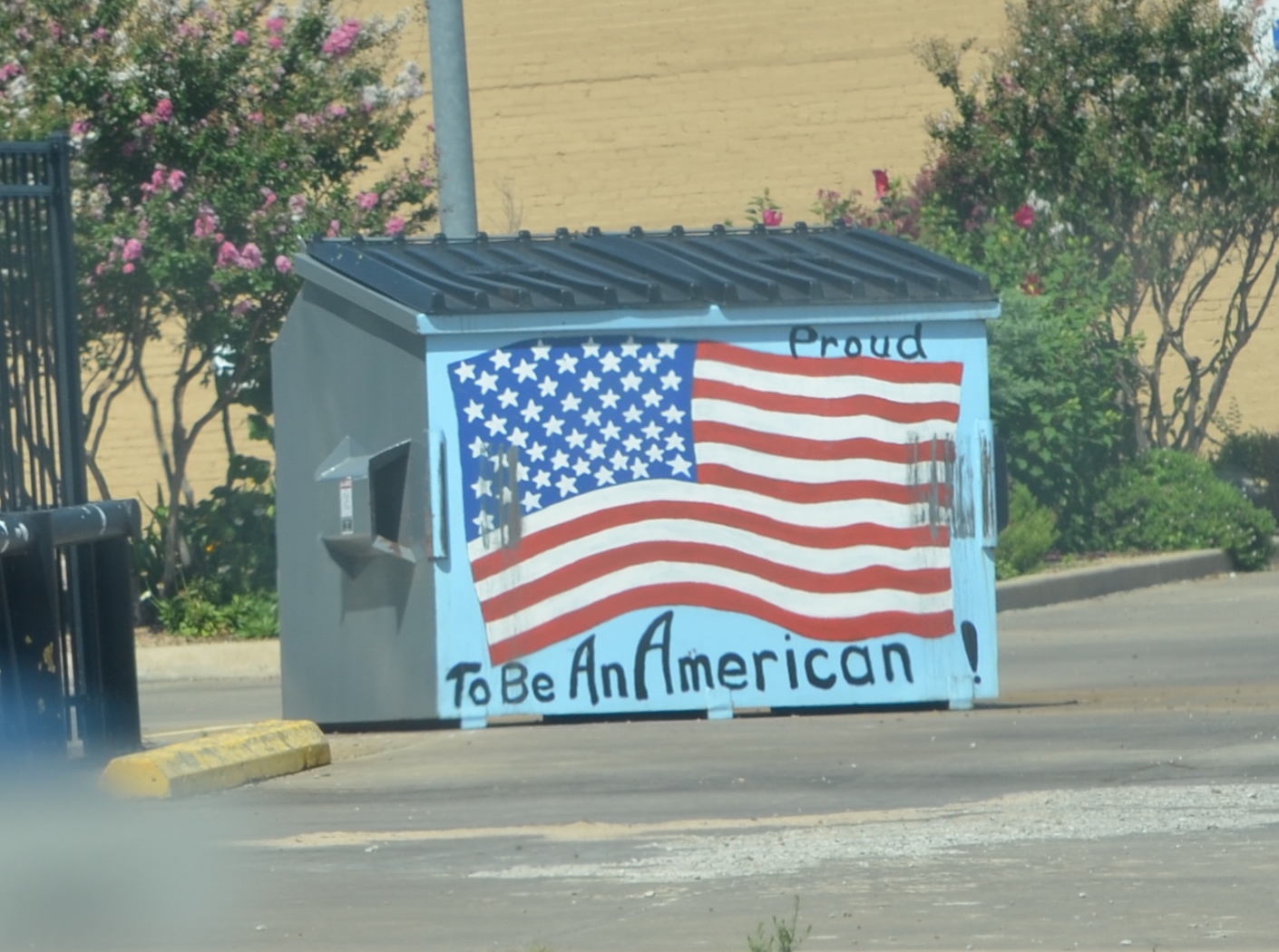
  I left Ardmore where they fly their flags proudly to head to Texas.
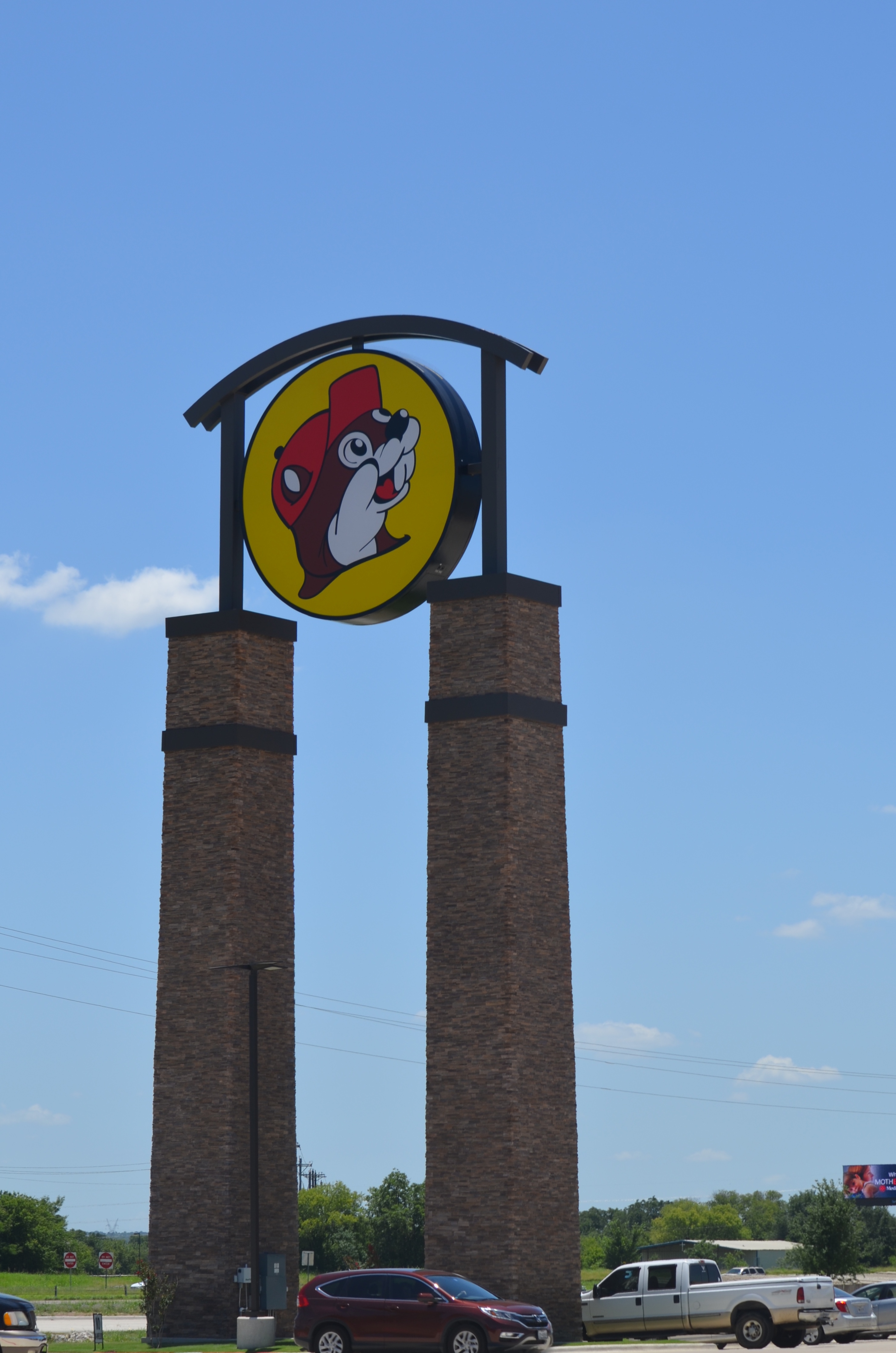
 I was tiring of the Interstate, looking for the way to the back road I prefer. Going towards Ft. Worth, I saw a Buc-ee’s at the next exit. If you’re not familiar with this Texas-sized stop, try one. Hard to explain, but you’ll find everything you could possibly need on the road – from gas to food to gifts and clothing. It’s a road stop shopping extravaganza.
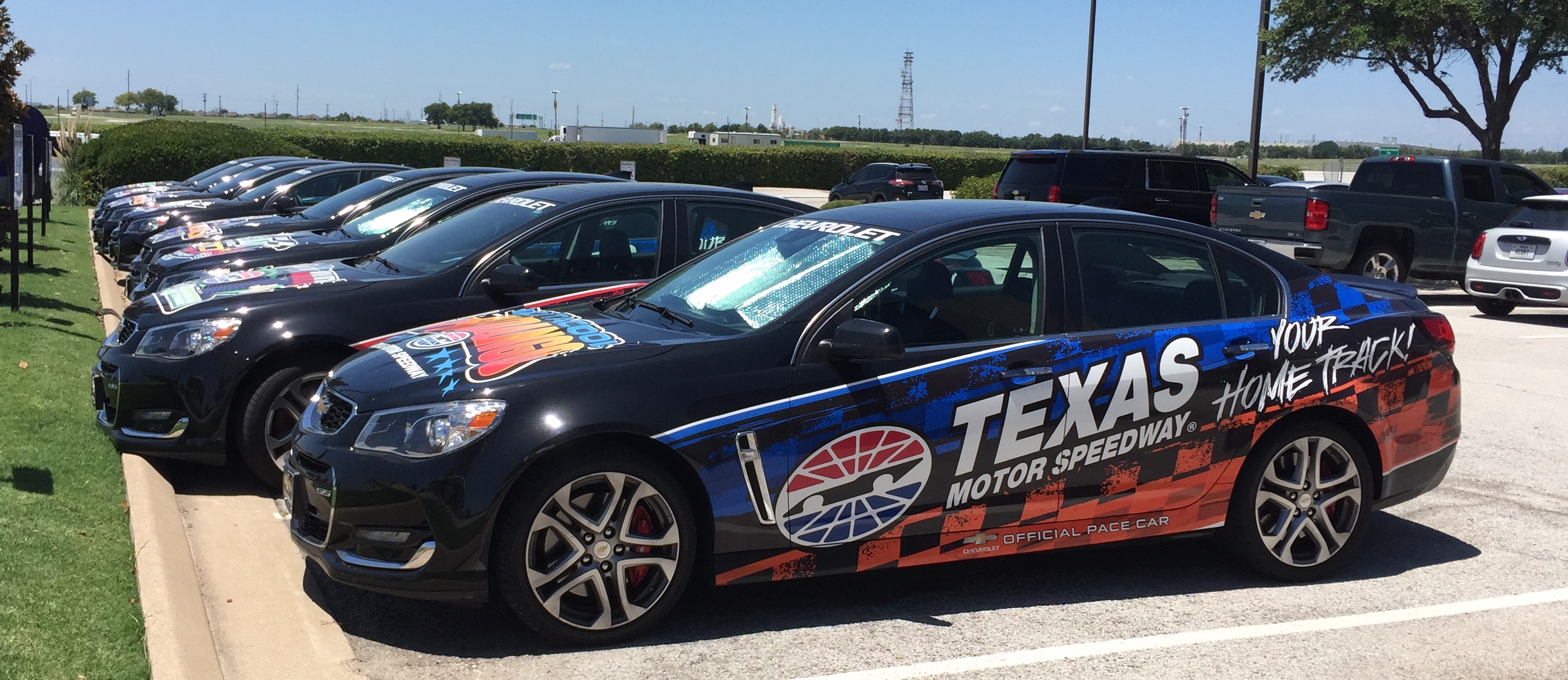
 Anyway, as I took the access road, Dale Earnhardt Way, or something like that, I realized that I was smack in the middle of the Texas Motor Speedway. Since nobody was around, I drove through, taking in the huge facility. I can only imagine when the races are actually happening. I had the luxury of being the only driving around, so I took it all in.

 Moving along, I looked for my exit, only to be caught in freeway traffic and construction. I couldn’t get out of there fast enough. I circled the city and headed into Texas country. At one point, I turned on my directions on my phone and soon found myself directed out into the hinterlands, off on farm roads. What the heck? It was ok. I was in beautiful country, ranches hidden in the trees.
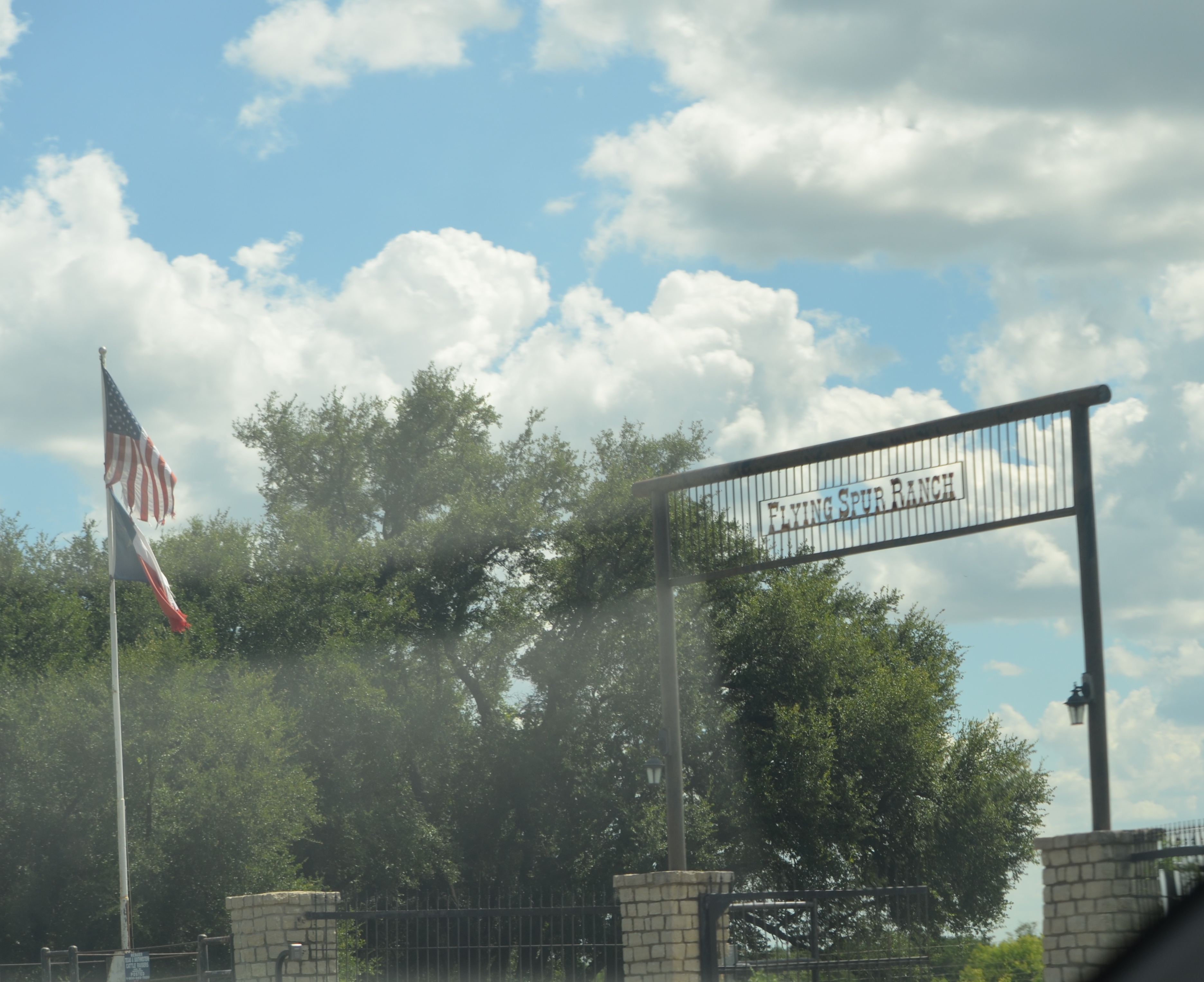 Here are two that are across the road from each other…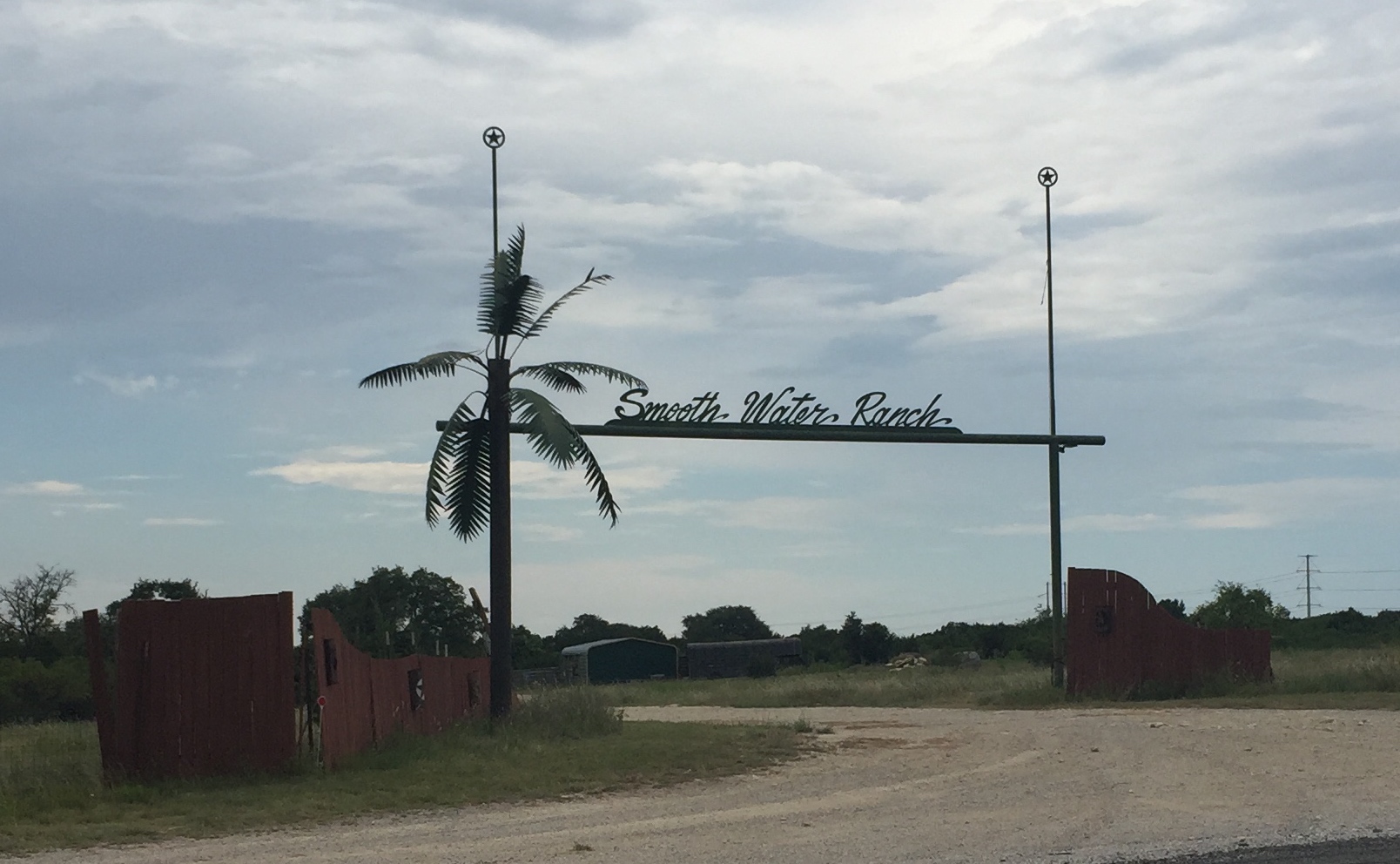
 Those are slightly more elaborate than some, but interesting. Here’s my favorite of all time, located in Johnson City. El Ranch Not So Grande says it all, doesn’t it?
 Speaking of this place – who knew there were so many goat farms in this area? I saw more goats than cattle for a long stretch.
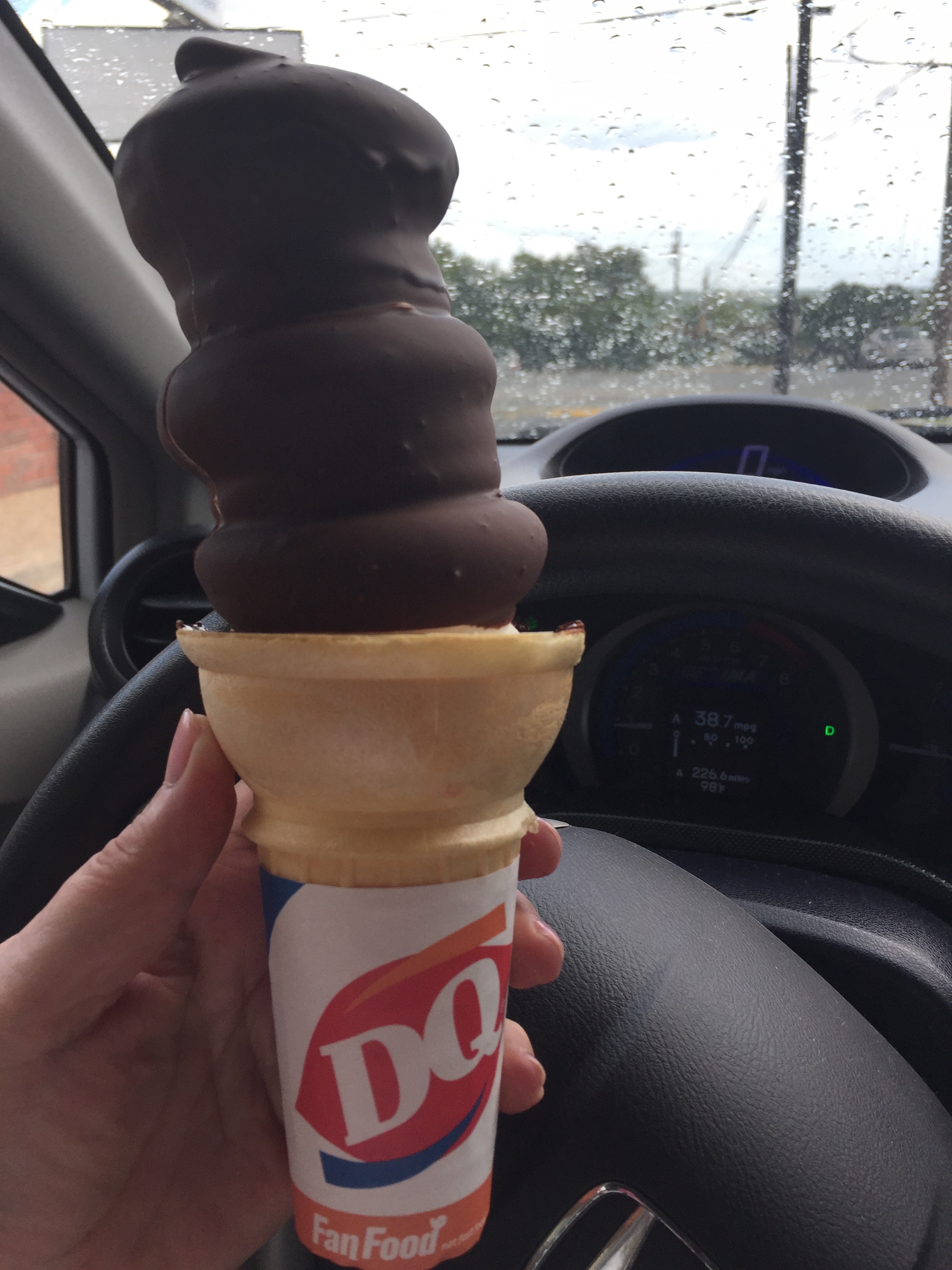
 I made my way south on Highway 281, enjoying the green views, watching thunderheads build from the summer heat, hawks flying across the sky. Little towns, cowboy towns, western towns. I didn’t stop except for gas and the Dairy Queen. What is a road trip without a dip cone in the summer? Driving without dripping all over yourself is fun.
 I arrived at my sister-in-law’s, deep in Texas Hill Country, where she lives on 7 1/2 acres of rugged beauty. Deer jump the fence and come to the house, birds sing, and you can see only the beautiful Live Oaks and cedars everywhere you look. She doesn’t have a horse any more, but the barn is now her art studio. Since I was last there, the area around has grown up. We debated whether it is better to welcome development in a small town or let the town die. There used to be nothing and now there is a Walmart, Home Depot, medical care, and everything else. She doesn’t have to drive so far, so she’s happy. Her view hasn’t changed, so all is good for her. It’s changing though.
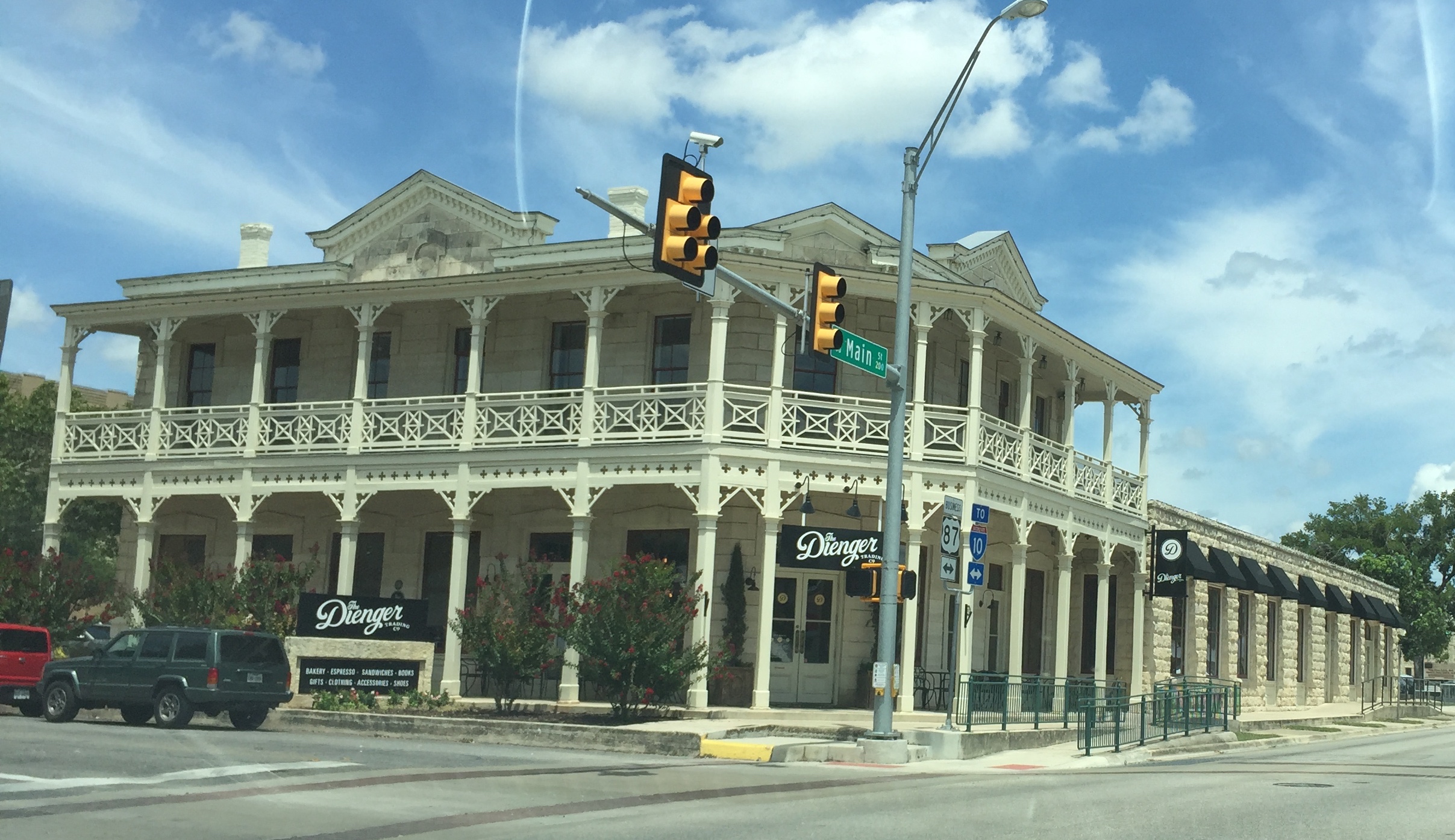
 The area she has lived in since 1977 is the part of Texas where Germans settled to create their own society. The towns reflect that heritage with names like New Braunfels, Fredericksburg, Boerne, and so on. In the middle of Mexicans and Indians and cowboys, there are Germans. It’s America, after all.
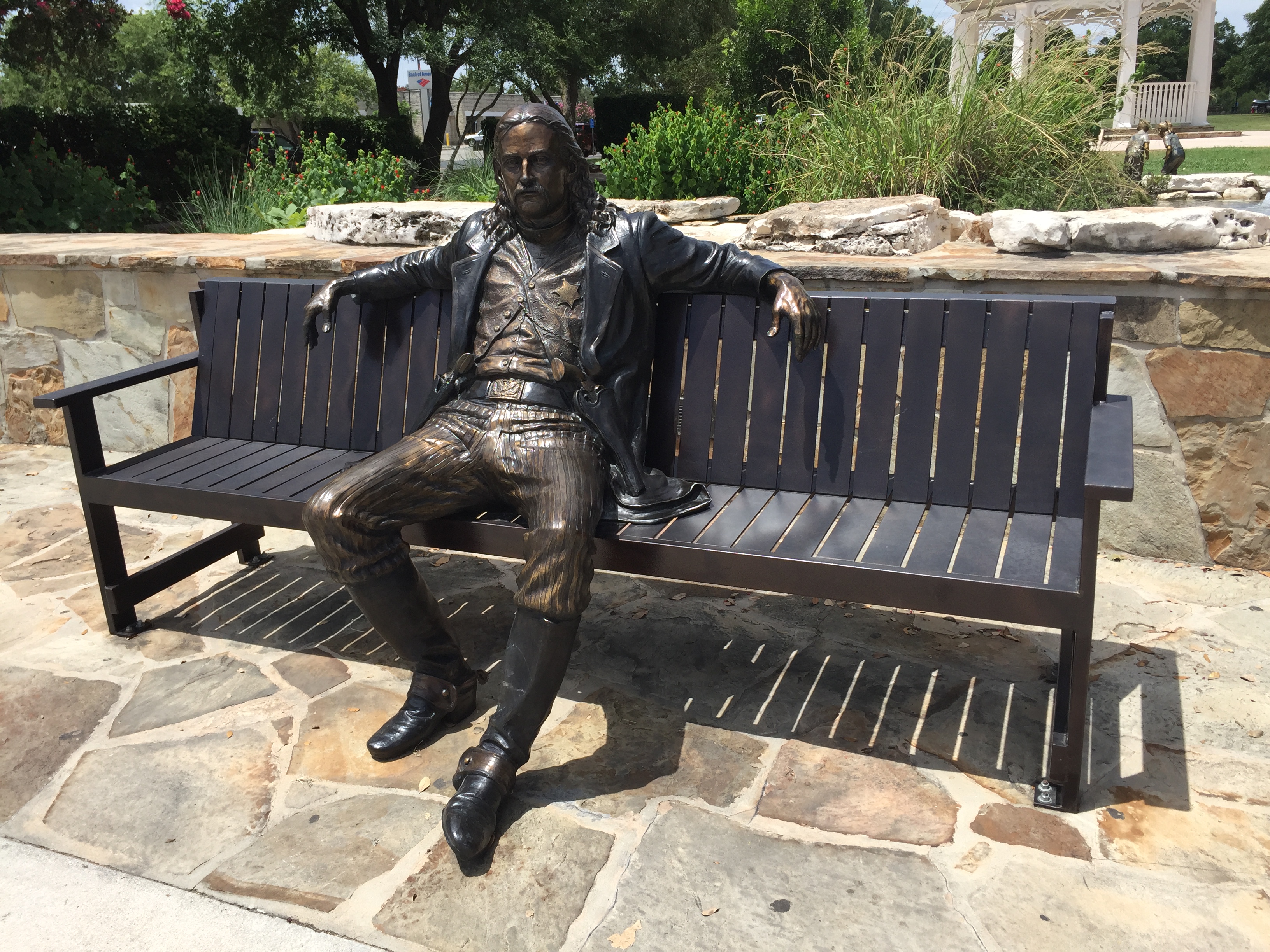
 With German names everywhere I looked, I thought this statue must be one of the old German settlers. Nope – Wild Bill Hickok. Of course. Note the gazebo where German music has been played for a century in the background.
 After a day relaxing in the pool visiting with my sister-in-law and her long time neighbor, also from Oklahoma originally, and a dinner of chicken-fried steak at the local restaurant, it was time to head home the next day. Which way to go?
 I’d been around during his political years and there is much to be admired about that old tough cowboy. In Johnson City, the National Park Service offers information and tours of his boyhood home and an old settlement. I drove around and then headed 14 miles out of town to the ranch. On the way, I stopped to take this picture. The town lists pop. 150. Hye, TX.
 The LBJ Ranch is run by the National Parks and the Texas Parks, so it has to be good. I LOVE the parks, by the way. There is much to see and it can be easily driven, so I gave it a quick look, having visited farms before. After passing the first Head Start School and Lutheran Church, I crossed the Pedernales River to the ranch. There was the one room school house LBJ attended and the house where he was born down the road from his grandfather’s place. The most peaceful place was the Johnson Family Cemetery. What a lovely spot to be, under the spreading Live Oaks in a little walled off cemetery.
 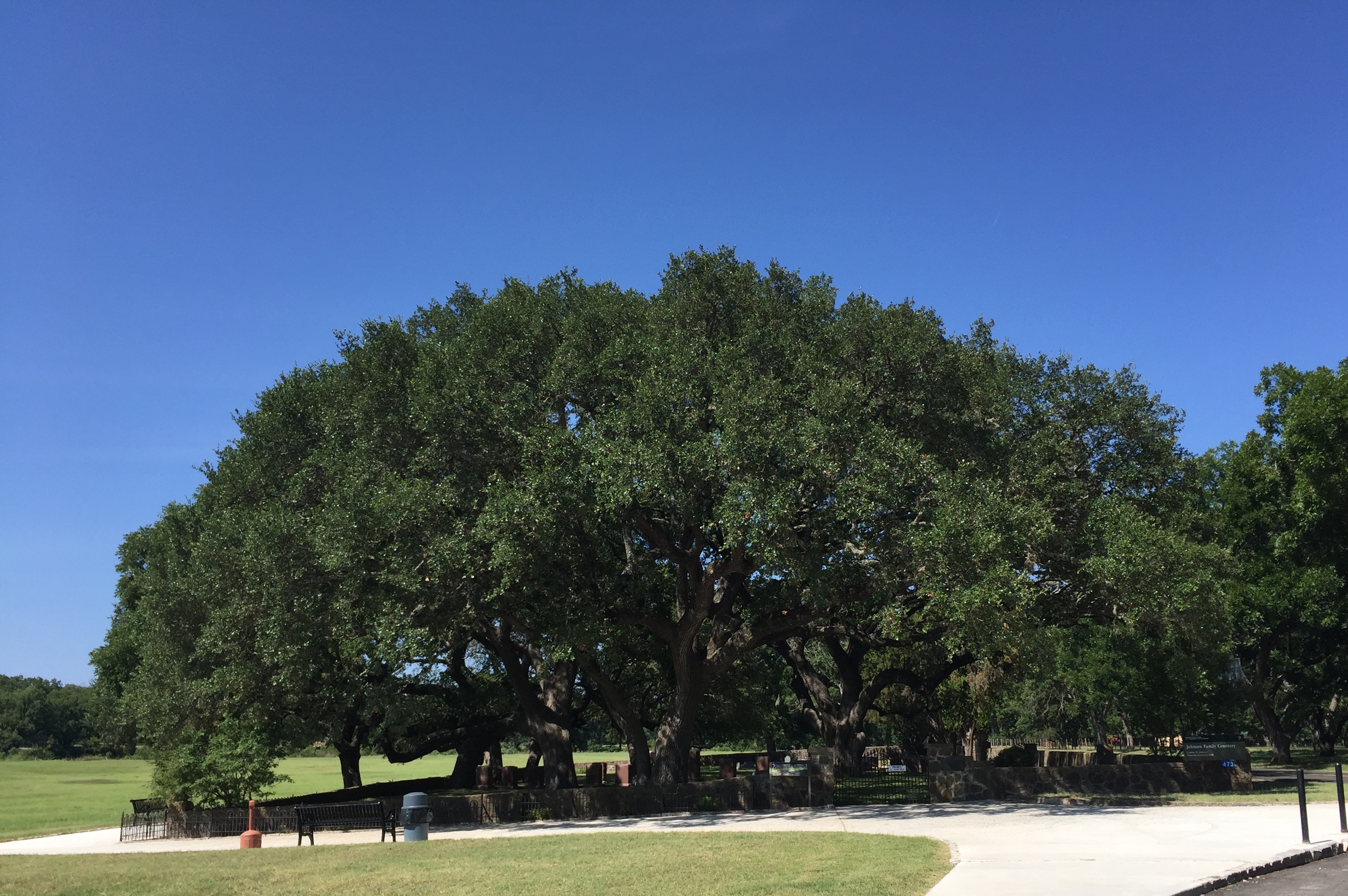 You couldn’t enter, but there were all the headstones. The flowers are for Lady Bird, our lover of wildflowers.
 Entering the actual working ranch, I thought it looked too perfect with cattle on both sides of the road as I went through the gate.
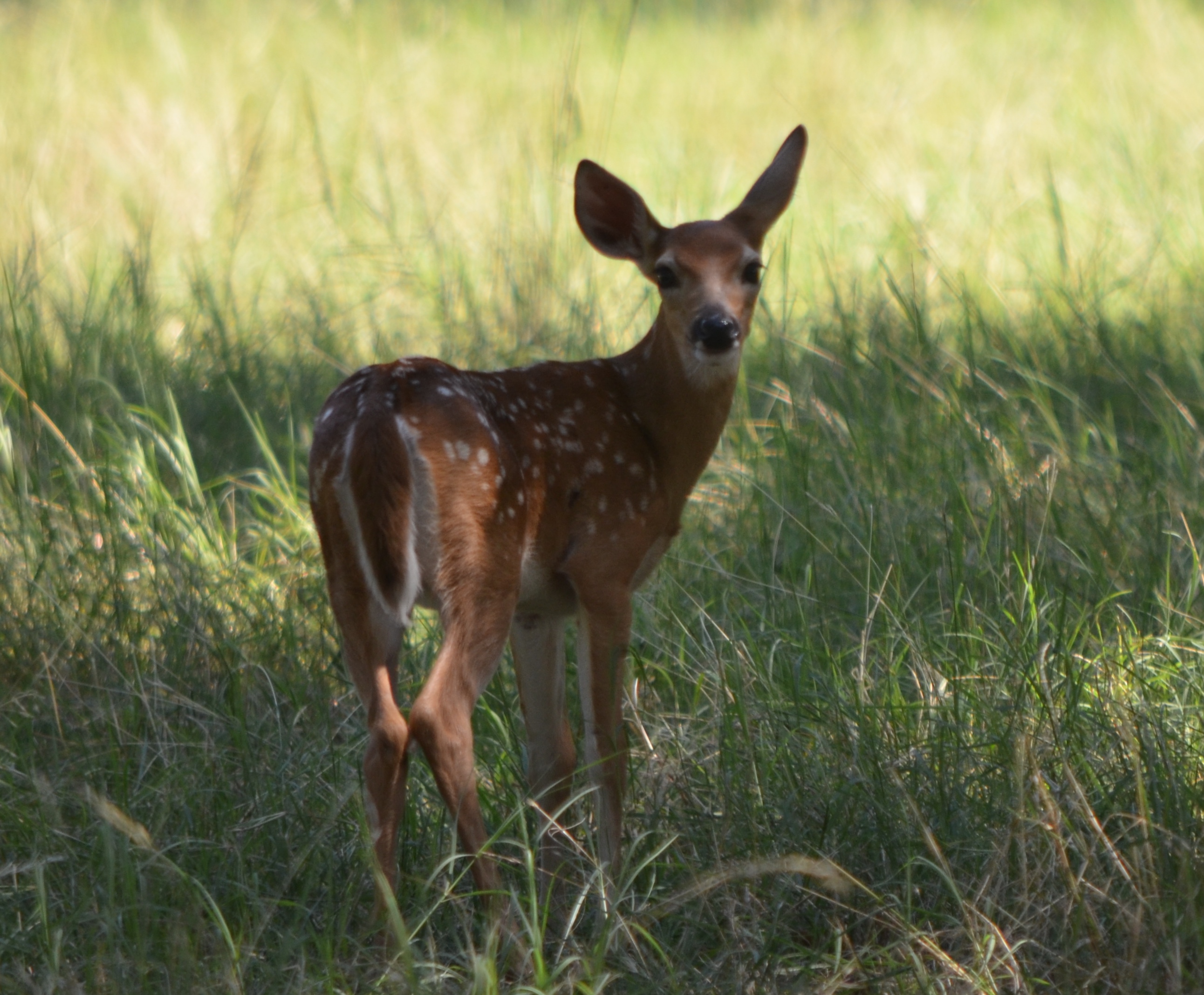
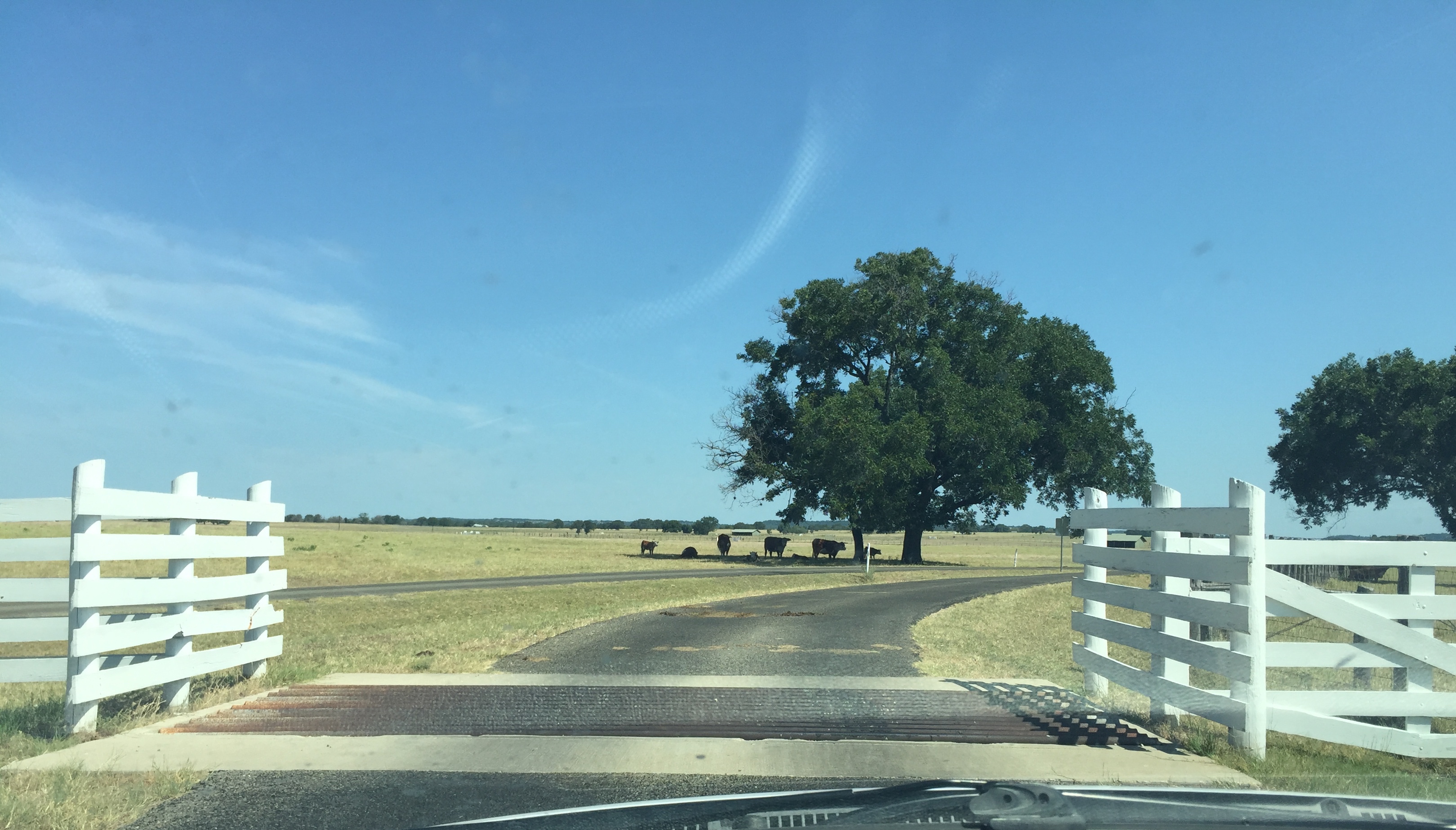 Those wide open spaces, the cattle, the big skies…I could picture LBJ riding this range with ease. It seemed so natural for him. At one point I spotted a mother deer and fawn in the trees by the road. As a city girl, I still get excited about seeing deer, but I understand when people live with them all the time. They multiply, eat the things in the yard, and can be a nuisance. I still like to see them.
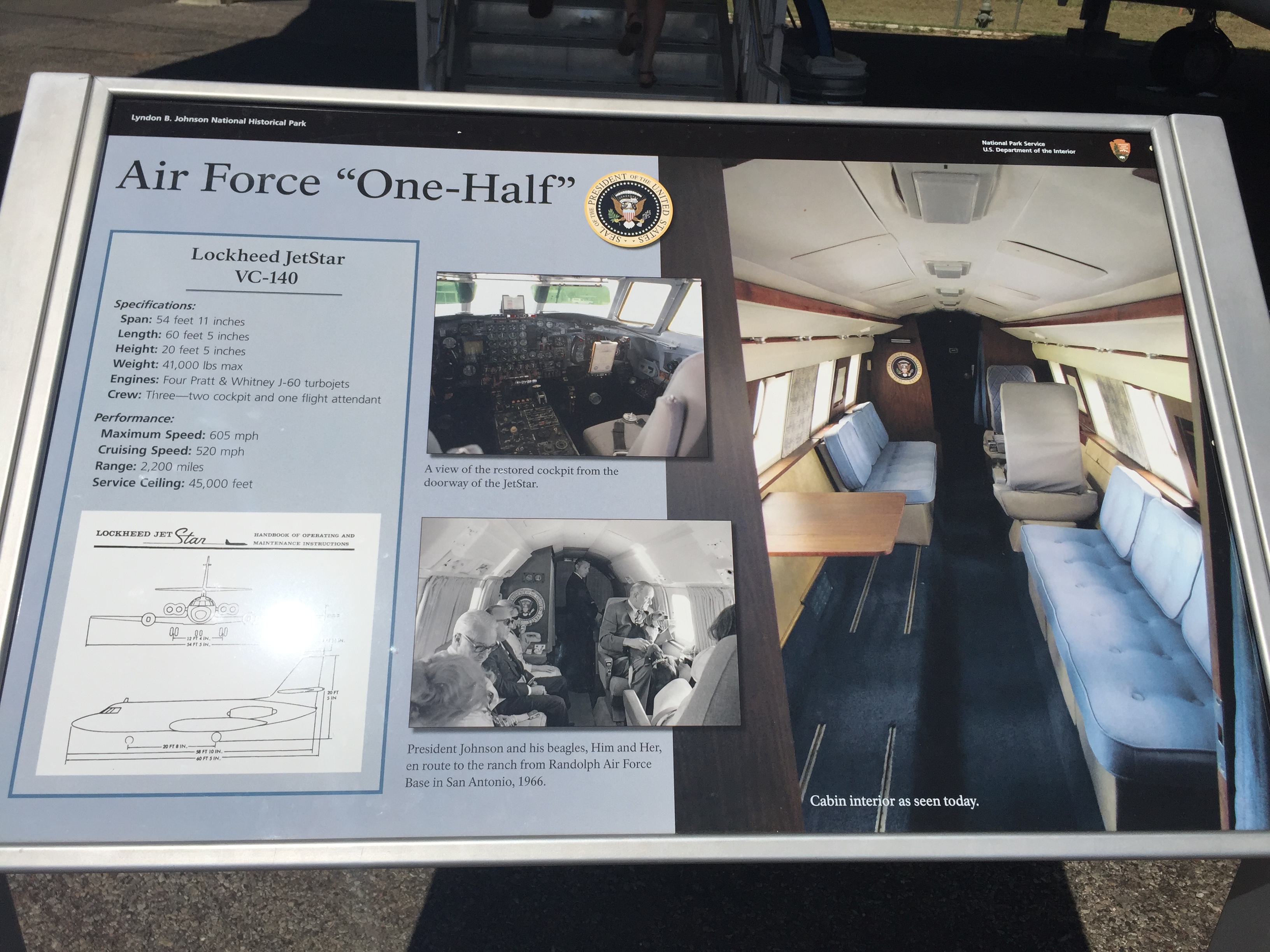
 I passed the show barns where LBJ’s prize cattle were shown. The park ranger had told me I could stop and learn how to rope steer, but I passed on that. It was hot, for one thing. By the house, I got out, gulping water to walk a bit in the searing middle of the day. First was Air Force 1/2, as LBJ called it. They couldn’t land a big plane on the property, so they used this one. It was so small compared to the luxury of Air Force One. I had to stoop to get through the door and I’m only 5’4″ these days.
 I walked to the house, checking out the very small command center for the Secret Service. The house is a big ranch house, but nothing too imposing really. It fits nicely on the property, overlooking a pond, big Live Oaks all around. There was a house adjacent that may have been for guests with a swimming pool between. I didn’t wait around for the ranger’s tour.
 Leaving the ranch, which I thoroughly enjoyed seeing, I made the turn to go to Luckenbach. I’ve been there before, but, hey, I was in the neighborhood. The scenery had changed since I was last here. Now it’s wine country and I probably passed 50 wineries in ten miles. There was even a wine shuttle taking people between the tasting rooms. I passed wineries and peach stands along the way. Peaches and grapes in the Texas Hill Country in the summer are the thing. I stopped on the way back to get some peaches because my mother always stopped at fruit stands and I absolutely cannot pass them by. The peaches were Texas huge. I had just purchased peaches in Oklahoma from one of our orchards, so I was in a peach kind of mood. These were yummy.
 Luckenbach, Texas is a mecca for tourists and music lovers. It consists of the old Post Office and a couple of buildings for restrooms, food, and one selling cowboy hats. There is a stage for musicians to gather. It’s cute and fun and one of those gotta stop places. On the way, I passed this farm with a front patch of dead trees (pic doesn’t show them all). Must be eerie at night.
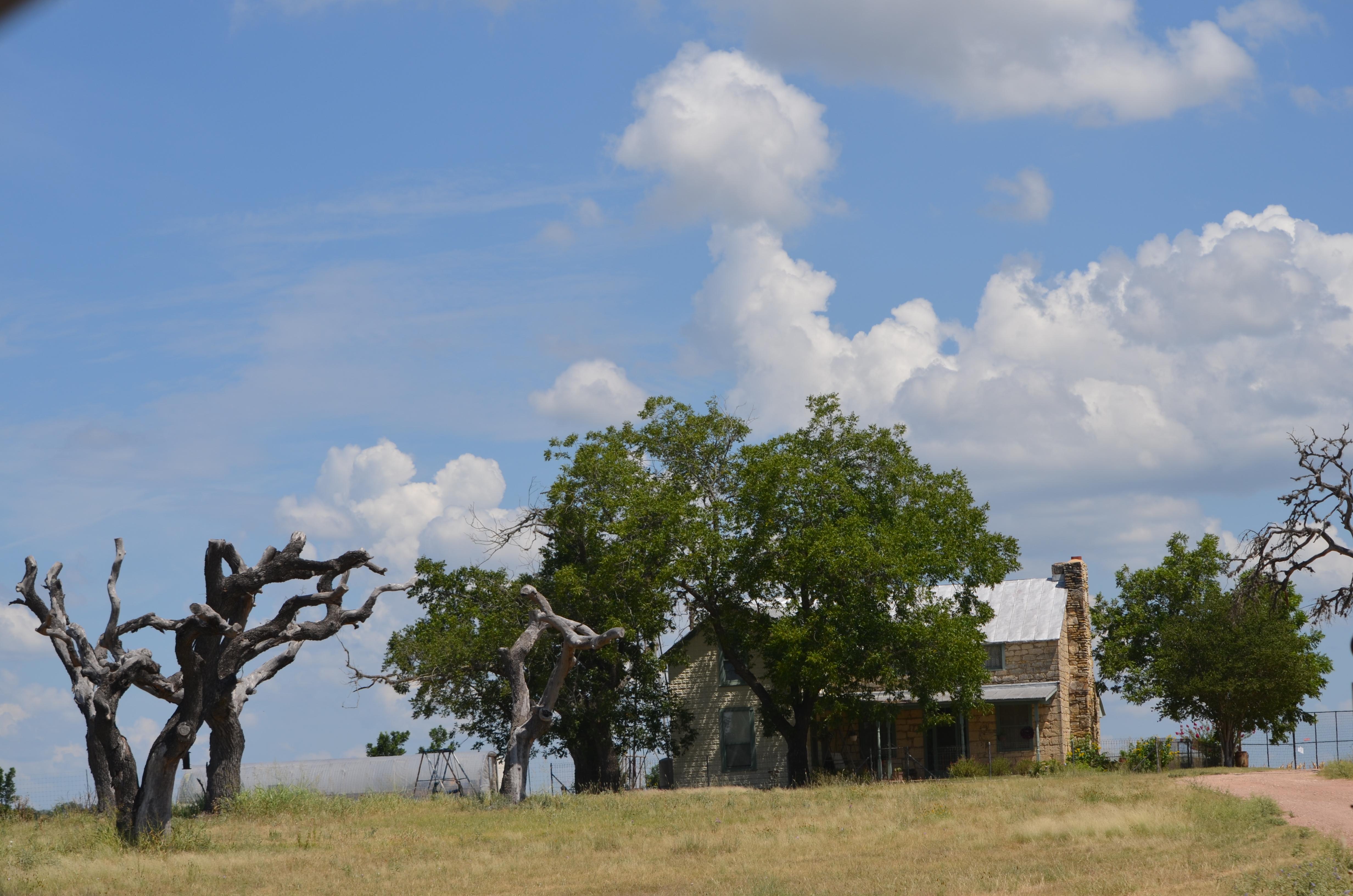 Luckenbach was as I remembered with more parking places for when it’s hopping. There were people on cycles and tourists galore, picking up souvenirs, just as it should be.
 There is a bar at the back of the old post office and I greeted the sleeping cat, the bar cat that catches the bar mice, as one man noted.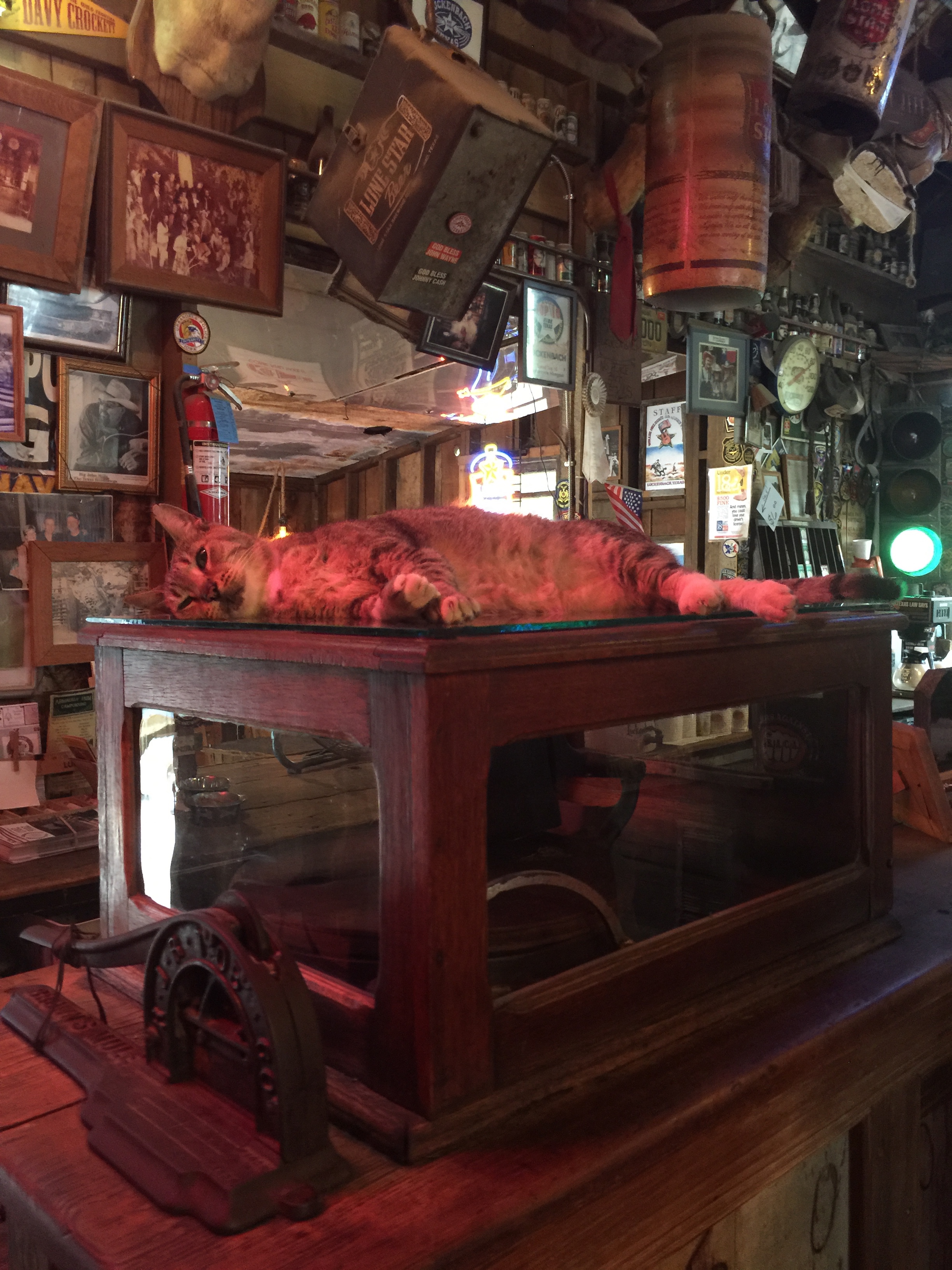
 I headed back to Johnson City and then north again, stopping to drive through a few of the towns. My final destination was Hico, Texas, a little western town. Hico has a scenic Main Street with a large Mexican restaurant on the corner. I have to note that when you go through these towns, you should look for the local cafe or the local Mexican restaurant if you want a good meal. It’s true everywhere in the country!
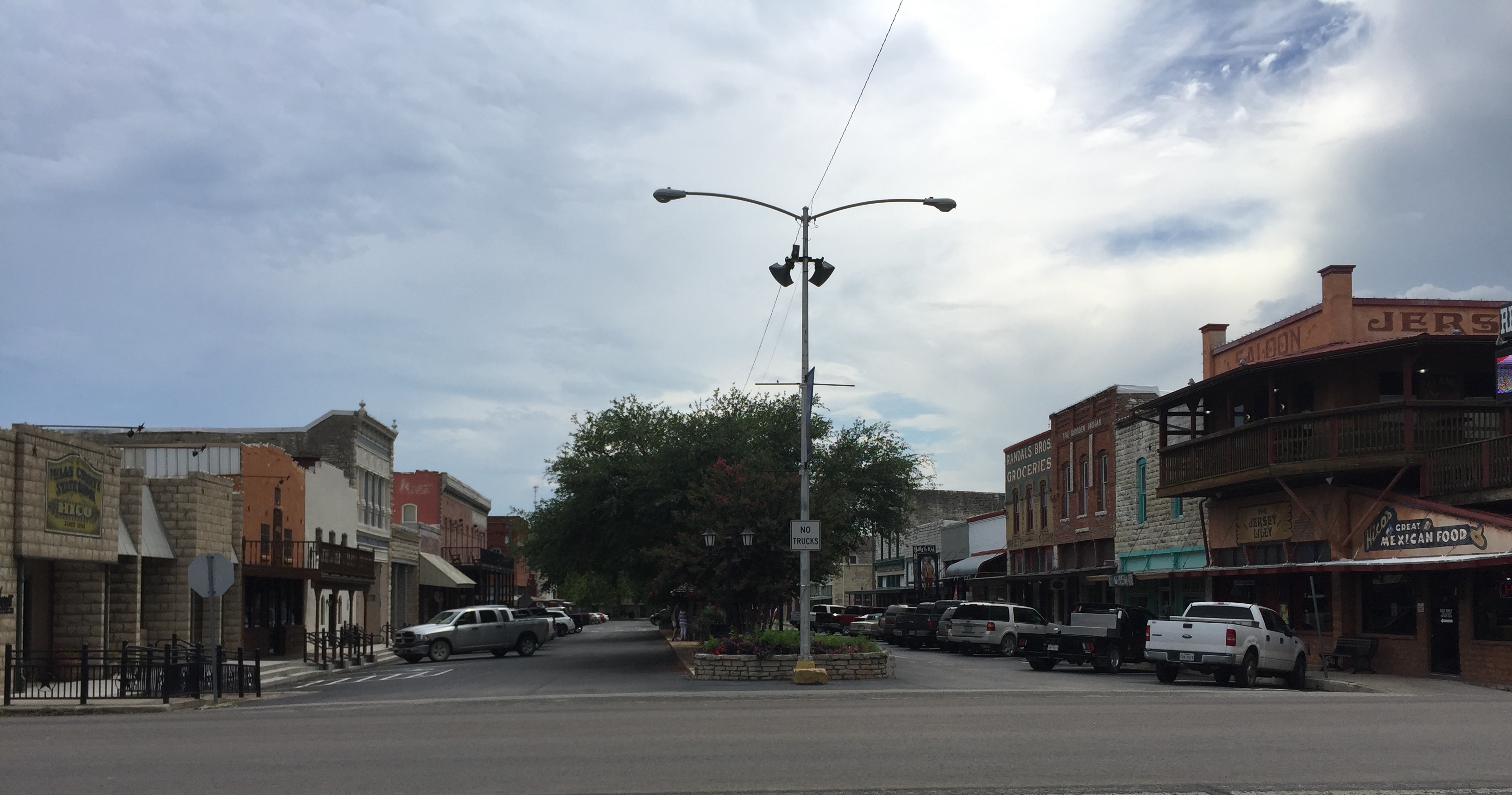 I toured the Billy the Kid Museum, which has a fun story since who knows if Billy the Kid really lived there,
 and checked out the old Opera House around the corner.
 I circled back to the road and found the famed chocolate shop and walked across the street to the Koffee Kup Family Restaurant. It had to be good.
  When a menu says their specialties are Chicken Fried Steak, Onion Rings and Pies, you just know. Yes, they were all excellent, especially the pie. I chose chocolate meringue (so rich), but they have a bunch of flavors. People were buying whole pies, by the way.
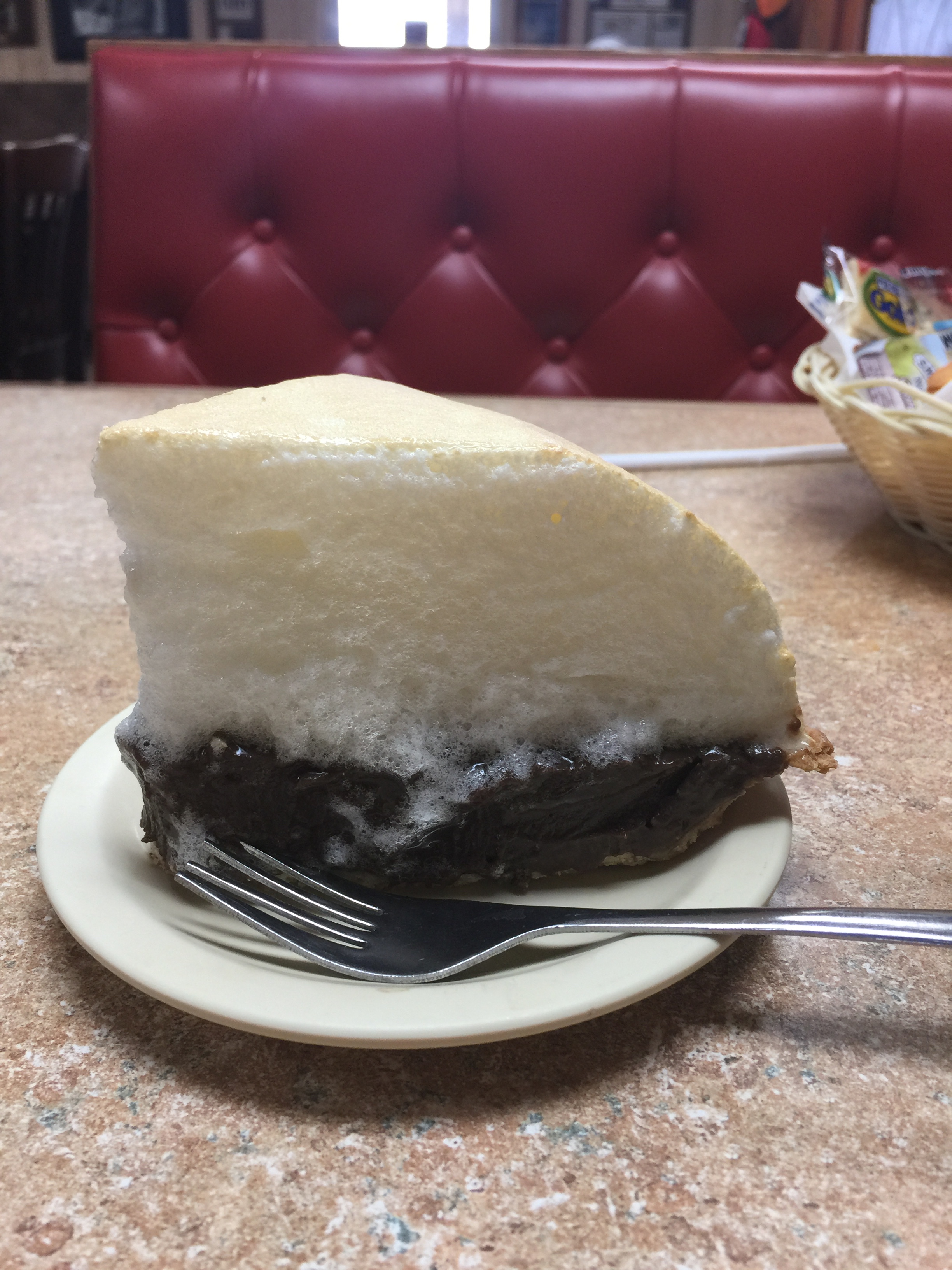 The place was the real deal, complete with some of the owner’s aunt’s salt and pepper collection.
 I was full even though I didn’t finish everything, but it was time to move along, leaving this charming town behind me. Now I needed to see how far I could get…heading north. Was I too tired to drive all the way home? Probably. The question was answered after I hit the Chisholm Trail Parkway, which follows the old cattle trail but doesn’t resemble anything about it, and headed into Ft. Worth. Everything was pretty smooth for a Saturday night until we screeched on our brakes. I was then trapped on the freeway with no exits, construction for three lanes beside me, inching along, for 45 minutes. I played Dice with Friends on my iPad with my sister-in-law to kill the time. We rose higher and higher on the freeway, locked in place. This was the most tiring part of the whole trip. When I finally escaped, I had to find a motel and ended up back in Ardmore in a complete turn around.
