Archives for category: Nature

Irving Berlin wrote

Blue skies
Smiling at me
Nothing but blue skies
Do I see

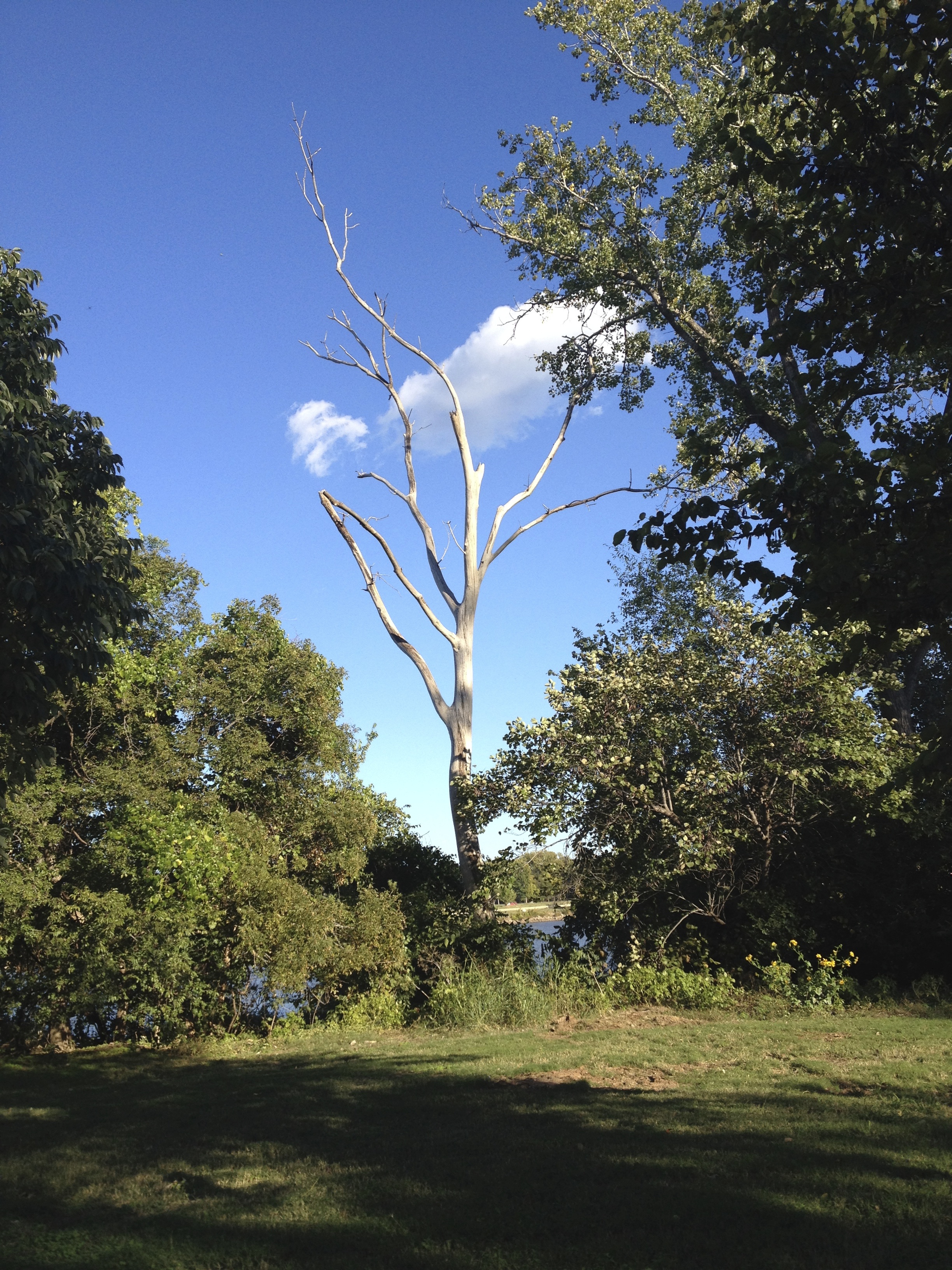
There’s truth in the fact that blue skies make everything seem brighter, everything alright. Right now we’re blessed with cool nights and warm, blue-skies all day long. I hope everything is right in your world, that all your skies are blue.

IMG_4213

IMG_4214

IMG_4217

And I hope you walk along humming that tune…

Last week, I went to the cabin of a friend along with two other friends, all of us Oklahoma born. While driving an hour out of town, we started talking about how beautiful the state is, one friend calling it underrated, with a diverse landscape that we appreciate. All of us are well-traveled, spanning the world, so it’s not like we haven’t seen the beauty of the Swiss Alps, the Mediterranean, the Colorado Rockies, the national parks, and on and on. We love it all. But we still feel tied to this land where we were born.

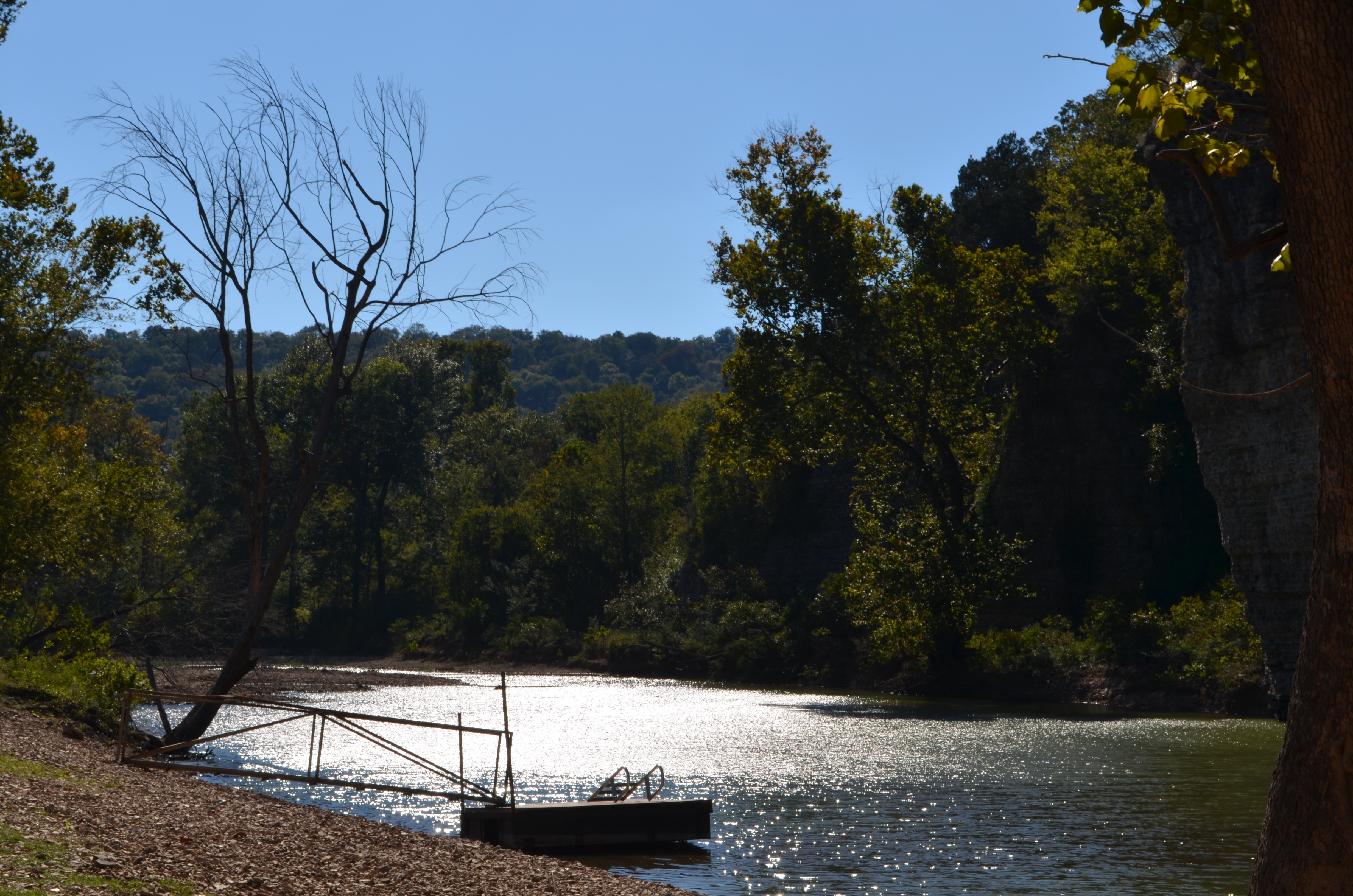
We had a stunningly beautiful afternoon to enjoy all that was around us…I love the rivers, creeks, scrub and blackjack oaks in rural Oklahoma. Fall hadn’t touched it yet, but it’s on the verge.

DSC_0012

DSC_0013

DSC_0015

Our roots are important to us no matter how many times we pull them up. I recently traveled with two friends, one who lives in Tulsa, born in Portland. She will forever be an Oregon girl. Our other friend has lived in so many places, including Tulsa, on so many continents, that she has to put down her roots over and over. I don’t know how that feels…I can’t imagine. She adapts well. What I understand is that we do feel connected to our land, to our environment and we find peace in it. There is something that pulls at our hearts from the land we have inhabited, the land where we grew up. In it, we find our true selves, we’re stripped bare. For those who move around, it must be a different feeling, one of making those connections wherever you are at the time, mixed with memories of where you’ve been. Neither one is better, they are just a part of us.

I will share the places of the heart with my Okie girls, with my friends whose roots are elsewhere, whenever I can. We need the places, but we also need the people. Peace…

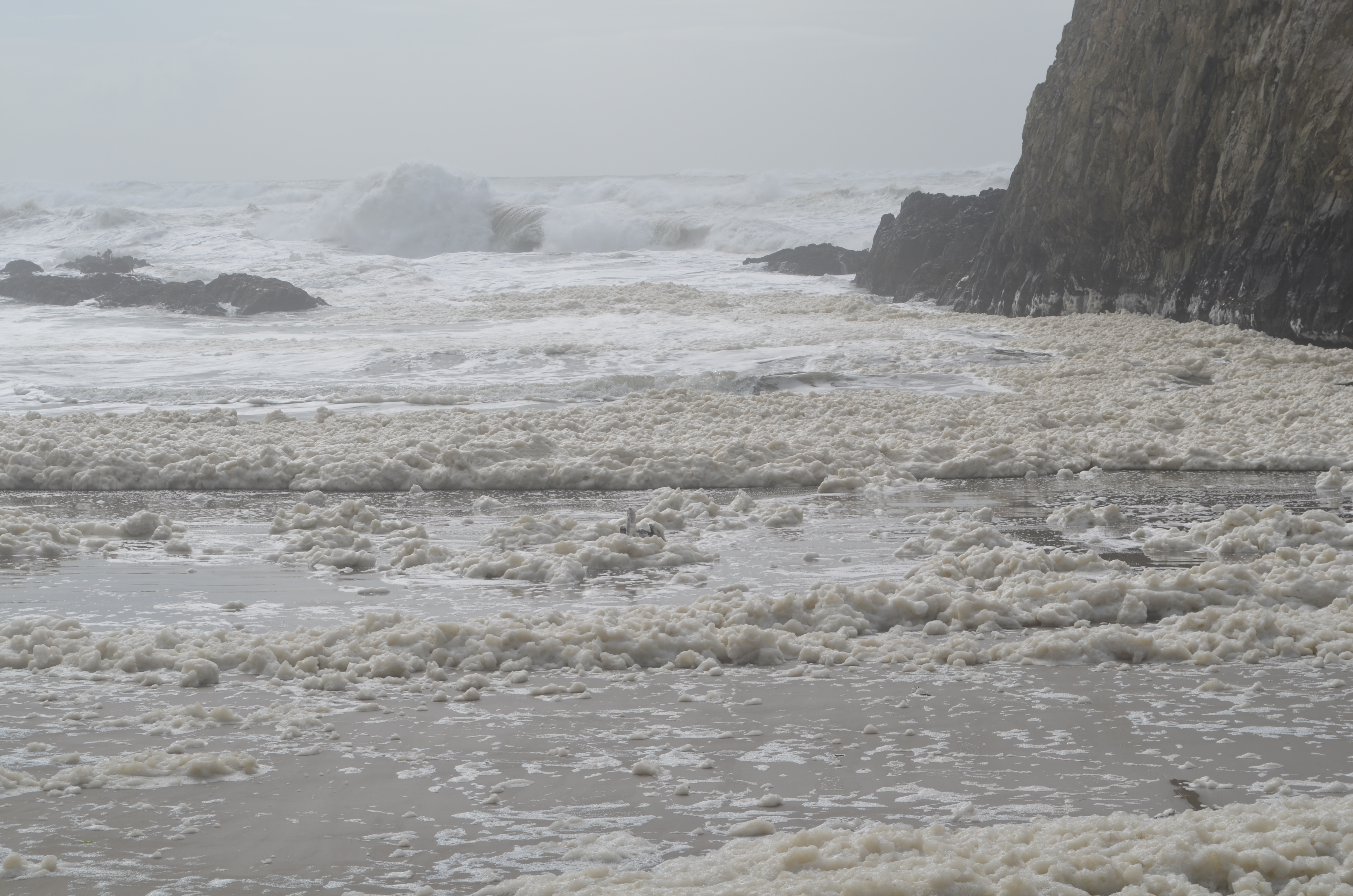
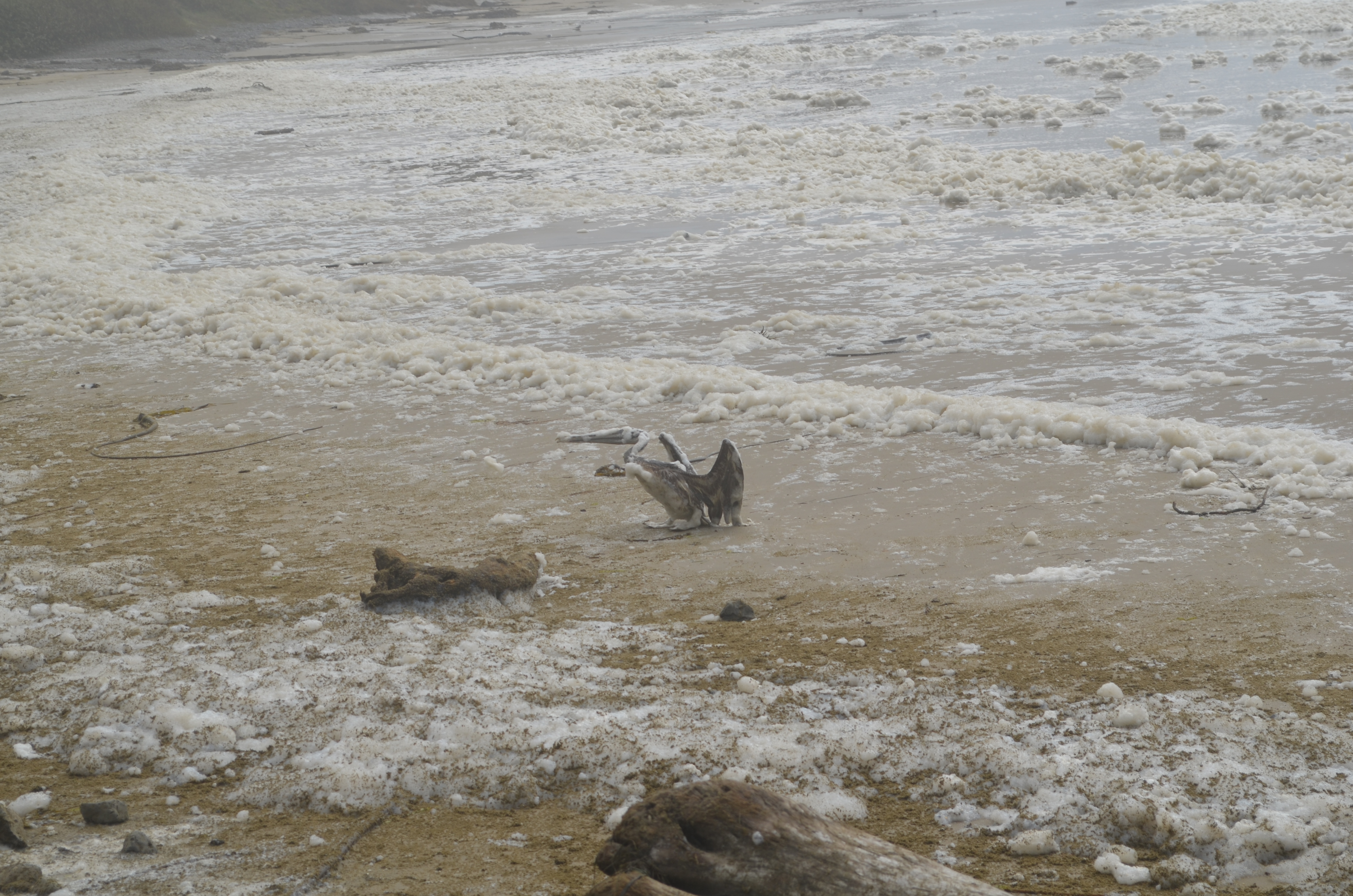
Sometimes we humans get to witness moments in nature that we know we will never see again. I was taking pictures after the recent storms in Oregon, watching the thick sea foam washing over the beach when something caught my eye, an unusual movement through my viewer. I had zoomed in and still couldn’t recognize exactly what I was seeing. You may see it around the center of this shot…

DSC_0353

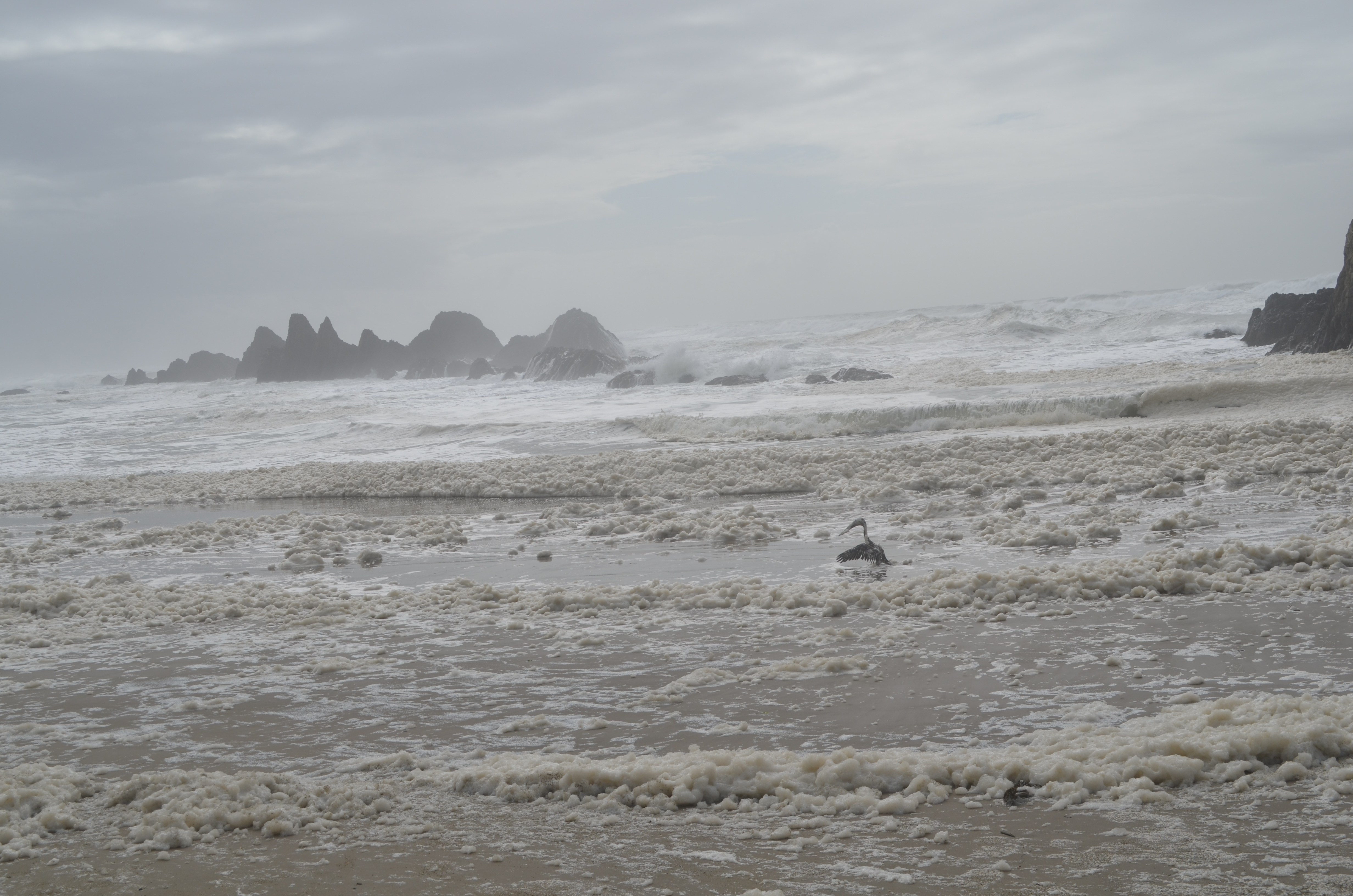
It was a bird, covered in sea foam, waddling towards me until it got covered in foam again with the next wave. It was a pelican.

DSC_0358

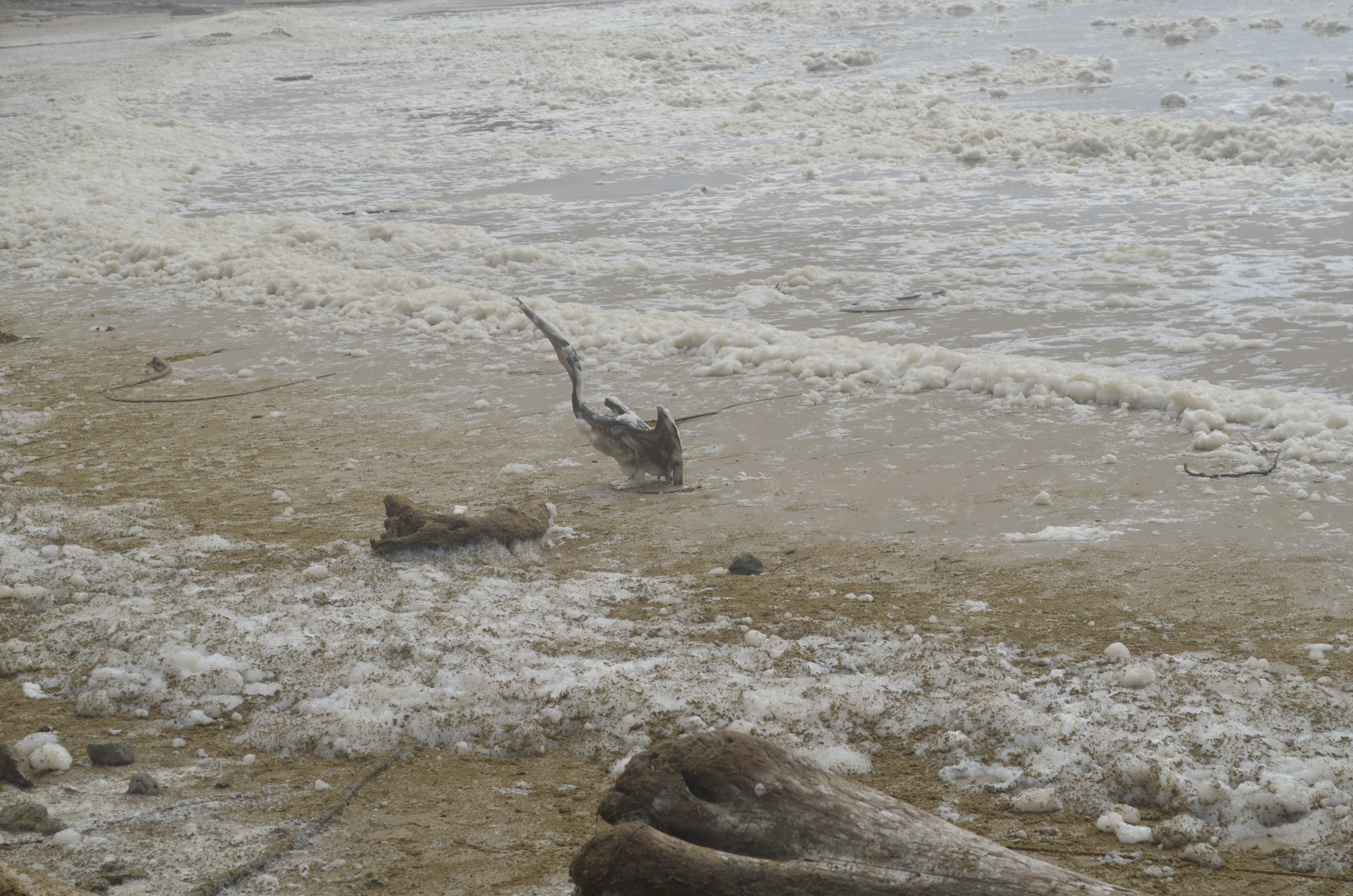
I wasn’t sure what to do. He was completely covered, his eyes, his wings, his bill. I was still too far from him to be of much help, so I kept taking pictures. He, or she…what do I know?…stopped and stretched. It was definitely a pelican, a tired pelican. No telling how long it had been struggling to escape the strong waves of sea foam. I know. I had been standing with my back to the ocean the day before and got caught in a rush of the nasty looking, thick foam. I couldn’t outrun it. And I’m a whole lot taller than a bird on the ground. It seems to take a long time to make it closer to the shore.

DSC_0364

I wasn’t moving, only clicking my camera, but the pelican seemed to know I wasn’t going to hurt him. Or he was too tired to care. He was just trying to get out of the mess. Thoughts were running through my mind about trying to help. Do pelicans bite? What if I just scared him. I had nothing with me to dry him off. So much for my valiant thoughts of a wildlife rescue. He stopped and shook a few times, losing a little bit of the foam.

DSC_0365

He wasn’t very graceful but he was moving. He seemed to know what to do. He stretched his wings again.

DSC_0367

Then his neck. He was watching me now.

DSC_0369

He let his pouch drop a little, alternating spreading his wings, preening to get the foam off.

DSC_0371

He turned to me, looking right at me, probably 20 feet away.

DSC_0378

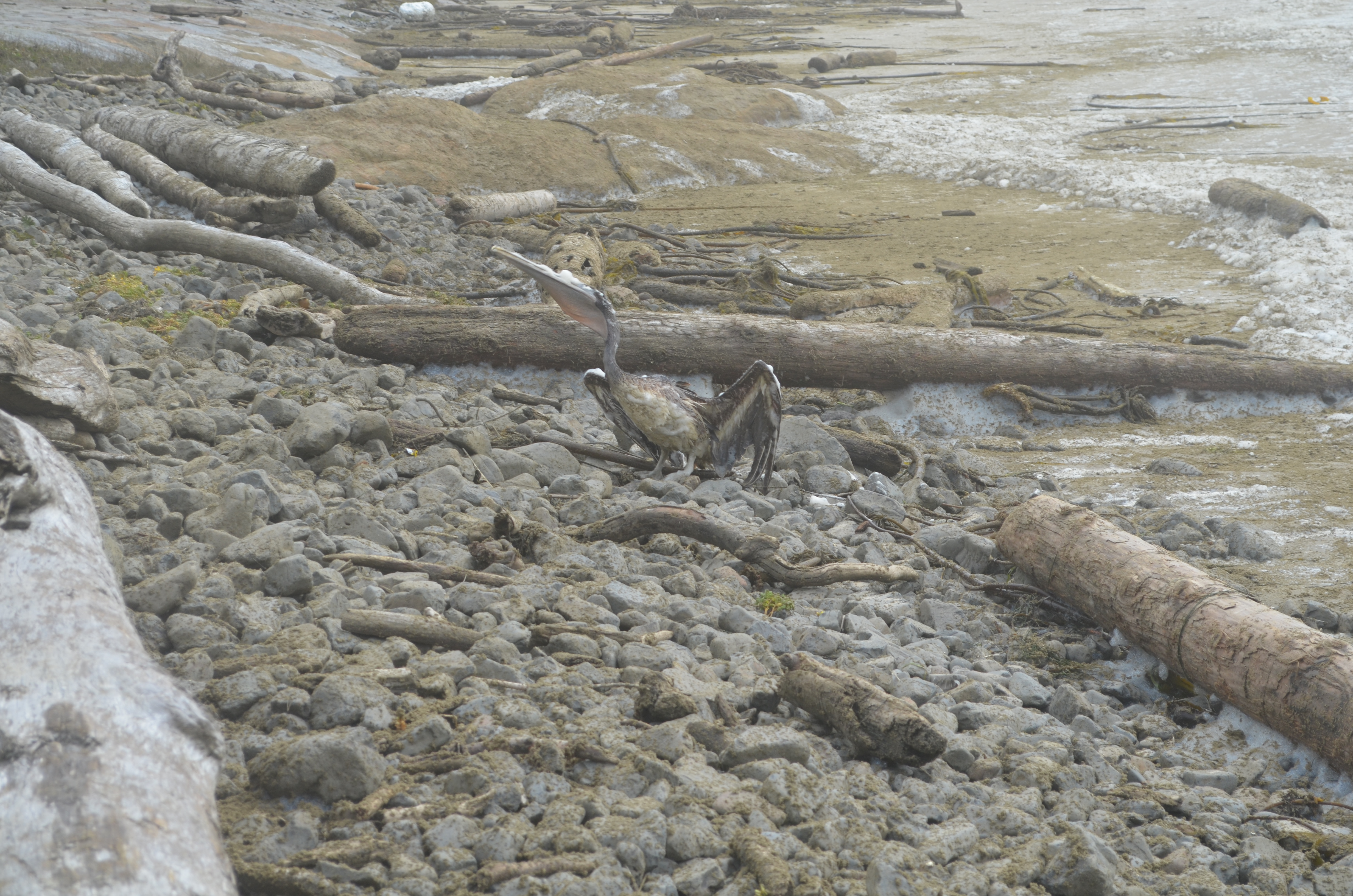
Then he spread his wings, airing them out, and headed for the safety of a log thrown to shore by the storm.

DSC_0382

A couple, probably from Germany, joined me on the shore and began taking photos with an iPad. They had seen many dead birds after the storm and thought this one would probably die, he looked old to them.

You know what…I don’t think so. I think he knew exactly what to do and was going to go dry off before returning to the other pelicans in the area. I’m not naive, but I saw the look in his eye, a look of strength. No matter what happened later, he had made it to shore, cleaned himself off, and looked a human in the eye. I felt good about him and grateful for getting to capture it for you. I won’t forget my plucky pelican friend…

I took a blogging break, not because I couldn’t get online or didn’t have things to show and tell, but because I was busy adventuring. There’s actually too much, but I have to treat you to the wonders of Oregon. This was my fourth trip to this state and I have to say that, while I’ll never leave Oklahoma, I hope to always come back here.

We were here for about 11 days this time and even the things I’d seen before at the same time of year looked different. First, we flew in over Mt Hood and it was covered with snow. Last year, it was dry.

image

And our first weekend on the coast was in record rains with high winds. From the safety of our place, we watched the stormy seas, venturing away from the fireplace only for better views. As visitors, you don’t have to worry about your property, only your own safety and preparedness, so we kept the fire lit and had flashlights and enjoyed snuggling in while the winds roared and the waves rolled higher and higher.

image

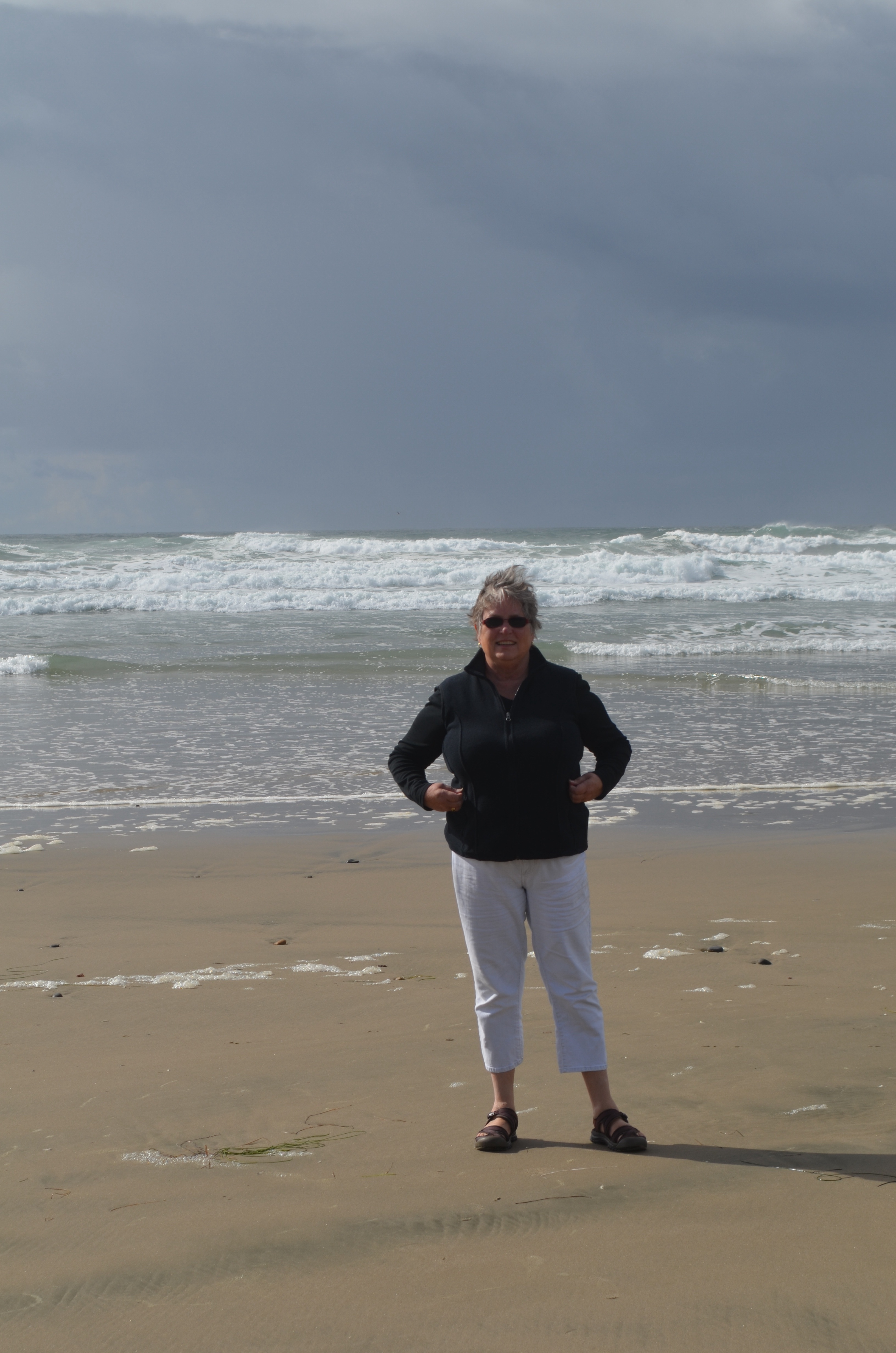
The beaches we saw after the storm were altered by the foam and debris.

image

image

image

and the waves were rough for a few days

image

image

But it soon relaxed and the earth restored itself to a refreshed beauty. We explored the towns along the coast with all their seaside charm…

image

image

image

…ate wonderful seafood…Dungeness crab, Oregon pink shrimp, shrimp and clam chowder, rock fish, halibut, and snapper…in nice restaurants and along the road…

image

image

I saw the creatures of the sea…the pelicans, gulls, and cormorants, the sea lions in rain and shine…

image

image

…and the harbor seals…

image

I walked early in the morning as the sun hit the sea…

image

image

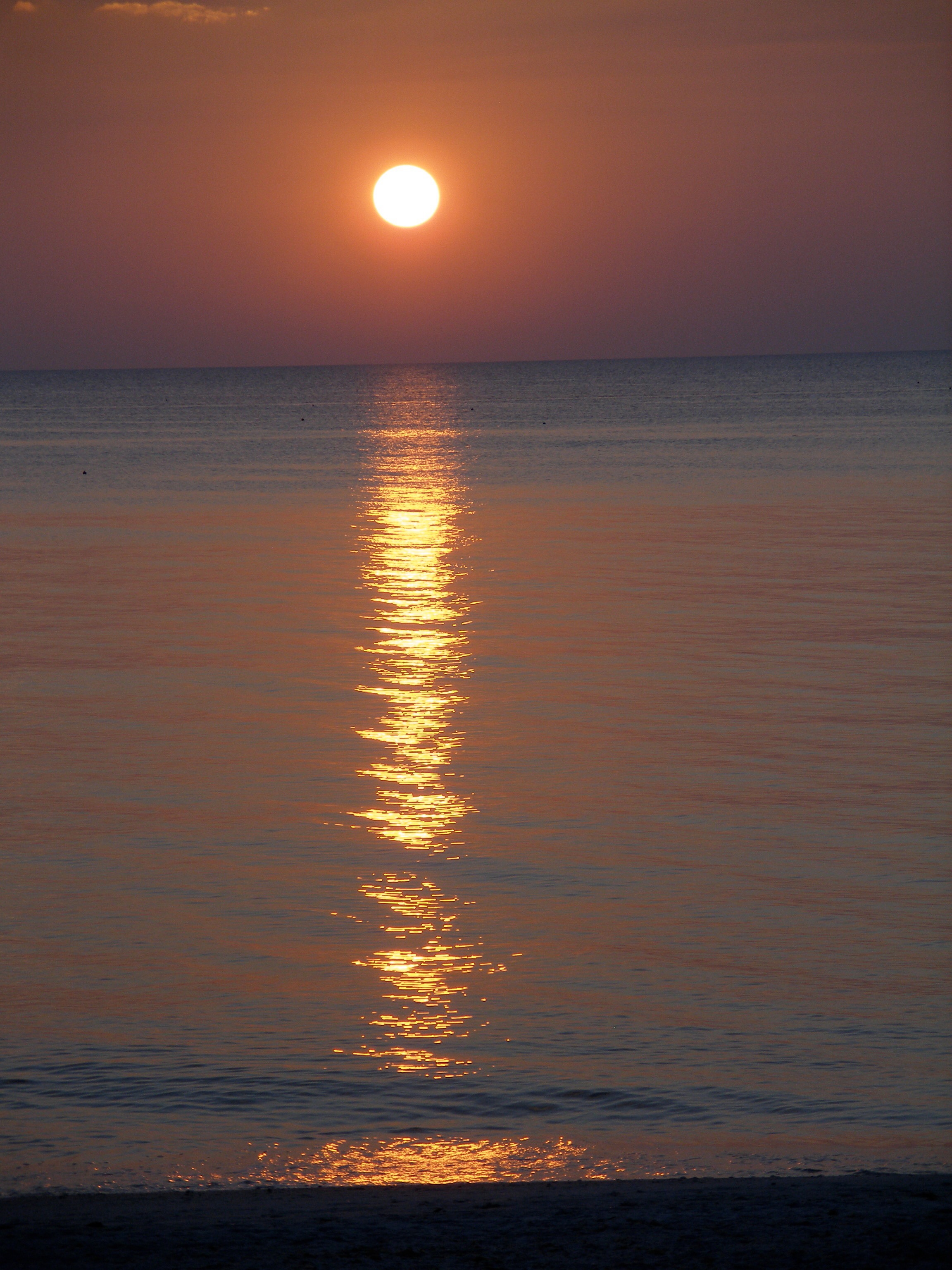
…and captured sunsets…

image

image

There were beaches with sand dunes…

image

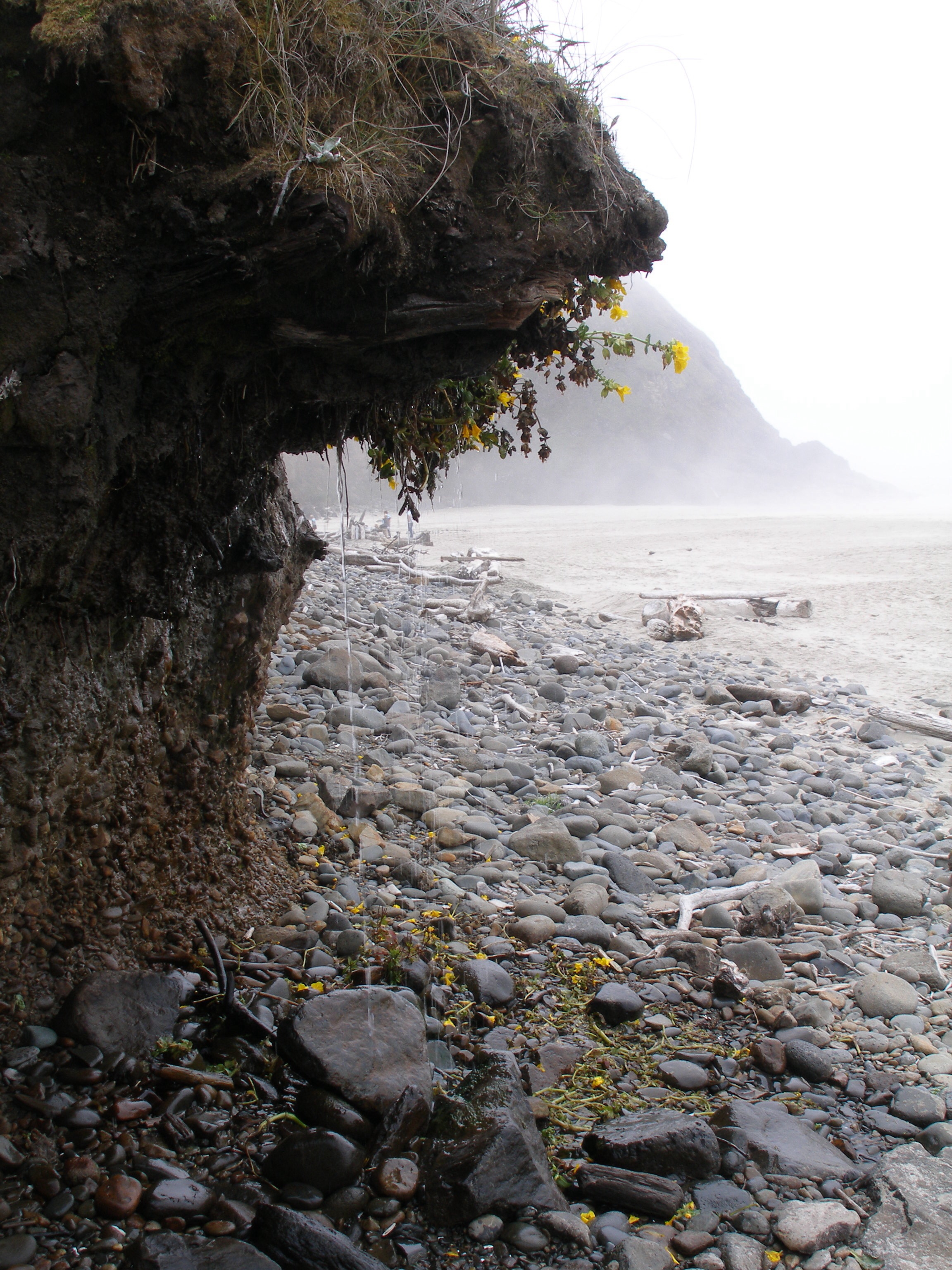
and beaches with driftwood…

image

…and treasures to find…

image

image

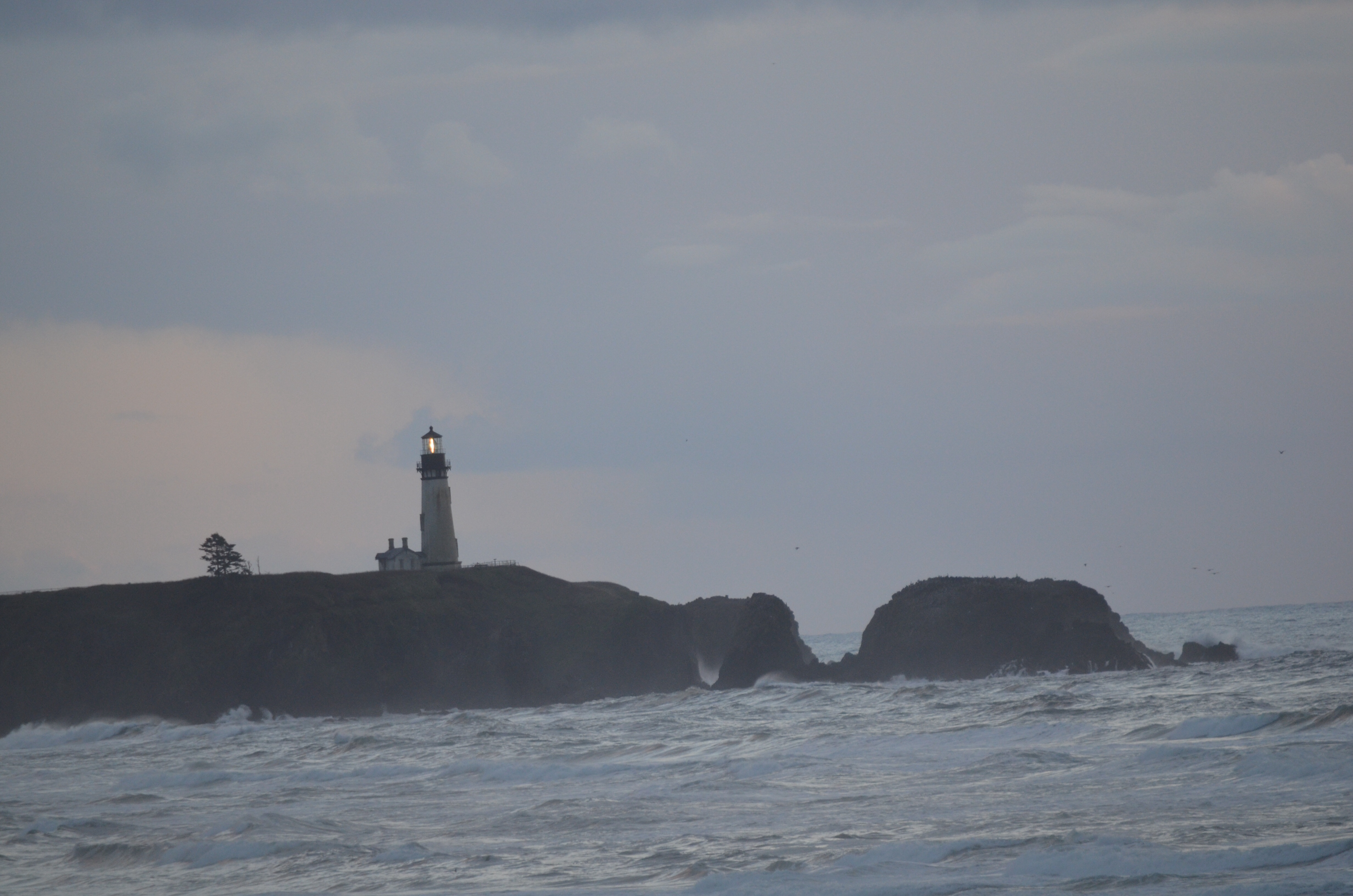
There were lighthouses…

image

image

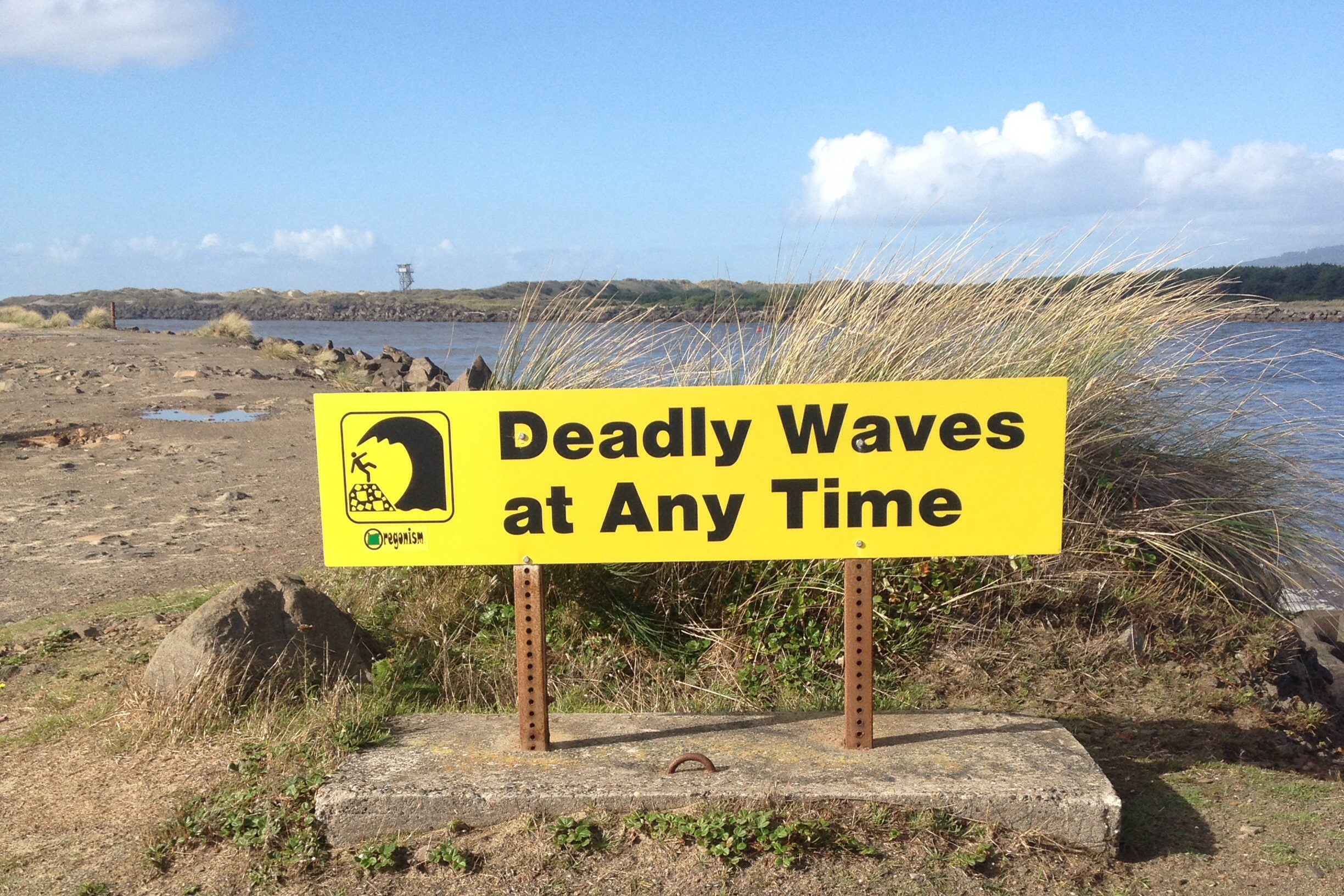
…and signs that alert…

image

image

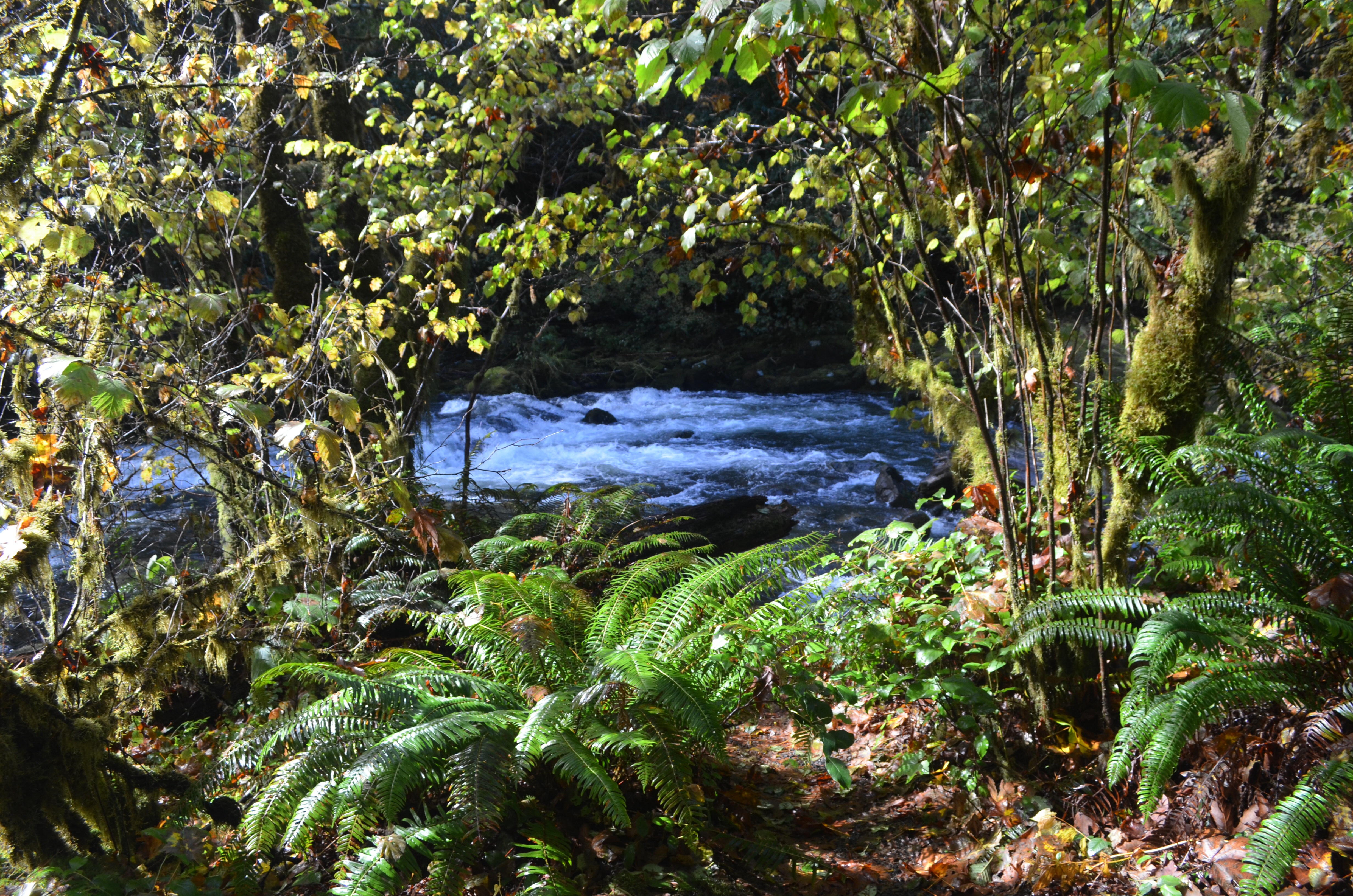
And I left the beach to hike up trails that led to mossy forests and flowing waterfalls, lush from the storms…

image

image

image

image

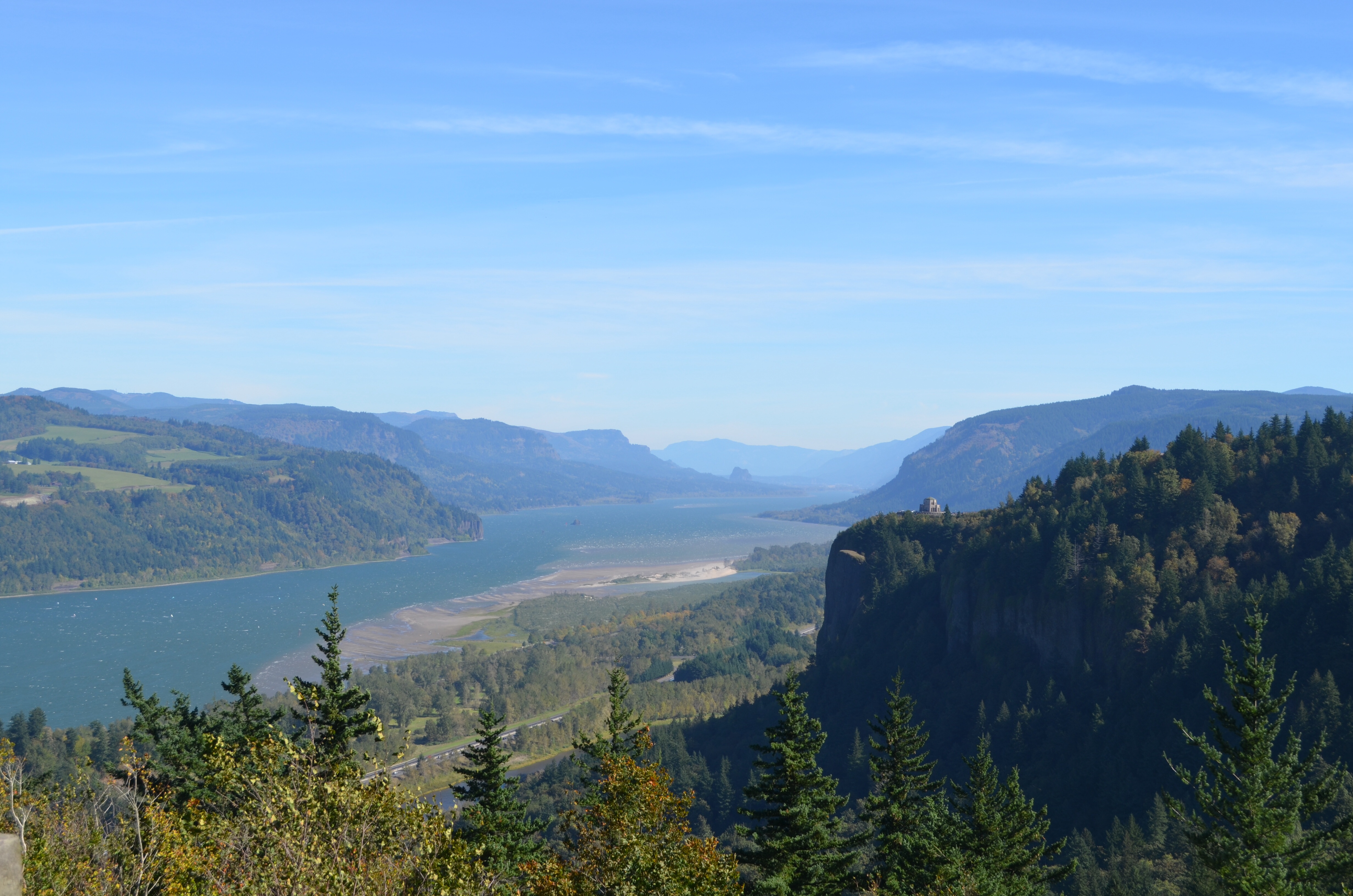
…and travelled the historic coastal highway along the Columbia River, looking over where Lewis & Clark paddled by, enjoying the falls along the way.

image

image

So I prepare to leave this beautiful state while the beaches, the forests, and Mt Hood are in my heart, begging me to return.

image

How can I refuse as long as I can walk the shores or climb the trails? Oregon will always be a special, magical place for me.

image

Places that restore my soul definitely include beaches ever since I saw my first one when I was about 10. That was Boca Raton, Florida and we looked for shells back when you could find lots of big ones, went crabbing, my brother got stung by a Man o’War, and we learned about tides and undertows.

Since then, I’ve been to other beaches in Florida, beaches in Mexico, the Caribbean, Spain, California, Virginia, Mississippi, Hawaii, and Oregon. Probably others, too!

When I hit a beach, I walk, looking out to sea. I look down to see what has washed up. I pick up shells, rocks, driftwood, sand dollars, whatever I find. I know the names of lots of shells, refreshed when I go each time. I watch for ships, boats, whales, dolphins, sharks, fish, birds. I watch the sky, the water, the sand and rocks.

I feel small at the beach, less than a grain of sand, and that gives me peace. I am of the universe, of nature. All problems are small, all life is part of the ebb and flow of the sea.

I walk, I think, I remember, I take pictures. Here are some of my favorites…

Naples, Florida in the morning…

image

Naples, Florida at sunset…

image

My first view of an Oregon beach…

image

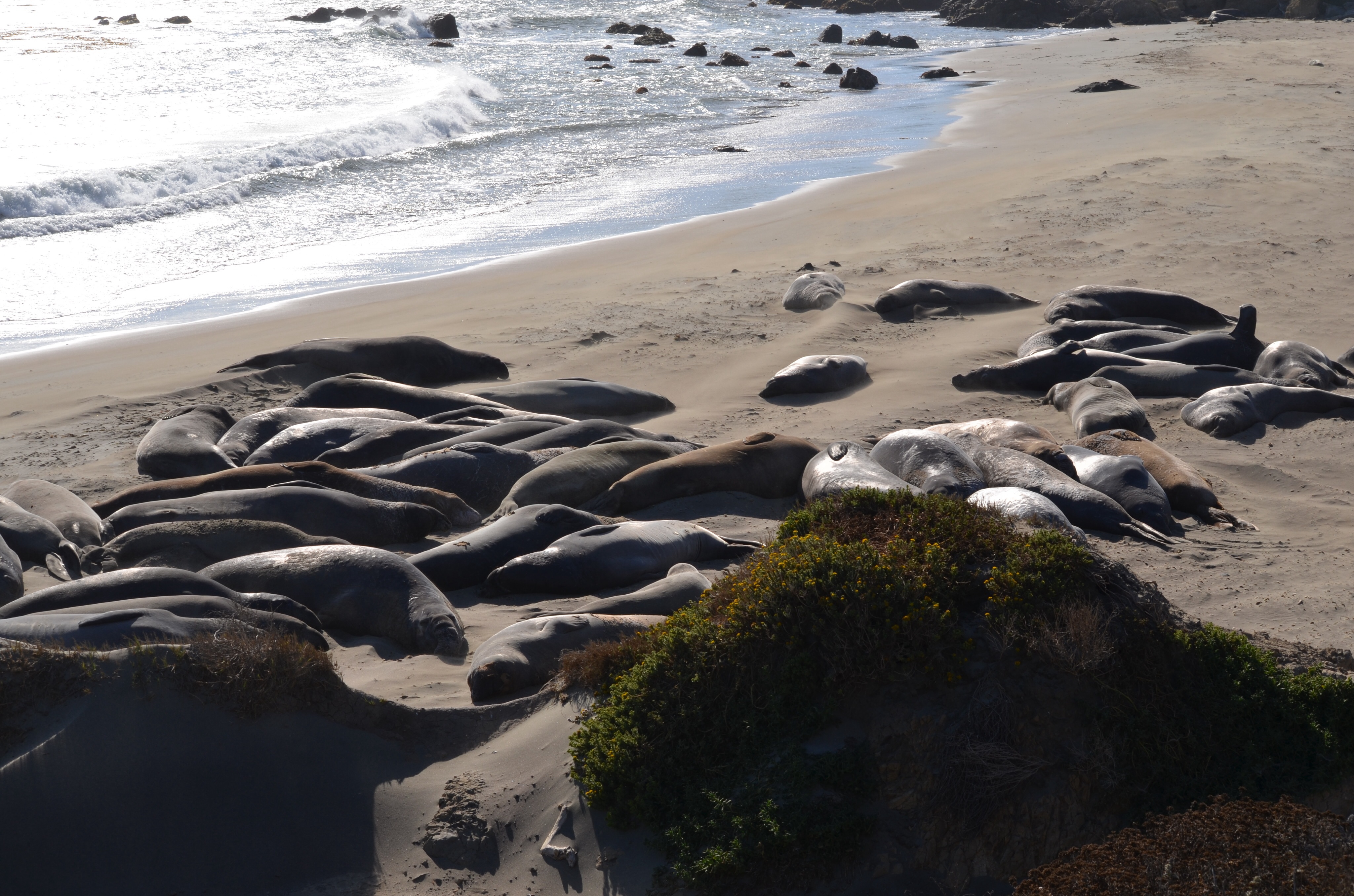
Elephant Seals in California…

image

California coast

image

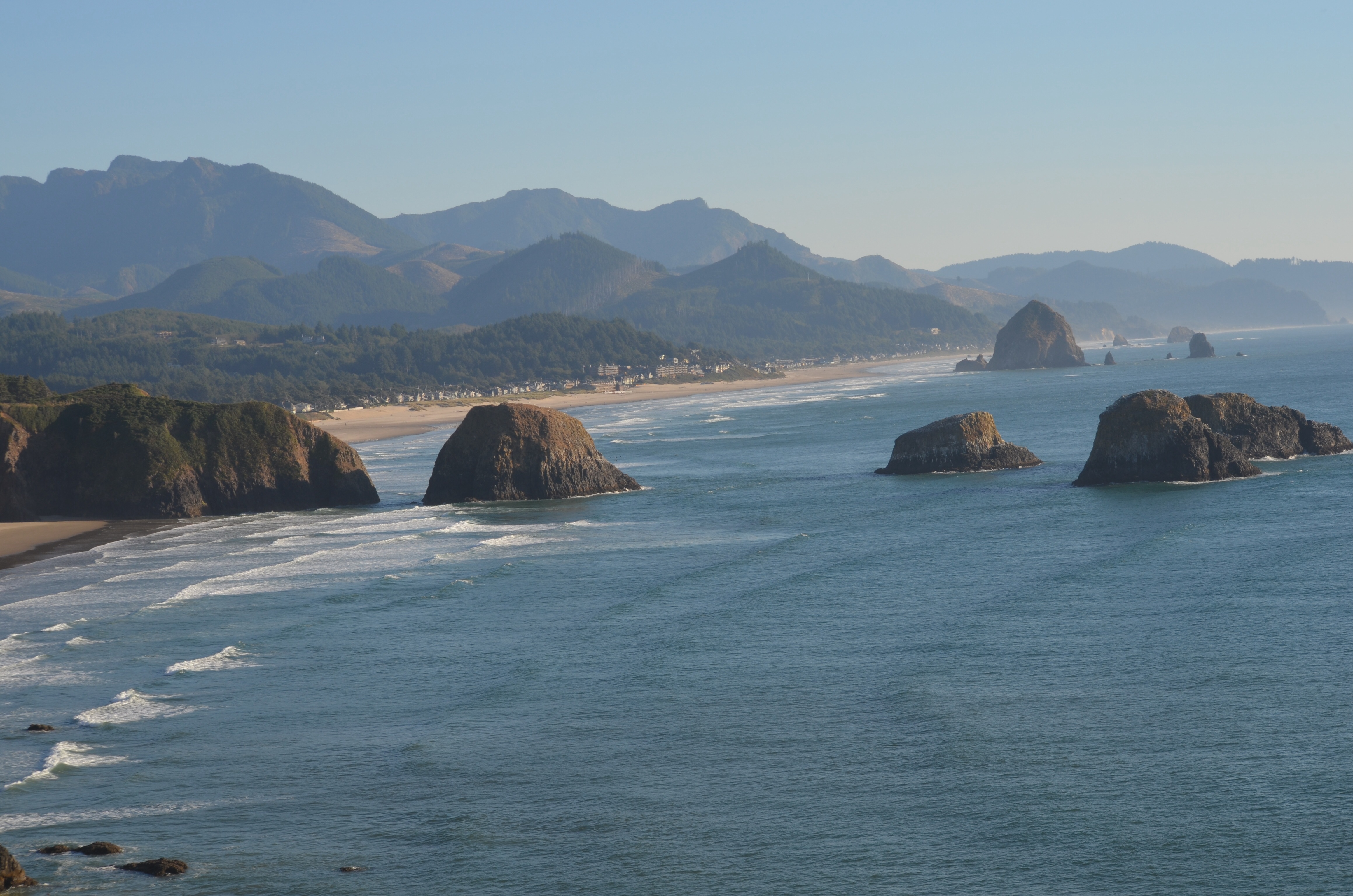
Cannon Beach, Oregon from Ecola Park…

image

I’m on the Oregon coast now, never tiring of the ever changing shore, the pounding waves, the variety of beaches. I’m at peace in my heart…

image

Last month I toured the Southeast states and now I am in the Northwest, Oregon to be exact. Getting to make two fun trips in a short time is a reminder of how beautiful this country is, how varied the plants, the foods, the dialects. I ended summer in the south and am welcoming fall in the northwest. The abundance of resources is taken for granted, but why are there still starving people in our country?

I’m here with two friends, kickin’ back on the laid back Oregon coast in a little town, Depoe Bay, on Highway 101. We’ve been up and down the coast before, so we’re deciding where to return, where to go new. Last night we ate looking over the harbor on a drizzly evening with the best waitress, Precious (and she was), fabulous salmon and fish & chips, and warm pear pie ala mode to die for.

image

image

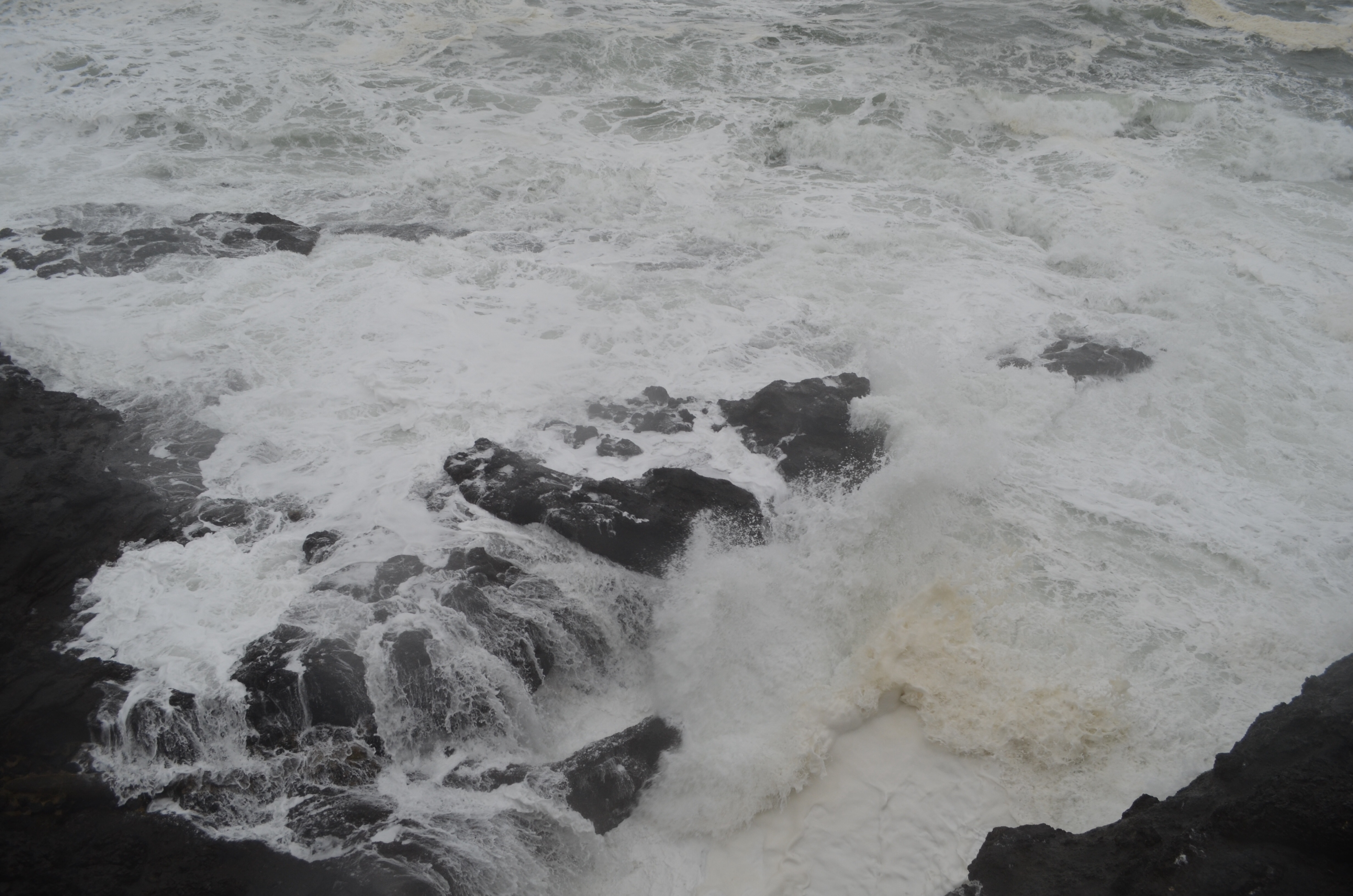
Today is the perfect day to stay in with rain and 50 mph winds. Our view has gone from relatively calm yesterday…

image

…to rougher and rougher as today unfolds.

image

Bottom line is that the weather doesn’t matter – of course it is raining in the Northwest, duh – when you’re adventuring with friends who make you laugh! Off we go…

Coming home from the Gulf Coast, I remembered this piece I wrote at the time of Hurricane Katrina. It’s long, but it’s an experience I’ll never forget and we should all remember what these people had to go through. It was cathartic for me to write at the time…

Bear with me, guys.

My family spent a lot of time in New Orleans since my husband’s parents lived there for over 30 years, ironic for those strait-laced Yankees from Massachusetts to be transplanted for the final time into the deep South.  I’m not sure they loved living there, but we were taken with its uniqueness, its flavor, its sense of fun and the magic we felt when we visited.  We went to the World’s Fair with our kids and to Mardi Gras without them.  They grew up on Bourbon Street and Jackson Square, eating at Commander’s Palace in the Garden District and the alligator sandwich place in the French Quarter.  We walked to the Mississippi River levee two blocks from my in-laws’ house and climbed the hill to watch the ships go by.  We brought back pralines and shrimp and music.  Our kids grew up listening to me try to read the “Cajun Night Before Christmas” in my non-Cajun tones. As they got older, they explored the cemeteries and Marie Laveaux’s voodoo shop, which was much spookier on Bourbon Street than when they opened a branch in the mall by the river.  Catcalls from the strip joints and peeks into the clubs were exotic and probably stirred their imaginations, but they grew up unscarred.  My son and his wife went there on their honeymoon.  And we never never missed a chance to sit at Cafe du Monde for coffee, hot chocolate and beignets. 

Sure, we drove by neighborhoods of poor and met them on the streets and knew that our white skins were the minority.  It was a sad thing about the city that you didn’t ignore, but didn’t know what to do to change.  We were just visitors.

The hurricane and the ensuing disaster has been painful to watch and too riveting to turn off.  The images are haunting along that southern line, the worst being in New Orleans.  What can we do?  By Friday, I could watch no more.  I woke up and sent money to Red Cross online and packed up supplies for my grandson to send with his cub scout pack.  I kept thinking that there must be more.  I served as a volunteer at Red Cross for many years and worked there for two years, receiving all the training I could cram in, but barely got to use before they closed our department.  My hours, days, in classes were interesting exercises required by all, but my stack of certification cards was in a drawer someplace.  I was never going to go back there.  Never say never.

Friday, my friend called and asked if I wanted to go help.  She couldn’t stand it any longer.  She went to the shelter in Tulsa and saw some of our former coworkers who were thrilled to see her.  I said I’d go.  We met at the shelter in a church at Admiral and Harvard Saturday morning and worked in Family Services where they open case files on the people and start helping them meet basic needs.  It was quiet at first, a few kids in the playroom, people lined up at the medical station, more eating donuts and chatting with volunteers, telling their stories.  I filed their paperwork, trying to keep up with the stack.  I could read all the notes from the caseworkers.  These were the people who got themselves out and came to Tulsa to stay with friends and relatives.  They had some means although one young couple had spent all their money on gas and the motel.  Families walked out with diapers and pillows and voucher cards for medicines and clothing.  A family of twenty Asian people of all ages showed up.  A young family in that group looked very calm with their two small children, but he had lost his shrimp boat – not much call for that in Tulsa – and her nail salon had been destroyed.  Their annual income was under $10,000, but they were hard-working people.  It was orderly there with seasoned staff and volunteers who had worked countless disasters doing what they know how to do.

Around noon, my friend was sent to the Red Cross chapter and called me to join her team and go to Camp Gruber to meet the incoming buses with 2,000 evacuees from the Superdome in New Orleans.  I thought, sure, why not?  What possible excuse would I have not to go?  I hustled out to that familiar site, smiled at a few former coworkers, hugged a couple, got a new badge issued and we checked out a Red Cross van, which we filled with supplies donated by people stopping by.  We had water, baby supplies, personal hygiene stuff, toys.  Three of us took off, my friend who is half Muscogee Creek, an Hispanic woman who is a former Tulsa policewoman now working for Camp Fire (very fun woman), and lily-white me to meet 2,000 mostly black poverty sticken folk who have been stuck on a bus for God knows how long. 

Camp Gruber is where Oklahoma National Guardsmen are trained, so it is military to the hilt.  I’d never been there, but it’s close to Muskogee, near Braggs.  You know.  We found our way to the main place, a room that looked like it might hold one or two busloads, plus the Red Cross teams.  There were tables set up, snacks stacked around, and comfort kits for all groups.  One of the first things they would receive was an individual kit with toothbrushes, toothpaste, soap, shampoo, deodorant, etc.  There were kits for men, women and children with the basics they need to clean themselves up.  This happens in every disaster.  They hadn’t received enough standard issue kits from Red Cross, so a group was assembling kits from the items donated by citizens.  We unloaded part of our load at a warehouse down the road where they were taking water, toilet paper, and food products.  Another location, air-conditioned, took baby supplies, toys and clothing.  They were sorting the clothes by sex and size.  The medical center took the allergy drugs we brought with us.  We passed the media center and saw trucks from all the local broadcasters and cars that probably had the print reporters.  I’m sure they were carefully controlled, knowing how all that works.

The main place was full of groups of people, some trained, some who showed up.  There were people in the mess hall with food.  Our building had the people who would do the first intakes and everybody was assigned a team.  The plan was to take these people to security first, search them and their buses, then triage the medical cases, then get their basic information and assign them to barracks, walk them there, then feed them.  They would be sorted by men, women, families, those 65+ or with special needs (there were one story buildings closer to the mess hall for them).  It seemed like a plan to me. 

I was on a Human Relations team, which basically is to make sure they were treated kindly and decently and to see if they needed a translator, be it a foreign language or a signer for the deaf, etc.  I was finally told I would be with the group that got on their buses, welcomed them, got them registered and rode to the main office where we would leave them and head back for another bus, etc.  Sounded simple to me.  Smile, pat them on the back, fill out a form, get their signature.  All the teams rehearsed over and over, ad nauseum.  There was a tv camera, almost in my face. I never saw the media later in the evening.

Now for the reality.  Many of the volunteers had been waiting for these buses since the night before.  The arrival time had been moved from 6 pm Friday to 7 am Saturday and I was there at 5 pm and nobody knew where they were.  These 2,000 people had been on the bus for days, literally, and we had no idea when they would arrive.  So we drilled on the routine, the leaders met, and the routine changed – over and over. 

In a disaster, there are many people who respond.  I call the main group Disaster Junkies.  These are the ones who will go to disaster after disaster for the three required weeks and then go back again.  These are the ones who make it their lives, whose adrenaline pumps at the news, who live for their pager to go off in the middle of the night.  Some are saner than others.  Some are wonderful, kind people, who want to give their time, skills, love.  Others are in it for baser reasons and live for the power, the sense of importance. They make friends with other Disaster Junkies across the country. Just like the rest of life.  So you get all kinds and, somehow, it miraculously works, God bless them. If you can stand it.  I’ve always thought it was a fascinating spectacle of human nature and loved it in small doses.  I’m not one of the junkies.  Just give me my job and let me help. Then I can go home.

Shortly after we arrived, the skies blackened and a thunderstorm opened up, pounding on the metal roof of our building. It cooled things off, but it left deep puddles and muddy places around the area. We thought it was a pretty sad welcoming sight for those who had been walking through worse. If they’d ever get here. You have to picture an ever growing crowd of Red Cross do-gooders, surrounded by the National Guard, Oklahoma sheriffs, officers from the Muskogee police, medical workers, and who knows who else, standing around for hours waiting to hear where these people were. First we heard they were still in Dallas, stalled by FEMA’s attempts to get Oklahoma declared as a stopping place so we could get federal funds. Why were they even in Dallas on the way from New Orleans? Nobody knew. We empathized with their feelings, whatever they would be. Tired, frustrated, angry, frightened, confused. Next we heard they were at the state line. But the clock ticked on and the plans changed. A couple of women were screaming orders, their blood pressure rising, making everyone else’s eyes roll. Calm down. I saw a woman whose heart was pounding so hard her shirt was moving. They reassigned her before she irritated anyone else. There were college students, people who drove over to help with no training, veterans of 9/11, and the military. Who the hell was in charge? The longer we waited, the more the plans changed. The room must have been reconfigured twelve times to see which way they could move more people through faster. It didn’t matter because it was all going to change again anyway. News came that one bus was having mechanical problems so all the buses slowed down. They must have been driving 15 mph – a caravan of 37 buses. Or 39. Or 32. Whatever. That too changed.

Finally, finally, we were told to go to our sites. There were two places the buses would stop first once they were on the base. I now had my own team – four women who showed up to help with no training. They were from Muskogee – normal people. We didn’t even have stick-on name badges for them, so I scribbled their names on a piece of cardboard so I’d remember. I can’t today. I told them they were lucky – they only had to come do their jobs and not go through all the changes of plans. I think it was another two or three hours after they arrived that we finally moved. We also had a greeter, who would enthusiastically welcome the busload to Oklahoma, tell them how happy we were to see them, and explain that we would be coming aboard to get them registered. We were down to taking their name and age and asking them if they had children with them. If they had missing family, we starred their form so someone could help them find the family or get them mental health professionals to speak with. We walked across a muddy field, sinking in the rainwater, walked a block and stationed ourselves to meet the people. There were men with drug dogs, a line of soldiers to meet them, the scanners like they have at airports, and a line of soldiers with hand-held scanners to run over their bodies. All their belongings were searched, as was the bus. There was a bathroom there, which they could use. There were medical teams and mental health workers. This was on a brightly lighted covered concrete pad. We were standing in the mud in the dark beyond to meet them as they got back on the buses to take them another block to start the process.

The news spread that they were at the gates, on the base. Not far. It took forever. In the meantime, we learned, from a Disaster Junkie mental health worker, who was a little mental himself and overly pumped for his assignment, that there was news of people who had died on the buses, and bleeders were sighted. There was rush to put rubber gloves on all of us. I was too hot & couldn’t get mine on & threw them away. I was only going to ask their names, not exchange bodily fluids. I used to teach this stuff and I wasn’t afraid of getting hepatitis from them on a block ride. How comforting for them anyway to think we were afraid of them. We were told what to do if they were hostile, what to say, how to react. We didn’t know what awaited. Some might be criminals. Who knew? Overkill. Where the hell were they? Someone in our two groups wanted to pray, which seemed appropriate, even for the least religious in the group – most of the people were anxious. A rough circle of former strangers formed, holding hands, and someone started the Lord’s Prayer. We stood in a circle in a muddy parking lot on a military base in the middle of Oklahoma late at night and hoped for the best. Help!

Then a line of lights appeared, an endless line of lights. Please, let these people off the damn buses. They had to be numb. It was around 10 pm.

My first image was a black family, dressed in very new, very clean white t-shirts. The children’s were oversized adult shirts that hit their ankles. The first face was a handsome young boy and, in the glare of the lights, he looked like an angel. Our first family was a group of angels. Not too threatening. I could feel the relief from our teams. And they looked exhausted. We weren’t allowed to get close to them, so we watched, taking in the faces of the people we would soon meet, a few inches from their faces. Many lit cigarettes (how do the poorest of the poor afford cigarettes – always a question), they stood around waiting one more time. There were elderly people put in wheelchairs, nurses talking to them. We watched the men remove their belts as the scanners went over them. It was pretty calm, everyone was too tired.

I met the National Guardsman who was in charge of this whole deal for the base, a pleasant young man with an Oklahoma drawl who told me he’d been up for 61 hours. Still smiling. He wanted a drink of water.

The bus pulled to our side and we helped them cross a patch of sloshy mud to reboard the bus. We smiled, not knowing what to do yet. I reached out to an elderly woman so she didn’t slip in the mud. The first team left with their busload, our team was next. Our bus unloaded. It’s hard to remember who we saw. A sea of black faces of all ages, all tired. A few white faces in the group. Varying kinds of dress. A guardsman told us the smell of the bus would knock us out. I think they’d been riding for 31 hours, maybe longer. I doubt they got off. My greeter was a nervous wreck, but my team was game. Good women, nice people. We were laughing as I told them I was not a very good leader because I had no idea what the latest change in plans was. I told them to do their best, the forms could get corrected later, these people mostly needed us to be kind. We welcomed the people crossing the mud path to the bus, our greeter gave her spiel and we boarded.

We had to lean down to hear their names, so we were inches from their faces. It was loud from the bus engine. The bus lurched, so I balanced myself against the seats to write and hear. I think I only had about four to do before we were there. That was fast. Our team was through, we waved goodbye and cleared the bus to return to the starting site for our next group. My people were grateful. A couple handed me ID so I could write their names. It was hard to hear the spelling over the noise and I was leaning across them to get signatures. Many apologized for smelling bad, but heck, I’d been standing around for 14 hours by now, so I wasn’t much of a flower myself. I was at the front of the bus – I heard the back was worse – by the bathrooms.

My friend called my cell phone from the other site. It was night and day from ours. The military people there were rougher, tougher. At our place, they were friendly, asked if we wanted chairs while we waited, seemed kind to the people. The other site was not so nice for anyone. Who knows why? Some gung-ho type over there. The first group at the other site included people who brought their dogs – a Great Dane and a German Shepherd. Red Cross shelters don’t take pets, mainly due to logistics & sanitary issues, although there are people who are trying to change that. Too many people die because they won’t leave their pets behind. Sheltering your pets, livestock, exotic animals is a huge issue and part of disaster planning. Who was going to tell these people “no” after they’d come through a hurricane like Katrina? Nobody.

We thought the process would speed up. They added another team to our site, which only meant we waited longer between buses. Later that night, I figured we were doing a bus an hour, although our part only took minutes. It was the search and medical assessment process that was the hangup. So we watched a lot. A bus arrived and I counted 7 dogs, all small. The owners were clutching them and the teams were petting them, admiring them. We would have dogs at this place, for sure.

My second group included a cute man with a Cajun accent who laughingly told us he would have to get used to our accents. He said he was getting us first. He was my first stop on the bus. The driver vanished, so we finished quickly and had time to visit with this group. My new Cajun friend moved to New Orleans in 1972, but left and came back many times. He was a jockey, race horses. He said he was single and liked to move around. Not a successful jockey, I guessed, but he was friendly and glad to talk to me. He said the bus was like heaven after the Superdome and apologized for not being cleaner. He asked me if I could imagine sleeping on a bleacher. I asked him what it was like when the roof blew off and he just said, “Oh, man.” He thanked us for our hospitality, but said he wouldn’t be staying long as he had friends who could get him a job in another state. He thanked us and said he wanted to get moving in a day or so to let us take care of the ones who were needier. Nice guy.

Mostly, the people were tired, hadn’t eaten since 7 am, wanted a bath and bed. None looked too threatening simply because of fatigue. While we waited, one man griped about the long wait for help. He said it was too little, too late, always too late. He was angry, but not in a bad way. One of my teammates, Lana Turner, a black woman from Tulsa who joined us late, and I listened. I told him I agreed with everything he said, which I did. He’d watched a baby die waiting for help. He had the right to be upset.

It was after midnight. We were waiting for our third?? bus. The line looked endless, headlights in the distance. By now, we were shaking hands with the people as they walked on the bus, welcoming them, smiling. They were smiling back, thanking us. My next group included a young mother with a sleeping two year old and a nine year old child with a different last name. She told me she had no idea where four members of her family were. I assured her we would do everything we could to help her get information. A woman on an earlier bus had been separated from her children. They were put on a bus that went to Houston, she ended up in Oklahoma. She knew who they were with, but not where. She was worn out.

I visited with a nice looking man, dirty but decent clothes. I’m not sure what his problems were as he could pass for normal on the street. I patted shoulders of worn out folks. Behind me a couple of rows was a baby, almost one year old. I think her name was Jediah, something like that. I could have eaten her up. Beautiful face, smile that lit up the night, happy baby. Clapping her hands, bouncing on the man’s lap. I played peek-a-boo with her. Her eyes were as shiny as could be, her hair pulled up in three little bunches. I would have loved to hug her. The family said she entertained them the whole trip. They were laughing.

This time, we had to wait when we got close to the building – some kind of backlog. I don’t know. I found my friend and she said she wanted to ride back with me. We found our van and she told me stories from the other side of the driveway. At her site, they had immediately filled four containers with contraband, drugs, knives, guns. One bus had more dogs than people on it. One bus had bags of feces and the smell was overpowering. The people had to resort to plastic bags. They found a drug addict and took away his drugs. One man told them he is HIV positive, another was mentally ill. Bodies were removed from the buses before we got on. There was a young woman with a three day old baby – the mother was bleeding. They stopped her for some reason rather than taking her to the medical unit. There was a deaf man, a blind man. Our driver said a man peed in the van. We could see people lined up to get a change of clothes as we drove. It was a surreal vision in the night. I could see people in the barracks, sitting on beds. Saw people wandering to the mess hall in search of food. They’d run out of lasagna early & had MREs for them. That’s military for Meals Ready to Eat – like in battle. They’re not bad. I had them in Alaska. These people said they were so sick of snacks, wanted real food. Not yet, sorry.

I heard the story of a man who said they were all taken to the Superdome and left there. Anarchy broke out and people began breaking into the concession stands, selling cigarettes for $10 a pack. Gangster types took over. Another man had been sleeping on a mattress in a factory in Algiers (a section of New Orleans across from the French Quarter) where his group had been taken and left. There’s an untold story, isn’t it? All these people were taken to evacuation sites and left to fend for themselves. They said sanitary conditions deteriorated. There was no way to clean anything or find help.

The stories abounded. The other landing site had turned into a mess because someone in the military started issuing insane rules, so those teams were through for the night, disbanding. Our site was running like the plan. Why the difference? We don’t know.

My friend told me I had to quit, 15 hours was the maximum for a disaster worker and I’d been going for over 17. I told her she had to come back, too. I told my team goodbye. I think there were only a handful of buses left all of a sudden. We found our friend and I stood there for my last look around the main center.

There was the young white couple with the hugest Harlequin Great Dane you’ve ever seen sprawled across her lap while he sat with the tiniest gray kitten in his. I think they had another dog, hard to tell. Dogs were sniffing dogs, trying to figure it all out. I noticed another category of barracks had been added – Co-Ed with pets. I heard there were more cats, a bird. Who knows. Can you imagine living in a non-air-conditioned barracks with pets of all types and sizes? Not to mention the people? Humorous. The four-legged animals all seemed to be getting along.

The room was a swirling late night blur of red disaster vests mixed with camouflage uniformed troops, tables with volunteers, people milling. Most had moved through the line of snacks and drinks to be registered, assigned to a barracks and assimilated into this new world. I wondered how it would look in the morning. One man said he knew he was in the middle of nowhere – he couldn’t see a Pizza Hut. I think he thought he’d been moved from one hell to another. Mostly they were grateful.

It was close to 1:30 am when we left, a thousand stories later. I drove, not well. The ex-policewoman in the back seat kept telling me to watch the speedometer in a pleasant voice as I sped along. I got home well after 2:30 am and hugged my dogs. I was too pumped to fall asleep, even after I stood in the shower and cleaned off mud, rain and the sweat of a hot day in August. My Cajun friend told me it was ironic that the hurricane hit in the holy month of August. I looked puzzled and he said August in New Orleans is so hot even the devil leaves town and we both grinned and shook our heads at the humor in that.

I didn’t go back today, although my friend called at 7 am. She was taking a new recruit. She gets into this more than I do and I could feel the fatigue in my bones. I couldn’t envision what today would bring and I could hear the rain. She’ll bring me more stories. I don’t know what will happen to these people who were put on buses, not told where they were going (two men said they had family in Memphis, but were put on buses going the opposite direction anyway), have nothing to go back to, no immediate help in the future. This is a stopgap measure, not a solution. This is not even a beginning for these people, just one small step out of their misery. I know it’s going to affect us all in many ways in this country.

For me, it was a day to assuage my feelings of helplessness. For these people, it’s one more day in lives of constant struggle. They said “God bless you” to us. God bless them.

It all started while talking to new friends about their life in Georgia on the Ogeechee River, which runs in their back yard, so to speak. She told me about fishing with a 16 foot gator coming up beside the boat. We laughed about the TV show, “Swamp People.” She said she knows those people, she is those people. We were out on their boat in the lowlands of Georgia, off the coast near Savannah, and I was watching the waters for alligators. Yikes!DSC_0653I’ve seen alligators on the golf course in Florida and was always careful if I hit a ball into the woods to just hit another one. I had no interest in searching for anything back there. But this was different. I don’t know why because an alligator is an alligator and all they want is to eat you no matter where you are.

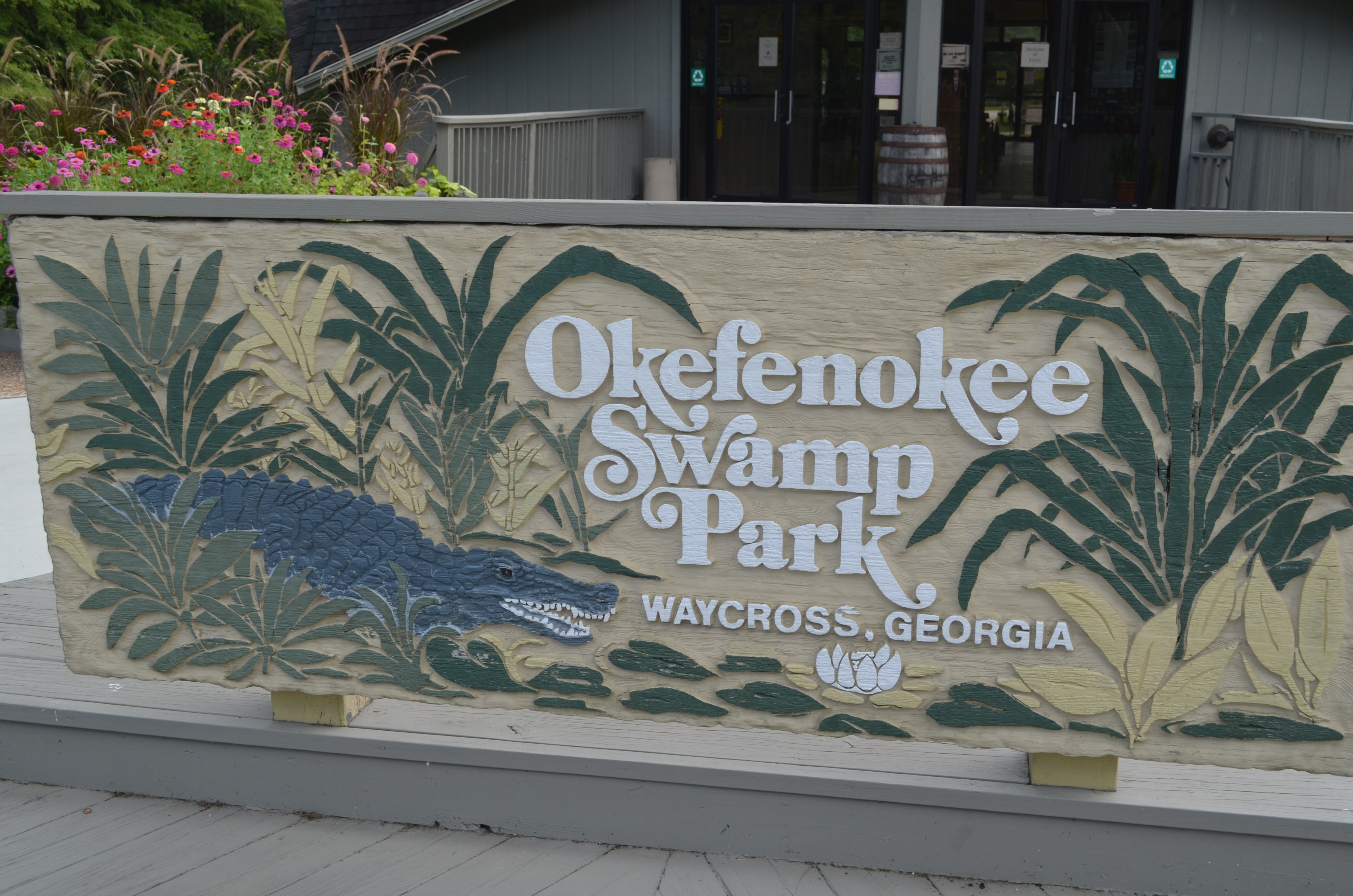
After leaving Savannah, we were driving through rural Georgia, kind of cutting across the state, and saw Okefenokee Swamp on the map. I’ve heard of Okefenokee all my life. It was the site for all the Pogo cartoons and there were those movies where people sank in the quicksand back in the Okefenokee and it’s just fun to say it. In the area where we were was a privately owned park in the national wildlife refuge, so we just cut off the road and went there. Fearing an overly done theme park, we were delighted to find a small park that seemed part of the natural area. We were too late for the boat tour but signed on for the train back into the swamp. Why were we so obsessed with swamps all of a sudden? And here are the signs we were greeted with…DSC_0746

DSC_0734They had a viewing area with some alligators, turtles and river otters. I was happy to see the otters because I love these little guys and we didn’t see any wild ones. As cute as they are, I know they bite. They’d have to if they live in the swamps!

DSC_0742When we left the viewing area, waiting for the train, I turned and saw a big alligator on the sidewalk ahead of us. Really! I don’t know why they bothered to have any in the viewing pen because they were everywhere. The train tour took us on a quick ride through the close swamps and the guide’s talk did nothing but confirm to me that I wasn’t ever going to live in a swamp. I could imagine the Indians back in there laughing at the people trying to get them out. Come and get us, you fools!

There is an incredible beauty to the swamps…if you don’t think about all the things that can kill you. I was being attacked by Yellow Flies even with bug spray. I know anybody who lived in there knew some natural way to keep them away. If the flies don’t get you with disease, there are mosquitoes, quicksand, panthers, snakes, snapping turtles and the alligators to do the job. A swamp was becoming the most dangerous place I could think of…Okefenokee SwampWe were walking through a little village that showed houses and the way the people of the area when some children spotted a gator around the back of the building. I can’t believe I took pictures because I know they can jump and move at 35 mph. This guy just kept smiling bigger and bigger at me. There was a lady with a pole who seemed to know how to get around this area and she kept talking to the gators and chasing them away from the ridiculously innocent tourists…like us.

DSC_0763 - Version 2We decided that was close enough to the wildlife and, with great respect, headed towards the car. While crossing over the little bridge, I spotted this one coming towards me. They say you can tell the size of an alligator by the space between their eyes. 6″=6′ I didn’t stop to measure.

DSC_0768

I kept walking and went to the side to take pictures. See the shoe in this shot? That’s how close we were. And the gator kept watching us very intently, probably hoping that lady with the pole wasn’t nearby.DSC_0772We turned for an ethereal view of the swamps before heading east once again.

DSC_0765DSC_0760We had already decided to go through Cajun country in southern Louisiana after we left New Orleans, and we decided to see if there was a swamp tour. There had to be because this is where “Swamp People” had been filmed. We really, REALLY, weren’t there because of that, but it seemed like we had to see the swamps down here after our tour in Georgia. We stayed in Houmas (pronouned HOMA) and looked online for a tour. I picked one that sounded good because it was a private area and no other boats would be there. I KNOW I’m a tourist, but I didn’t think it would be so good with lots of boats in the swamp. We were told to watch for their sign in the sugar cane. It was in the middle of a sugar cane plantation, it turns out.

DSC_0930This was a small operation with boats that reminded me of “The African Queen,” but looked high enough to maybe keep alligators out. My respect for them was growing each day.

DSC_0926

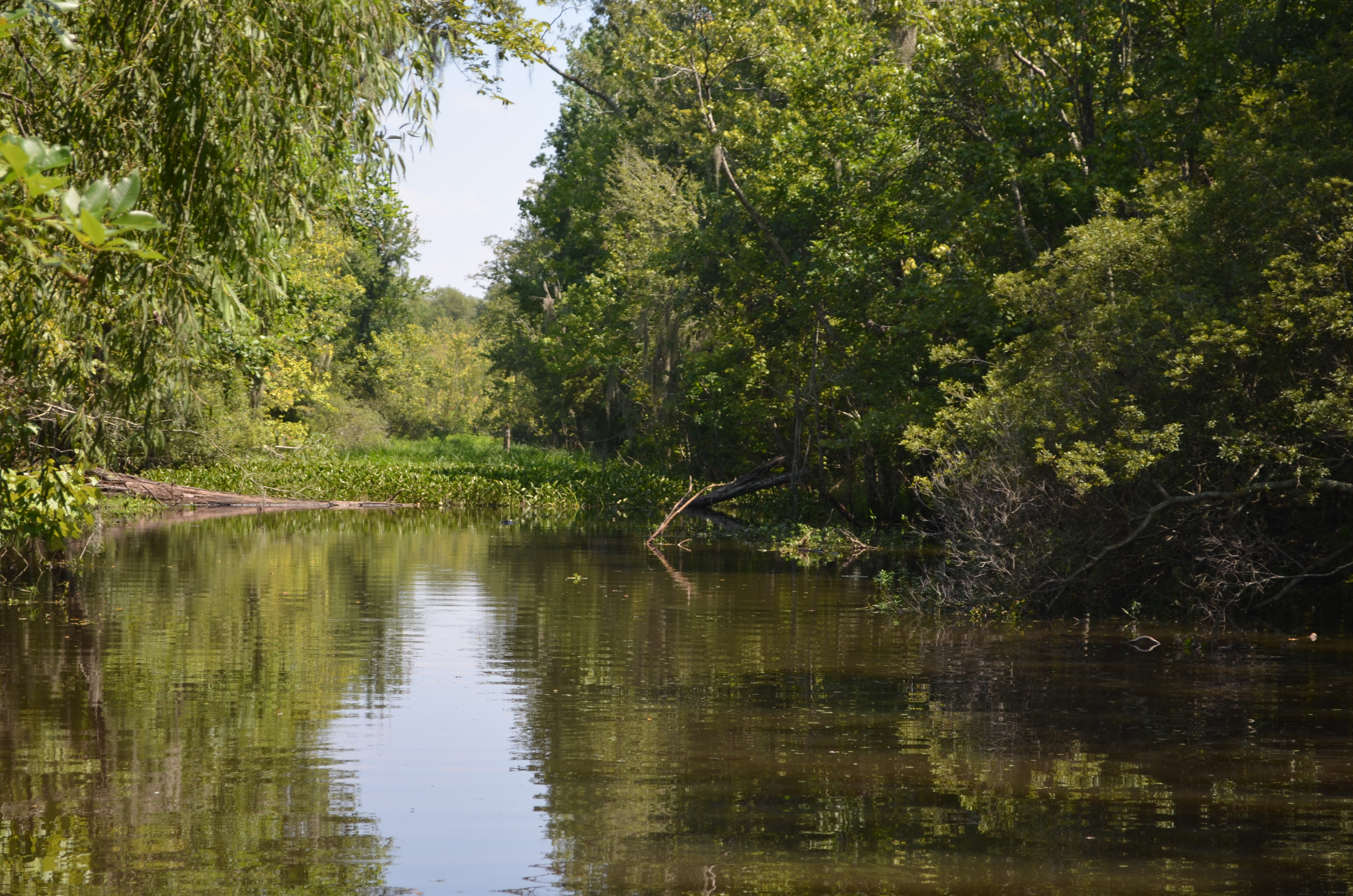
DSC_0928Only two of us showed up that day…a bonus. Our Cajun guide had obviously hauled boatloads of tourists from all over the world into his beloved swamps and we were probably a relief to start the beautiful day. This was his place, although he told us you are never out of danger in a swamp. We’d already figured that out. It was just beautiful in this swamp that had not been hunted or fished in over 30 years. I don’t know what will happen to it when the elderly lady who owns it is gone, especially since she has no relatives. He told us the messy commercial strip where we had stayed the night before once looked just like this before they filled it in and concreted it over. Developers fear no critters…

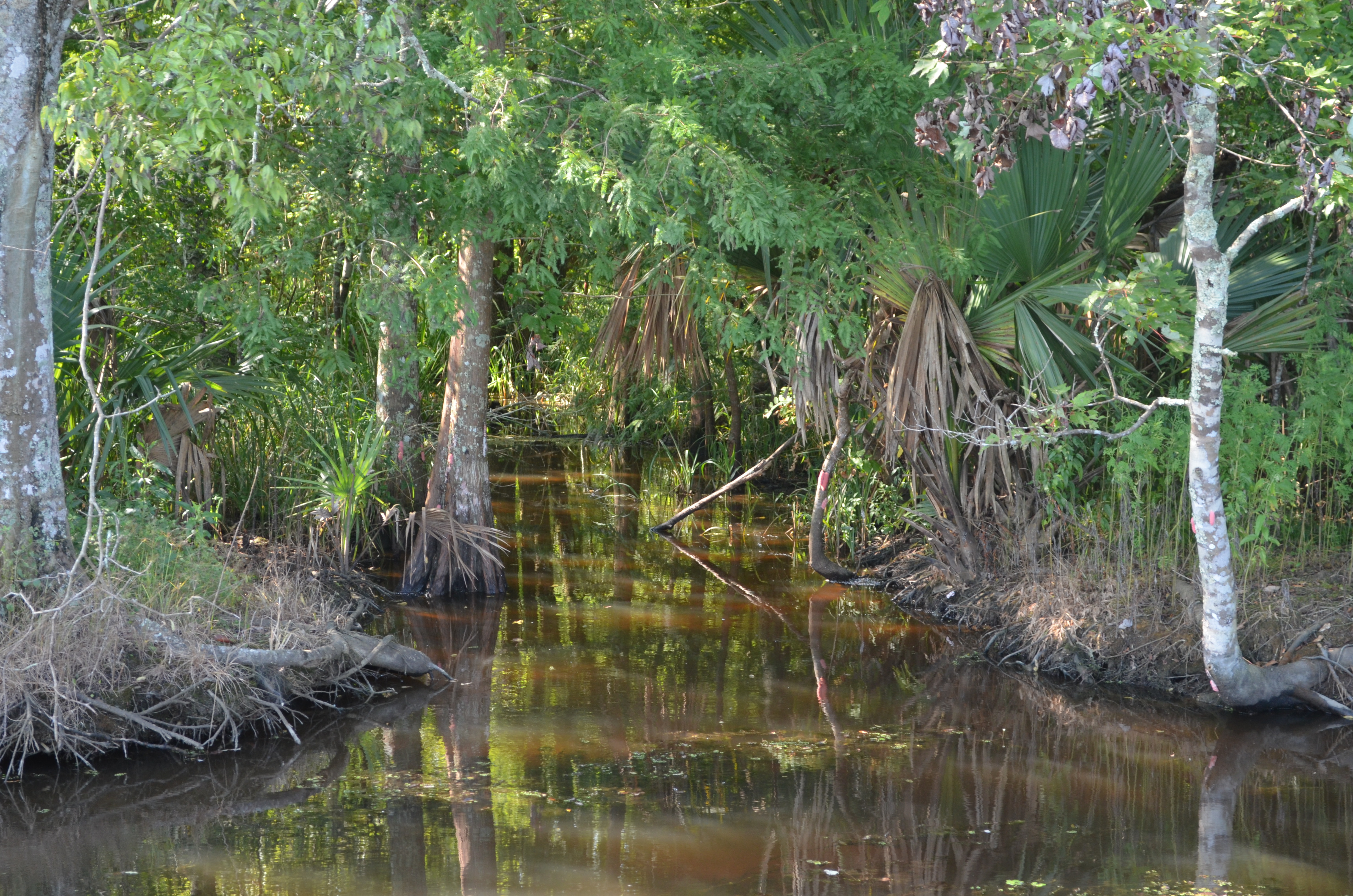
Here are some views of this Louisiana swamp…

DSC_1033

DSC_0937

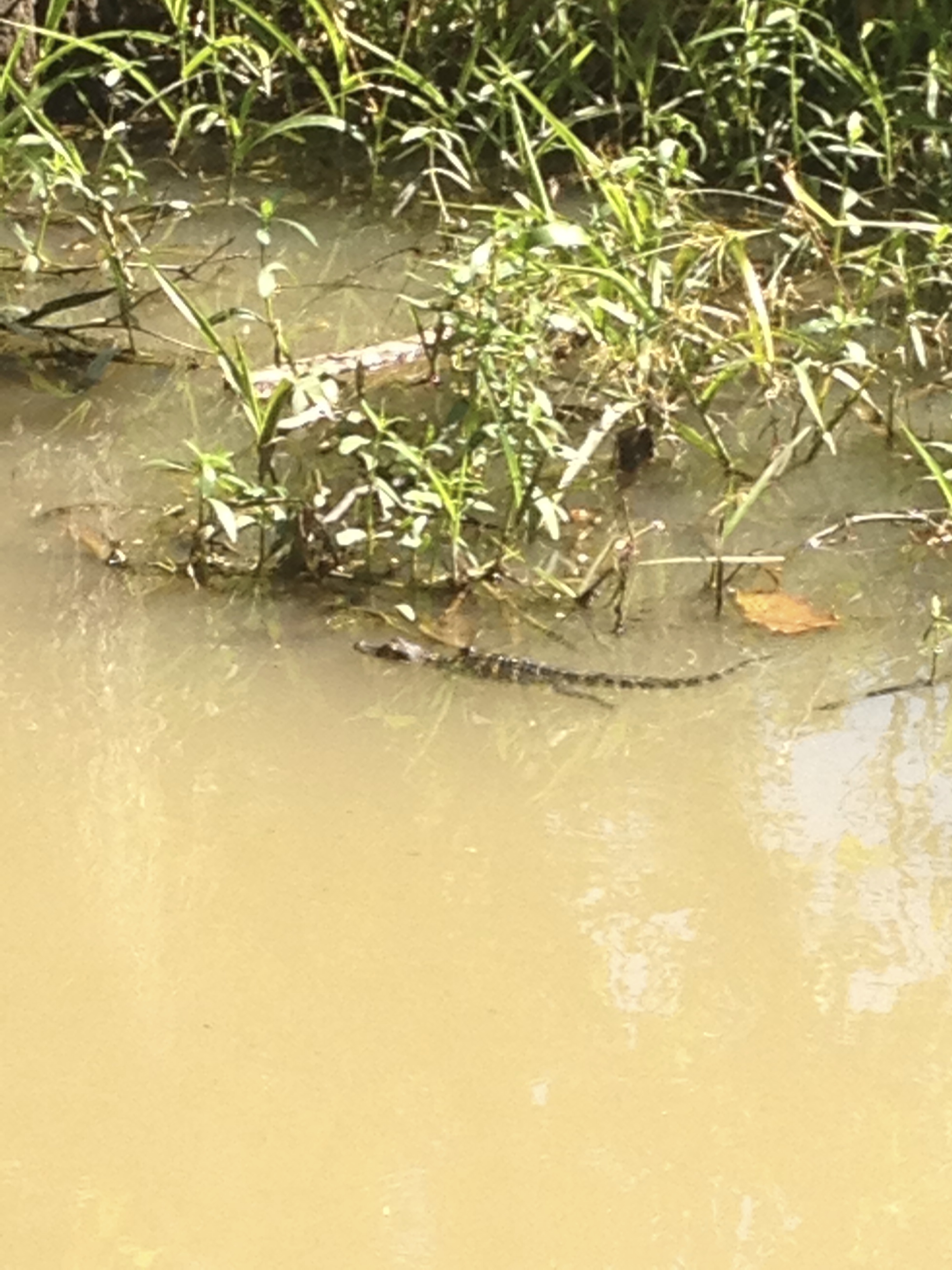
DSC_0985We learned about the palmettos that the Indians used to build huts and how the animals lived and the constant dangers to all. L’il John, our guide, showed us nests of 6 week and striped 3 week old baby alligators and we looked for their mothers nearby. One of the mothers showed up, swimming down the river at us at a steady, fast pace. The mothers protect their babies for a couple of years, while the fathers will just eat them.IMG_4033

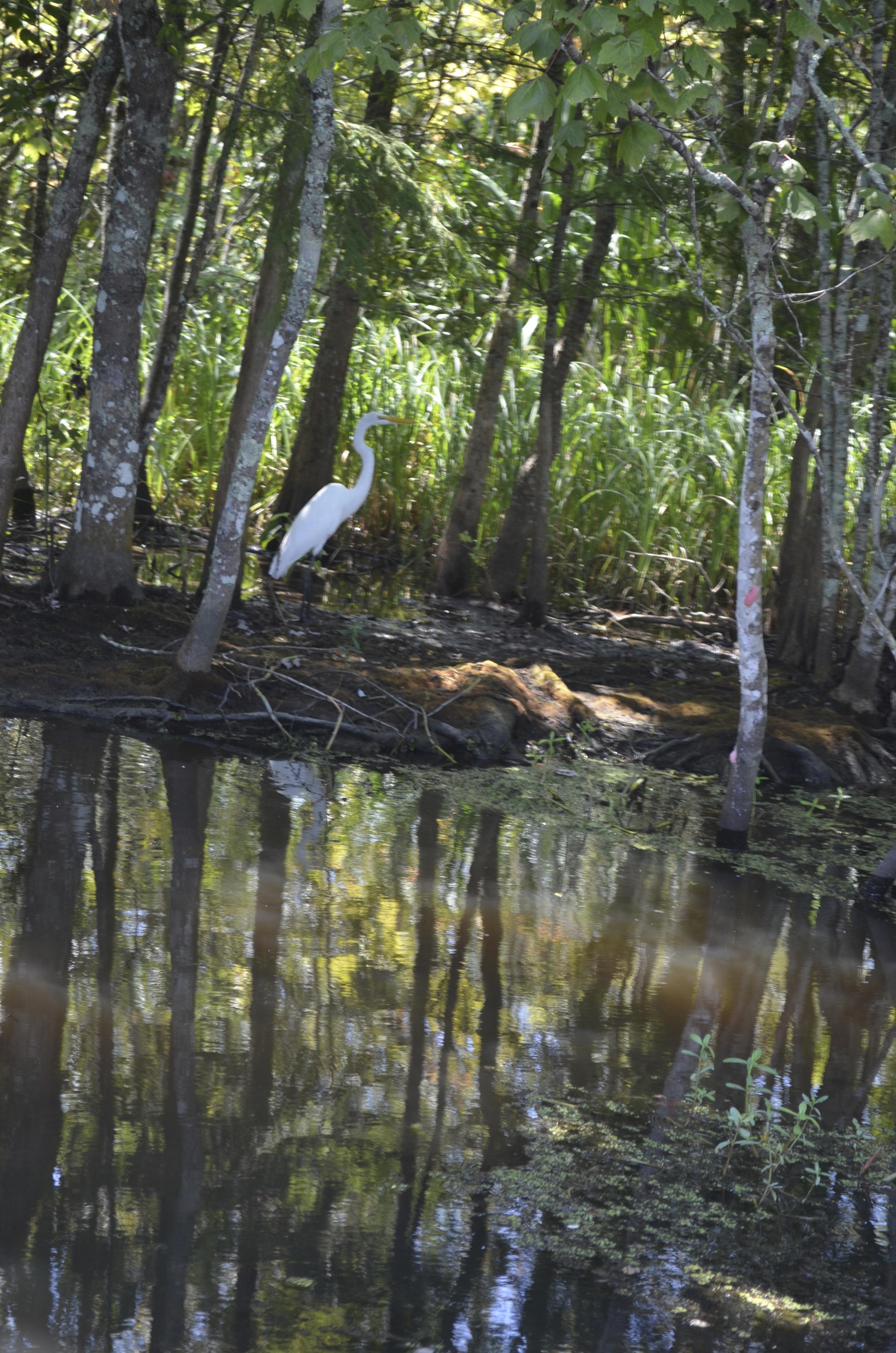
There were beautiful birds…

DSC_1035

DSC_0997

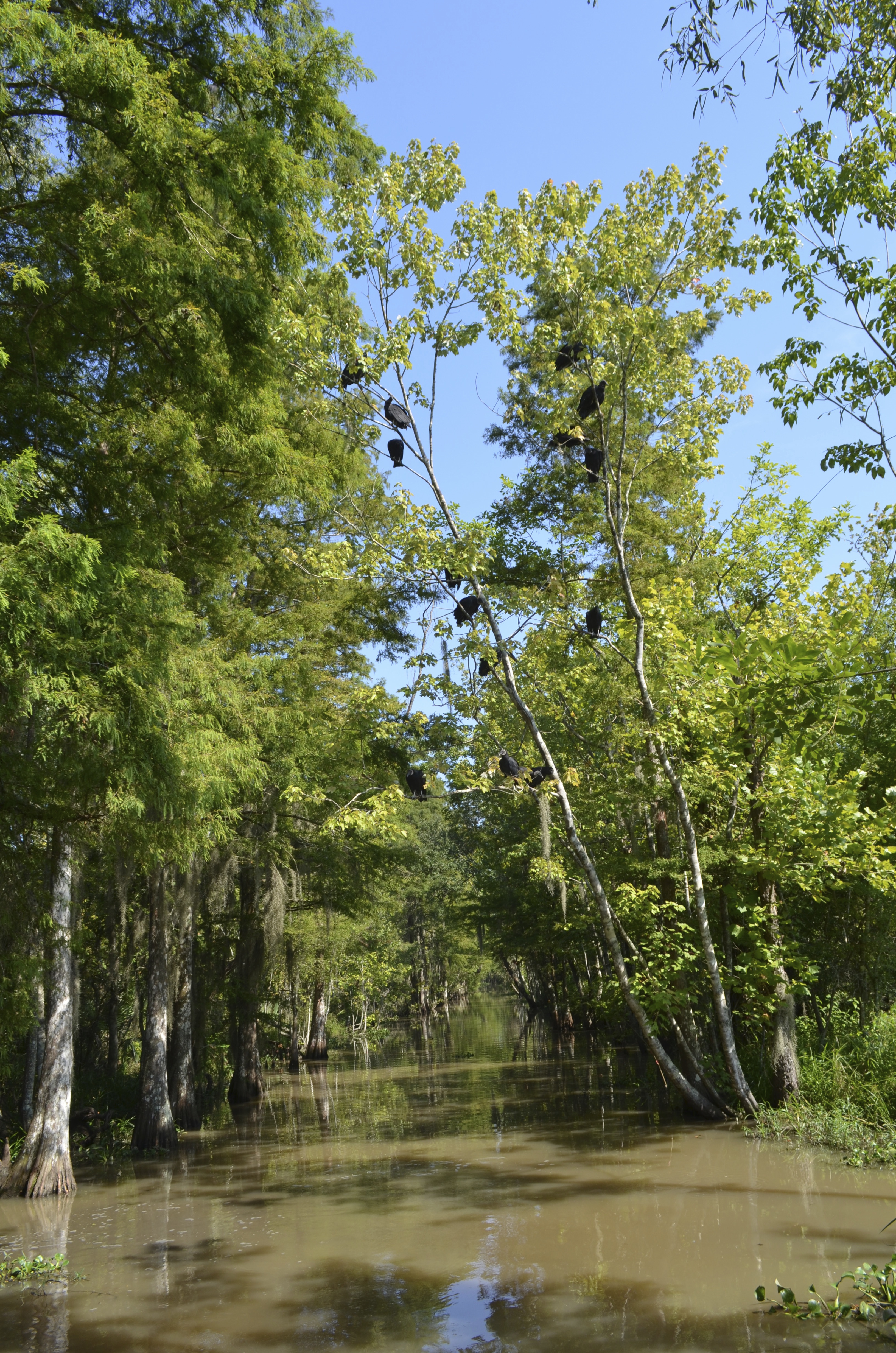
and families of river raccoons, much smaller than our forest raccoons at home. They ran to the banks, knowing he would throw bread to them. After all, you do have to show the tourists some critters so they can get their money’s worth! But they were pretty cute…DSC_0950Soon after we started, the most frightening birds showed up, black-headed vultures. They followed us up and down the swamp, swooping in on us, hovering in branches overhead.
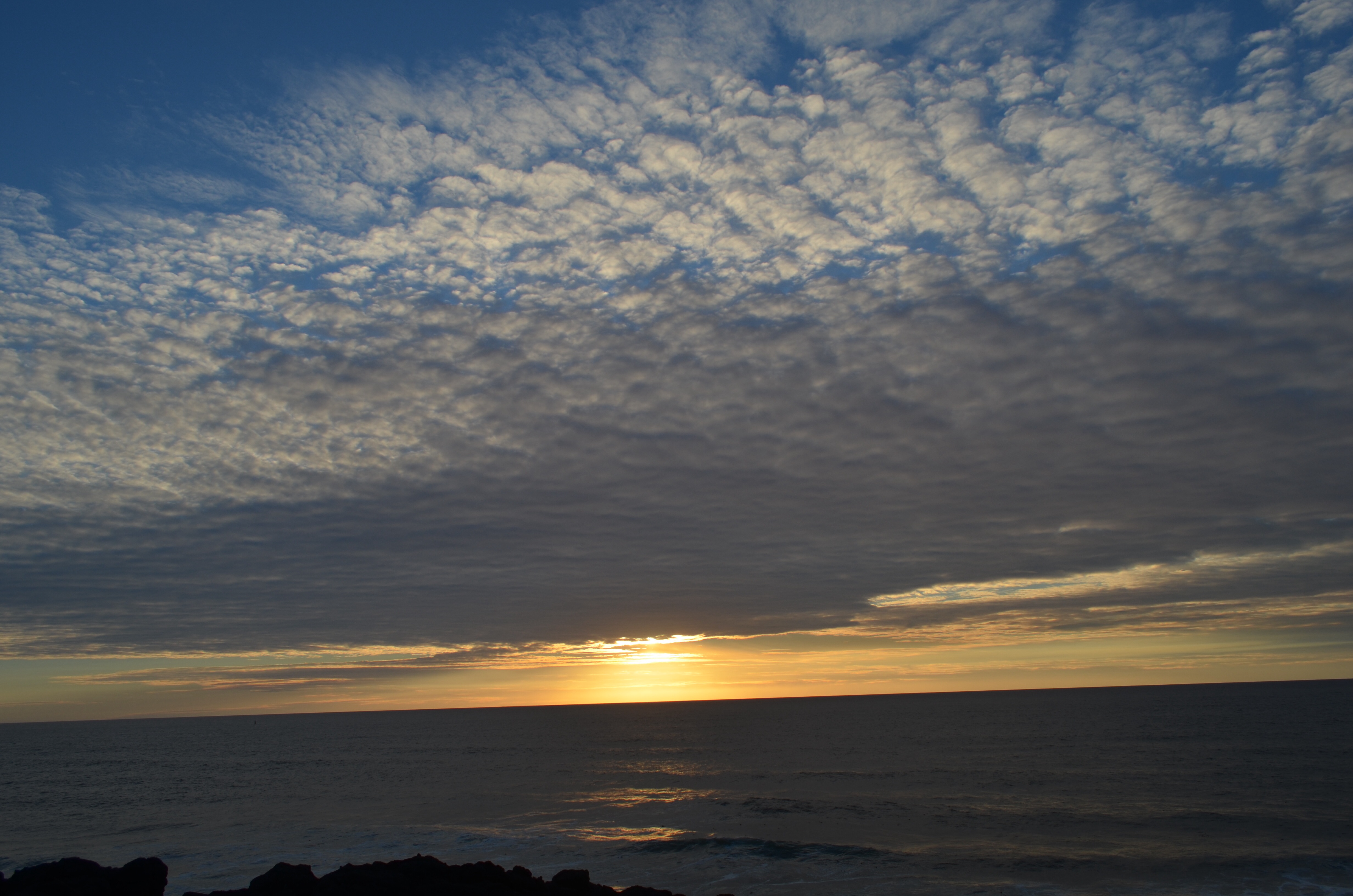
DSC_0965


DSC_0967At a spot he called Buzzard’s Point, hundreds of them congregated and made the most heinous sounds as we floated by them. Creepy!!!IMG_4036The boats had buckets of meat for the alligators so you could see how they eat and how far up they jump – they can bring 2/3 of their bodies out of the water. I was talked into holding the pole with meat on the hook for a gator, who snapped it off with such force that pole sprang back at me. I just wanted to take pictures. Trust me, they’re not tame or trained. He showed us the hooks they use on television, which he doesn’t like to use to bring them in because making the gators pull on it hurts the gators’ insides. He prefers bringing them up and shooting them, but acknowledges it probably doesn’t make good television.

DSC_1003We headed down this way, looking for a 13 foot female with a large head who lived there, near the pump station that takes the water out of the cane field…we saw her den under the bank…

DSC_0987L’il John saw a 16 foot gator in this direction, but the big guy slunk back into the heavy growth back in there…

DSC_1031At the boundary of this protected area was a sign that was shot up, showing how much the locals want to hunt and fish this property.

DSC_1020Our guide was disappointed that the big gators hid from us today, but we hadn’t planned on all we saw and I later saw a stuffed 13′ gator that reassured me that the ones I had seen were just fine. They were all around us.

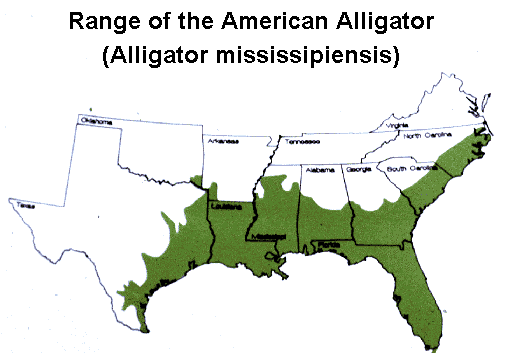
Here are the places where alligators live in the United States…

rangemapx

I’m not planning any camping trips in the swamps, but it was fun and educational to get back in there. I’m even recording an episode or two of “Gator Boys.” And the alligator season in Louisiana is open the month of September. There are a million alligators in Louisiana and another million in Florida (along with crocodiles) and no telling how many in the other states. Be careful out there!

OK – I can’t be the only person who brings home a carload of souvenirs from a road trip…can I? It’s not like I can’t remember the place or person, but I do tend to forget after a time and the things I pick up along the trails of my life make me smile as I walk by them or dust them and shake up a memory from a wonderful experience. My home is packed with such memories and I’m old enough to know I’ll never be a minimalist in any way. So, here’s what I brought home from my travels through the South this past two weeks…think what you will.

First are the general, sometimes tacky, souvenirs: hats, t-shirts, magnets, lapel/hat pins and a few books, including a Cajun Little Red Riding Hood, “Petite Rouge,” because I have other Cajun children’s stories and love to read them out loud. You can’t help but sound a little Cajun…DSC_1059


I’ve collected the pins since I was in Vienna way back in the 1970s and saw a man with pins on his hat in European fashion. I used to be somewhat casual about it, but ended up with quite a few and now always look for them. I have them on a little bulletin board in my laundry room that I pass by every day.DSC_0001


The refrigerator magnets are a new deal and I have to promise to stop…DSC_0002


I just bought a hat and t-shirt in the town where my father was born because that’s all they had. I bought a ball cap in Savannah to wear out on the water and a cute painted t-shirt in Charleston because I liked the artist.

Then there’s the food category, which really can get out of hand in the South…

DSC_1063

After all, I can’t get boiled peanuts and okra chips at home and who could pass up the Peach or Cherry cider and the Sweet Potato anything? And I wanted to see what was in red rice, so I bought a package, and then we went to Avery Island where they make Tabasco sauce and had to buy some of the new flavors. This is nothing compared to the souvenirs that didn’t make it home because they were eaten along the way…another blog. I did buy a cookbook from one restaurant to get the recipe for the best sweet potato soufflé I’ve ever eaten.

And we had to have things from the nature part of the trip, so I have seashells from the Katrina-wrecked beaches of the Gulf and puppets of animals from the National Parks we visited, Mammoth Cave and the Great Smokey Mountains.DSC_1067


Finally, there were the antiques and art I had to have. I’ve always liked to support local artists, especially when they have pieces that represent what I’ve come to love in their home. So that is why I came home with a ceramic mug and platter from potters in Fairhope, Alabama, a painting from the streets of the French Quarter in New Orleans, and antique tobacco basket from Thomasville, Georgia (what am I going to do with this huge piece even though I love it and got quite a deal on it) and an antique framed book plate by a well known artist of the Charleston Renaissance period (I learned about that). Each piece of art came with a story to make it even more special.DSC_1068


Maybe because I’ve owned a gift shop and know what it’s like to have people wander in and not buy anything, maybe because I’ve worked with artists for years and want them to be appreciated, maybe it’s the things my mother taught me, but I never, NEVER come home empty handed. The end result is that my home is a warehouse for some pretty exciting travels that I love to remember. I can only hope my children will smile and laugh a bit when they have to clean this stuff out when I’m gone! I can feel their eyes rolling…

Some of my fondest memories of my trip through the southern states will always be the people. I loved to sit still to hear their sweet southern drawls, which varied from region to region. Here are a few of my favorites…DSC_0304


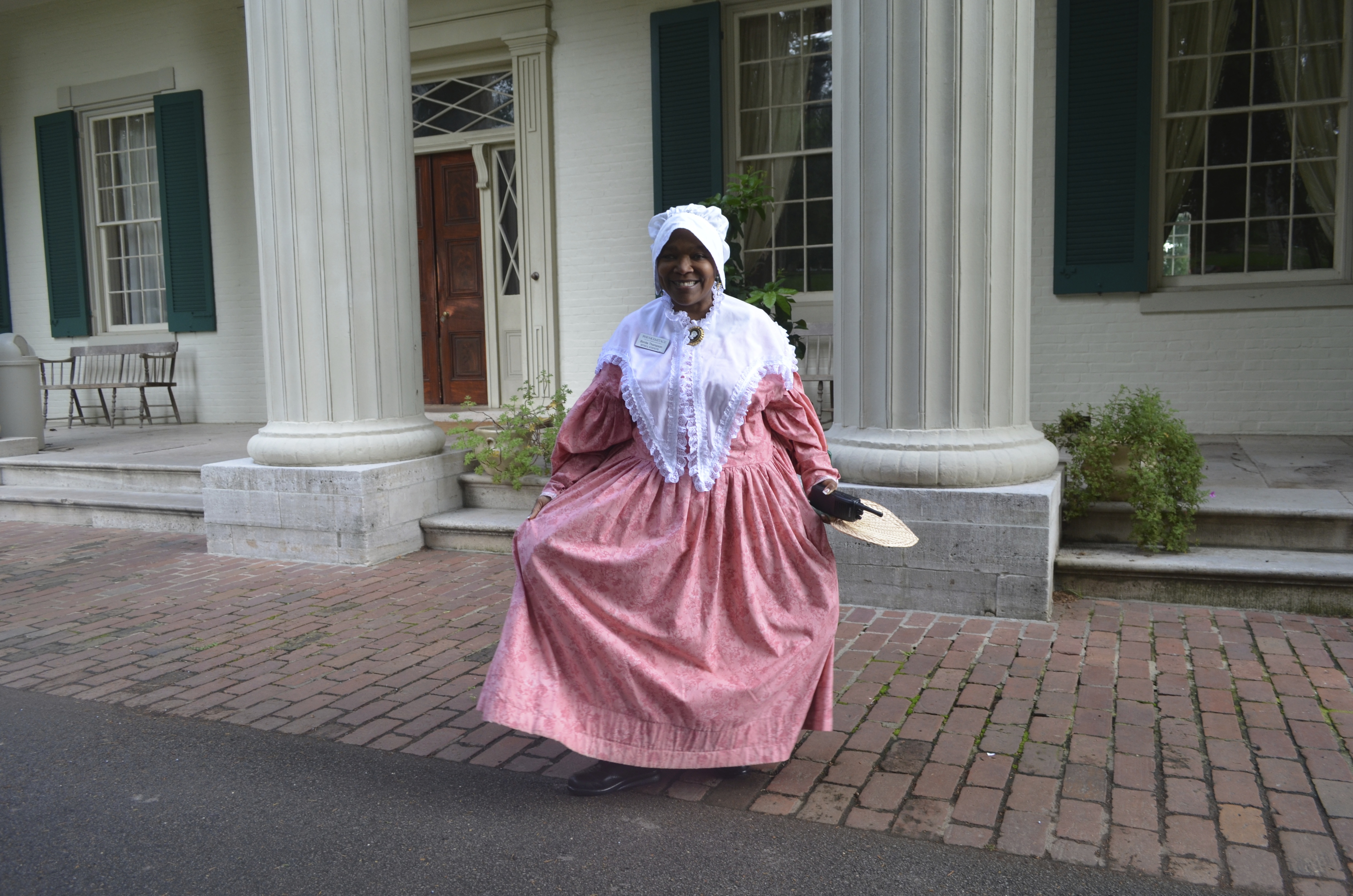
Bonita was our first guide at The Hermitage, Andrew Jackson’s home outside of Nashville. All the guides dressed in period costume and this was her appropriate garb. I wondered how she felt about having to be the slave, but she was a gracious and wonderful guide, even posing when she saw me lift my camera. One of our other guides was asked if Jackson was a good slave owner and she answered that there was no such thing as a good slave owner. Bonita was a tribute to new attitudes in the south.GalleryToys


In Charleston, I saw an interesting antique shop while walking one evening and returned the next day on a whim. The sign said not to ring unless you were a serious buyer, which I always am. What a treat! The owner was Fred Le Clercq, who turned out to be a true southern gentleman. He is a retired law professor who has collected art and antiques for many, many years. The shop was actually his home, on the third floor at least, and it was filled from floor to ceiling with beautiful objects. I walked around taking it all in for awhile, tempted by so many things, and then started asking questions. He told me about many of the artists of the area and graciously took me around. He has another gallery at his lake home and I regretted not meeting his wife, who is the daughter of the famous Mrs. Whaley and has written garden books and other books. I decided on a small book plate by Alice Ravenel Huger Smith, one of the Charleston Renaissance artists of the early 20th century. I realized I had no checks with me, but Fred told me to just send a check when I got home. After he wrapped my purchase, he took me to their living quarters and showed me the original painting they own by this artist, as well as others. I glanced around their home, which was furnished in beautiful antiques and art. When I left, Fred took my hand, leaned down and blew gently across it, speaking in French. He asked me if I knew what that meant. I was so charmed that all my French lessons left me. He translated it as “until your return” or something close to that. Who wouldn’t love that? A lovely hour that reflected all you would dream of in Charleston.DSC_0656
 

In Savannah, we met Captain Dan and Penny. Dan was the old friend of an old friend of my friend, which is how we were introduced. They met us for dinner on the riverfront in Savannah soon after we arrived. It’s always such a treat when you have no idea what to expect, kind of like a blind date, and then it turns out to be something special. Dan is a musician and actor and had lived in Hollywood and Nashville before returning to his hometown near Scarboro, Georgia. Penny is a true Georgia girl with the best drawl in the world and loving, open arms for all. They live in Dan’s family home, a house built in the 1700s on 5,000 acres along the Ogeechee River. Penny works in Statesboro and they spend their weekends at their apartment on Middleton Island, close to Savannah and their boats docked at Thunderbolt Marina. On the weekends, Cap’n Dan takes charters for visitors from Tybee Island to fish or tour the islands. I told them at dinner that I was very interested in the islands and they invited us to join them the next day. They picked us up and drove us to Fort Pulanski for a great historical tour, complete with a cannon demonstration, out to Tybee Island, where I could have kicked back all day at the beach, back for a boat ride around the islands and to lunch at their favorite place on the water, a yacht club with a Jimmy Buffett atmosphere (Cap’n Dan’s description), and then for a tour of Bonaventure Cemetery. It was one of those days where you feel like you’ve been with friends you’ve known all your life and you know you will remain friends because the more you know about them, the more you like them.DSC_0794 - Version 2


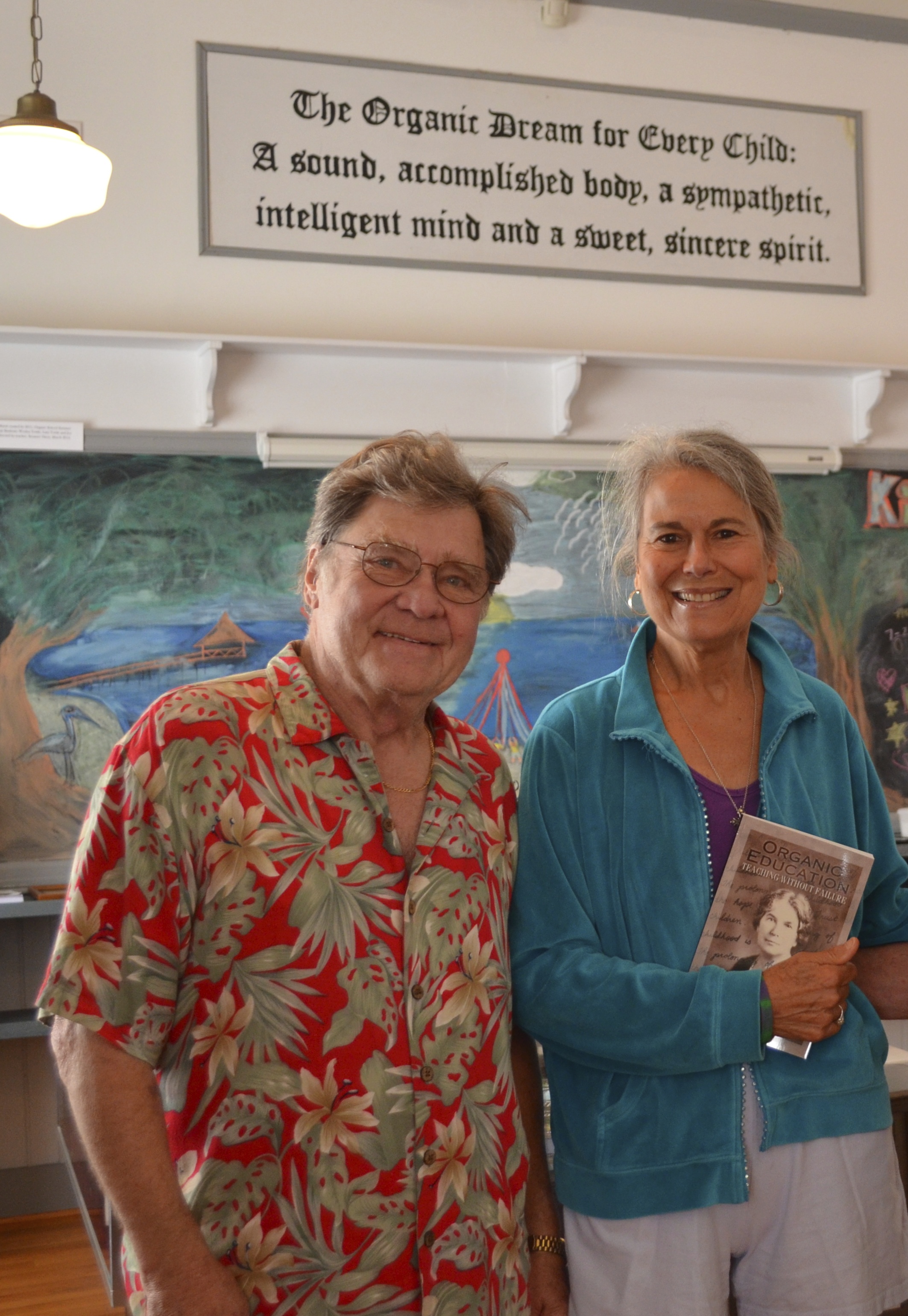
In Fairhope, Alabama, across the bay from Mobile, we stayed with my traveling buddy’s friend, Graham. Fairhope is a beautiful town, full of artists and creative people of all sorts with an interesting and unique history. Graham attended the local Organic School as a child and his wife, Maggi, is now the director of the school’s museum. I knew Graham, but it was my first time to meet Maggi and she was a delight. We met for breakfast in the oldest cafe in the county, which didn’t disappoint. We walked over to her museum for a tour and she gifted us with books about the school’s founder, a book about Fairhope, and a novel, the last two written by Graham’s sister. We toured the very impressive museum of Fairhope History and met the director, another graduate of the Organic School. Maggi and I took a driving tour of the town and went to two pottery artists’ studios, since I expressed interest, especially since there is much history of pottery in the area. Again, I have a new friend, a lovely woman, I hope to see again very soon.DSC_0981


My last person I’ll tell you about is L’il John, our guide on a tour of the swamps in southern Louisiana, near Gibson, which is near Houma. I picked this tour because it was on private property and there would be no other boats. It turned out that the property had not been hunted or fished in 30 years, so the swamp was pretty pure. L’il John was Cajun and I loved listening to him talk about dem and dat, dropping any hard consonants at the end of words. I love listening to Cajuns talking anytime, but it was very appropriate while cruising through a swamp. L’il John has traveled a lot, but he was born in the area and told us he’s done everything legal and illegal back in those swamps. I believe him. There were only the two of us with him on the boat, so he didn’t have to fill the time with stories for the tourists. He said that most people don’t understand the lifestyle down there, haven’t had to live off the land. This was a man at home in this environment, which is so beautiful and so threatening. He tried to get us close to a 13′ and 16′ alligator, wanting them to come to the boat, but they swam off into their dens and hid under the water. I was fine with all the smaller ones that did get close. Alligators are not to be messed with, in my opinion. I held out meat for a smaller one, who jumped up to get it, making the pole I was holding snap. That’s close enough. He obviously knows every inch of the tour area and every critter living there. He told us that he usually shoots an alligator, showing us the hook that is used on the popular television shows. He said that using a hook to bring them in causes great pain to the alligators as it twists inside them, deeming it a stunt for the cameras. In a conversation a few states back, someone had told us that only the tail of the alligator was used for food. I asked L’il John about that and he said that the whole gator was good. I knew he’d tell me that. People who depend upon hunting for food don’t usually waste any of it. We had a good morning in the swamps and I’d like to think he was as sorry to see it end as we were.

Those are some of the people I met in the southern states that I bring back as special memories and special friends. You can tour and read and take pictures, but you can’t really understand an area until you meet the people who love it as much as you love your own place on earth. One of the joys of travel…