
Lazy summer days are meant for meandering thoughts. Mine came while squinting into the sun, looking for signs of my youngest granddaughter in the vast swimming pool. She’s almost 11, but I automatically check to see where she is. She’s past the age where she delighted in playing with me and is content to be by herself or interacting with other kids, even though it’s 2020 and we’re trying to socially distance even in the water. That leaves me free to remember the years that explode in my mind as I listen to the sounds of happy people in the pool, cooling off on a hot summer day.
I go back over 70 years with this particular pool. Well, it wasn’t this exact pool, but it was this place. We moved to Tulsa when I was about 2 1/2 and my parents immediately joined Tulsa Country Club, the oldest country club in town, having opened in 1908. Daddy was a champion golfer and needed a place to play. He had come back from World War II and married at the age of 32 and rejoined the family business, moving to Tulsa to open a new branch in 1948. At what age they started bringing me to the pool, I have no idea, but we were certainly around the club in one way or another.
My first memories of the pool are of taking swimming lessons. The old pool, opened in 1935, was by the old clubhouse and this was back in the 1950s, my olden days. The pool was a large rectangle with a shallow end and a deep end that had both a low and high diving board. There were dressing rooms at the end of the pool and a grassy area to one side and an area with tables and chairs on the other end. Our swimming lessons were taught by Coach Charvoz, a coach at Central High School, who also managed the pool in the summers. I remember him so well, standing in the pool with a floppy hat to shield him from the sun, demonstrating the different strokes for us. He would stand in front of us and have us swim towards him, stepping back the closer we got until we could make it all the way across the pool. He was an excellent teacher as I can still remember everything he taught me about swimming the backstroke, sidestroke, breaststroke and crawl. I’m still pretty good, although the pool today isn’t as conducive to swimming laps as it was then.
My favorite thing to do for many years was to try and swim the length of the pool in one breath. I don’t know how long the pool was, but I could do it. I wasn’t as much of a fan of the boards, although I could dive off the small one. I’m sure my lifelong fear of heights comes from climbing up the ladder onto the high board and jumping off. It wasn’t a thrill for me – more likely something I did to show I could. Once or twice.
There were so many games we played in the pool, from racing to diving for objects to Marco Polo (why won’t that game go away?). The lifeguards constantly told us not to run around the pool, but we were kids and the pavement was scorching our feet. So many rules back then that have gone away. We were living in the age of polio, so we were constantly reminded to be careful of water. We couldn’t get in the pool for an hour after eating for fear of getting stomach cramps and drowning. This was proven not to be true, but we spent many an hour waiting impatiently for the pool clock to tick to our hour when we could jump back in. We also had to shower before we entered the pool. I still think this is a rule, although few follow it.
Another rule was that the girls had to wear swim caps. This was to keep the hair out of the pool filters, but it was pretty annoying. The guys kept their hair cut in buzz cuts for the summer so they didn’t have to worry. I kept my hair short, but still had to wear that cap. It was no fun squeezing your hair into that piece of rubber, although I guess it did keep it dry. The chin strap was just as irritating as the cap. I still cringe when I think of having to wear those darned things. By the time I was a teenager, it was even more annoying as we were striving to be bathing beauties as we laid in the sun, trying to attract the attention of whatever boys were around.
The sunbathing area was a large patch of lovely grass between the pool area and the clubhouse. To get refreshments, you went to the clubhouse, where there were steps to a window on the side where you could order hamburgers, drinks, ice cream and whatever. Those are the things I remember- cold Grapettes, hamburgers, ice cream bars. We spread our towels on the grass and slathered our bodies with tanning creams, including the all time favorite of baby oil and iodine. Those were the days when all we wanted was a good tan and knew nothing of skin cancers or the dangers of too much sun. We put lemon juice in our hair to bleach it in the sun and worked on getting that coveted beach look of tan skin and sun lightened hair. No wonder so many of us have skin cancers in our old age.
And those summers of my youth melted into the summers when I returned as a young mother. By then, the clubhouse had been moved from the site where it had stood in a wonderful old three story brick building since 1917 to the other side of the golf course into a “modern building,” a move that caused much grumbling among many of the members. The old building burned to the ground in 1986, leaving those of us who were fortunate enough to experience it with only fond memories, which leads me into other memories to be shared another time.
The new pool was a rectangle that flowed into a smaller rectangle that was the diving area. There was a separate wading pool for the little ones. If I spent many hours of my childhood and youth at the old pool, I spent so many more at this one as a parent. My husband and I were able to get a junior membership and my summers as a stay at home mom were marked by the days we spent in the sun, moving from the baby pool to the main pool in what now seems like a flash. There was golf and tennis, but it was mainly the pool. My kids learned to swim there, taking lessons much as I had, and learning strokes that eventually led them onto swim teams in the winter months. They were genuine “pool brats” that I could leave to swim while I ran errands, went to meetings or played golf. They have their own memories of those days, but mine are of sitting with other moms, trying to talk over the constant cries of “Mommy, watch me.” To this day, I can hear those calls and hear the sounds of play that became the background of so many lovely days.
One of our favorite days in the summer has always been the Fourth of July, when there were swim games and races and fireworks. This has been a tradition that continues into the next generation. Here are my two oldest daughters waiting for a race to start: and my youngest daughter catching goldfish in the wading pool.
 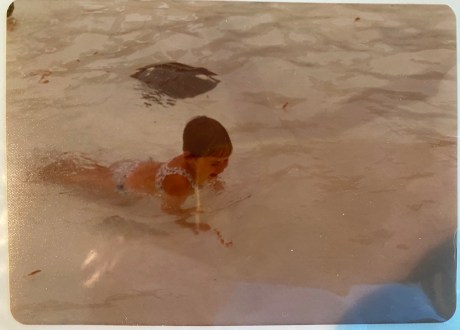 Here is my husband playing with our son in the wading pool:
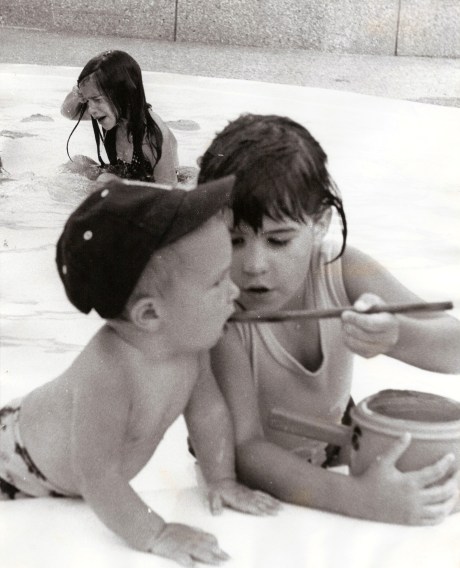
 and my middle daughter feeding her brother the wonderful pool water (yikes!)
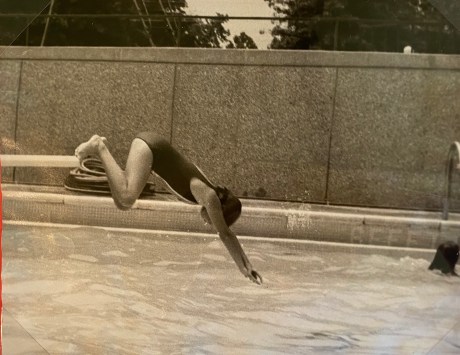
 and my oldest daughter diving from the board.
  Life went on and the kids grew up and I probably didn’t spend as many days poolside until the next generation appeared and we were once again gathering there in the summers. Here are my daughters and the oldest five grandsons at the wading pool:
 and then there were a couple of more grandkids at the pool.
 And before I knew it, they were growing up.
And then they were in the races and diving competitions. I will note (with a little bit of a grin) that our family is pretty competitive and we have won a lot of club races through the years.
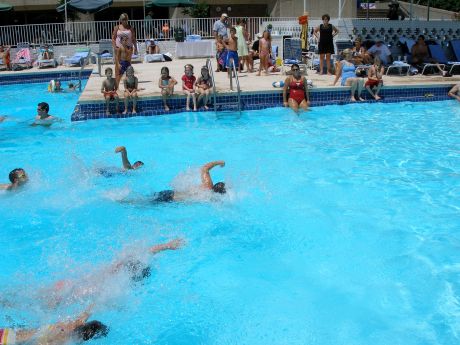
 And then there were improvements at the club and by 2012, the old pool was gone and the new pool was in. This time, it is a spa design with a diving area, a slide, and a beach type area for wading, complete with fountains. My grandkids were bigger
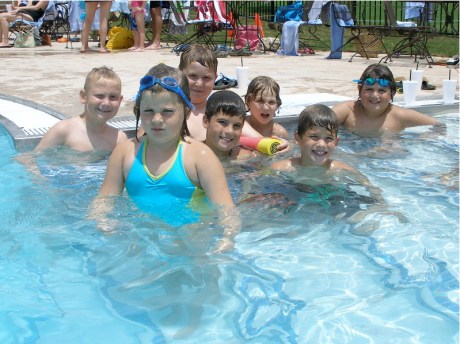
 and still doing races in the new pool.
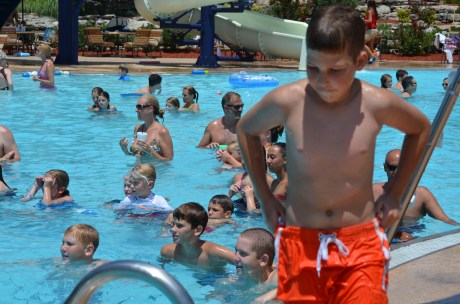 By this time, we had lost my son, who was the kid that hung around the pool and knew everyone behind the scenes and everyone knew him by name. We are lucky to have his daughter, who has now grown up at the pool, following her cousins, aunts and father. And me, of course.
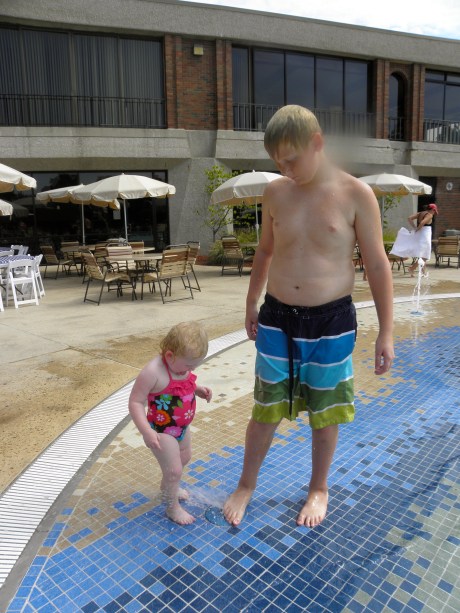
 My three daughters are now the mothers of grown children, but still like to hang out at the pool together.
 My grandchildren are growing up, with seven of them in college or beyond. In 2020, it’s just my last granddaughter, turning 11 soon, and me by the pool on this sunny day. Some things are the same. The lifeguards are watching the kids, who are calling to their mothers to see what they can do. Kiddos are asking for snacks, running when they should be walking, doing belly flops off the board, diving for objects, making up fun pool games and making new pool friends. The parents are more diverse and have their electronics with them to read books or check their messages. Now they have their drinks delivered to poolside, where they visit and relax. They look younger all the time to me, as they should.
Sometimes I wonder what my parents would think of the changes around the pool. Not the activities or the pool itself, but the people. From the time I was a child until I was too far into adulthood, the country club was segregated. Now you see a diversity of races in the families, which is nice. It’s more of a slice of our community.
The parents are not as uptight as they used to be and this summer of quarantine, there are more fathers around during the week. I can picture my mother making funny comments about their various tattoos. She wouldn’t have been shocked, but she would have found it as amusing as I do. Since I have so much time to observe, I think about why each tattoo was chosen. Why does this young mother have “Gone Fishing” on her middle right back? What does that woman have a slice of pie on her arm? What was this man thinking when he asked for all those interesting pictures of ships and animals to be inked into his chest? My husband used to amuse me with stories of the tattoos he saw when he was in the Navy back in the sixties. I’m sure he would be rolling his eyes at me. I take it all in when I sit by the pool these days. My mind is full with images of all those decades.
It’s a vault full of memories that flash by with each splash of the water, each squeal of a child, each kid jumping wildly off the board or each girl parading by with her suntanned body glowing with youth and health. It’s just one tiny piece of my life really, but it’s all tied together at this pool in the summer. There are so many places like this for remembering all the good people and things that I have been lucky enough to have in my life. It’s a reminder that I have more good memories than bad ones, more family and friends and love in my life than so many. It’s a good thing to be reminded of on a hot summer day.
 Sorry for the mirror image, but you get the drift and you would correctly assume from this that I was marching for women’s rights, the climate, and civil rights – all causes I’ve been working for most of my life. I wasn’t a marcher most of my years, but I’ve worked to better my community for all who live here in these areas and others.
 I immediately made assumptions about her, based on my own prejudices. I saw someone who was proudly proclaiming that she was a Republican and would only vote Republican and there is no point trying to talk to her about anything. She is right (and probably never wrong) and proud of it. I watched her play with her child and thought how much that t-shirt had changed how I was reacting to her. All my own prejudices were on my nerve endings, an emotional and visceral reaction, which is pretty amazing since I spent most of my voting life as a Republican.
 The family moved to Oklahoma City at some point, where my grandfather started his automotive parts business, J. C. Hamilton Co. Here is a photo of the family during that time. My father is on the front fender behind his brother, Ed. Bill stands on the running board between his sister and parents. It’s the only photo I can find of the whole family together, but you get the idea.
  Years passed, the children grew up and the boys went into the family business. Sarah married my other Uncle Ed and started their family. When the United States joined World War II, all the men went into service. Here is my Uncle Bill with my grandfather.
  My grandfather was about 5’8″, so Uncle Bill was the smallest of the brothers in the family, besides being the baby. I still don’t know where my father got his height of 6’2″.
 And then this article from the local paper.
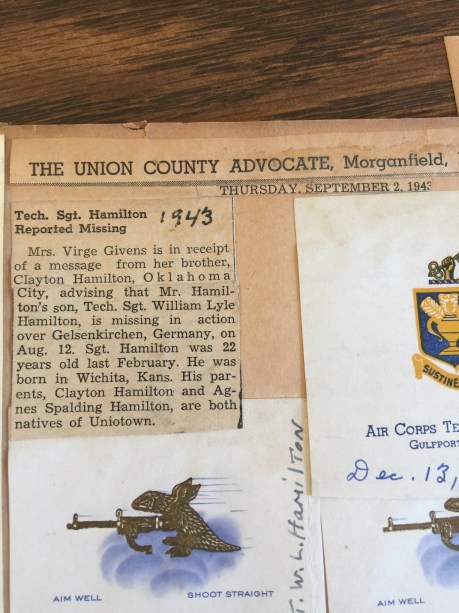 All I had ever heard was that he was shot down while parachuting into Germany and was buried there, far from home. Then I found this touching letter, written to my father. I’m not sure how this got into this group of papers, but it showed a big brother trying to find more information about his little brother, probably trying to get answers for my grandparents.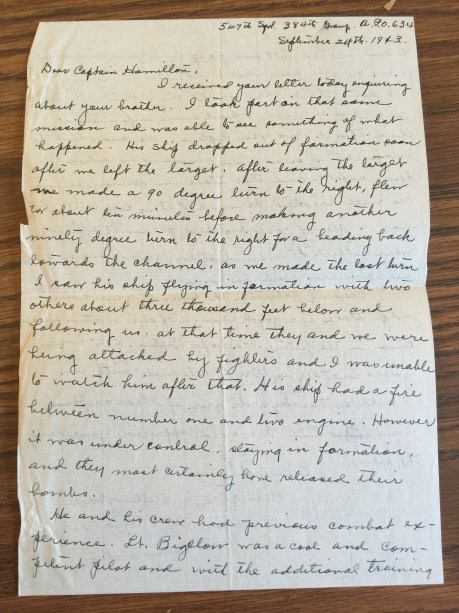
 The letter shows they didn’t know right away if he was killed or captured, as this letter was written well over a month after he must have been killed, according to the newspaper clip above.

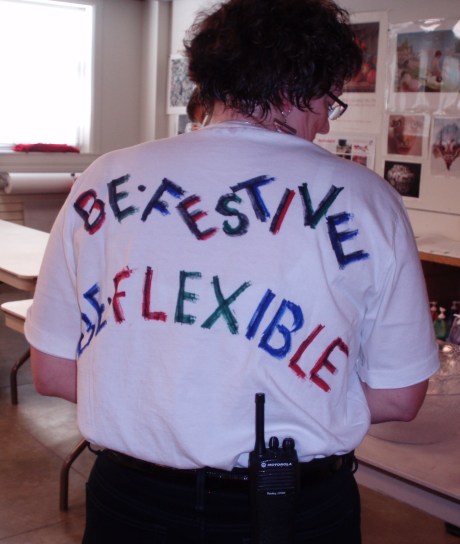 The words served all my teams well through the following years, both at the museum and at Oklahoma State University, where I did the same kind of work with college students.
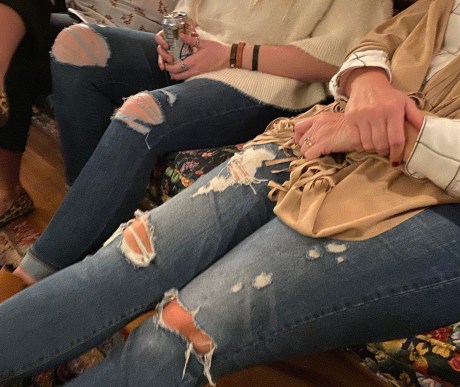 It looks like my family has made it. You can just look at the way we dress and see that we are successful…not to mention on trend, with it, cool.
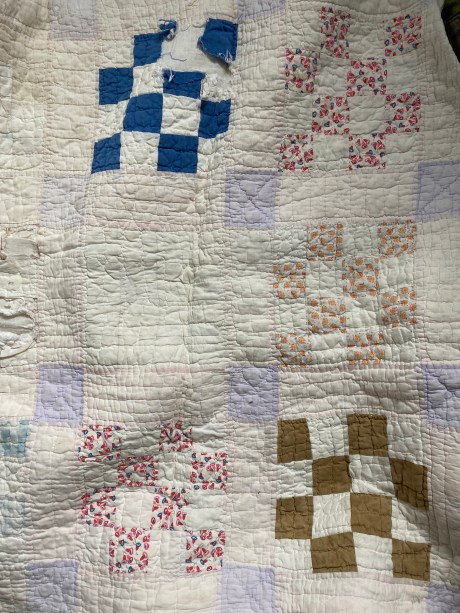
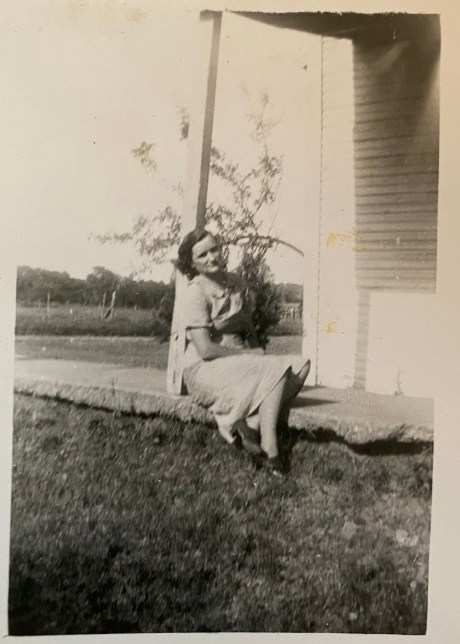 My grandmother kept my mother’s dresses to make quilts. I have a few well worn quilts and some unfinished quilt tops from then that show the thinness of the fabrics. There was no waste in those days. They couldn’t afford it.
 My mother always looked stylish after she started working. Here she is when she was young.
 I only have photos of three of my great-grandmothers. This is my father’s paternal grandmother, shown with him. These were their everyday clothes. They weren’t poor, but they had lots of children to keep dressed.
 This is my mother’s paternal grandmother, shown with my mother and her brothers. My mother may be wearing one of the dresses that ended up in a quilt. My mother told me her grandmother dressed the same way until she died, wearing layers of clothes as they did in the late 1800s. The earliest information I can find out about her is that she worked as a house servant in Texas when she was 14. Later she married and traveled to Ardmore, OK by covered wagon, where they set up the West Wagon Yard and did pretty well, although she always lived very simply.
 This is my mother’s paternal grandmother. They were poor, living on a farm in southern Oklahoma. Both she and my grandfather ended up, literally, at the poor farm. I’m not sure if they were suffering from dementia or just couldn’t afford to live on the farm anymore, but I learned that they both died at the home in Vinita, OK. She was buried there and the family managed to bring him home later.
  So, I stand in the middle of the generations, looking back at my great-grandmothers who lived difficult lives, but managed to patch their children’s clothes and keep the families together, to my grandmothers, who both were poor as children, but worked hard and raised their families, to me, who was born to a comfortable lifestyle, which my husband and I worked hard to provide for our children.
 Our family has made it, if you look at the generations. I have grown children and grandchildren who can afford to buy expensive, torn clothing to show how well we are doing. I think I understand why I haven’t embraced this trend. I’m stuck in the middle of those who had nothing and those who have much. I look back and I look forward and I appreciate the progress. These are my people and I love them all.
 He said this was his first time to come here and I told him I come whenever I can. I asked him where he was from and he said, “Checotah,” which is about an hour and a half away. Then he told me that he didn’t have much of a Bucket List because he didn’t have much money, but he had a Thimble List. I told him this was definitely a great place to have on it. He told me he had never seen the ocean, but was planning to go next year. He told me that even if you were Rembrandt, whom he admired, you could never outdo the Lord’s work. I told him it was definitely a place to restore your soul.
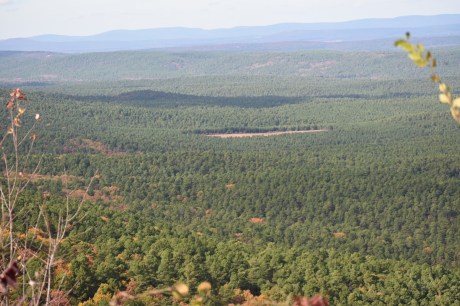 I watched the shadows from the clouds spread across the valley and took in all the beauty around me.
  We all need a Thimble List, which I define as a list of places to visit and things to do that are not unobtainable, not far from home. I can’t criticize him for just now getting to this beautiful place because I didn’t see it for the first time until I was in my late 50s or 60s. It’s only 2 1/2 hours from my home, but I might have missed it.
 Way back in the 1950s, when I was younger than my granddaughter now, we used to drive to visit my grandmother in Ardmore, Oklahoma. At that time, until the turnpikes and highways were built, the drive from Tulsa took at least four hours and involved going through multiple small towns and then winding along the narrow roads through the Arbuckles until you hit a flat road into Ardmore.
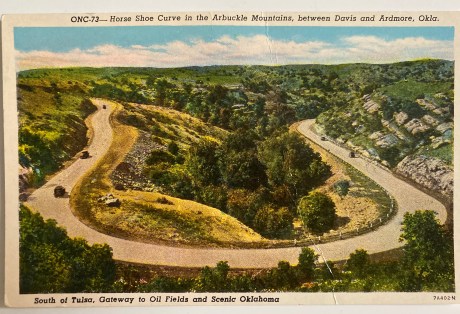 This doesn’t look too bad, but it was narrow with big trucks going by quickly. It used to scare me, sitting in the back seat looking at the drop off. I can now drive myself through the mountains in California and Colorado without freaking out, but it took me a long time to get over this minor childhood trauma (I had a great childhood).
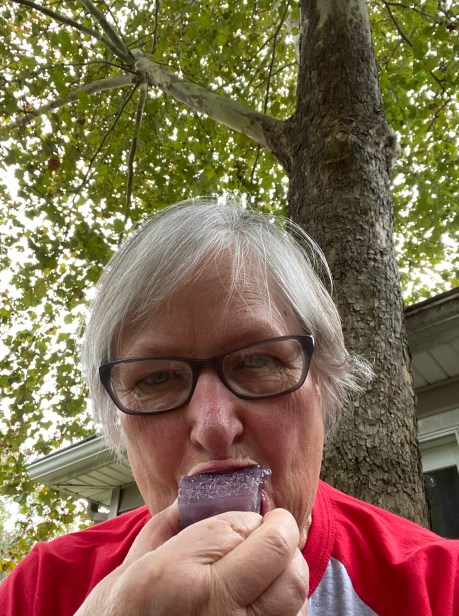 Maybe my granddaughter will remember doing this – maybe not. That’s ok since we have plenty of other memories we’ve shared. For me, this was a trip back in time, into my heart and soul, for the sweetest of times, the times of love and family.
 Mickey was named for Mickey Mantle because he batted at things with both feet, a switch hitter. He was more burly looking and was the sweetest boy, always doing something silly or cuddling up with the dogs or me.
  Guy was definitely Siamese, named Guy because I thought he was female and gave him a girl name until I found out. He did not like to be held or confined, but loved to be petted and purred so loudly you could hear him across the room. He was elegant and strong.
  So we lived our lives with the girl dogs and the boy cats existing in harmony. The boys were inside outside cats and spent time with their secret lives outside, but mostly hanging around the yard or curled up inside. They were street smart as to dogs, cars, hawks and owls and even an occasional fox.
 I knew immediately what had happened. You need to understand that I live in the city, an urban area, although there are creeks and the Arkansas River within a couple of miles. We’re not in the country where I might have expected this. This is a predator who has invaded our city, taking pets from yards. We had severe flooding this spring, coupled with ever present development, so I can’t blame the animals for being animals.

