Archives for category: Uncategorized

I do believe in God.

What I don’t believe is that there is a God in human form watching us in order to decide whose side He/She is on.  That’s a bit hard to reconcile with a God that is loving, at least for me.  To me, we all want to complicate it.

The worst things ever done by man/woman to the each other, to other living things, to the planet are often done in the name of God.  I cannot believe that God, whatever name you use, is on any side in wars, causes diseases, wins sporting games, blesses or damns any individual among us for being gay, or of any race or religious preference.

From what I’ve read, most religions share some common beliefs, usually along the lines of doing unto others as you would have them do unto you, in various languages and traditions.  Most people want the same things for their country, for their families.

We are our own worst enemies, all of us.  We, and I use that term to cover all humans, use the Bible, or whatever your religion uses, to justify all the worst fears, all the worst feelings we’re capable of having.

During this season of celebration for many religions, let’s remember the basics, the words that teach us to love one another.  In the beginning, there was…something.  And the beauty is all around us.

Peace and Love to all.  DSC_0002

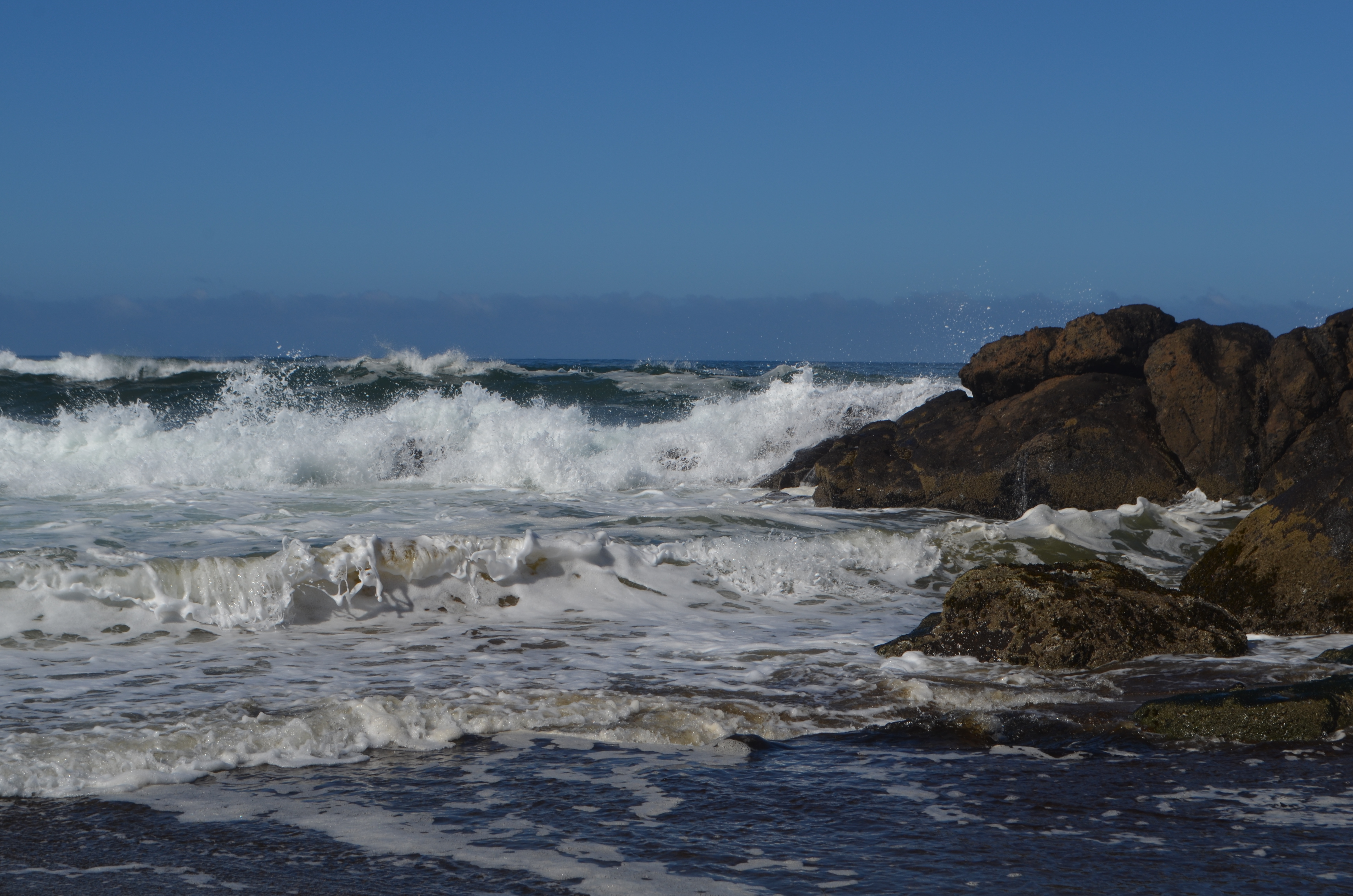
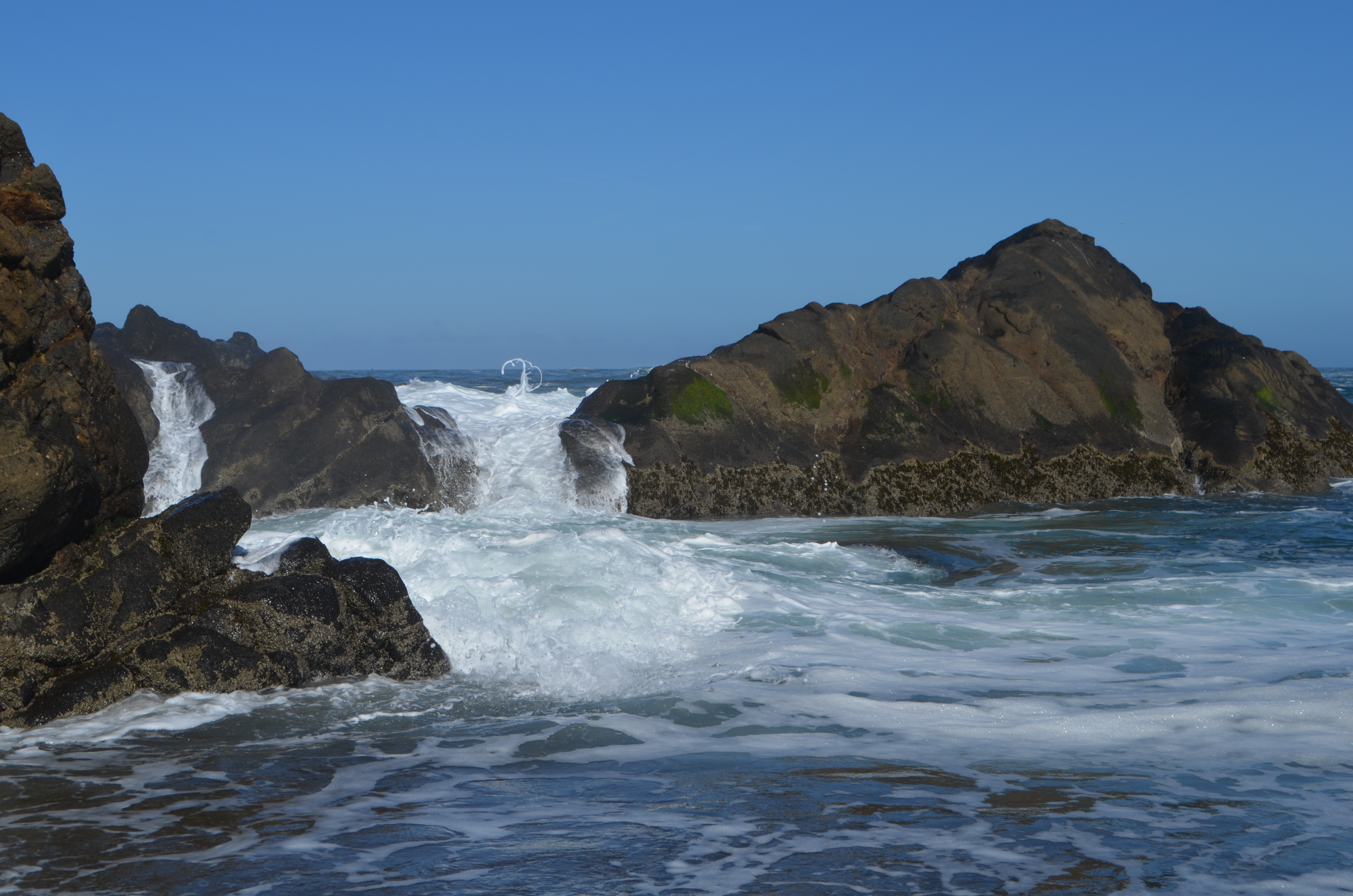
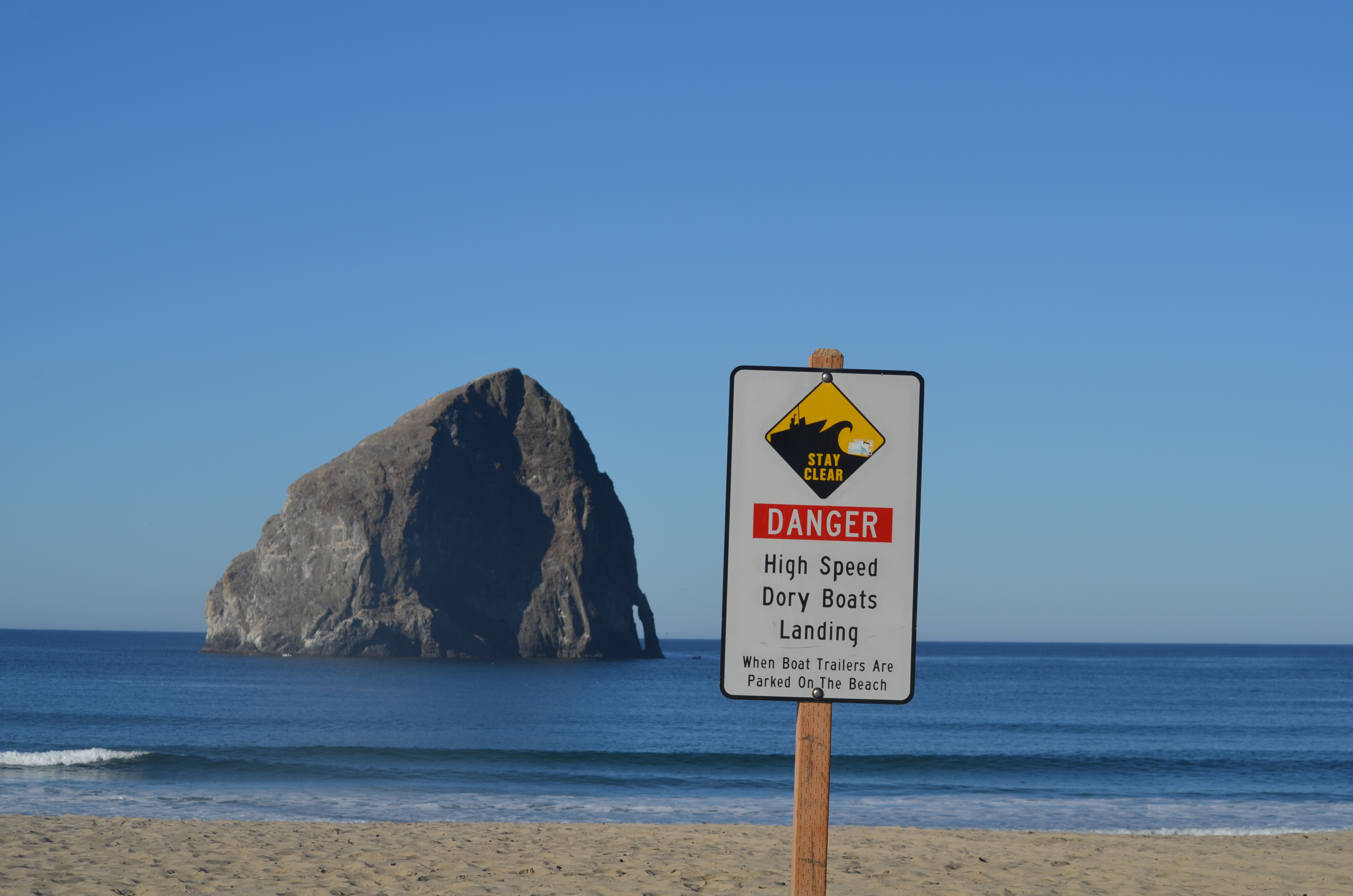
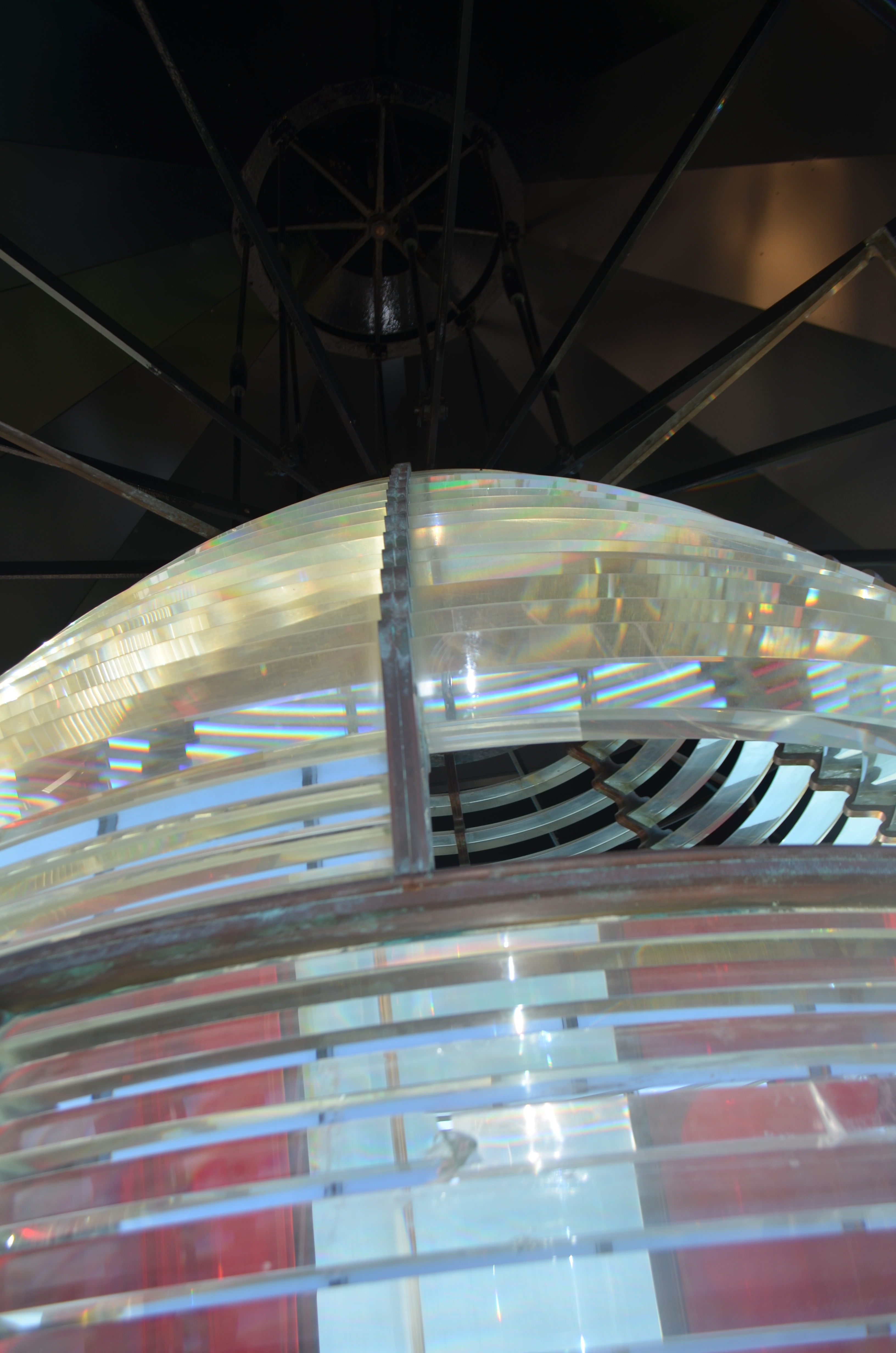
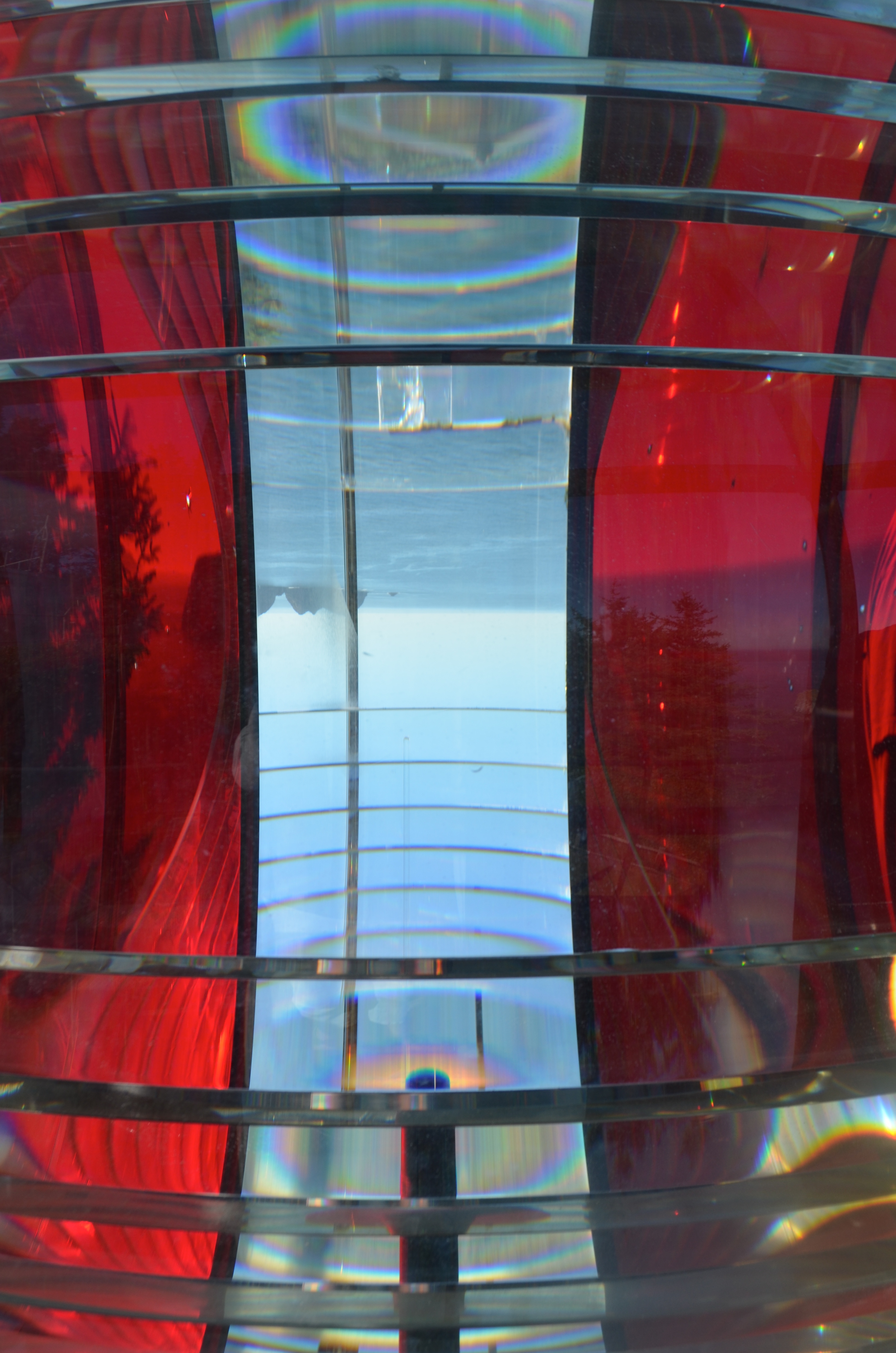
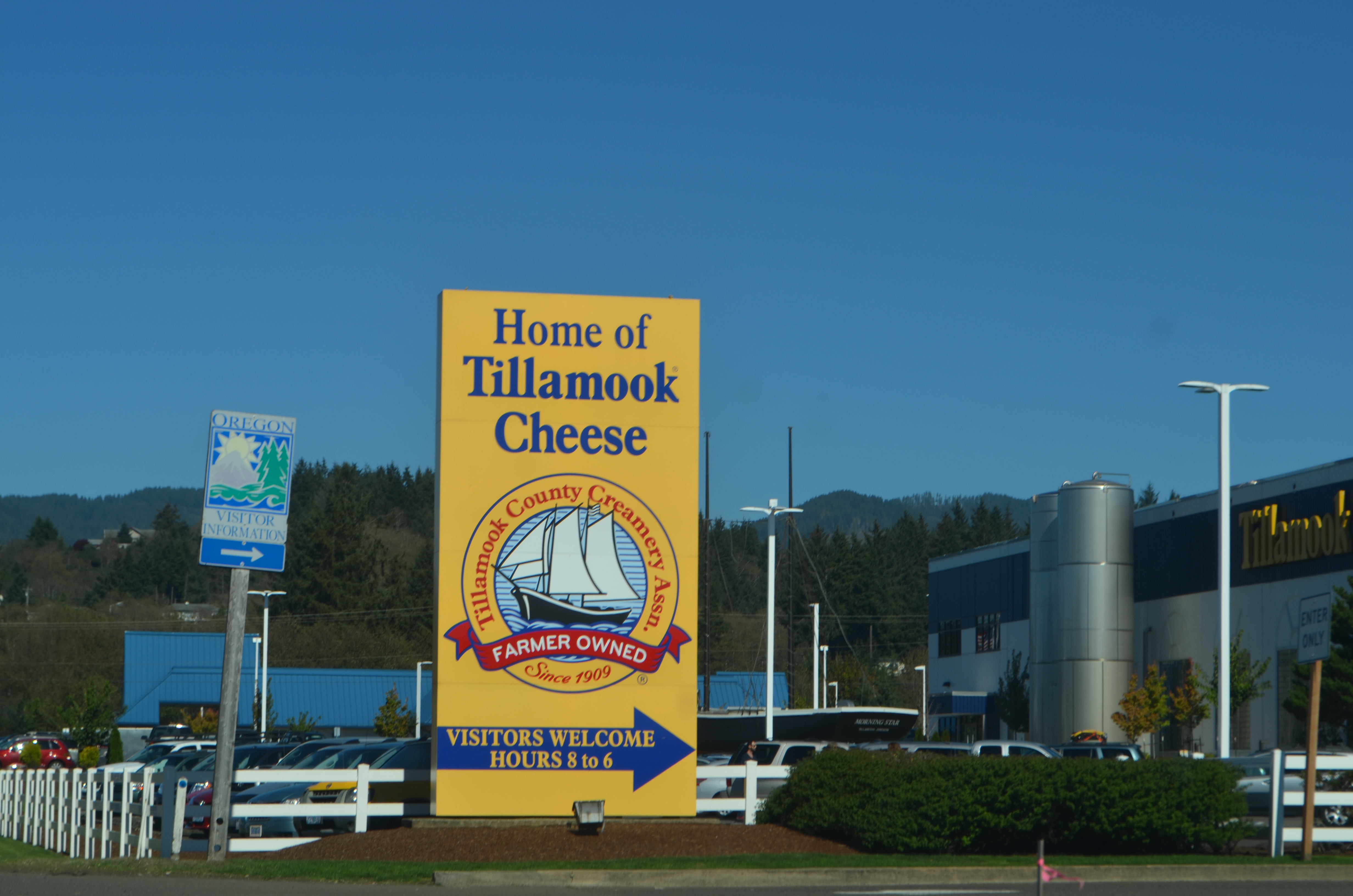
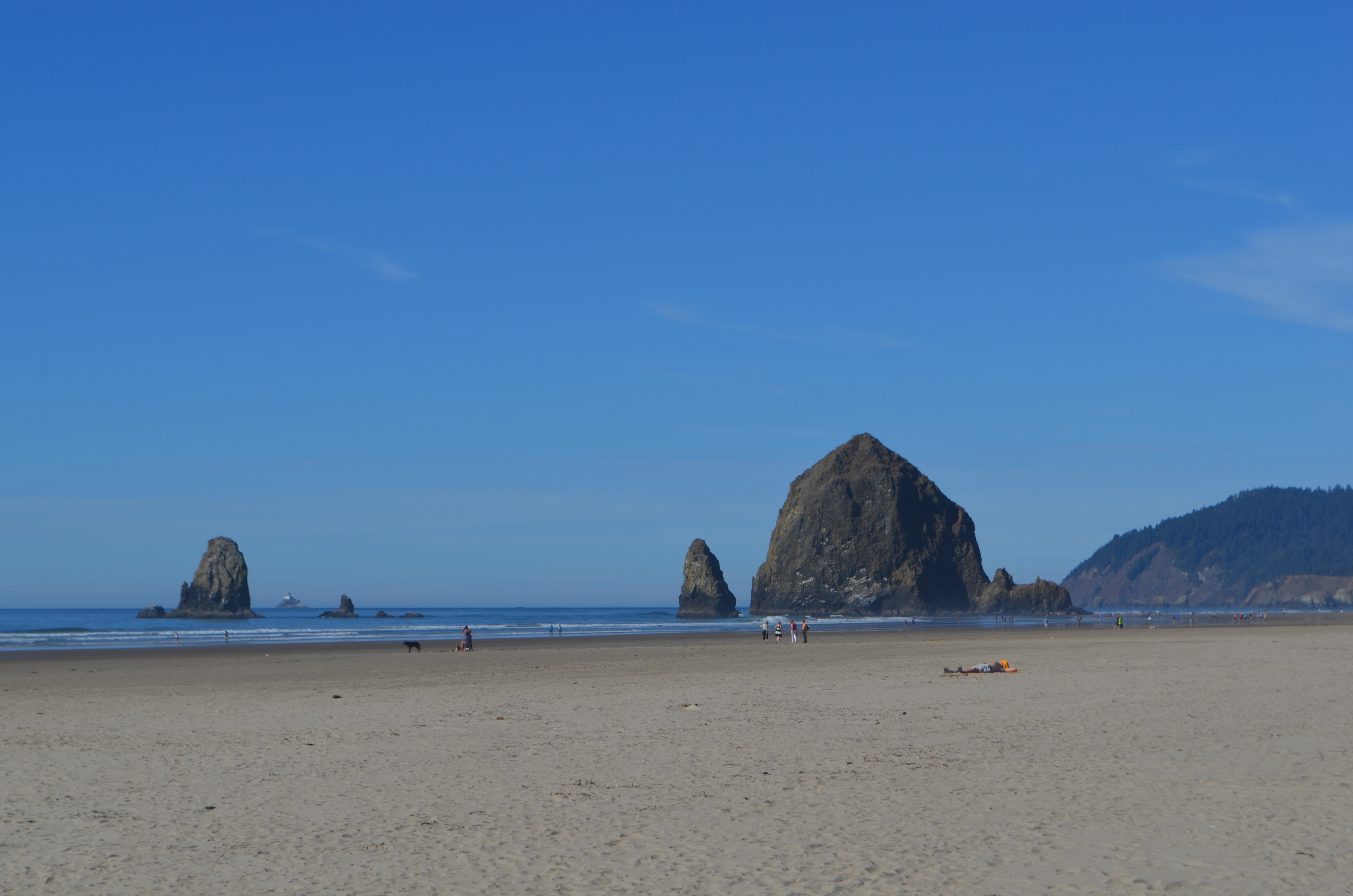
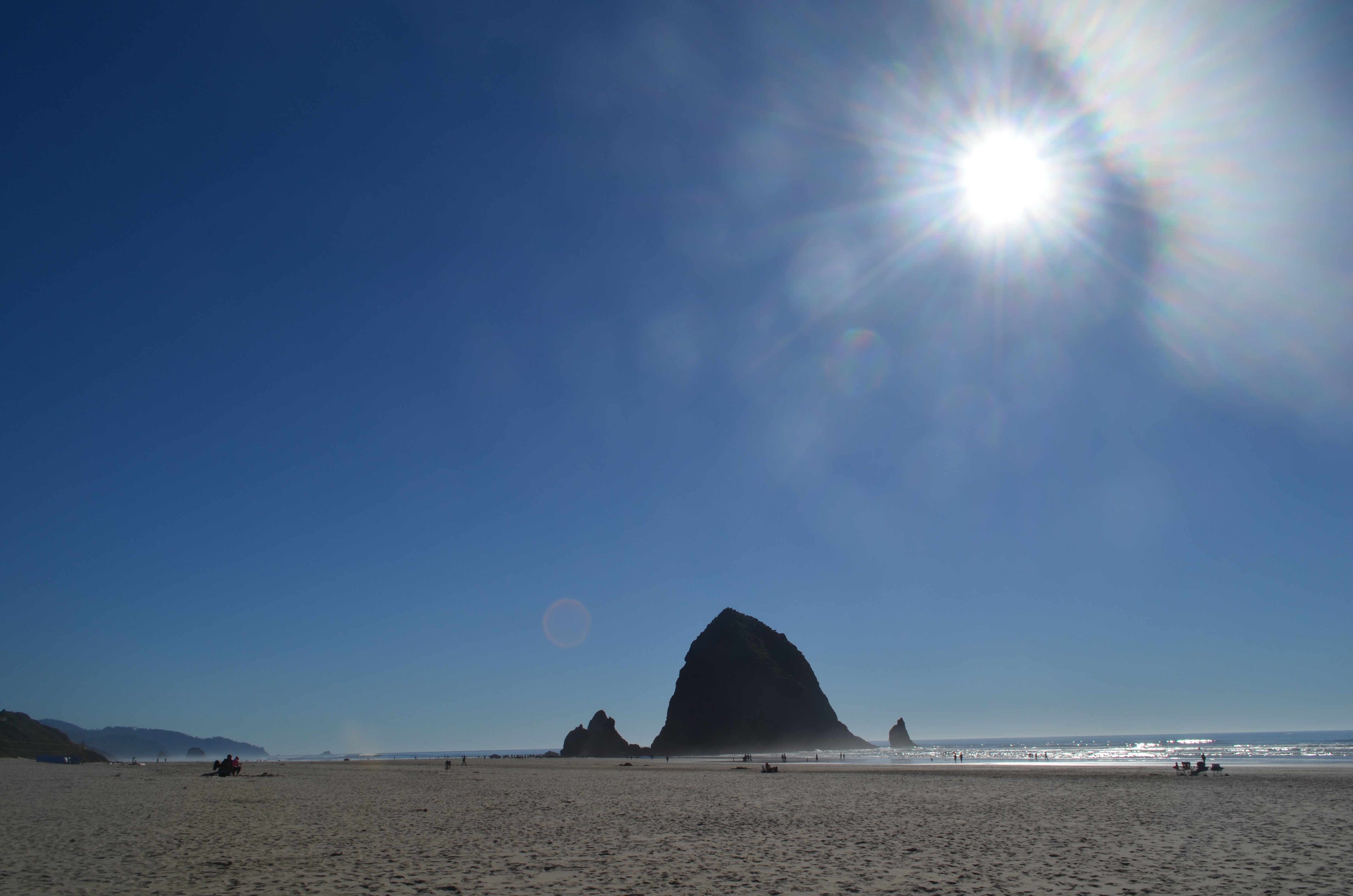
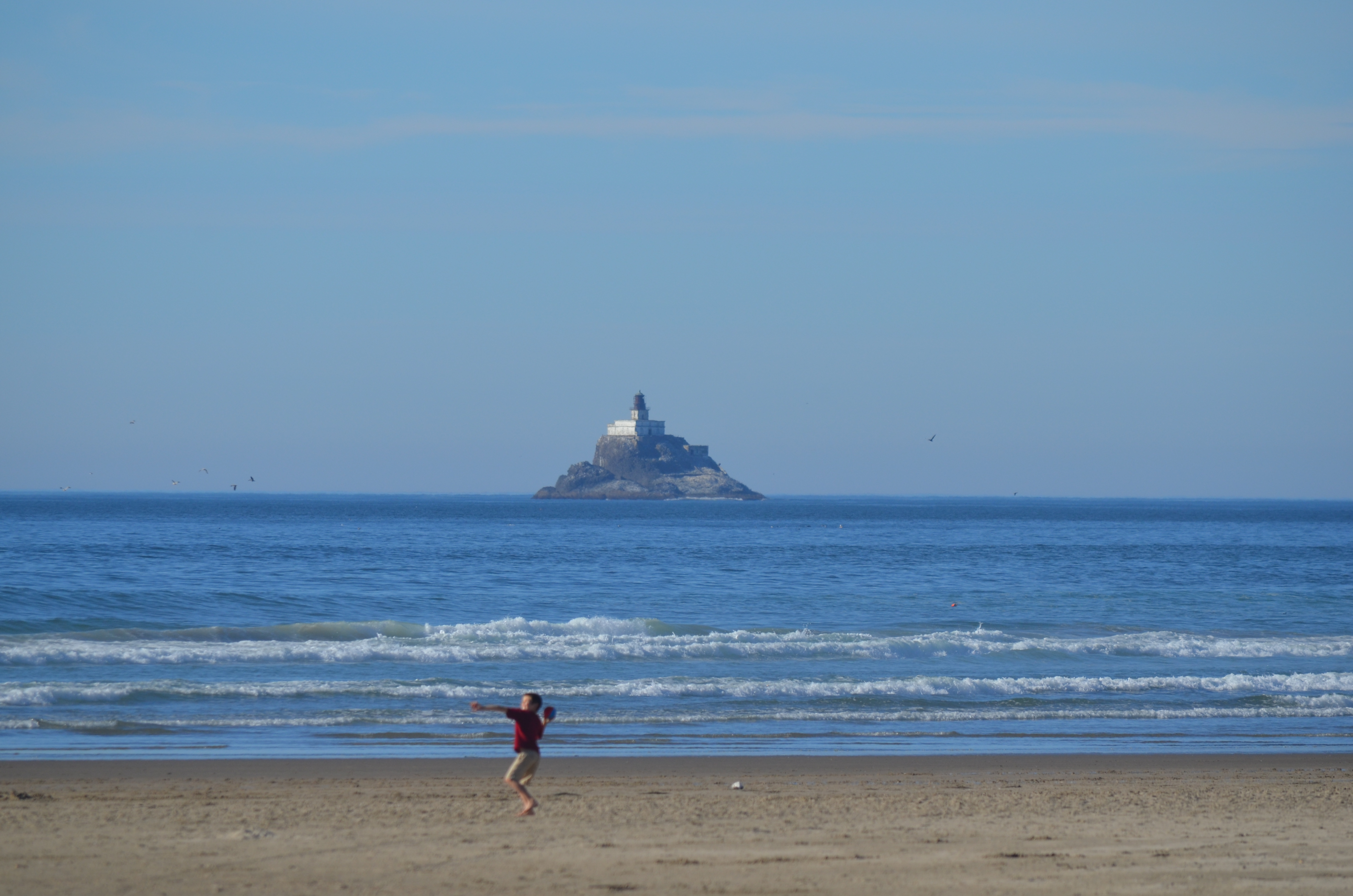
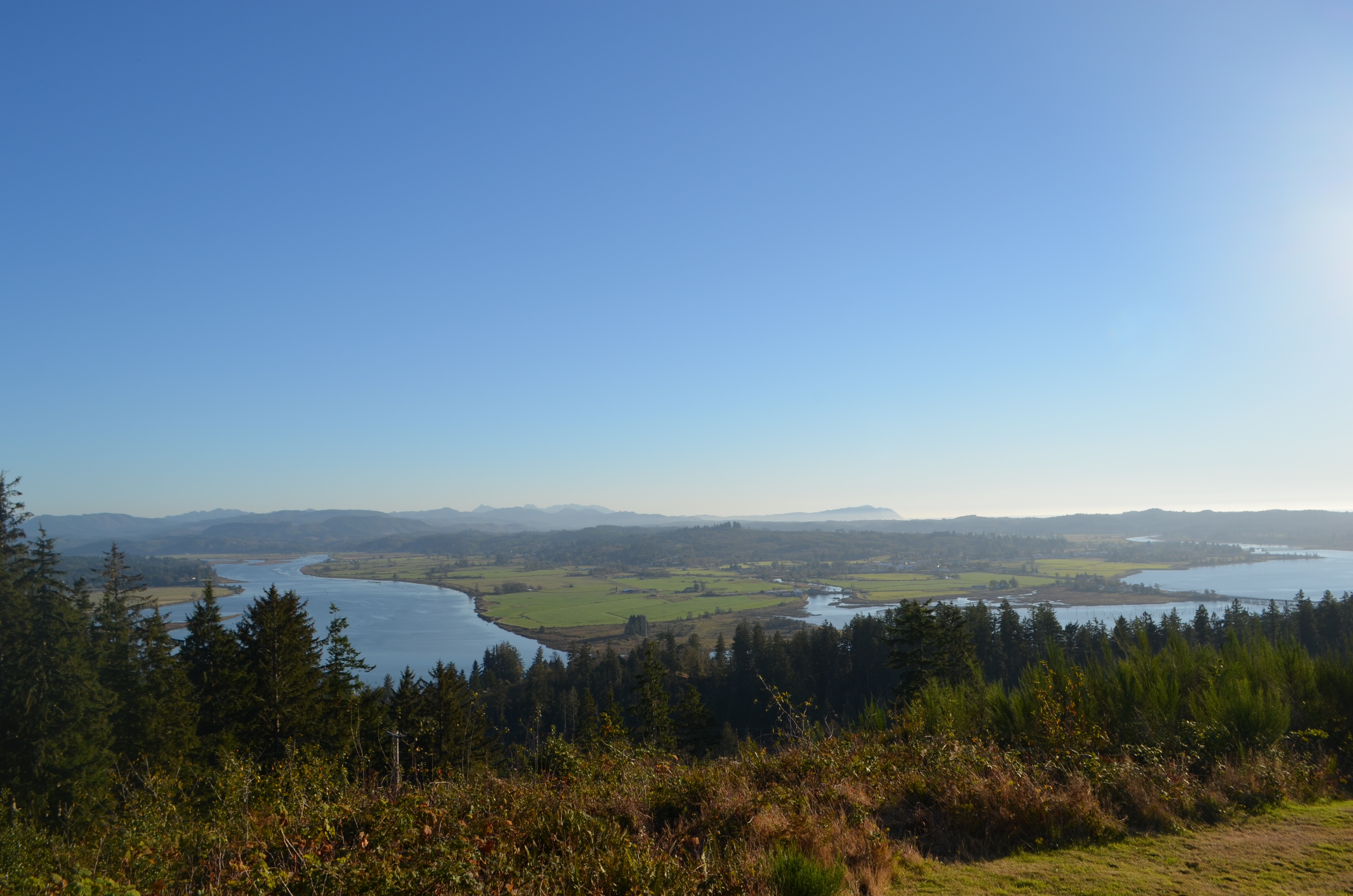
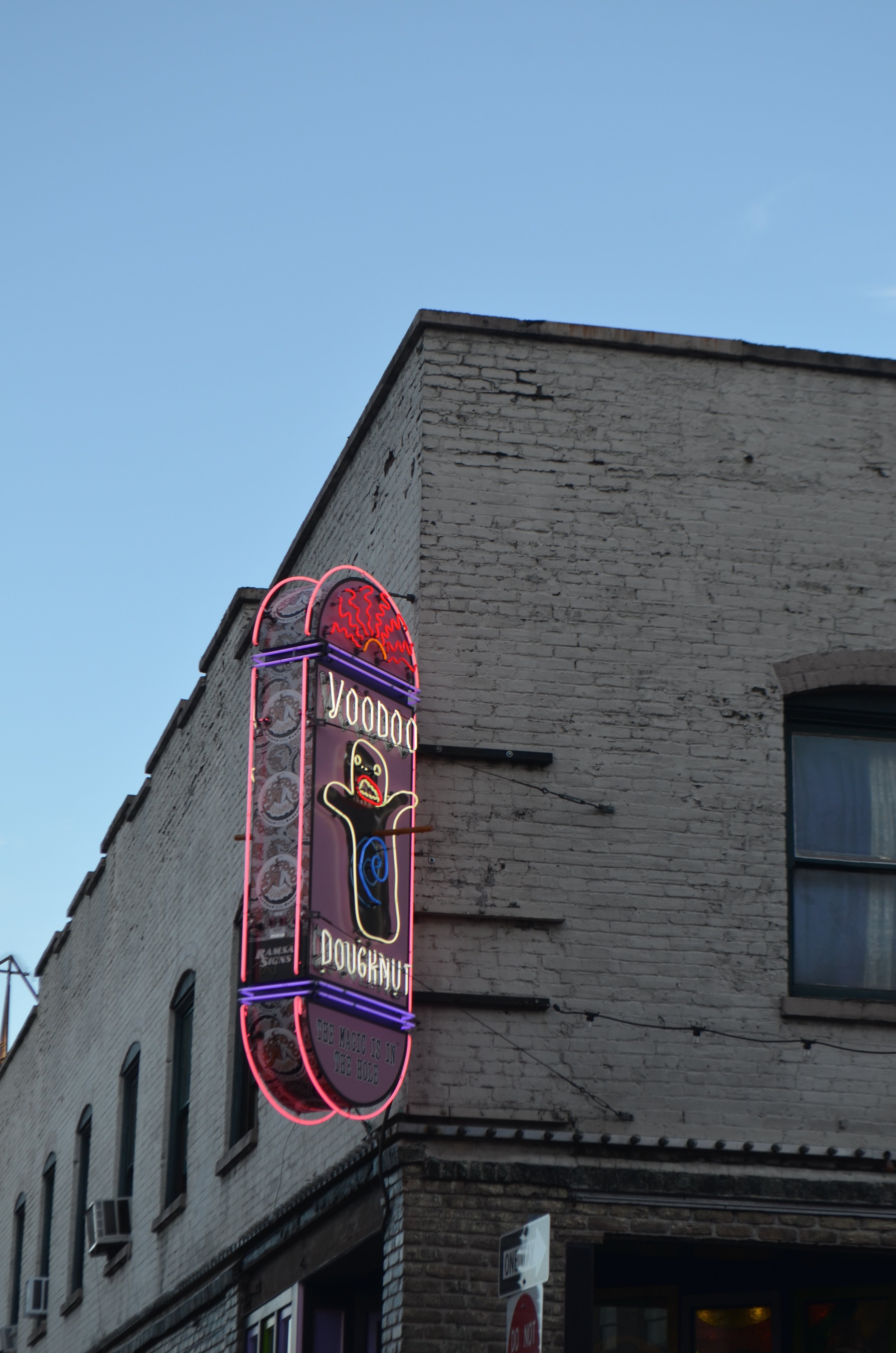
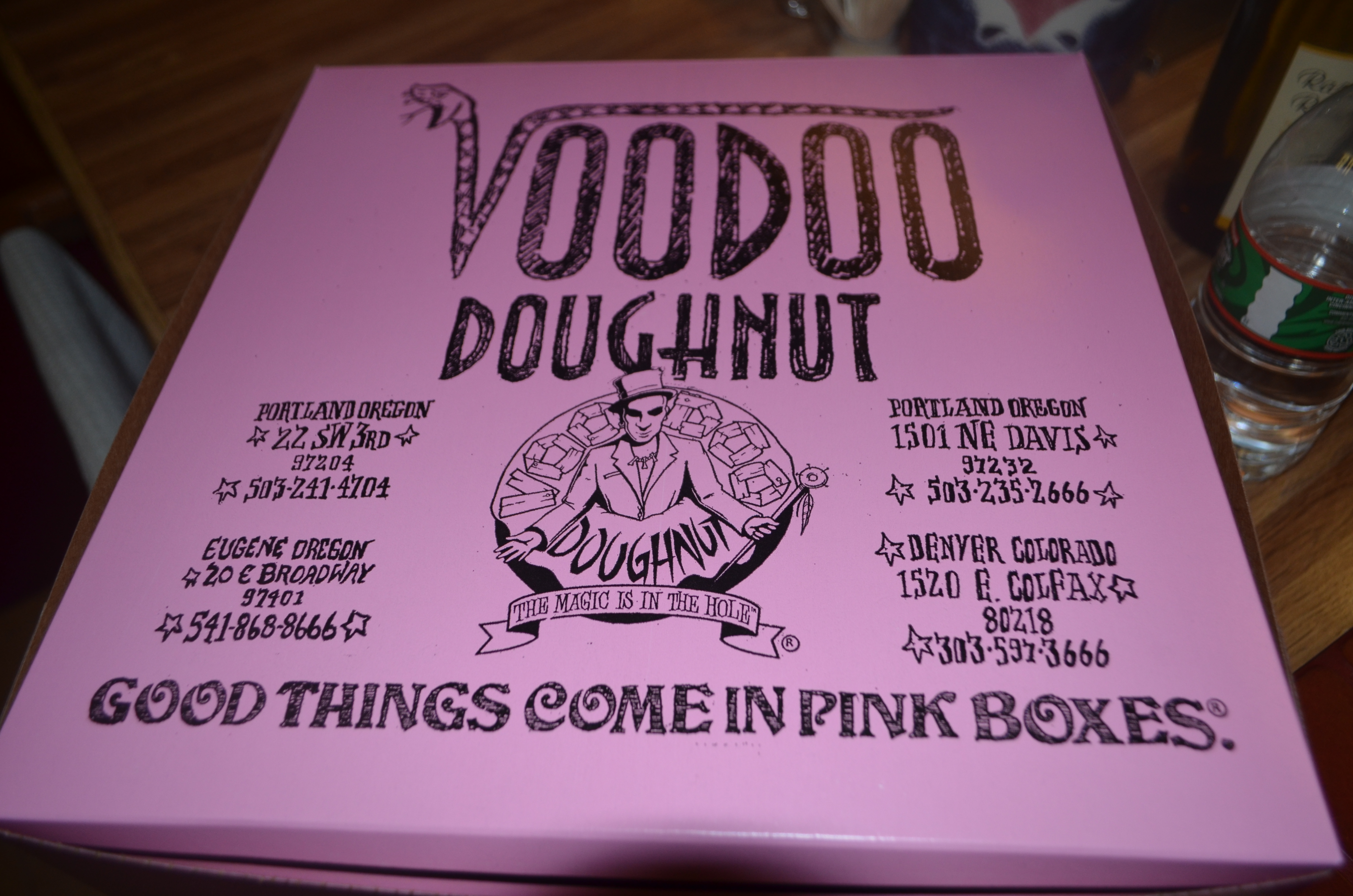
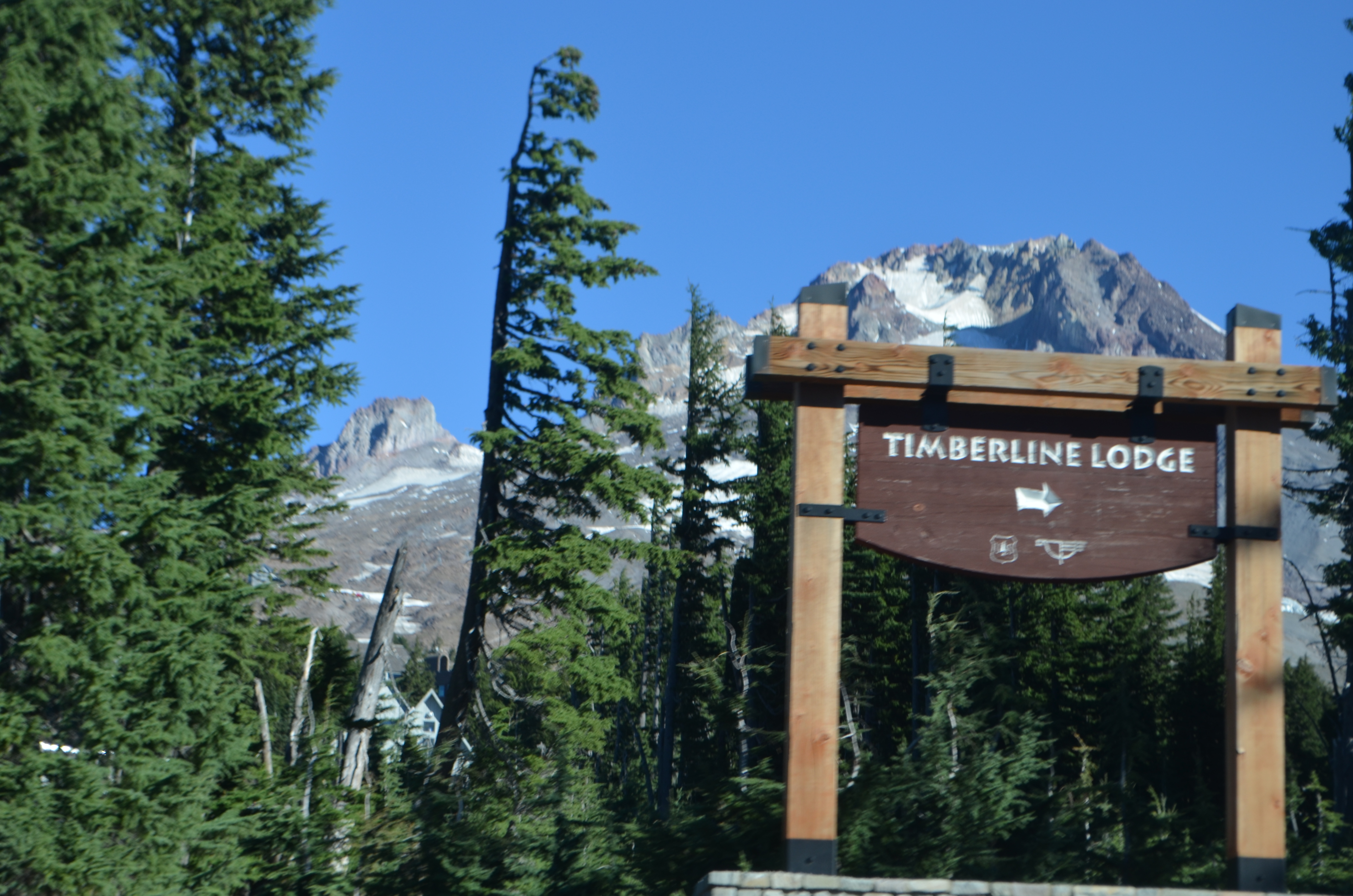
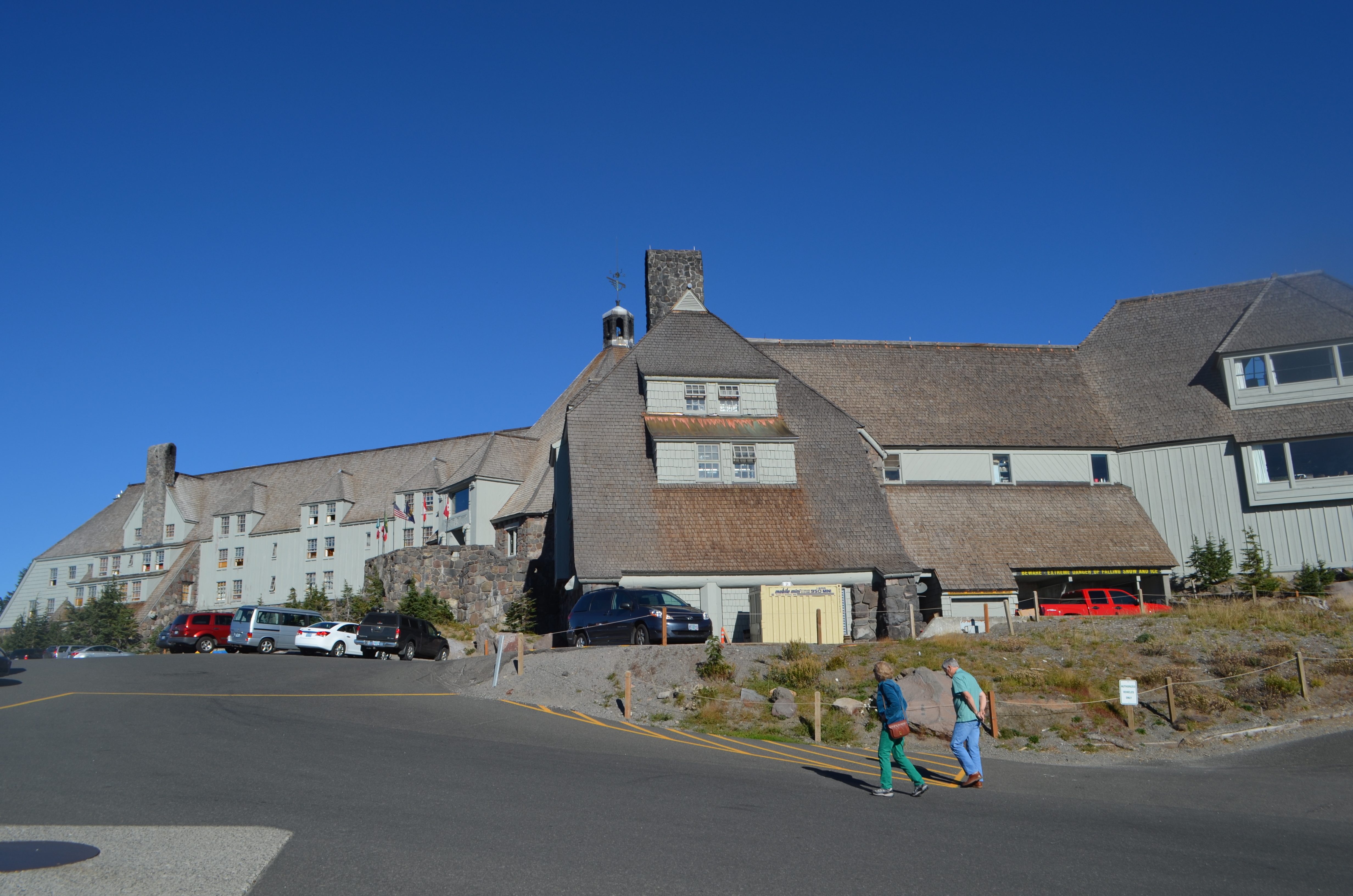
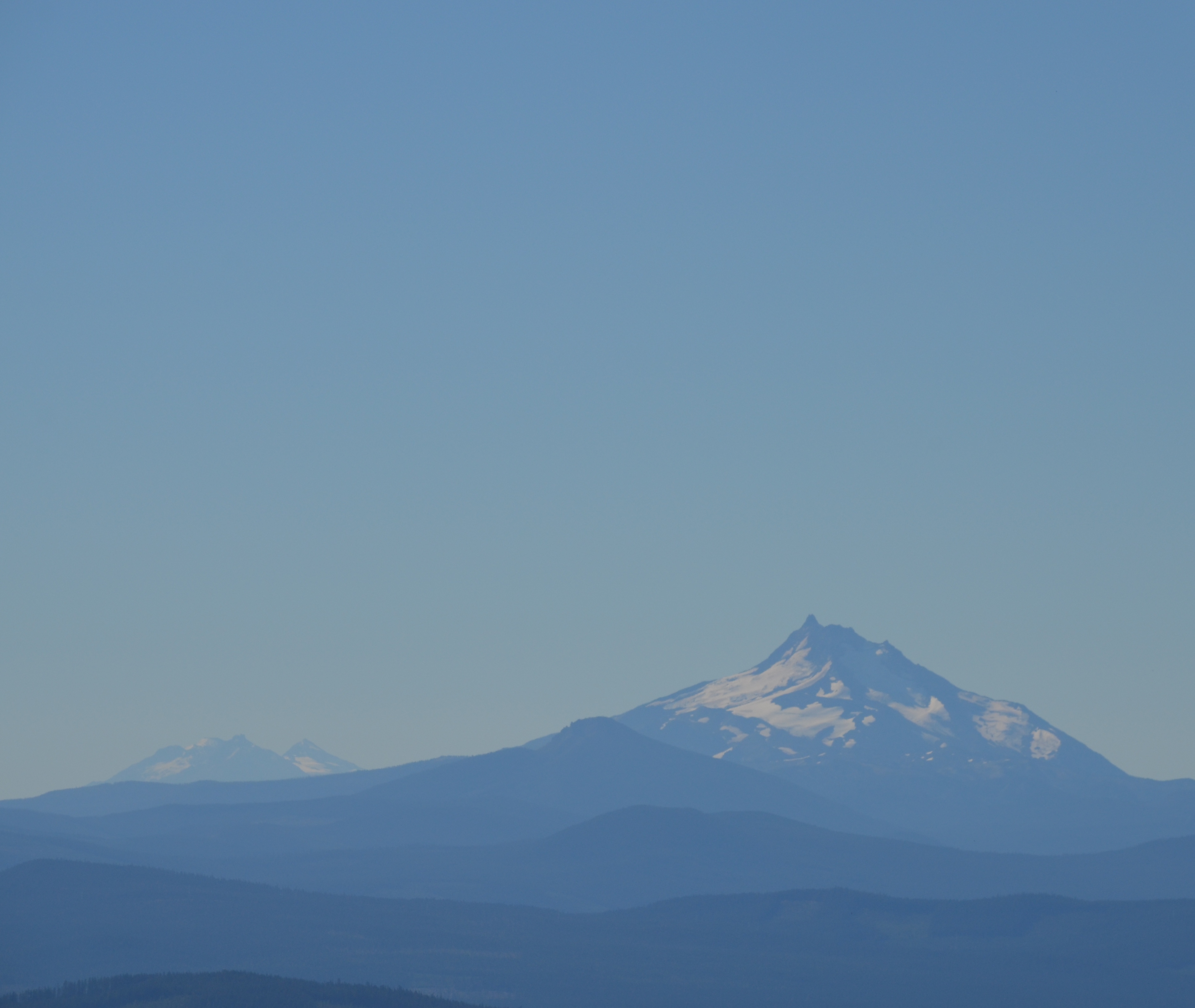
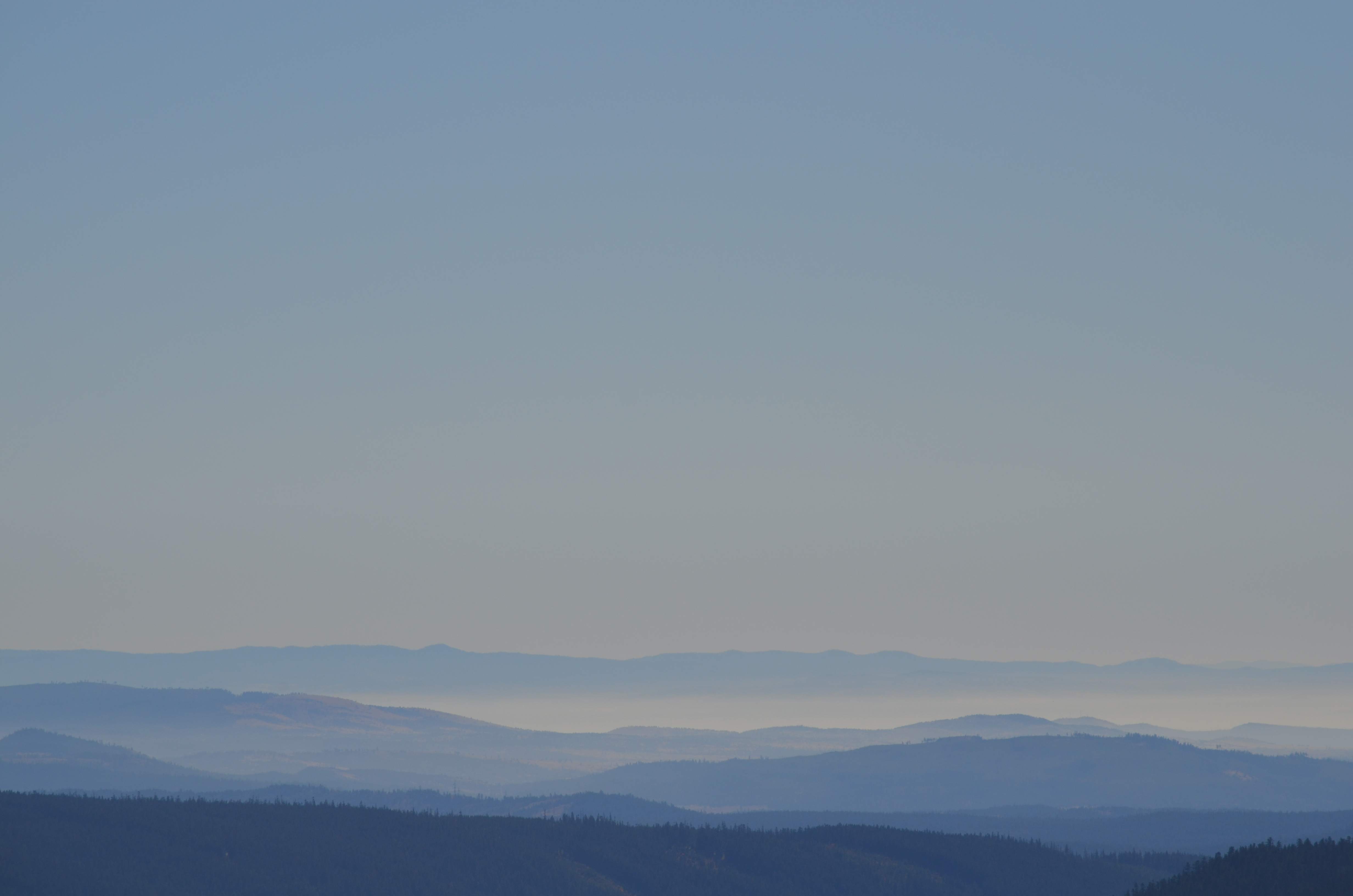
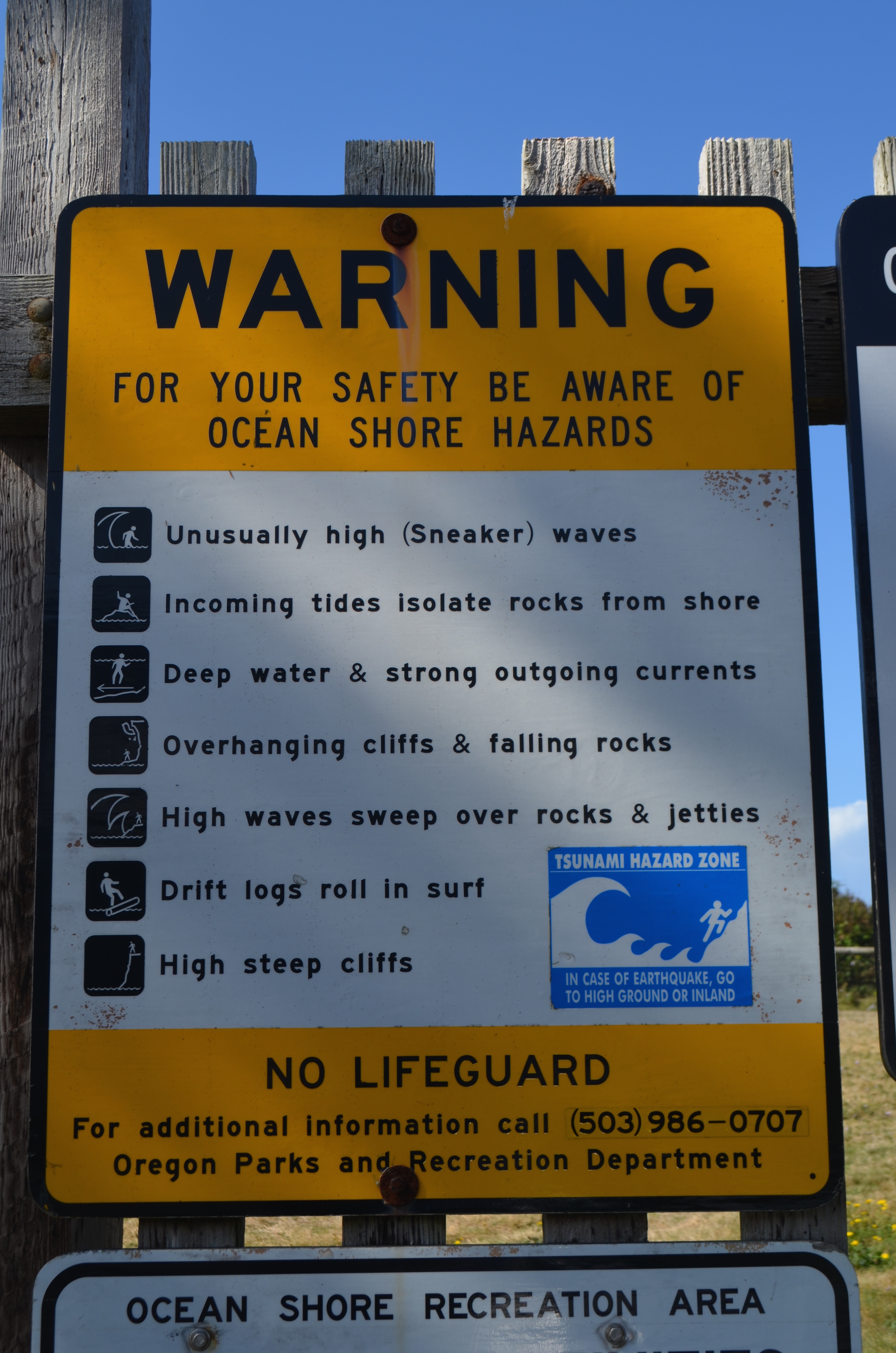
It was hard to leave the central coast of Oregon but time to come back.  I never tire of watching the waves crash around me, so we went up the coast to get back to Portland this time.  One more look at crashing waves, please.DSC_0441 DSC_0418We drove up the coast, leaving Highway 101 to hit the coast drive to Cape Kiwanda…DSC_1330 and Cape Lookout, both with their views and beach warning signs.  Believe me, I wasn’t planning on going off any cliffs.DSC_1337The final Cape was Cape Meares, which was the most delightful of all.   Besides the views…DSC_1344there was the Octopus Tree, a 300 year old Sitka Spruce tree that fits into my memorable trees collection.DSC_1350And the shortest lighthouse, at 38 feet, on the coast.DSC_1363My tour was interesting, giving me insight into the life and work of the lighthouse men of our past.  Not an easy job.  This one had the original glass for the clear sections, beautiful in the sunshine.DSC_1374 DSC_1375We headed back to Highway 101, stopping in Tillamook, where barn quilts decorate buildings all over town.  I wasn’t familiar with this until this summer, so now I’m looking for them when I travel.  Here are a few I saw.DSC_1381 DSC_1382 DSC_1385I can’t go to Oregon without getting Tillamook Ice Cream, the creamiest ever.  Besides they have wonderful flavors like Marionberry Pie and Huckleberry.  Tillamook Cheese is a destination, a farmers’ co-op where you can watch the cheese being made, shop and eat, tasting all the flavors of ice cream, milk and cheese.  I can get the cheese at home, but not the ice cream!  I always have to stop, joining the crowds who share my passion.DSC_1389Our next stop was at one of the amazing beaches in the world, Cannon Beach, home of Haystack Rock.  On this particular day, it was sunny and warm.  People were sunbathing in Oregon in October.  I had to stop at both ends of the beach for the beautiful views of the rock.  Here’s looking from the south to north.  DSC_1390And north to south with the rock shining in the late afternoon sun.  You can’t imagine how big this thing is.  And how big the beach is.  Incredibly beautiful.  And fun.DSC_1399I got a clear shot of Tillamook Lighthouse, perched on its lonely, dangerous rock, from the beach, looking north.DSC_1402Although I could have dawdled all day on the beach, we were trying to reach Astoria by dark, so we headed north.  It was late in the day, but we were able to go to the top of the hill where the Astoria Column, concrete carved with the history of the region, sits.  I was too tired to climb the 168 steps to the top, but the views from below were incredible and the column is an incredible piece of art.DSC_1416Looking towards Astoria, you see the bridge that takes you from Oregon to Washington, and you feel chills thinking of the Lewis & Clark expedition charting these waters.  Looking to the view, where the mighty Columbia River meets the Pacific Ocean is breathtaking in its importance.  DSC_1410On the other side of the hill, the Youngs River and the Lewis & Clark River enter Youngs Bay before joining the Columbia.  DSC_1428The charming city of Astoria is the oldest settlement in America west of the Rockies.  I’ll return for more.  I did love the trash cans in Astoria, symbolic of one of the major industries of the area.DSC_1435We headed east to Portland, leaving the coast behind us.  The next day, we went into Portland for the underground tour, which was very little underground, but a lot of colorful history of the wild and wooly days of early Portland.  Very fun.DSC_1440I’ve been to Portland various times in the past five years, enjoying the diversity and casualness of this beautiful city.  We had a wonderful tea and late lunch in one of the few Chinese restaurants left in Chinatown.  DSC_1441DSC_1448I really wanted the Hung Farlow to still be open, but they are saving the sign.  DSC_1443Portland has the signs saying “Keep Portland Weird,” just as Austin has signs that beg us to “Keep Austin Weird.”  I’m thinking “weird” is just a word for being open to everything.  There were more homeless than I remembered from my last visit, but just as many colorful people, trying to be as weird as possible or to fit in however they can.  It’s part of the charm really.   We finished our tour and joined local friends for a fun Thai dinner, watching the sport of Sepak Takraw, a combination of hackey sack and volleyball, on the television.  DSC_1462We’d passed the famous Voodoo doughnut place on our tour, but stopped at the second location on the other side of the river to stock up on the notorious doughnuts.  We HAD to have this Portland experience and included one Voodoo man doughnut in our box for fun.DSC_1458 DSC_1480The next day, our final day in Oregon, we traveled to Timberline Lodge on Mt Hood.  It was a beautiful day, warm even at 6,000 feet, and the views were spectacular.DSC_1485DSC_1492Timberline is an old WPA lodge and everything inside is hand made from local materials, including the furniture, drapes, hand wrought iron, carvings.  The building, used in the opening shots of “The Shining,” is a tribute to the craftsmen and women who worked in the program, not only grateful for jobs during the depression but showing deep pride in their creations.  It was a total delight.  The six-sided fireplace, made of local rocks, runs up through the three stories of the main lobby, with three fireplaces on two levels.DSC_1514I loved the scenes carved in linoleum on the walls of a meeting room.DSC_1504The views of Mt Jefferson and Mt St Helens in the distance were lovely.DSC_1527And the mists over the hills gave us the layers of blue against the clear sky.  DSC_1532The top of Mt Hood was rocky, but they continue to manicure the dusty snow for the skiers we passed coming and going up the mountain.DSC_1519Our Oregon trip ended with meals with friends before we headed back to Oklahoma the next day.  This Okie left with more lovely Oregon memories to fill my senses.  Okie in Oregon.  That’s me.

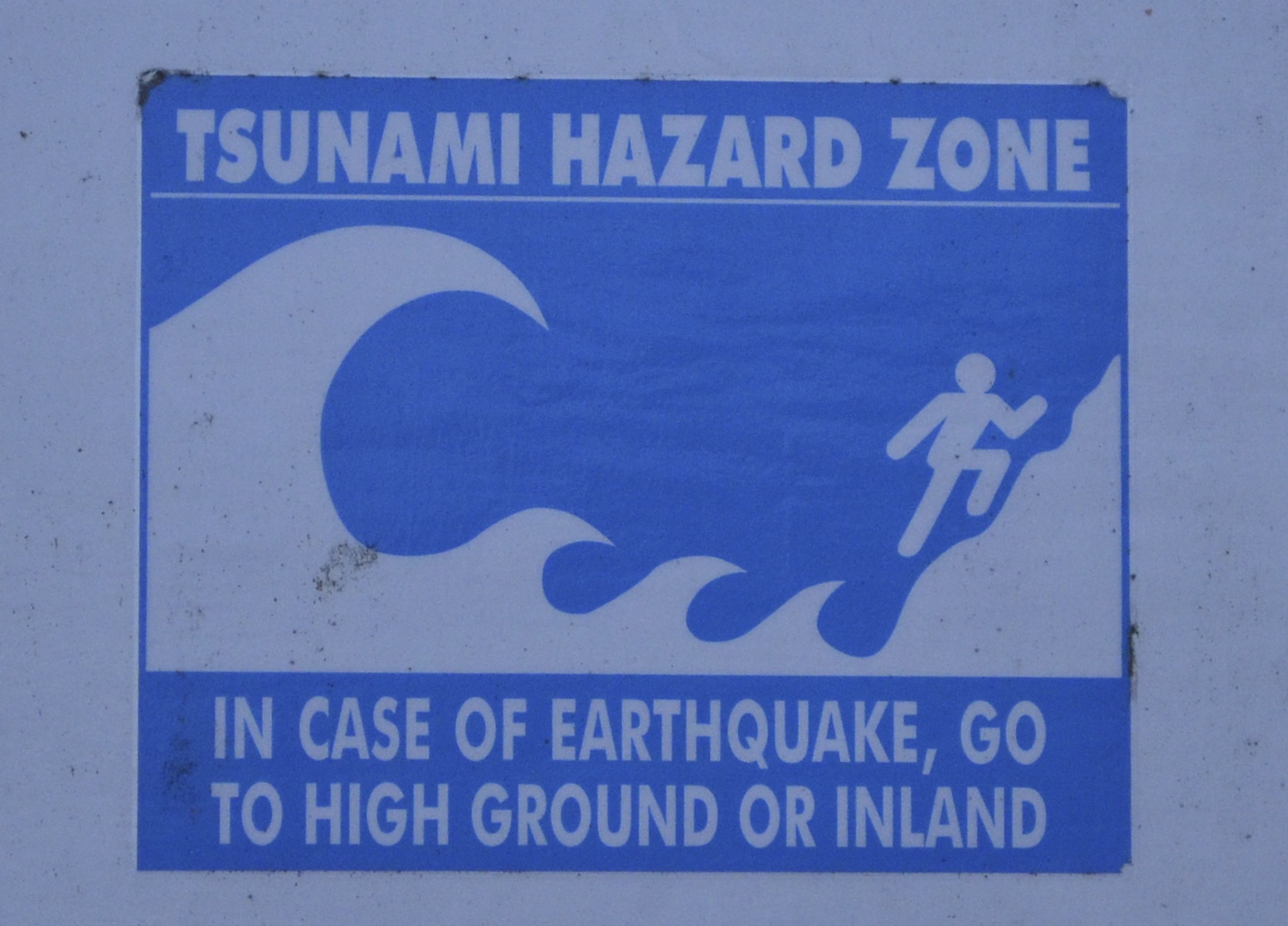
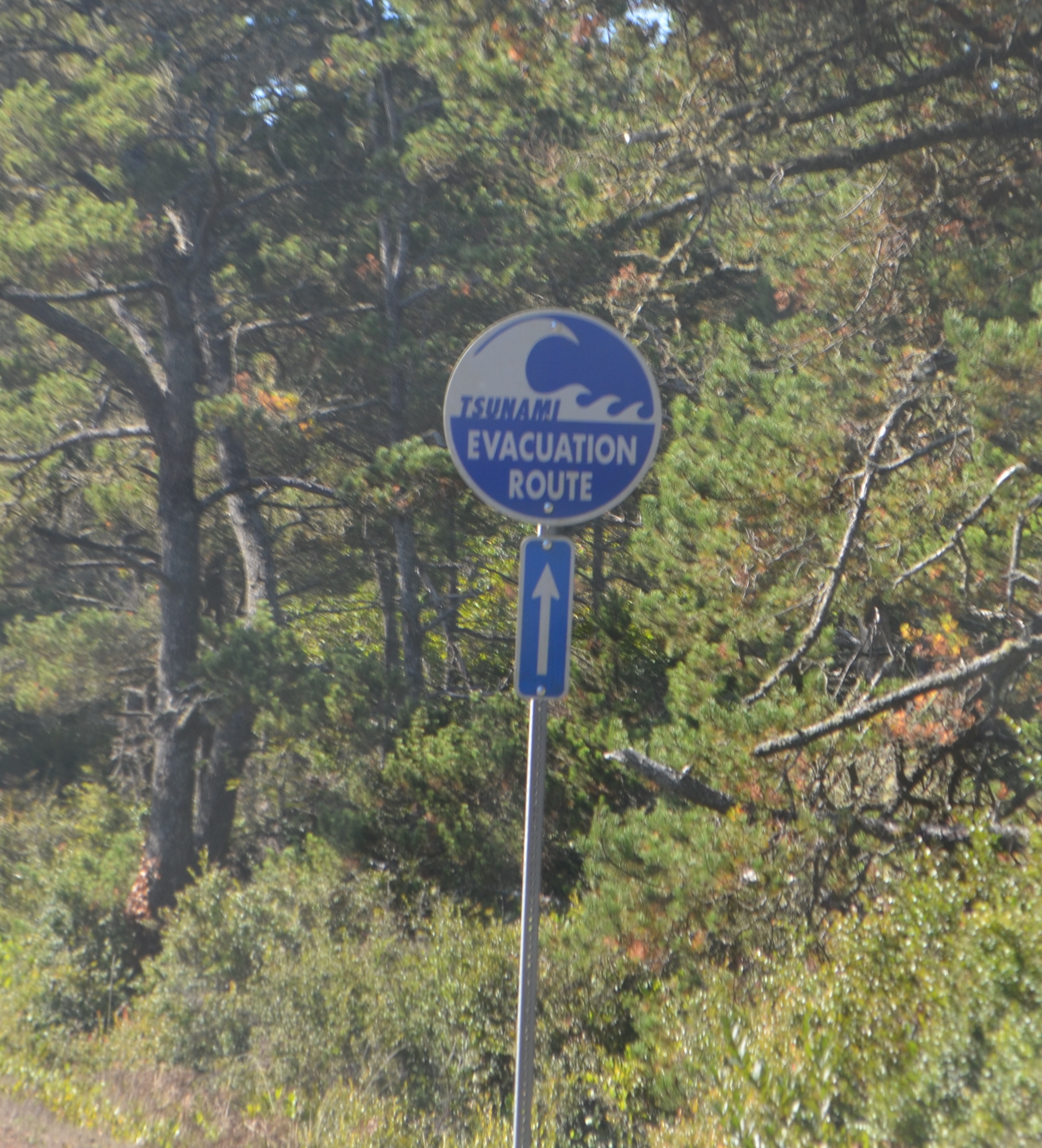
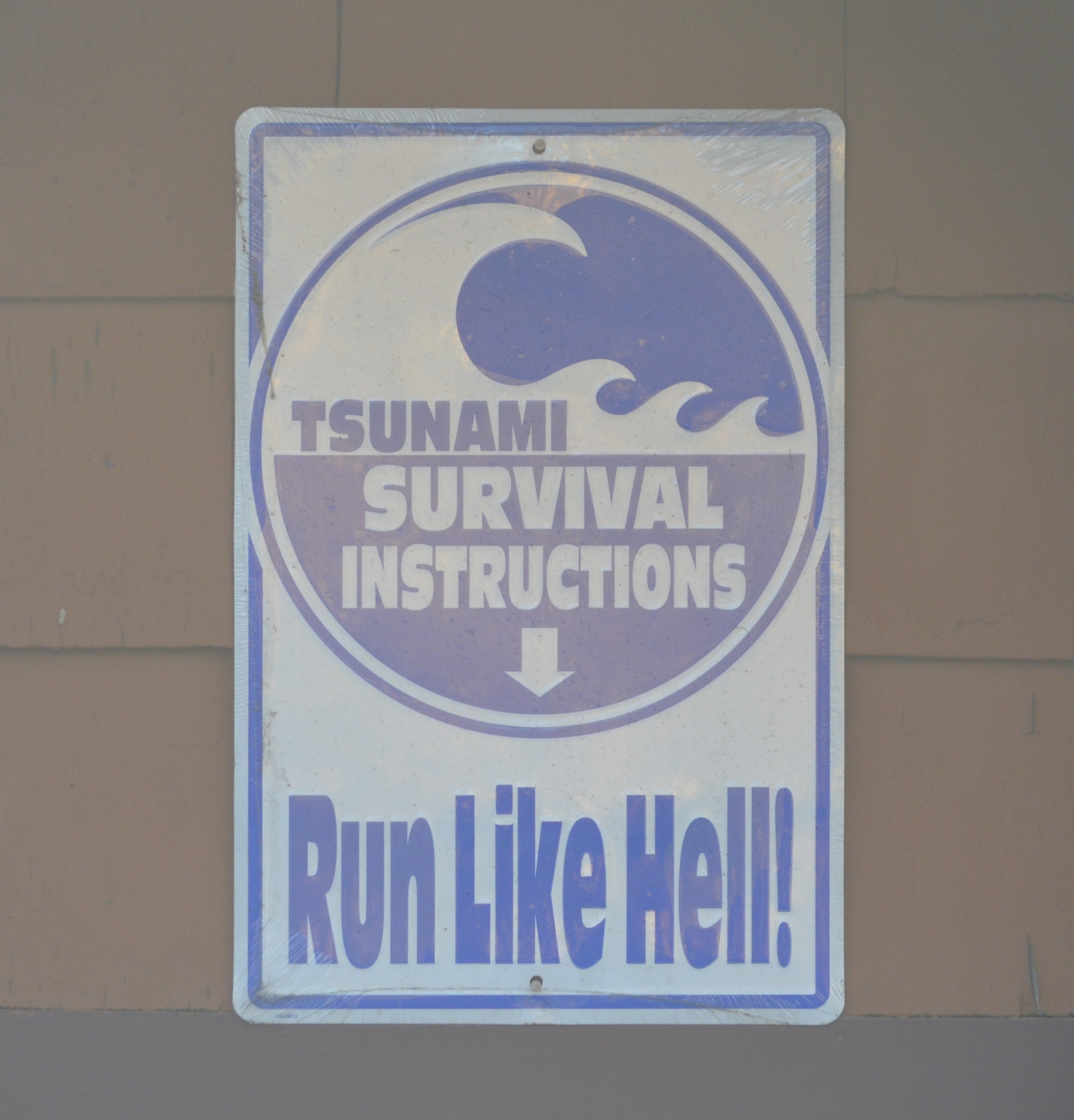
Traveling coastal Oregon along Highway 101, there are signs that we just don’t see in Oklahoma.  We have tornadoes, earthquakes, and thunderstorms, but we don’t have tsunamis.  Everywhere you go, there are warnings and I find myself trying to figure out how I’m going to get high enough to escape the giant waves.  In Oregon, the forests reach the coast, often on high cliffs.  You’d have to scramble to get up, up, up!

DSC_0471 DSC_1340 DSC_1317 DSC_0942 DSC_0539DSC_0780The “run like hell” sign is a joke, but that’s basically what you do.  Not to be messed with.  But most of the highway is delightful and scenic with beaches and trails around every turn, different each time you visit.

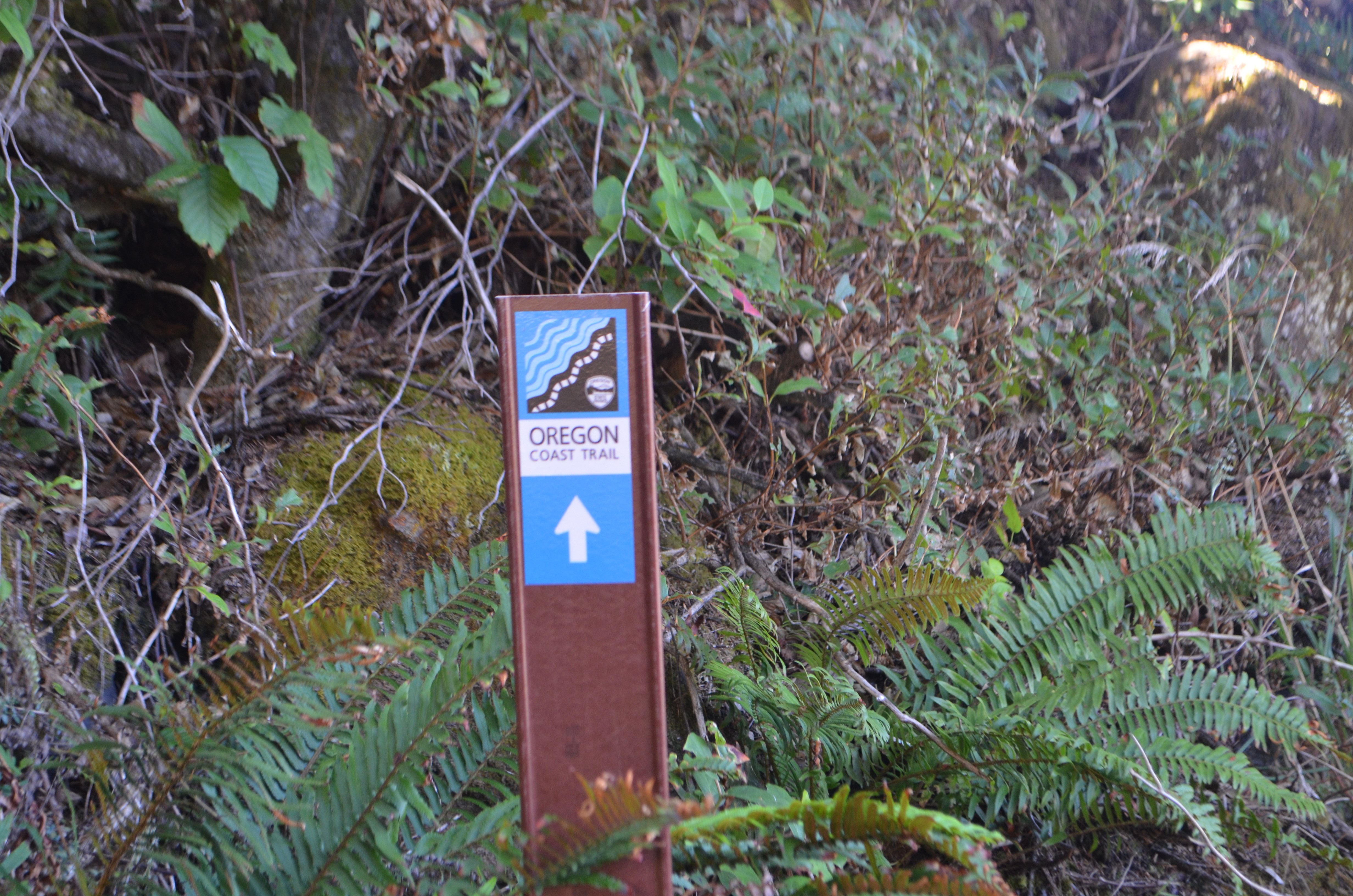
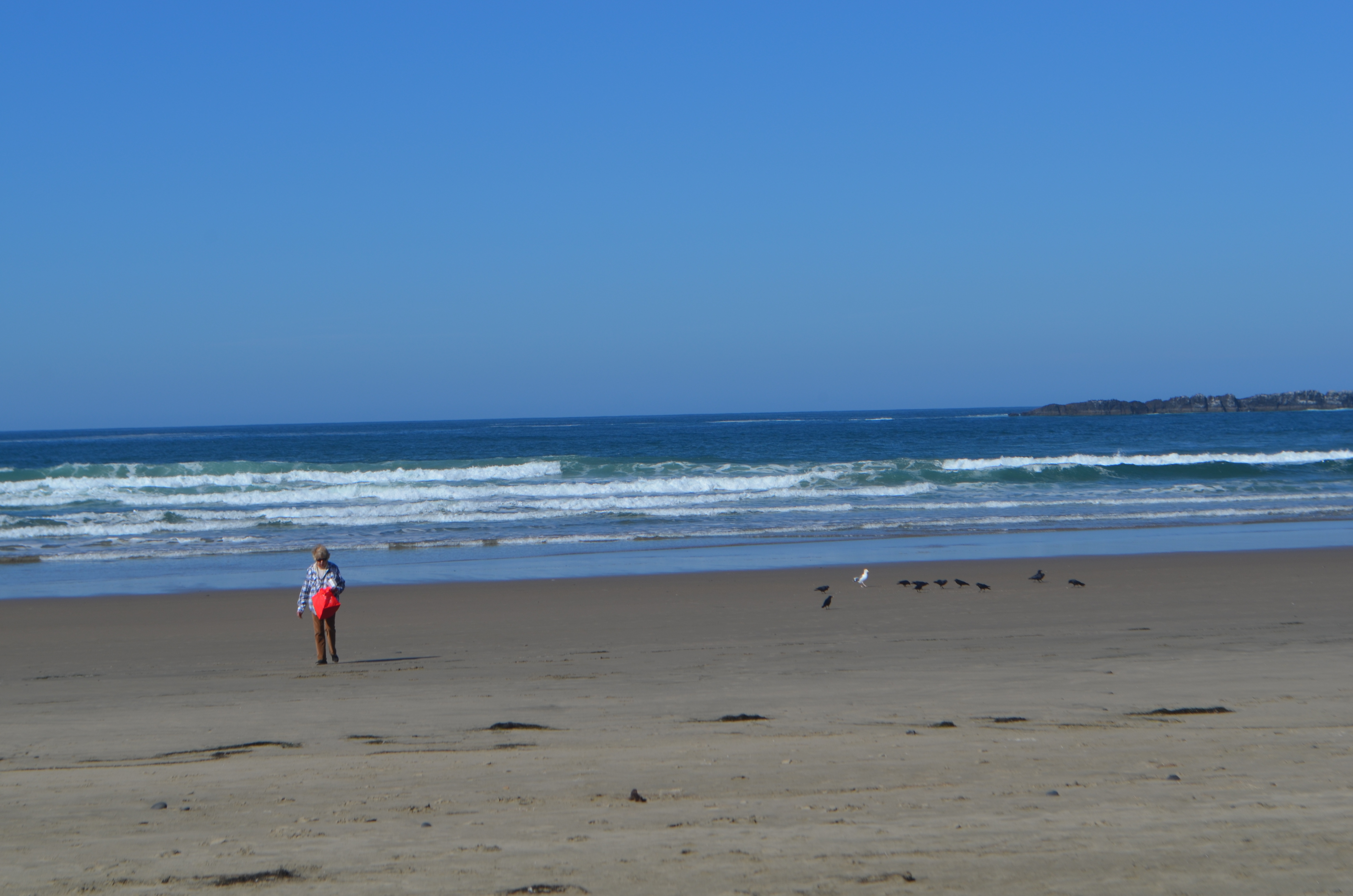
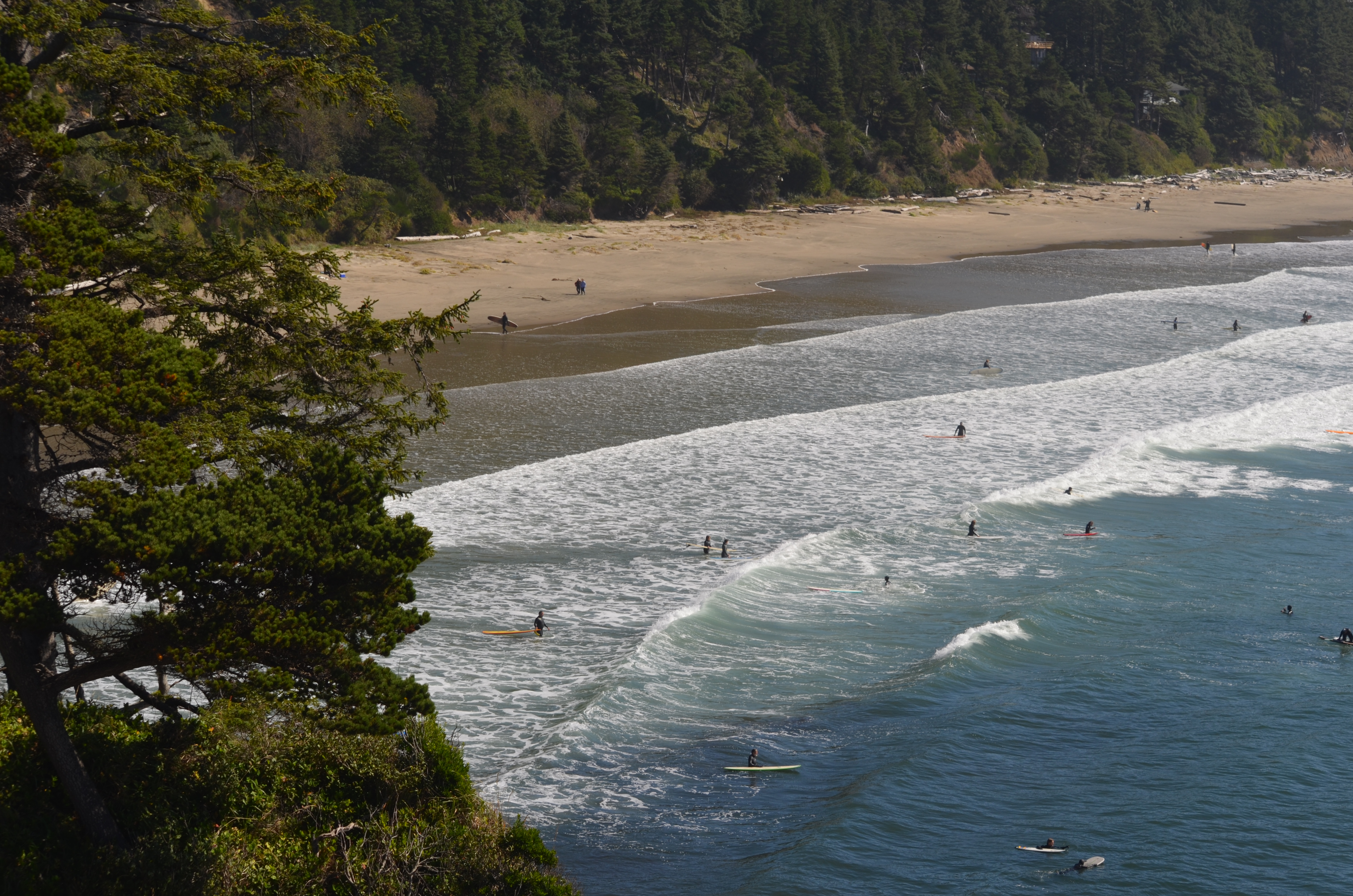
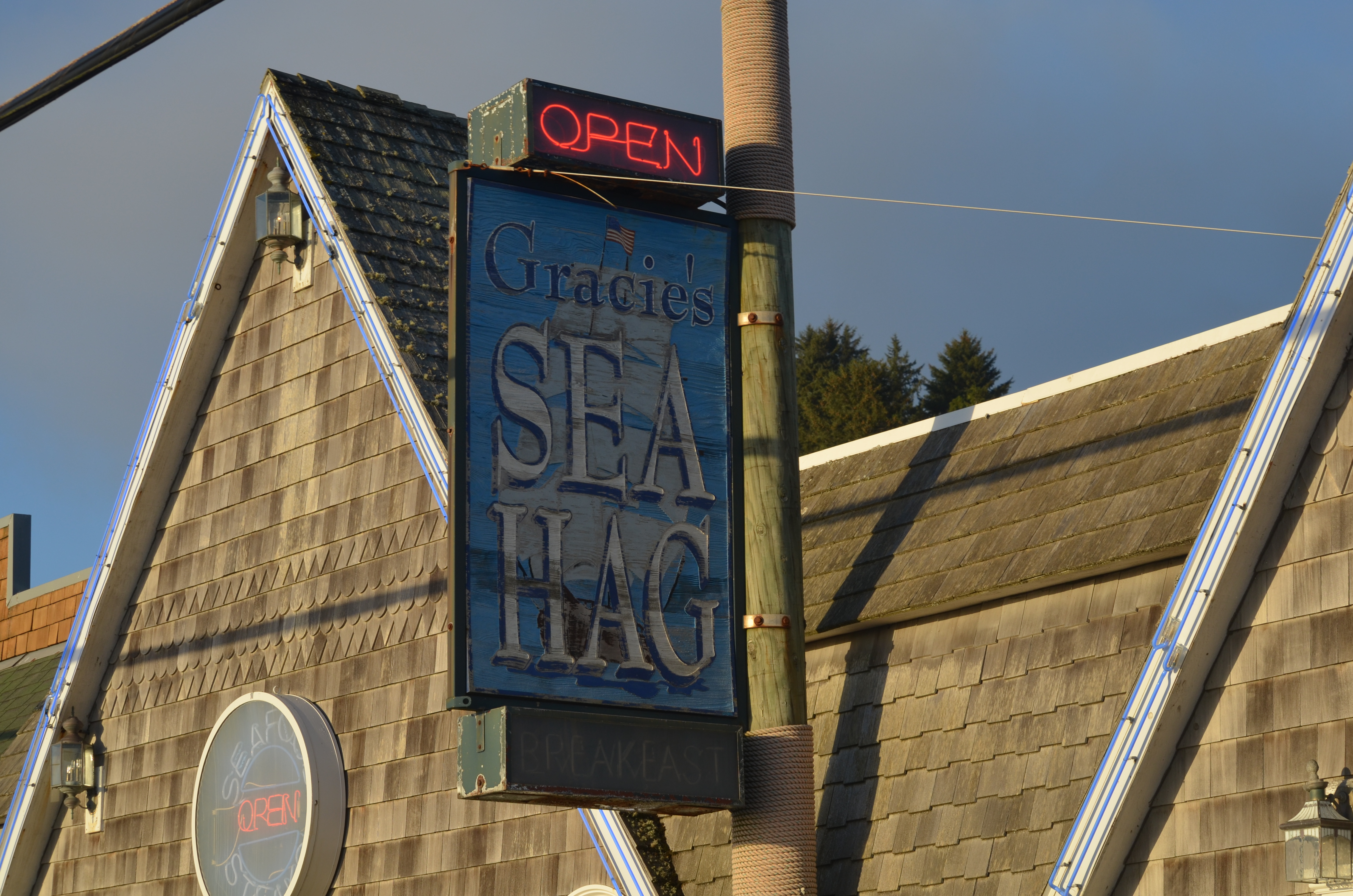
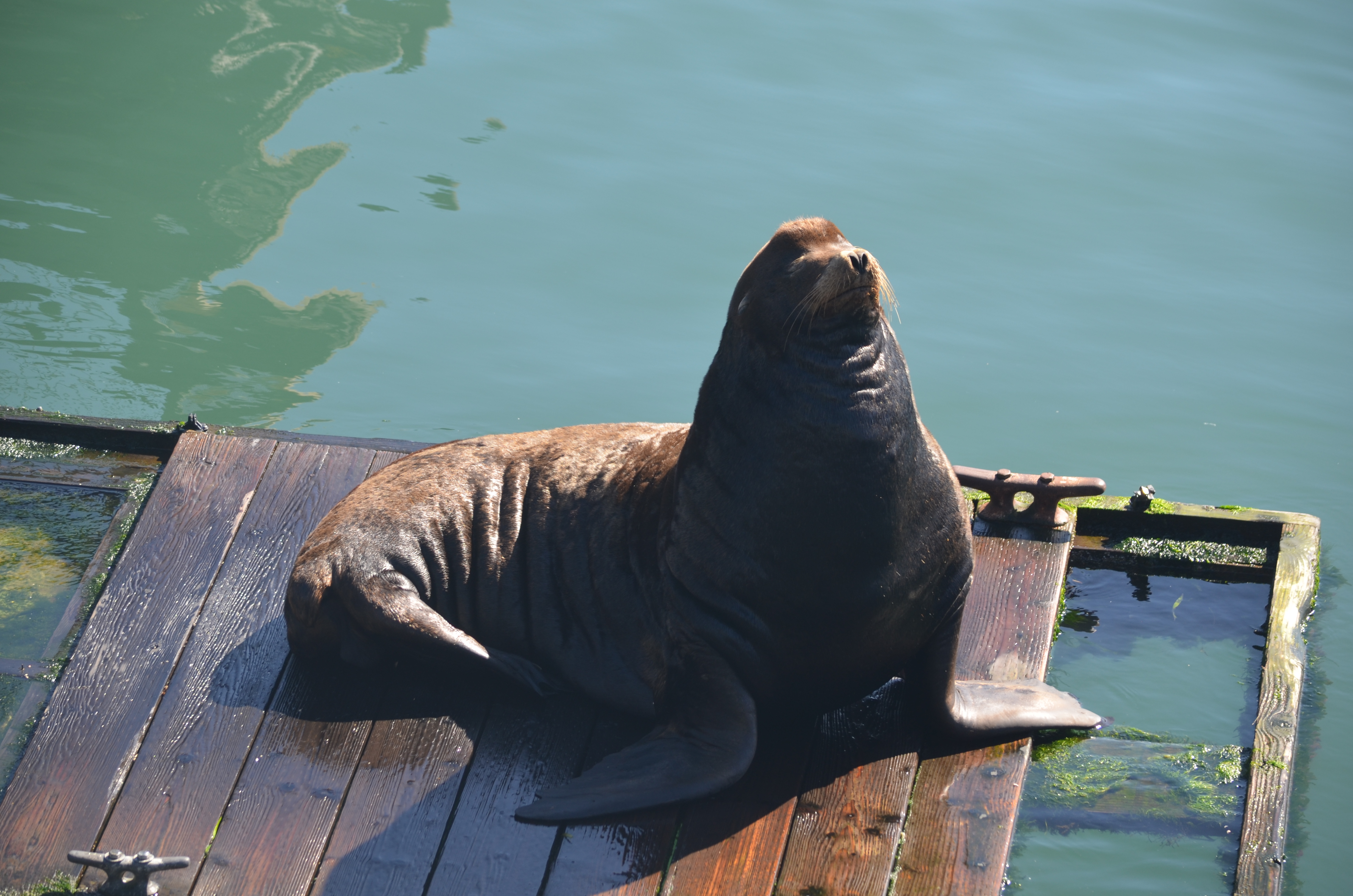
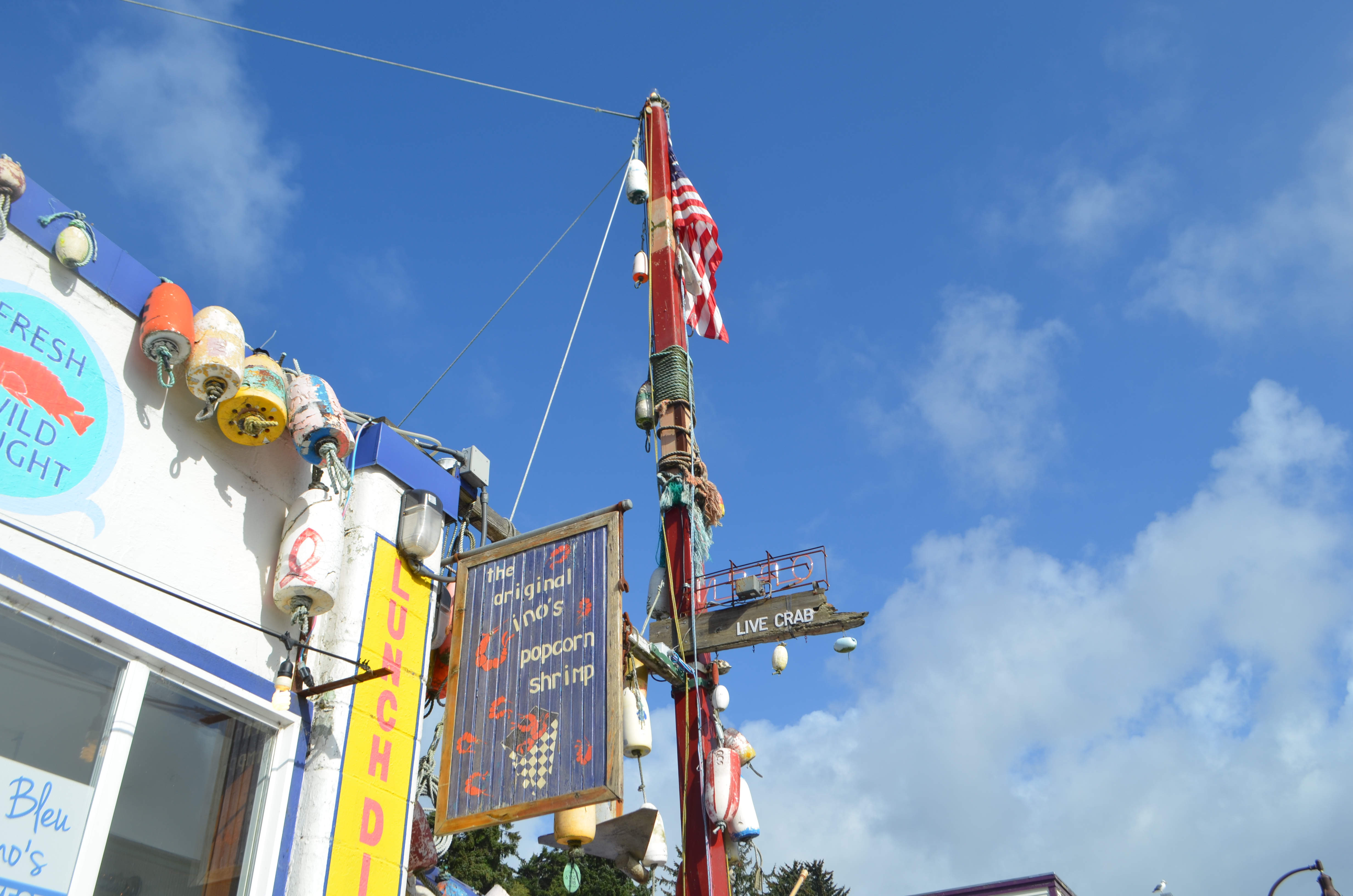
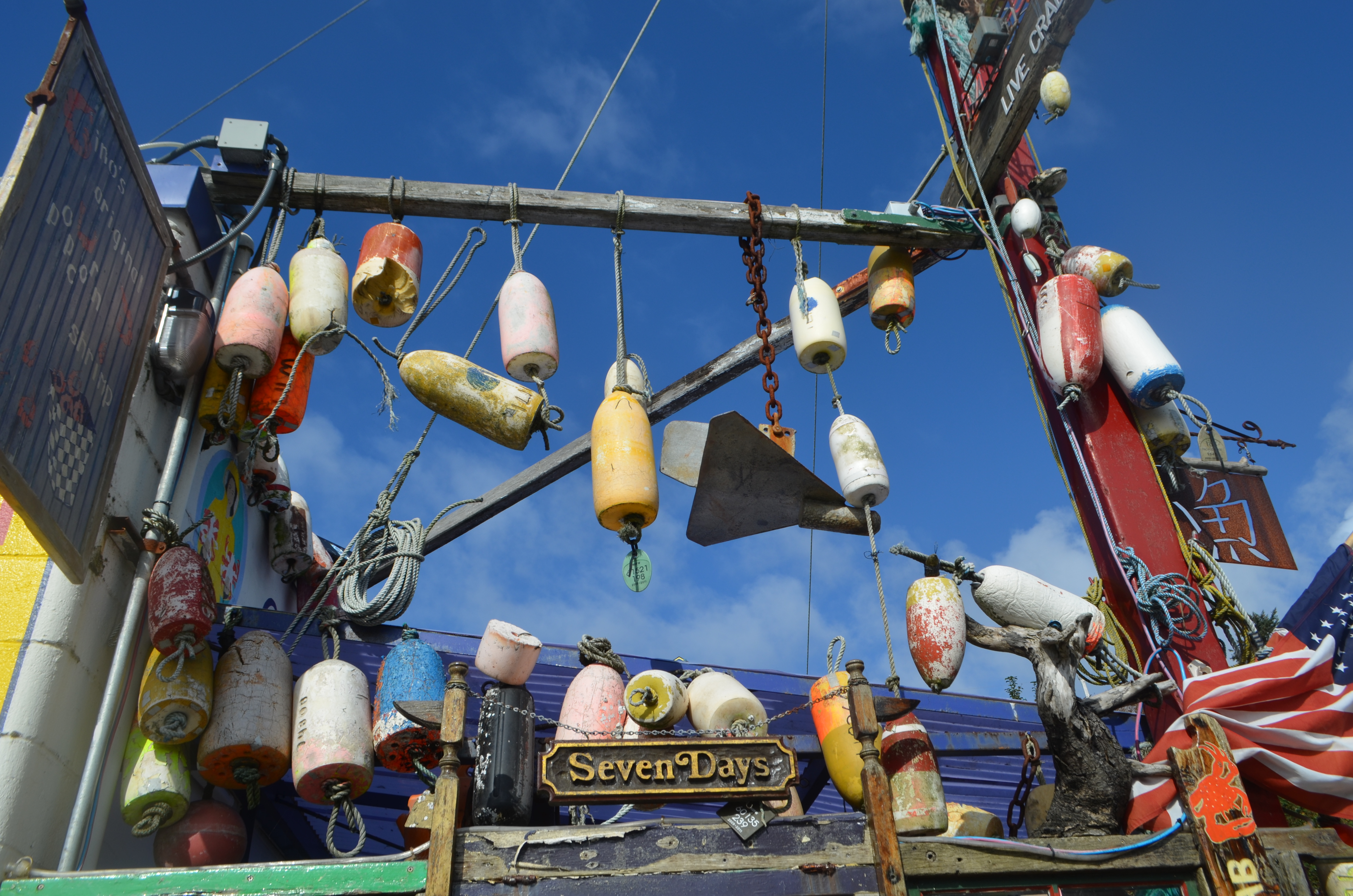
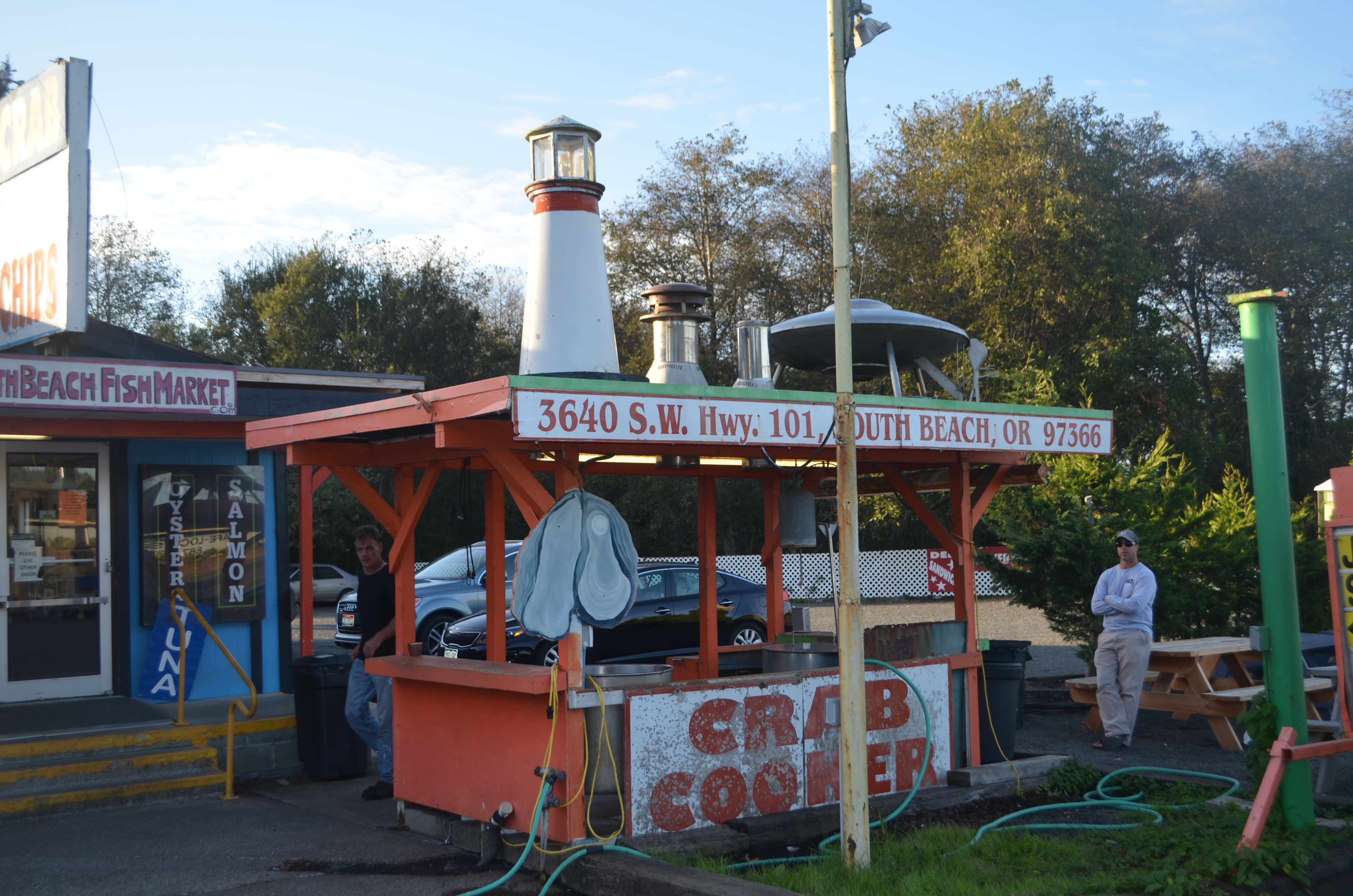
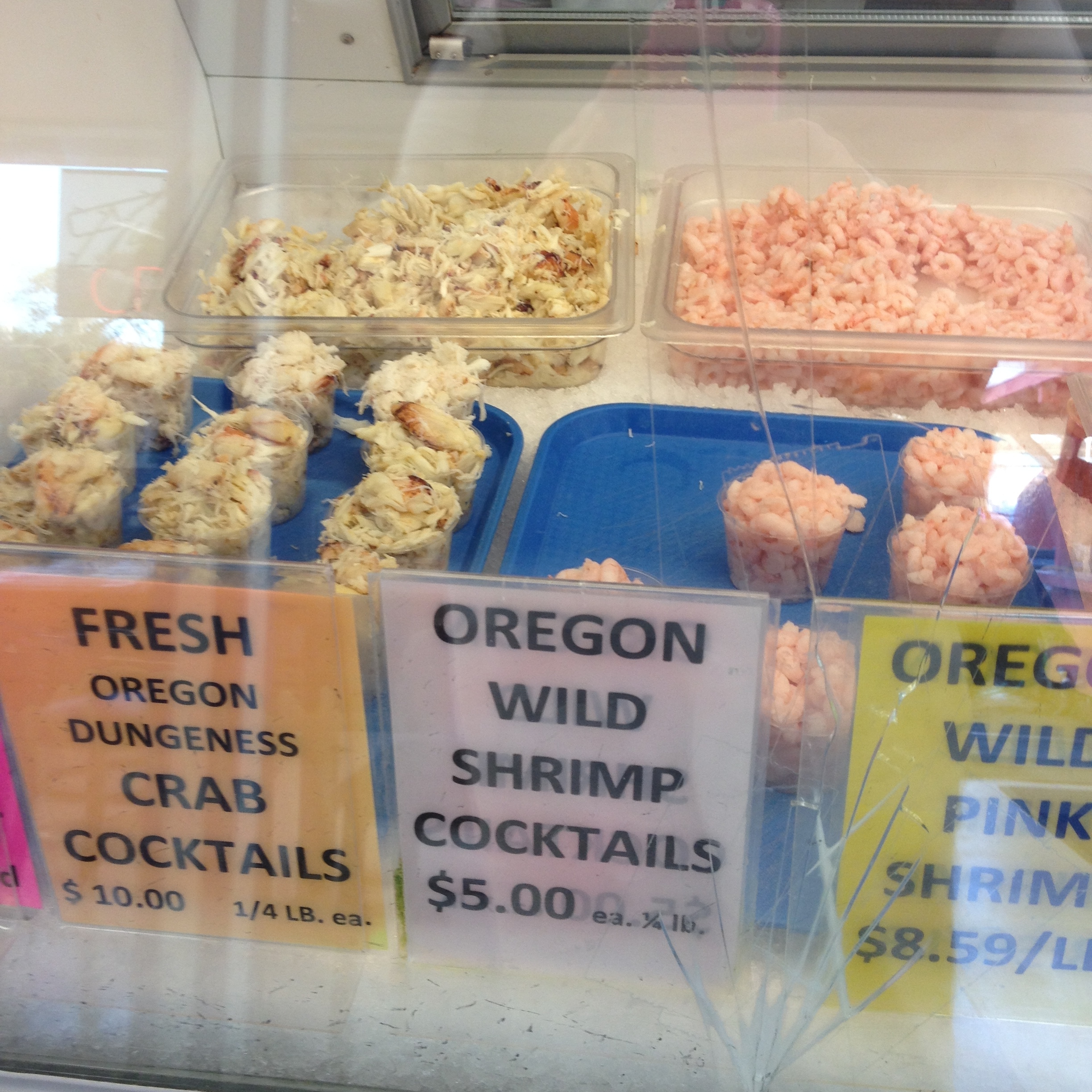
DSC_0461 DSC_1404I love the beauty of Florida beaches with their smooth white sands, unique shells, gorgeous sunsets, and warm sun, but there is a dangerous element with the Oregon beaches that brings ever-changing surprises.  You never know what the beach will hold.  This year, we had the mildest, most perfect weather imaginable with only a few hours of drizzle preceded and followed by warm sun and calm seas.  You still enter every beach by passing by the instructions and warnings for visiting.  DSC_0829 DSC_0384DSC_0940And then, you’re at the ocean on small beaches, long beaches, wide beaches.  Surfers, beachcombers, sunbathers, picnickers, dogs and children.  Perfect beaches.DSC_0908 DSC_1262 DSC_1266 DSC_1286 DSC_0837 DSC_0852 DSC_0483Coming from Oklahoma, I eat all the fresh seafood I can get.  I haven’t had a bad meal on the coast yet.  Here are some of my favorite places that we add to our list every time.  There’s Mo’s with locations up and down the coast, but we like the one at Otter Creek.  Mo’s is famous for their clam chowder, but a friend had a wonderful Oregon shrimp sandwich.DSC_0467Gracie’s Sea Hag in Depoe Bay is right on Highway 101 and our favorite place on a Saturday night, eating in the bar, when there is entertainment, dancing, and bartenders playing tunes on the liquor bottles.  It’s a perfect seaside vibe, right across the street from the sea wall.DSC_0523 DSC_0490We have several favorites in Newport, although I’m sure there are many more.  Lunch at Port Dock One is a must because your dining companions are sea lions, at least in the fall, when the males come up from California and you can be seated right beside them.  They are constantly entertaining, but then I don’t have to listen to them all day.  The food is good, too!IMG_5168DSC_1299I love Gino’s, with the owners from a fishing family.  The popcorn shrimp is delicious and the soups scrumptious.  It’s on the bay front without a water view, but they make up for it with their masses of colorful buoys.  DSC_0815It’s clean, fun, good.  Love Gino’s.DSC_0816 DSC_0824And you HAVE to stop on Highway 101, south of the Newport bridge for crab.  It’s a fish market, restaurant, convenience store combo.  Yum.DSC_1150 IMG_5213 IMG_5212For the nicest dinner possible, go to Depoe Bay and visit Tidal Raves, again on Highway 101.  You must have a reservation as there are few tables, but an outstanding view and incredible food.  I love the Seahawk bread, which could be a meal in itself, and the Rock Fish.  Oh my.   IMG_5210IMG_5188
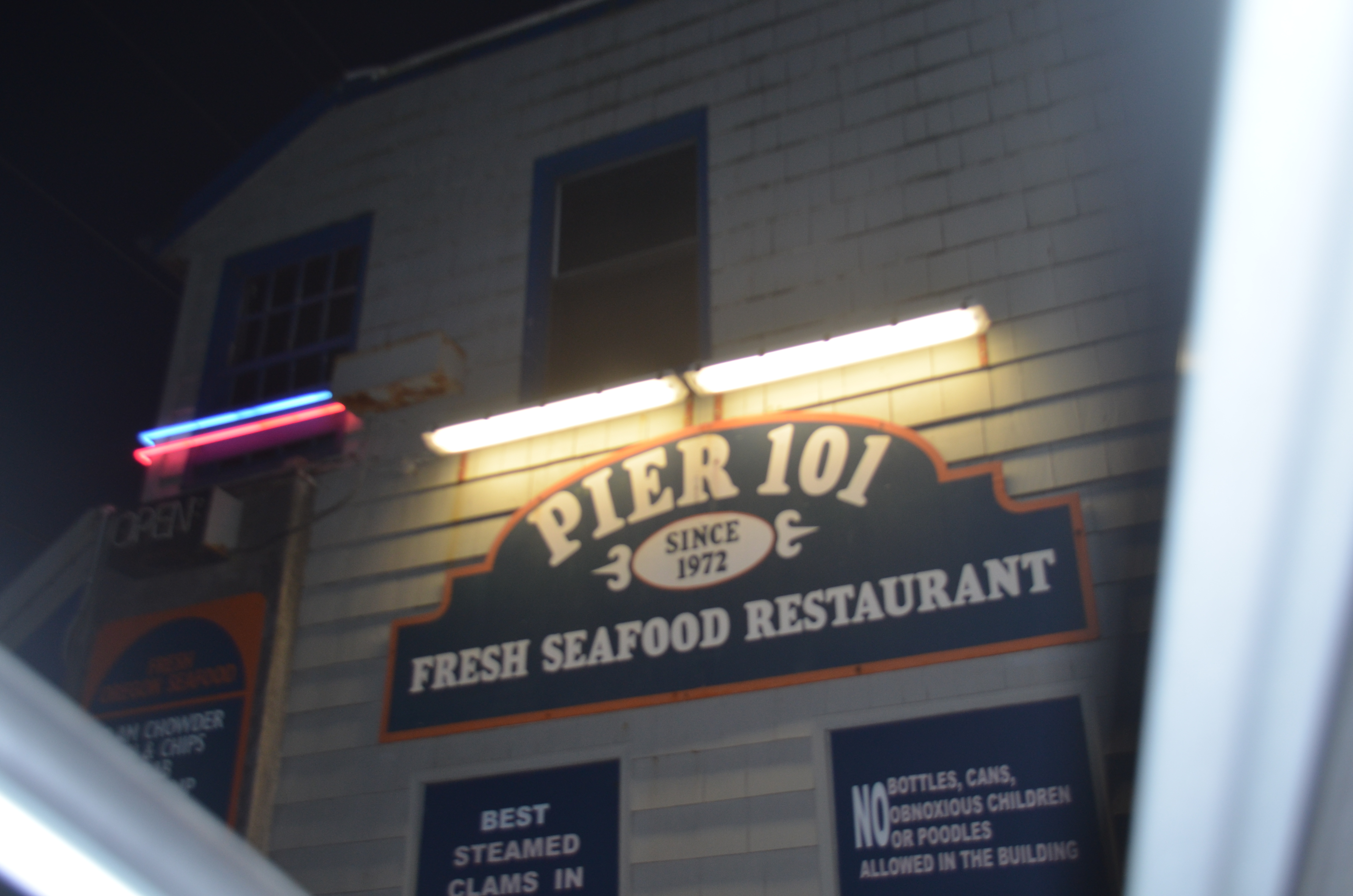
If it’s raining or you’re just in Lincoln City, sit near the fireplace at Pier 101 for more seafood!  Can you ever get enough when you’re on the coast?  I had the Cedar Plank Salmon, which was crusted with a maple bourbon sauce.  Need I say more?DSC_1329
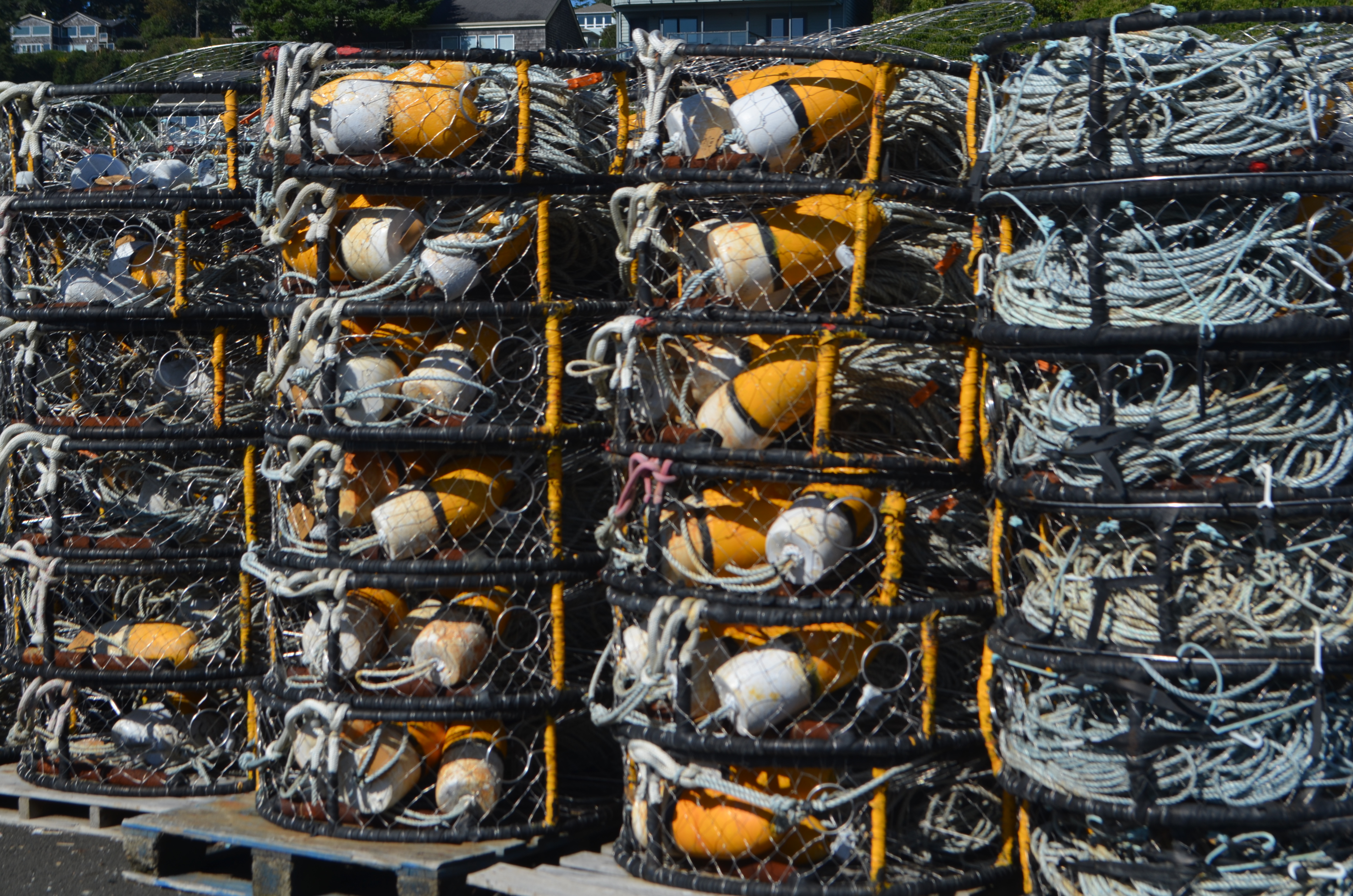
Enough with the food.  I’m ready to fly back now, although I have to admit that I went for a hamburger as soon as I got home to beef country.  Oregon is known for its greens, forests of pine trees carpeted with masses of ferns and decorated with moss and lichens.  The coast gives you the contrast of the blues of the ocean with the colorful nautical elements.  Besides the buoys, there are the crab  cages stacked by the fishing boats and the containers ready for the ships in port in Newport.DSC_1306
 
The famous bridges designed by Conde B. McCullough are elegant in their Art Deco beauty.  I discovered the one in Florence on this trip, but they are everywhere in the state, including Newport.  Here’s the one in Florence.DSC_0966
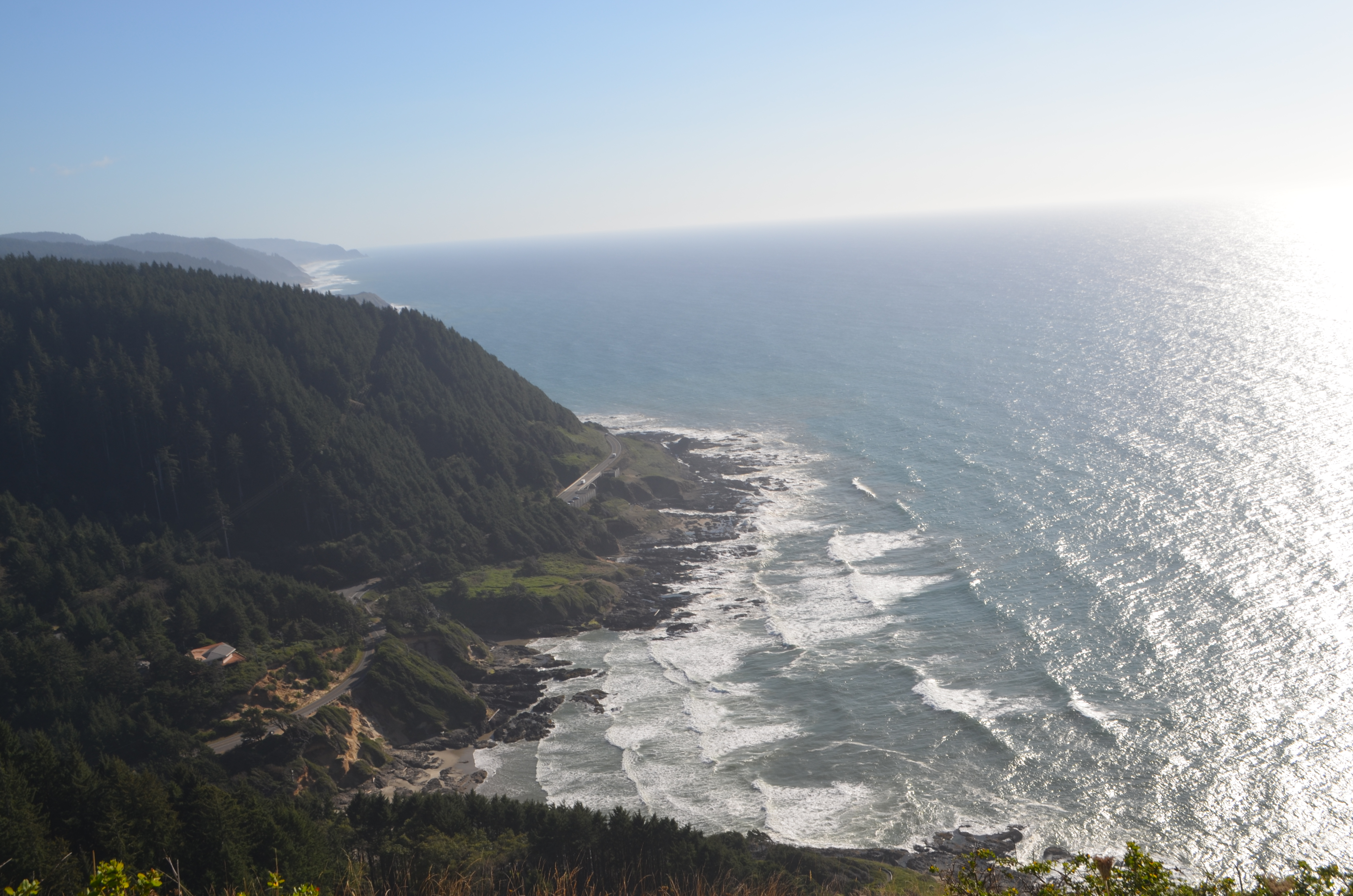
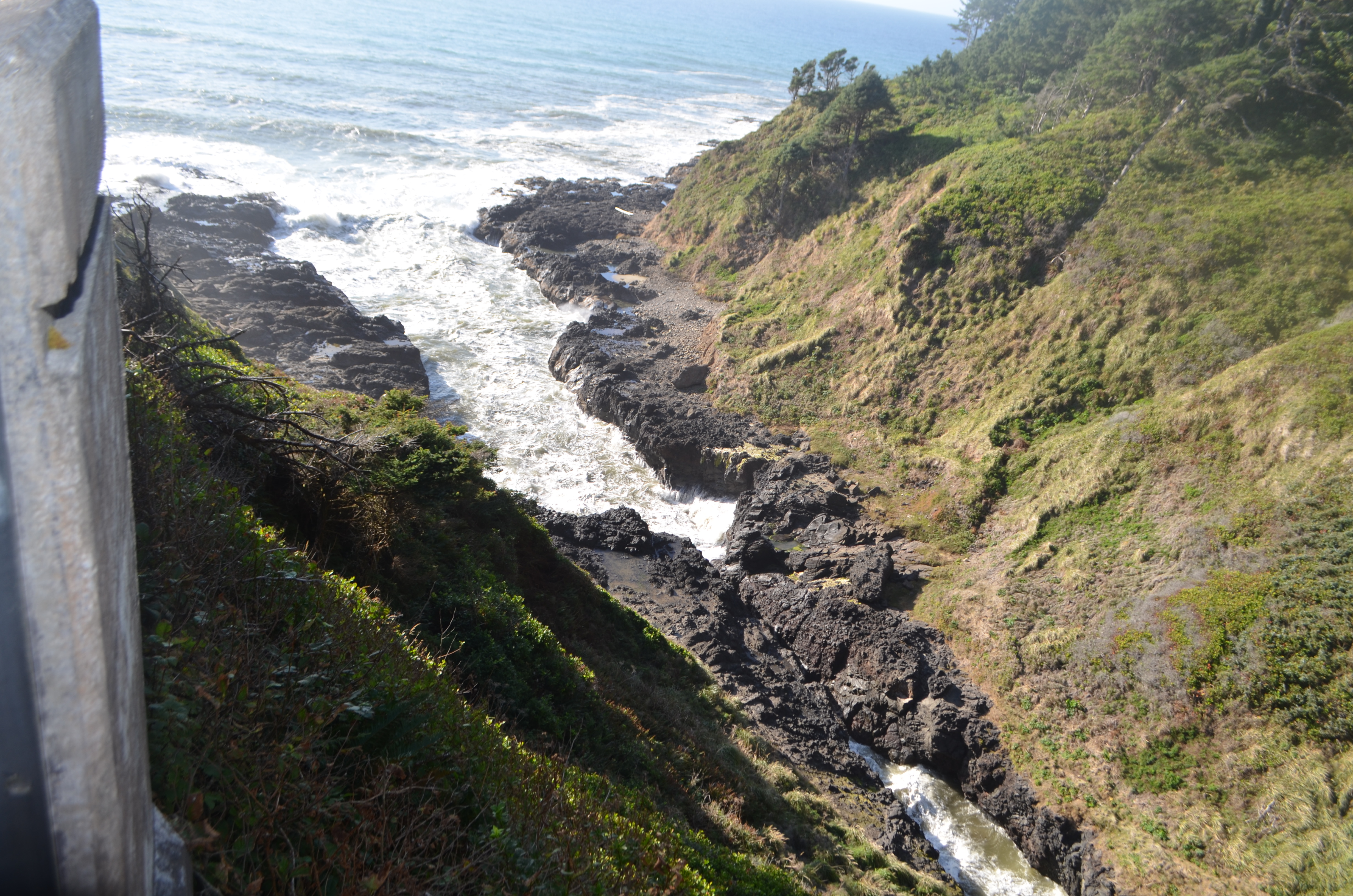
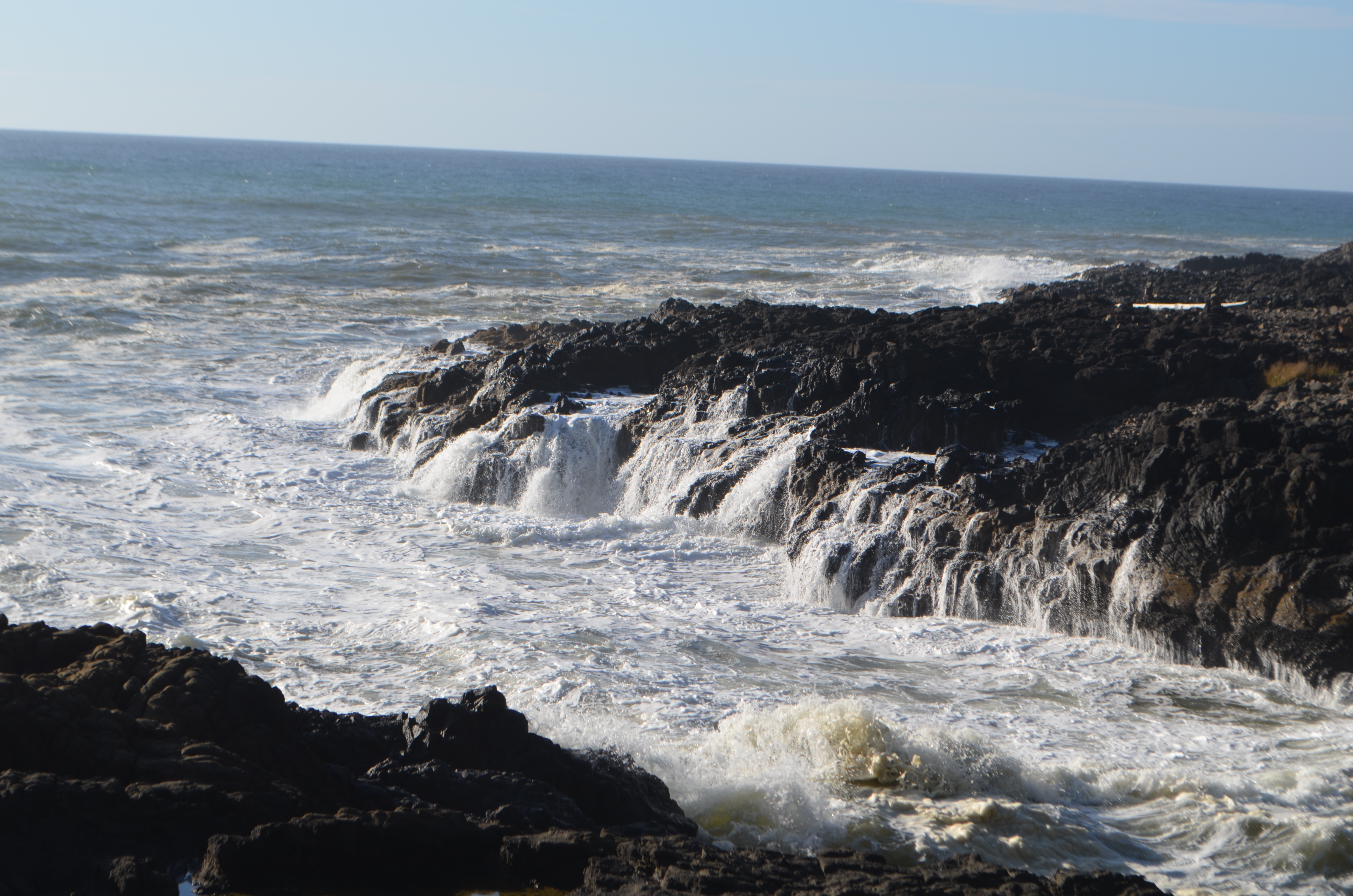
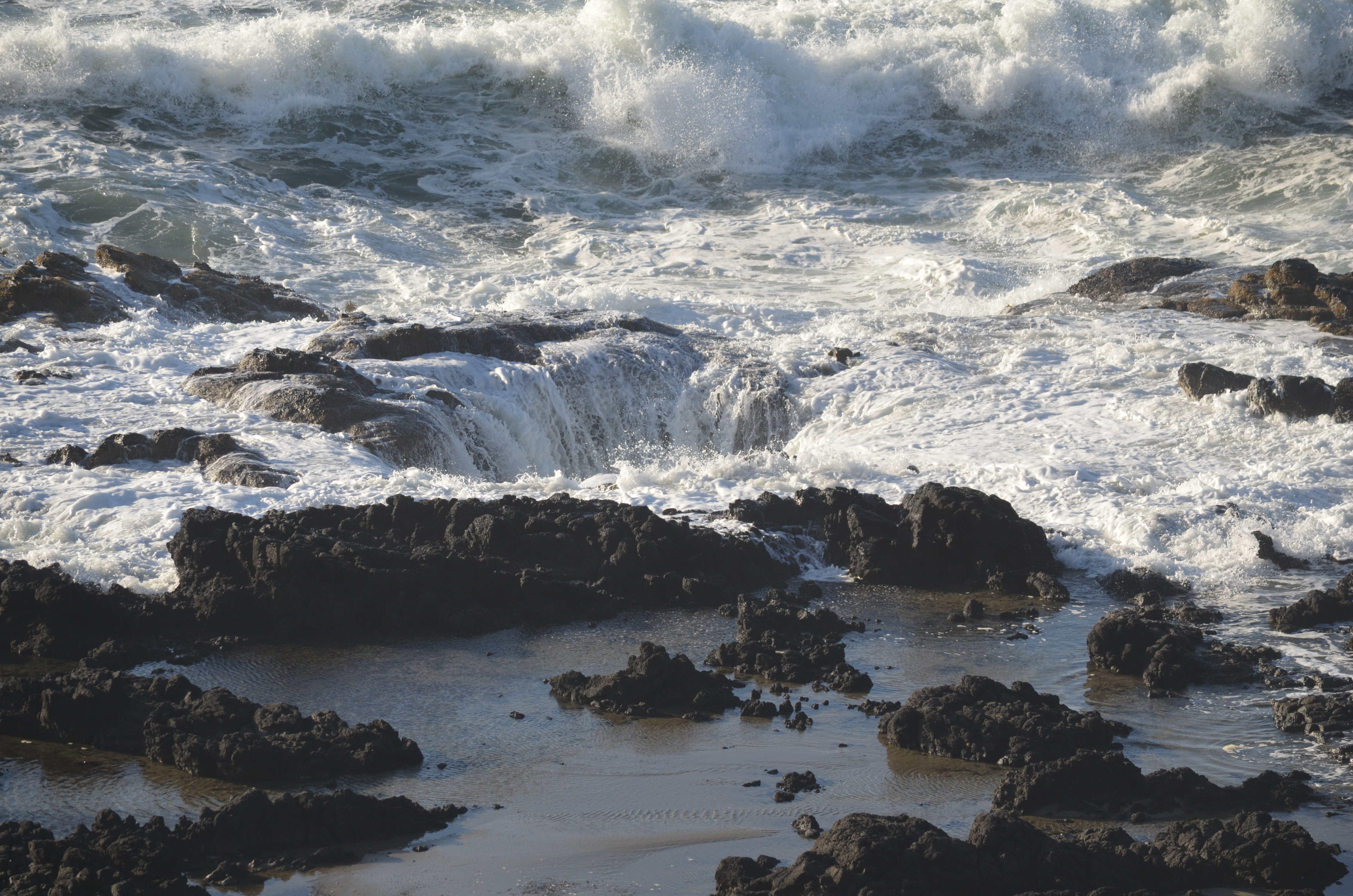
North of Florence is Cape Perpetua with cliffs, forests and extraordinary views.  The park encompasses the mountain and the coast for a sample of the natural wonders of the state.  With the Heceta Head lighthouse at the south endDSC_0990DSC_0996The view from the point is endless, especially from the World War II lookout where you can stare out to the open seas.DSC_1020DSC_1016Back along Highway 101, you can see the raging wonders of The Devil’s Churn, where the waters froth like fresh cream…DSC_1048 DSC_1058…The Spouting Horn spurts up as the waves rush in…DSC_1108…and the pounding waves sink into Thor’s Well in an ever fascinating rush of water.DSC_1128

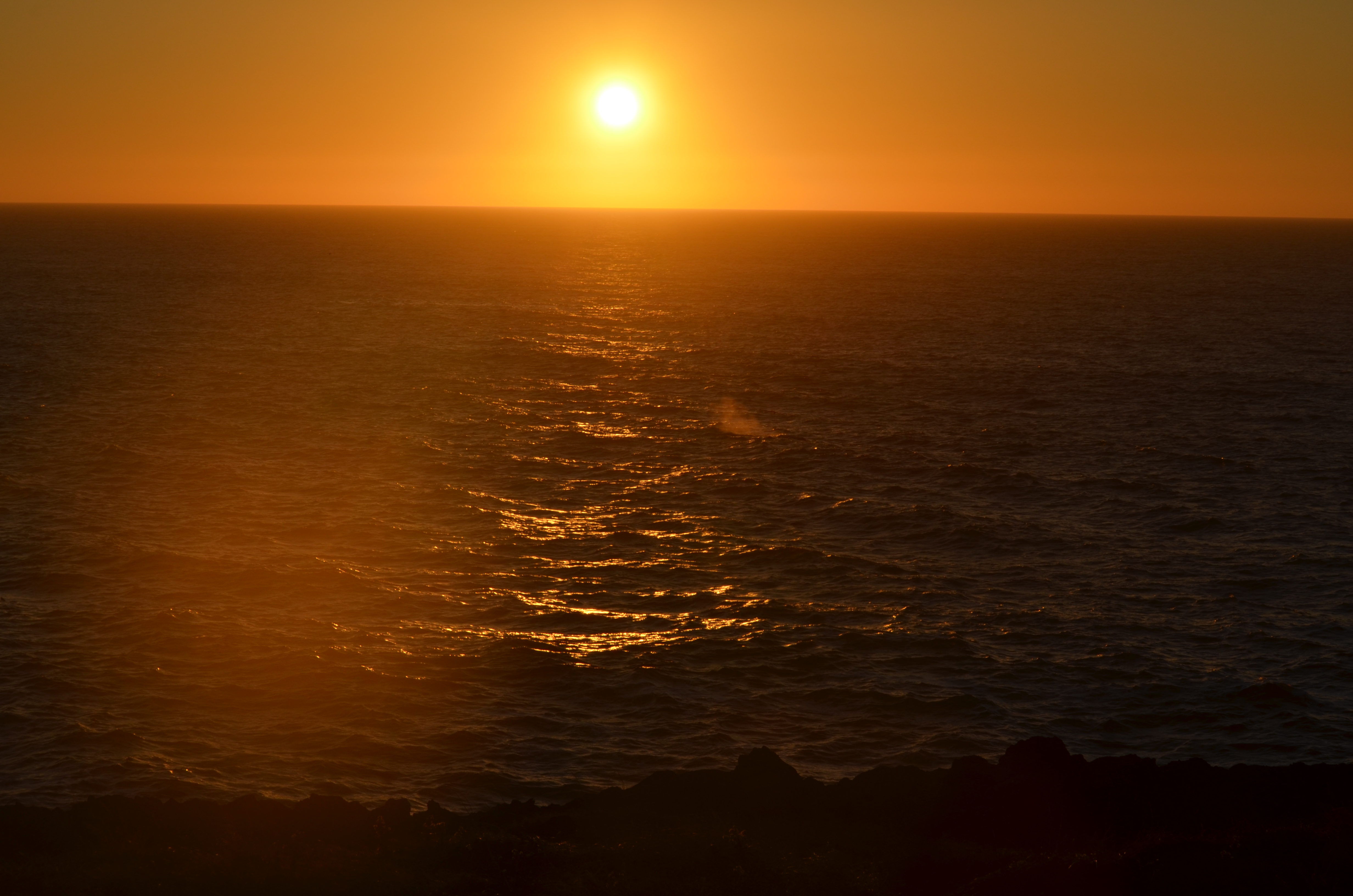
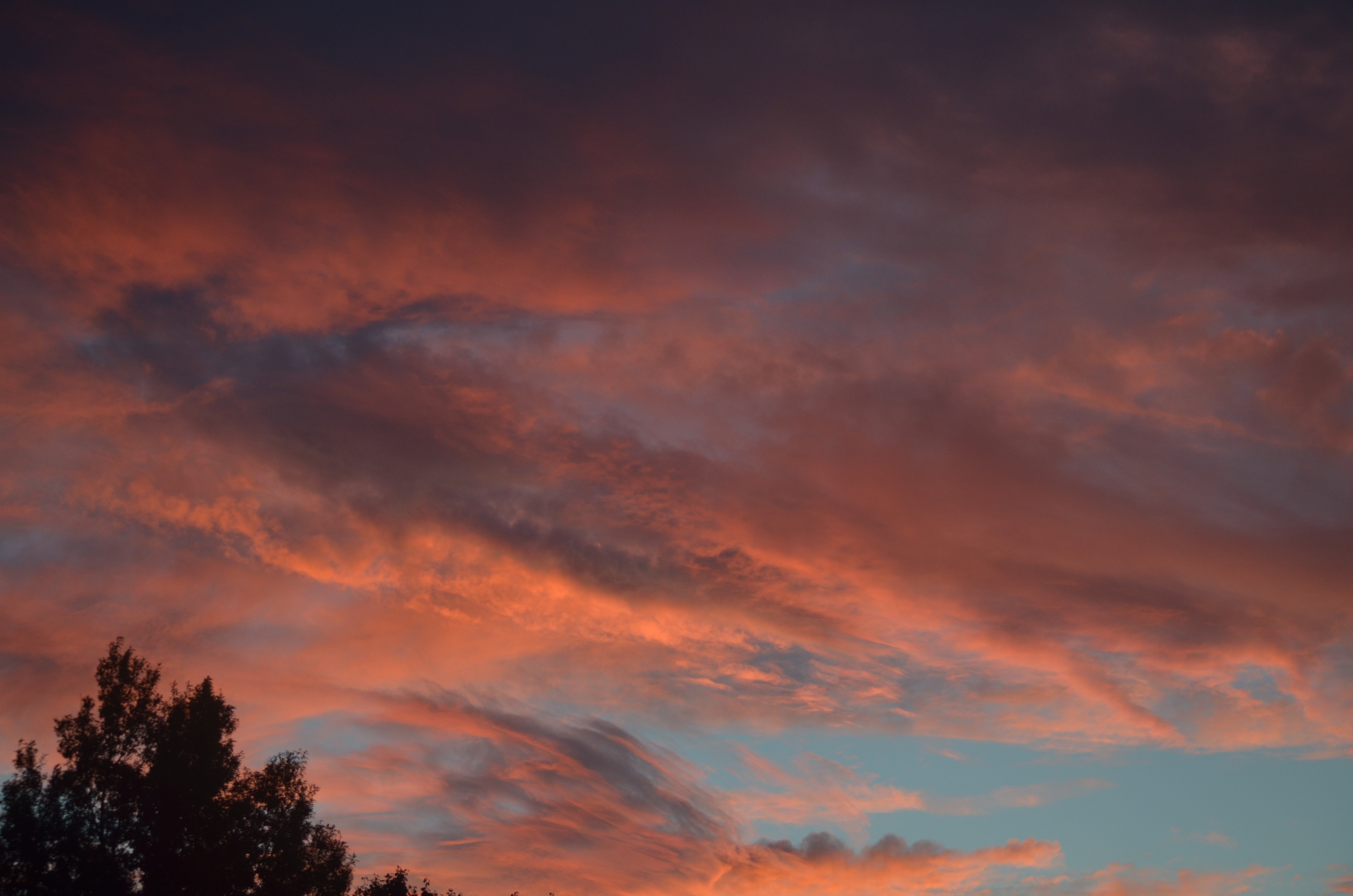
Our glorious days on the Oregon coast ended with a different sunset every evening…DSC_0532 DSC_1157

…and our final night in Depoe Bay found us watching half a dozen whales spouting and leaping in the orange waves.  The perfect ending to our days on the Oregon coast.

DSC_1323Watch my blog for our final days of this trip.

My fascination with deserted houses is never-ending, a continual source of questions.  As a city girl, I’m intrigued by the fact that houses are left to devolve back into nature in rural areas.  There’s nobody to impress, nobody to come on your property and tell you what to do with the house unless you get lucky and some creative designer or artist wants to buy the weathered wood for a project.

Every state has rural areas, so don’t get all “it’s because you’re an Okie” on me.  I see them everywhere, especially when I’m off the highways.  I want to know the stories, imagine who lived there and when.

Here are four Okie houses…

The first one is in the Oklahoma panhandle.  I wonder if it was deserted during the Dust Bowl?  Did the people who made it a home put cloths in the windows to keep out the dust and finally just have to leave when the crops were dead and they couldn’t make it anymore?  There are so many stories out here…OLYMPUS DIGITAL CAMERAThis one is from northeastern Oklahoma.  Tiny home for who?  Or storage?  Or storm shelter?DSC_0012I spotted this one on a dirt road in southwestern Oklahoma.  There’s still a window reflecting the countryside.  Was there a family here?  Or was it for storage? Were the people happy?  What happened?IMG_3487And then, there’s this one in central Oklahoma.  A lot of work to drag all those rocks to build it.  There’s also another structure and rusting oil storage tanks further up the land.  This was oil country.  Did the oil run off the farmers?  Who lived here?  Who planted the Crepe Myrtle?DSC_0002I can’t stop wondering, knowing these houses tell us so much of our history.  Aren’t you curious when you drive by?

One of my favorite things about Facebook is seeing all the pictures taken on the first day of school.  I know it’s a parent and grandparent thing that makes kids roll their eyes and escape to the newest social media before their parents can find it, but it’s a very special day for everyone.  Decked in new clothes from head to toe, carrying new pencils and crayons and notebooks in their backpacks, children, students march off to a new classroom, new teachers, maybe even a new school.  The first day of school marks another milestone, more challenges, and many sighs.

For the students, it’s exciting and scary all at the same time.  Will they know anybody in their classes, will they look right (even if they wear uniforms, there’s a “look” they need to have), what if they can’t find something, what if, what if?  There’s so much to take in as they learn about their new teachers, take on new subjects, take notes on new assignments.

For the parents, there are tears of pride, fears for letting their children out of their watch, knowing all that lies out there, and cheers that they have successfully helped their child grow into yet another level.  For working parents, there are sighs of relief for the regular schedule and anxiety about making all the teacher meetings and extracurricular activities.  And the anxiety for all of hoping you can keep up with the homework that seems so much more complicated than when you were in school or manage all the carpools and PTA meetings and, and, and the list goes on and on.

For grandparents, it’s sighs at the recognition of time passing all too quickly, pride in watching another generation grow up, and gratitude for being able to be a part of it all.

This year, my oldest grandson is a senior in high school and it brings tears to my eyes to realize how quickly the time has flown by.  Next year, he’ll take a major step and I know that will be the most emotional of all.  I now have five grandchildren in high school and two in middle school.

My youngest grandchild started Pre-Kindergarten.  I got to take her to her new room and meet her new teacher and watch her excitement at being in a “big kid” school, even though the chairs are small and the lockers scaled down.  It’s a new world for her.

Today, I watched the complete spectrum as I saw photos of my grandkids leaving for their first day at school, photos of my children’s friends’ children and my friends’ grandchildren.  The parents are the children I once sent off with all the same emotions they have today.  I have a grandson beginning his last year with his parents’ supervision and a granddaughter leaping with joy into the next fourteen years of school, her mother helping her figure it all out.  It’s one of those circles of life that bring it all home.

I remember my days as a parent and then I go back and remember my own days.  It brings back all the things I felt on my own first day.  I’m grateful that it just never changes.  I’m grateful for the wonderful teachers I had through the years, for the wonderful educational opportunities we have in our country, for getting all of my own children through school, and for being here to see this next generation.  The first day of school is VERY important.  Thanks for all the photos that link us together for this special occasion.Karen - 1st day of school


Most of us learn about life in a small river town through the stories of Mark Twain, but I’ve also learned through my own family history.  Focusing on my family’s stories from Uniontown, Kentucky, I’ve absorbed so much information that brings it all home to my heart.  Founded in 1840 by an act that merged two existing communities into one, Uniontown flourished along the Ohio River due to the surrounding rich agricultural lands and the mining industry.  Here’s a picture taken by one of my relatives of one side of Main Street back when there were still horses and buggies with new fangled cars being introduced to the dirt streets.imageThanks to Mike Guillerman, author of “Face Boss:  The Memoir of a Western Kentucky Coal Miner,” who was nice enough to send me a copy of the June 12, 1903 special edition of The Telegram, Uniontown’s newspaper, I’ve learned that this little town at one time or another had three hotels, a bank, a distillery, granaries, confectionery, millinery, dry goods, and furniture stores, along with a saloon and a wagon works.  There was a livery stable, a saddle store, and a tobacco and cigar store, along with a grocery story, a meat market and a fish market.  This little town of 2,000 had a fire department and a fairgrounds with a paddock (Kentucky does have horses, you know), an amphitheater and floral halls.  There was a Cooper Shop, which I surmise was a brewery for local beer.

My great-great-grandfather arrived in Uniontown as a doctor.  There were doctors, a dentist, and lawyers.  My great-grandfather, who bought and sold grain with an office on the river, also sold insurance for Aetna.  What didn’t they have?

Uniontown had lovely wide streets lined with lovely homes with tall trees and schools for both white and “colored” children (The Telegram reported a scholastic population of 820 with 520 whites and 250 blacks in 1903).  There were at least 6 churches, including Catholic, Episcopal, Presbyterian, Methodist, Baptist and Christian.  Ferries crossed the river for those on the Indiana side and riverboats arrived to pick up grain and coal and bring visitors to town. Riverboats also brought entertainment with special shows that everyone would await with excitement.  There was a town band, whose members met twice a week to practice and learn the latest tunes.

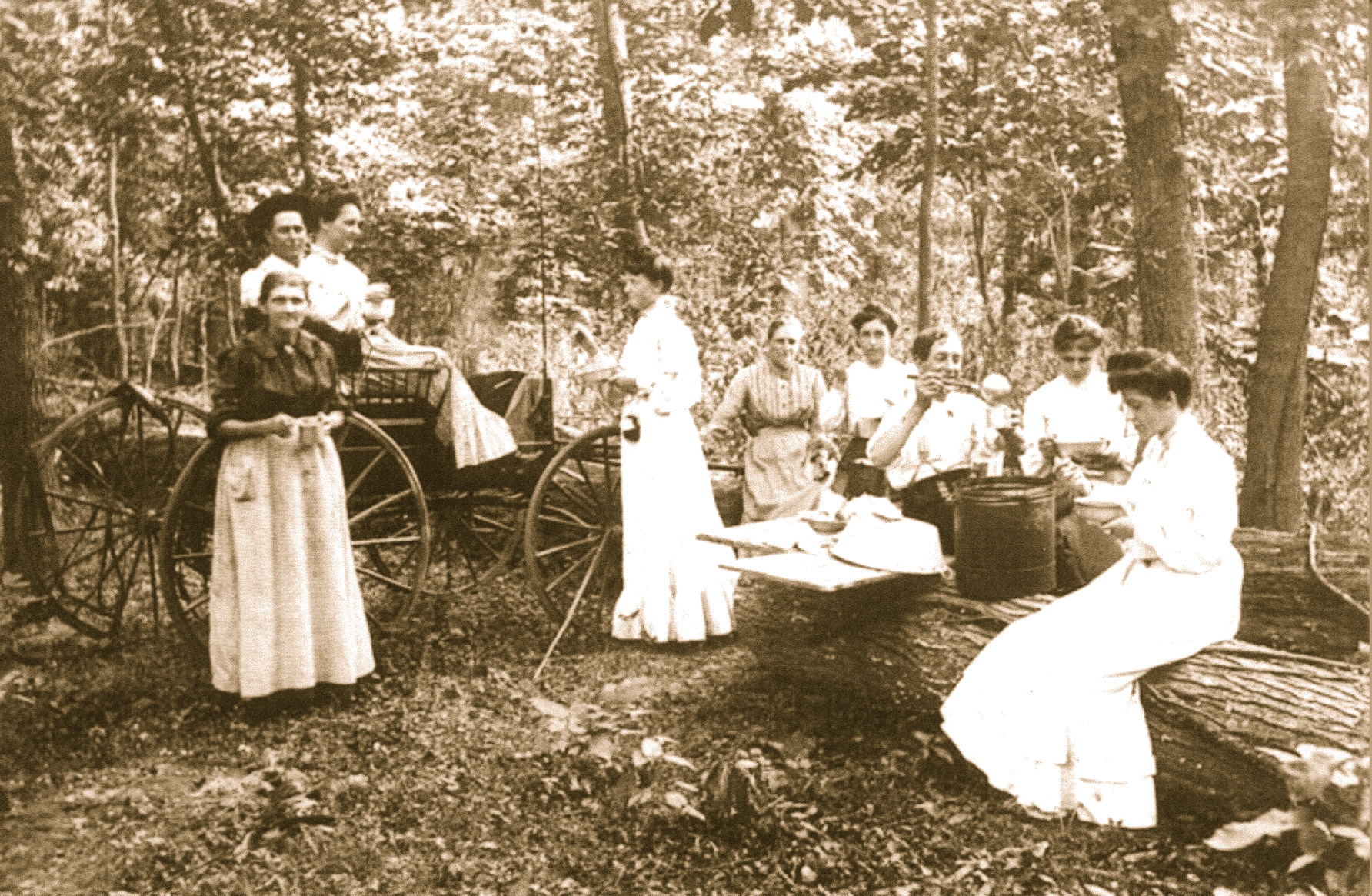
And there were the Kentucky “burgoos,”  which I learned about from my great aunt in her book, “My Sun Shines Bright.”  My Uniontown friend, Treva Robards told me more about burgoos, which are a Kentucky tradition, a get together where everyone brings something to contribute to the burgoo, a kind of stew.  There were all kinds of vegetables and meats, everything from Kentucky hams to wild game, all thrown together into a wonderful meal for all.  Each time had to be different since you never knew what people would bring.  Treva shared this older photo of a burgoo.  She said it is always good!Scan 268This was as good as it gets anywhere, I would imagine.  I’ve read the stories of my grandfather being sent on errands when he was only three, watched over by the whole town along the way.  I’ve read of my grandfather and his siblings playing with the black children who lived across the street, riding their horses together, at a time when the town was growing away from the days of slaves and slaveowners in the post-Civil War years.  Children played along and in the river, went hunting in the lush forests nearby, and feasted on Kentucky hams, fried chicken, biscuits and peach pies.
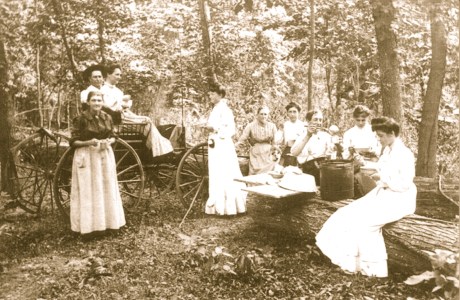
On the other side of town, my grandmother’s family were farmers, working hard in their tobacco fields, the children picking the worms off the tobacco plants. The town had its other side as all towns do, all part of the Uniontown story.   And the town has changed through the years, victim of nature and the times.

My family wrote of the floods, when the Ohio spread across the town and people moved their furniture to upper stories and stayed in the homes of family and friends on higher ground.  Here’s my family’s home with high water.imageIt was fun for the kids to walk on stilts to school or ride in a boat to the store.  I’ve cleaned up after flood waters and it must not have been as much fun for the adults.  Here’s a stereoscope photo I found of one of the floods.ajaxhelper
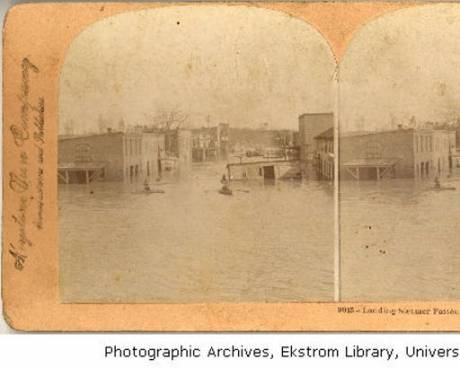
But, the river was a part of the town, a huge part.  Treva shared some photos with me of a day’s catch…
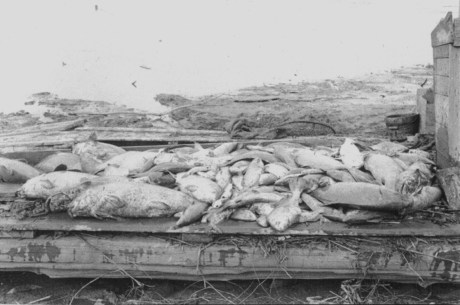
Scan 267…and the river when it was frozen.  Her father and brother walked across the ice.  Scan 269There were huge floods in 1884, when the entire Ohio River flooded, devastating towns all along its banks.  Clara Barton and the American Red Cross used their new network of helping others to bring relief to the flooded areas.  I found a later newspaper clipping of my great-grandmother attending a Red Cross meeting in nearby Morgansfield.  The 1937 flood did much damage to my family’s home and my great-grandmother’s insistence on staying in the dampness led to the pneumonia that caused her death.

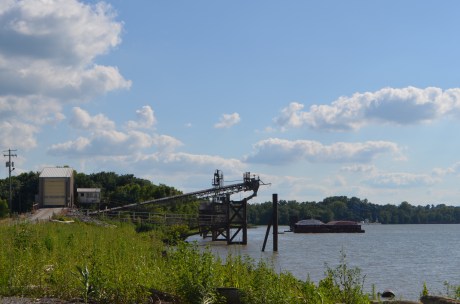
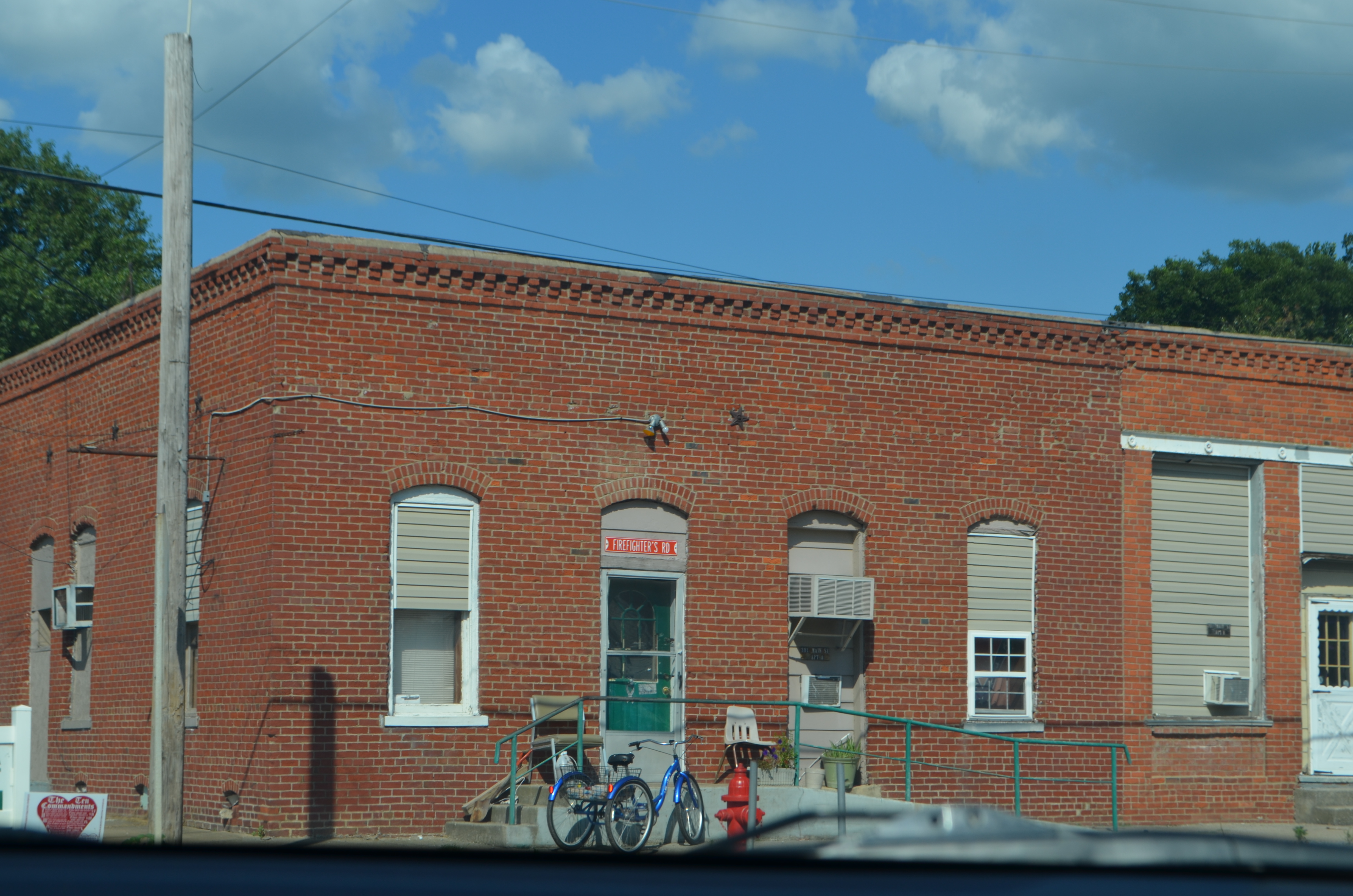
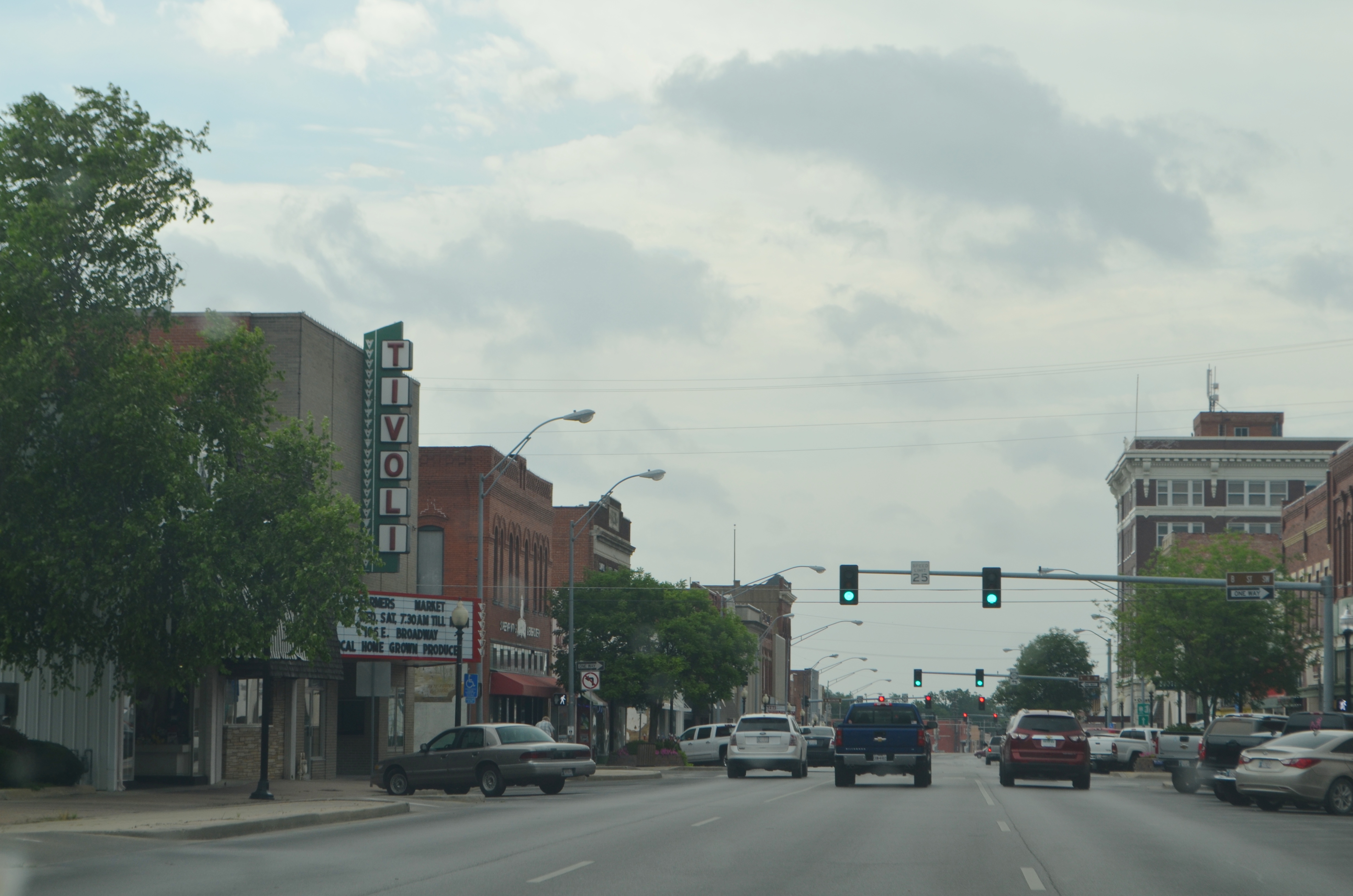
I wondered why they didn’t build levees and finally realized how much work and money it costs to build such a structure for a town.  Uniontown continued on with a flood about every year, finally building a levee in the 1960s, I believe.  Here’s a later flood photo.Dorothy Deboe - town streetwalker in Uniontown after floodBy then, the riverboats were gone, leaving only barges to transport goods, and life was changing.  The town continued to be a great place to live into the 70s.  Now the town is down to a population of just over 1,250.DSC_0292The prosperous Main Street is virtually non-existent, with only this former movie theatre…DSC_0295…and this building left from the past glory days.
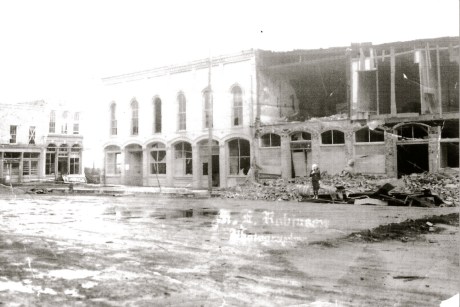
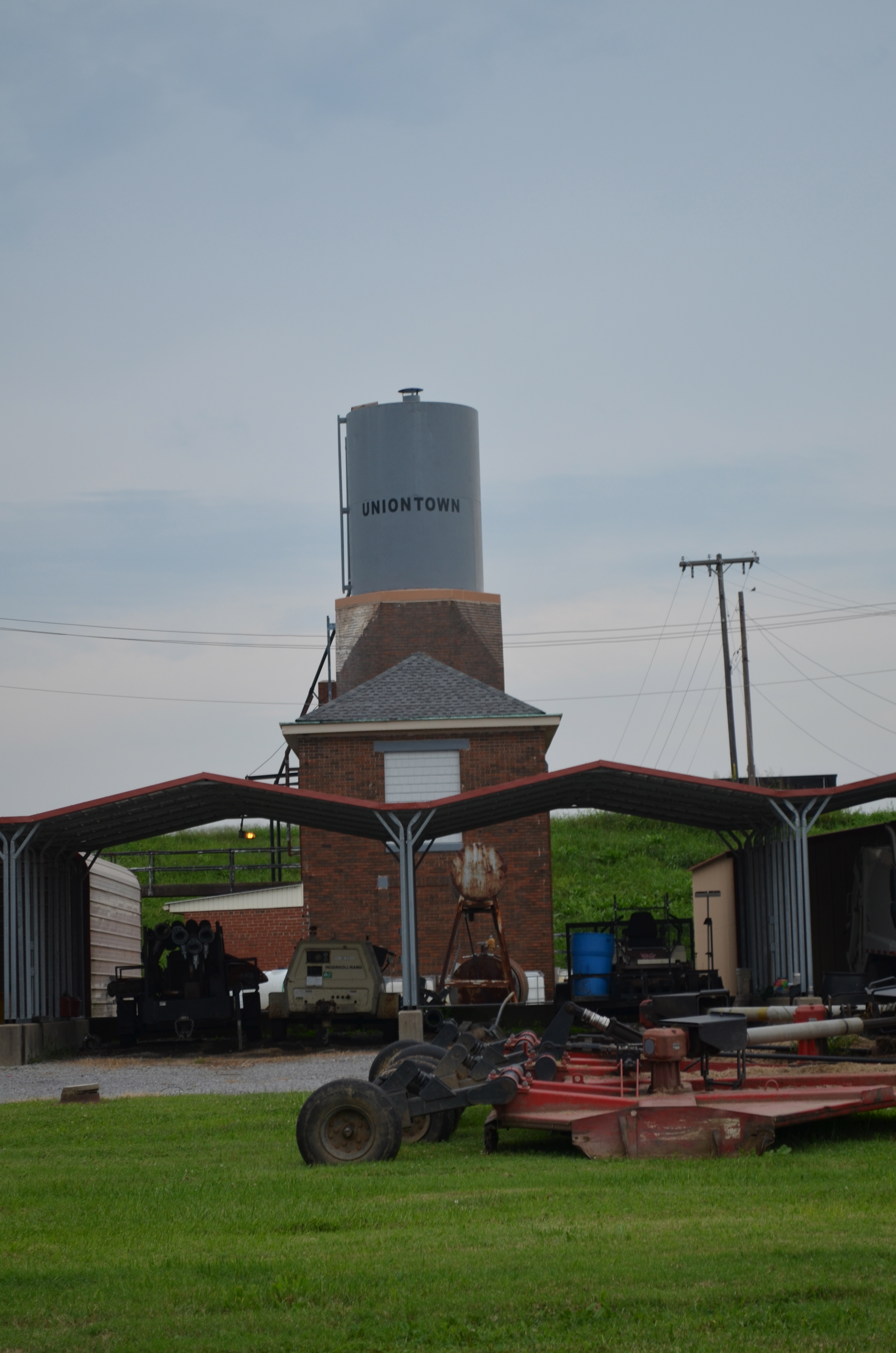
DSC_0296This building still stands by the levee…DSC_0199There’s still a granary…DSC_0303…and the miners keep mining coal to transport to the river…DSC_0291
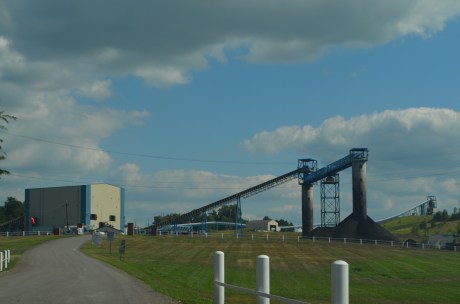
DSC_0290

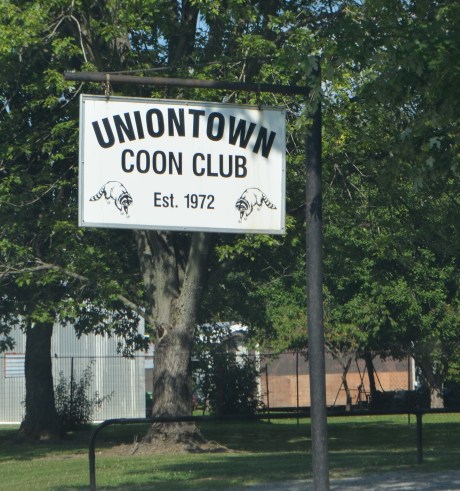
DSC_0306Men still hunt and gather at the Uniontown Coon ClubDSC_0293to eat, drink and tell their stories.DSC_0294Druggies inhabited Toon Town on the outskirts of Uniontown during a past time but now it’s a family camp and young people are trying to bring the town back.  There’s a new market, a restaurant, and people who love this river community.  The landing is busy with fishermen loading boats onto the river.DSC_0236And there are people like my friend, Treva, who treasure the memories of what life on the river used to be.  Here we are by the levee.DSC_0305I feel connected to the town and the river through my family who lived there when it was the best of all places to be for the times.  At least that’s how it feels.  I dipped my feet in the Ohio, linking me to the river and my people who settled in Kentucky so many years ago.  DSC_0307I came from people who settled in many places through the years as this country grew.  There are quite a few who link me to Kentucky, especially Uniontown.  As long as I can, I’ll help preserve the stories because they help me understand them, this country and who I am.

Last year, I traveled to Uniontown, Kentucky, where my father and grandfather were born, curious to see the place I had read about in a book, “The Sun Shines Bright,” written by my great-aunt Sue Hamilton Jewell about her life growing up there.  I also had photos from an album I collected when my grandparents died that showed the family when my grandfather was a child, a young man, and a father.  I wrote a blog about the trip, “My River Kinfolk,” that covered the visit.

That simple blog opened up new information I hadn’t expected.  I heard from several people who lived in the area, including someone who is distantly related, an author of a book about coal mining in the area, a young woman who lives in Uniontown, a man whose mother purchased the house my family lived in after they had all gone, and a woman who actually lived in the house at one time.  I hadn’t expected that kind of response at all.  All of that information centered around the lives of my grandfather’s family.

Over the next months, I opened a file box that was sitting on a shelf and found another recounting of life in Uniontown from my great-aunt on my grandmother’s side.  I was getting more and more of a picture of life on the river in that town.  I read about the great Ohio River floods, which devastated the towns along its banks, especially in 1884 and 1937.  I started getting more interested in the history of the area. Through another book of the history of the Hamilton family, I traced my grandfather’s family back to Scotland, which they left for Maryland due to religious persecution.  The box from my grandmother’s side showed that her family, the Spaldings, left England and landed in Maryland also.

Though they didn’t know each other, the Hamiltons and the Spaldings both migrated to eastern Kentucky in 1792, the year it became a state and opened up as the country expanded west.  My ties to Kentucky were deepening.  And branches of both families ended up in Uniontown, a growing community on the banks of the Ohio with commerce from the river traffic, coal mining, and agriculture.  There was even the ubiquitous Kentucky distillery.  From what I can tell, my great-great-grandfather on my grandfather’s side was a doctor who ended up in Uniontown.  My great-great-grandfather on my grandmother’s side was probably a farmer.  They were both part of the growth of the area.

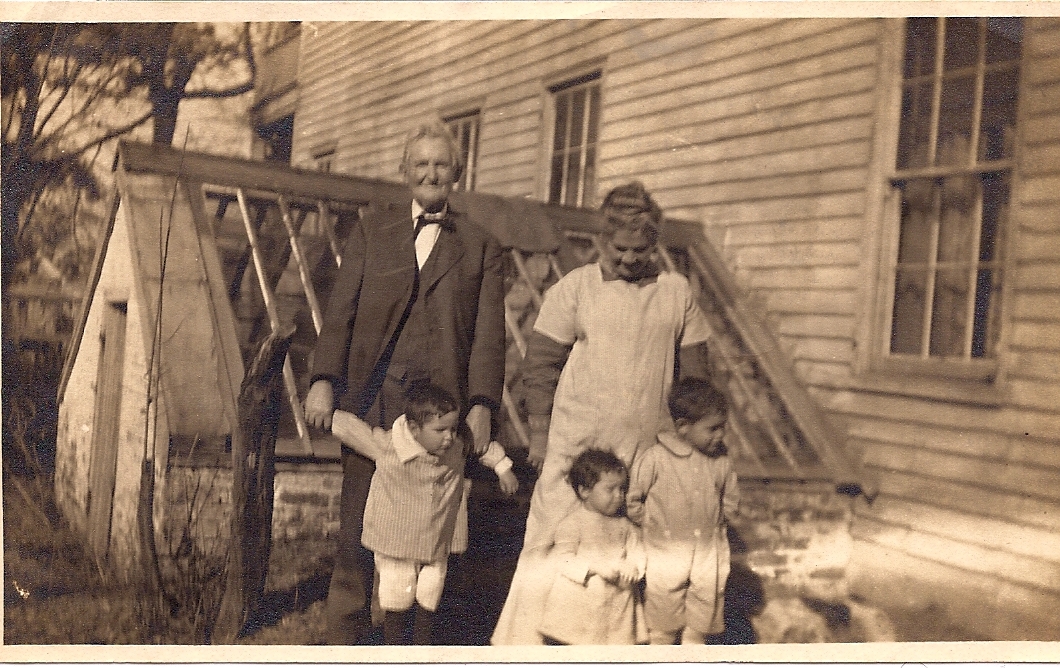
My grandfather was born in 1885 and had an idyllic childhood, raised in a large, loving family.  His father was a grain dealer with an office at the river for shipping.  He was also an insurance salesman for Aetna, so respected that they made him an honorary member of the Aetna family rather than let him retire.  He owned a farm in the area, also, which is probably where he was born.  He and my great-grandmother were the first couple married in the Episcopal Church in Uniontown and he served as Senior Warden for many years.  He was also a charter member of the Masonic Lodge in nearby Morgansfield.  They were pillars of the community according to his obituary.Scan 44My grandmother’s childhood was not quite so charming.  One of eight children, her father was a blacksmith and he drank.  He was also a farmer, tobacco mostly, and my grandmother picked worms off the tobacco along with her brothers and sisters.  Their mother died young and the children took care of each other and all of them worked.  Most of them got out as soon as they could.  My grandmother’s older sister opened a millinery shop in town and married into another more prosperous family.

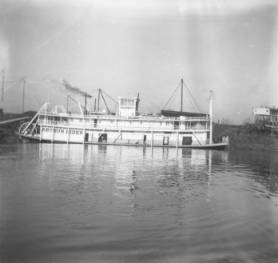
While my grandmother’s family didn’t have the luxury of a camera or a photographer, I have a picture of some of the tobacco farmers, ready to meet the revenuers coming onto their land.  One of them could easily be my great-grandfather.Scan 265My grandparents married and had their first three children in Uniontown before leaving for other opportunities.  I have these photos of my grandmother with my father (with curls), his brother and sister as babies, sitting on the lawn of the Hamilton house.  I note here that my grandfather was Episcopal and my grandmother was Catholic, not such an easy marriage in those days.  They were married for 55 years.  The story my grandmother told my mother was that they took a trip when they first got married, leaving on a train.  My grandfather gave his new bride a fur muff.  She was so poor that she didn’t even have underwear and now she had a fur muff.  That’s how I heard it, probably close to the truth.Scan 93And this photo is of my great-grandparents with their grandchildren, my father on the right.  I’m lucky to have many more precious photos.Mom & Dad Hamilton with J. C., Ed & SaraThe town was changing as the river changed and the riverboats became more obsolete.  I love this old picture of one of the riverboats that stopped in Uniontown, delighting my grandfather in his childhood.ajaxhelperAnd I realized that this photo of my father and his brother was with a sailor on one of the riverboats.  Somebody drew in the head that was cut out of the picture, making it even cuter.  Daddy was born in 1912, so this must have been around 1915 or so.Scan 248And here’s one of the ferry at Uniontown, one my father probably rode to cross the Ohio.Scan 266As I found myself with even more information, I decided to return to Uniontown, especially since I now had some people to talk to while I was there.  My new friend, Treva Robards, spent a delightful afternoon driving around the area with me, filling my head with stories of her own childhood in Uniontown and pointing out the locations of long gone buildings along with local gossip.  I was beginning to get a bigger picture of this area and how it shaped my family.

Treva’s interest in my family grew from living in the old Hamilton house when she was younger.  The house that held our large family was flooded badly in 1937 and my great-grandmother died soon after from pneumonia contracted because she refused to leave.  It was purchased years later and became home to two or more families at a time.  Treva told me that the house was haunted and she could hear the cries of babies and the clanking of chains every night.  We think the cries could be from the three babies who died as infants or toddlers, my grandfather’s siblings.  She thinks the chains could be from slaves who were kept in the attic long before my family purchased the house.  Those are our theories anyway.  I have no doubt she heard them when she lived there.IMG_3731

She also told me that she was fascinated by a room that was kept locked upstairs.  She would look through the keyhole and see the antique dolls and dress forms with wonderful clothes and trunks piled around.  I know these are the things that my great-aunt wrote about in her book that delighted her as a child.  The roof fell in, the house was deserted, looters came.  Who knows why none of the family came to retrieve those items, some priceless treasures.  The family had scattered by then.  It gave me an answer to what came next in that wonderful home.

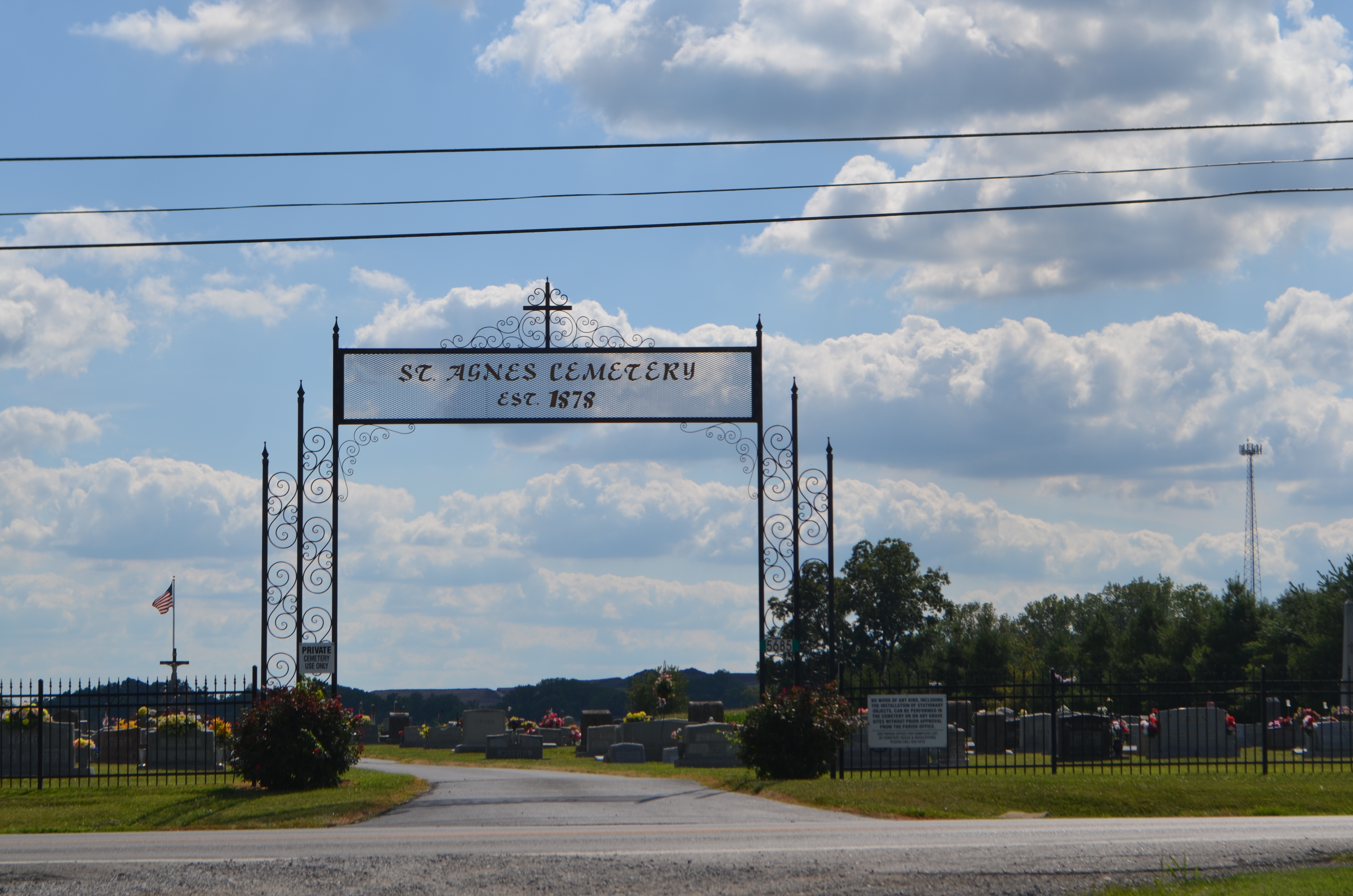
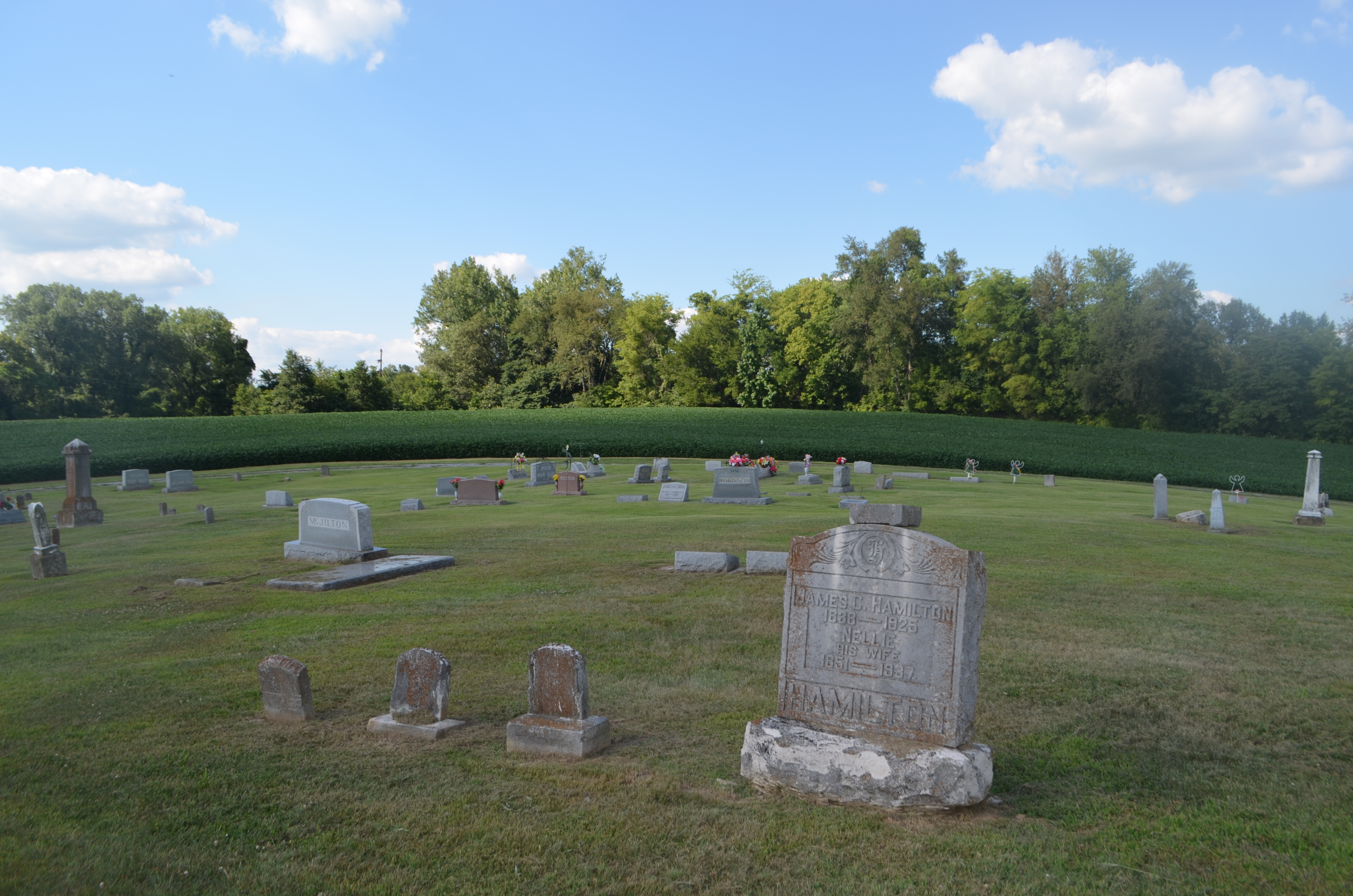
This trip I visited both cemeteries, the Uniontown cemetery where I went last year, and the Catholic cemetery, looking for my grandmother’s family.  The Catholic cemetery had lots of Spaldings, but none that matched the names I knew.   Many of the headstones were worn bare.  I also think my great-grandmother may have been buried in the potter’s field, so I paid my tributes there in the clear area by a pond at the back of the cemetery.DSC_0288The Hamilton sites were as I left them, although the cemetery was surrounded by corn last year and soybeans this year.DSC_0299There has been so much new information for me to think about this year, so much more to learn about life on the river and how my family was shaped through the centuries.  My greatest regret is that I didn’t ask my grandparents and parents to tell me stories of both sides of my family, because now I want to know and find myself searching for more clues.

We don’t tell our stories enough because we don’t realize the importance sometimes.  I think my childhood was pretty ordinary until I look back and place it in the times.  Maybe this is why so many authors tell their stories when they are older.  When we’re young, we’re busy looking to the future.  When there is less future time left, we turn back to put the past in perspective.

This is so much to take in and I share these stories for my children and grandchildren, my siblings, nephews, cousins, and all those to come.  More Uniontown stories to come…

I’m on the road again for a short trip.  I’m not that young, but I still get around pretty well, love driving trips, love exploring new things.  I can keep up pretty well with my grandkids, which is my goal.

You’ve all seen them when you travel, the bus loads of old people on tour,  you’ve probably tried to avoid them when you can, along with bus loads of noisy kids.  They’re both a nuisance, you may think.

This week I was in Hannibal, Missouri.  If I have to tell you the main reason people travel there, then you need to look it up.  At the hotel where I was staying, there was a bus load of Geezers, Geezers from Kentucky.  I need to remind you that these are my people, I am one of them, some are younger than I am, I can actually relate to them.  I watched them, wearing their name-badges around their necks, waiting to go to their next meal or  their next tour, visiting with each other, laughing and telling stories.
My thoughts on the Geezers on the bus was “Good for them!!!”  They don’t feel safe driving anymore, they don’t want to deal with reservations and bags, but they want to be out seeing and doing.  Some of them had canes or creaked along, but they were out there doing it!  They weren’t sitting around thinking about their lives, they were out there experiencing it.  And laughing and learning and enjoying friends and making new ones.  Thank you for these tours, for the bus drivers who take care of them, for the people who take them.

The other Geezers I watched in Hannibal on a Monday in July were the ones who were traveling with family. A few had brought a young grandchild along.  I watched a boy about 8 rolling his eyes while his grandfather explained about Mark Twain and Tom Sawyer as we stood near the famous whitewashed fence.  Someday, that boy may bring his grandson here, too.  Hopefully, the memories will be strong when he looks back.  The grandparents were loving watching their grandchildren ride on a riverboat for the first time, taking pictures, a gift for all generations.

As I travel around, I’m grateful I can still get there on my own, but I’m happy for my contemporaries and my elders, because there are still a lot of people older than I am, who are out there.

On a Monday night, visitors gathered to listen to a band play old tunes in front of an ice cream parlor.  Many were older, sitting on benches, humming along.  Lovely.image

As Willie Nelson, a Geezer if there ever was one, sings “I can’t wait to get on the road again.”

Oklahoma is home to 38 Native American tribes, second in number of tribes only to California.  Our town and city names reflect the languages and influence on our history and there seems to be more and more positive appreciation of their individual heritages and customs.

There are many tribal headquarters as you pass through our state, but one of the biggest and newest is the Chickasaw Cultural Center in Sulphur, down in south central Oklahoma. 
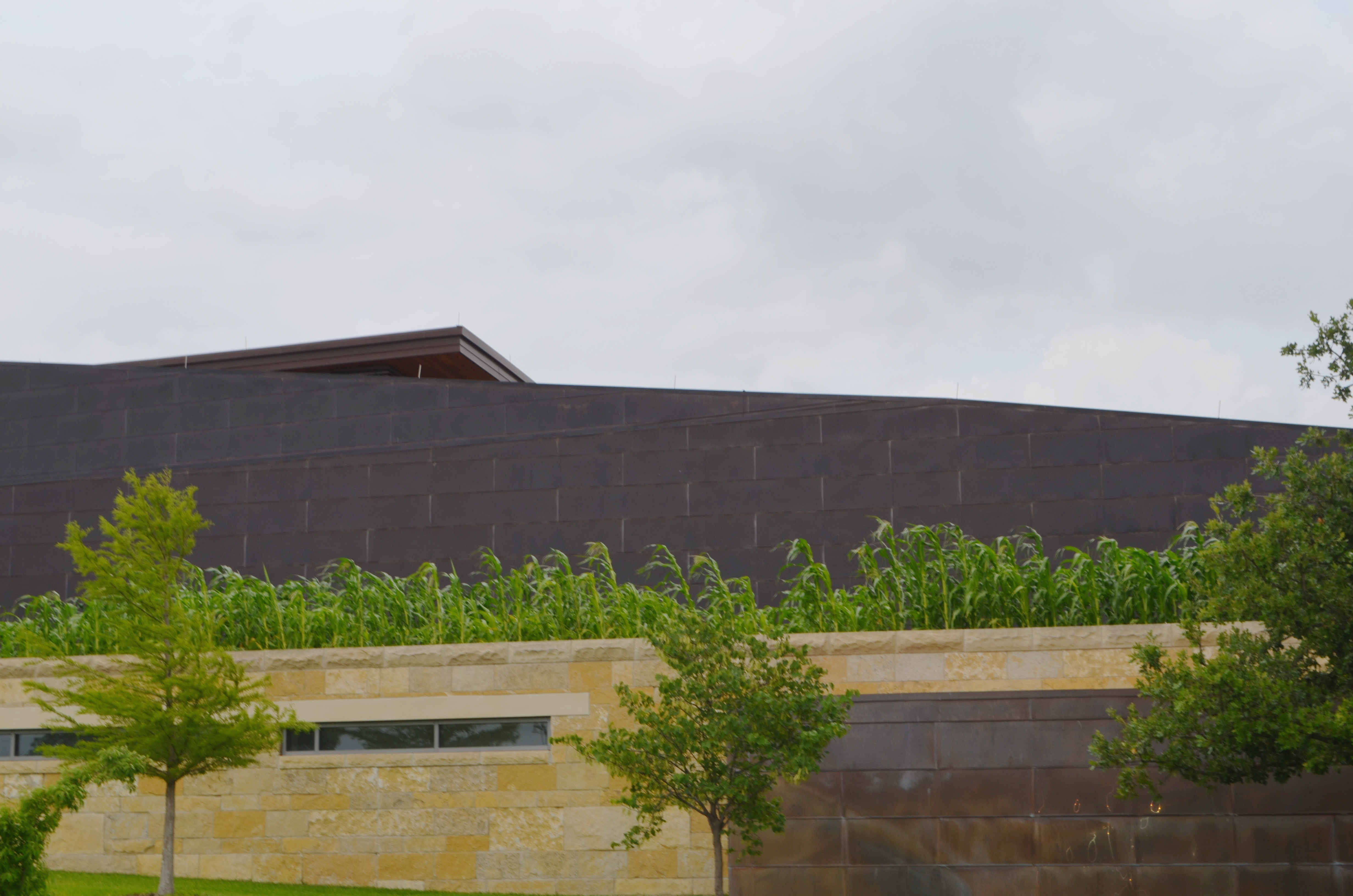
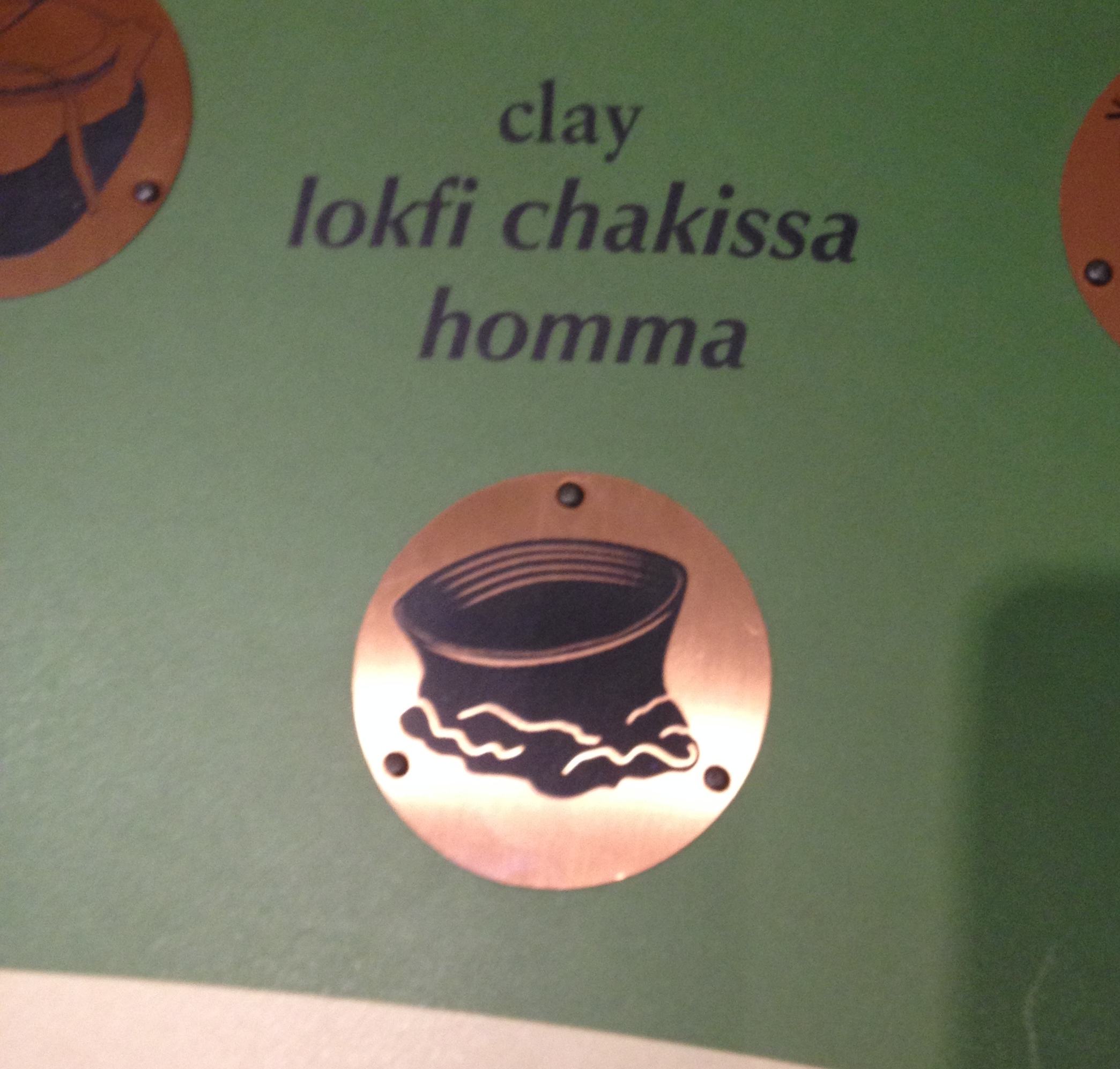
DSC_0217Blocks from the Chickasaw National Recreation Area, you find a beautiful contemporary center with exhibits, meeting places, research center, and a cafe, art galleries and beautifully landscaped grounds.  The first thing we saw was corn growing on the roof of one of the buildings.  How wonderfully appropriate!DSC_0221We were greeted with signs in English and Chickasaw…DSC_0246DSC_0220and bronze tributes to the tribe…DSC_0224DSC_0228The exhibit hall had the latest in interactive displays showing the history and heritage of the tribe.DSC_0225My favorite were the various boards where you could press a copper disc and hear the words spoken in Chickasaw as well as used in a sentence.IMG_4909There was a model village with explanations spoken in each building.DSC_0232The day we were there, the center was hosting a children’s festival, one of the best I have seen.  There was so  much for kids and families to do and learn and everyone was friendly and inviting.  I loved watching some of the young men demonstrating stickball games, which I had learned in the center were more than just for fun in the tribes in the old days.DSC_0244To top off the whole exciting experience, the Chickasaw also own a chocolate factory, Bedre, located a few miles down the road on the interstate in Davis.  They are the only tribe to own a chocolate factory and the products are truly excellent.  They sell to stores such as Neiman-Marcus, so you know that it’s special.DSC_0216IMG_4922I’ve traveled many places on this planet and I keep finding beautiful spots close to home.  Every state has them for us to discover, so I’m not claiming we’re unique, but it’s fun to go down the road and make new memories close to home.  If you’re crossing our state or coming to spend awhile, don’t miss our not so hidden surprises.  As the Chickasaw say, “Chockma!”DSC_0245

Getting off the interstates takes you along some great secondary roads that lead to new adventures everywhere you go.  My friend and I travelled within Oklahoma, going south where both of our families have roots.

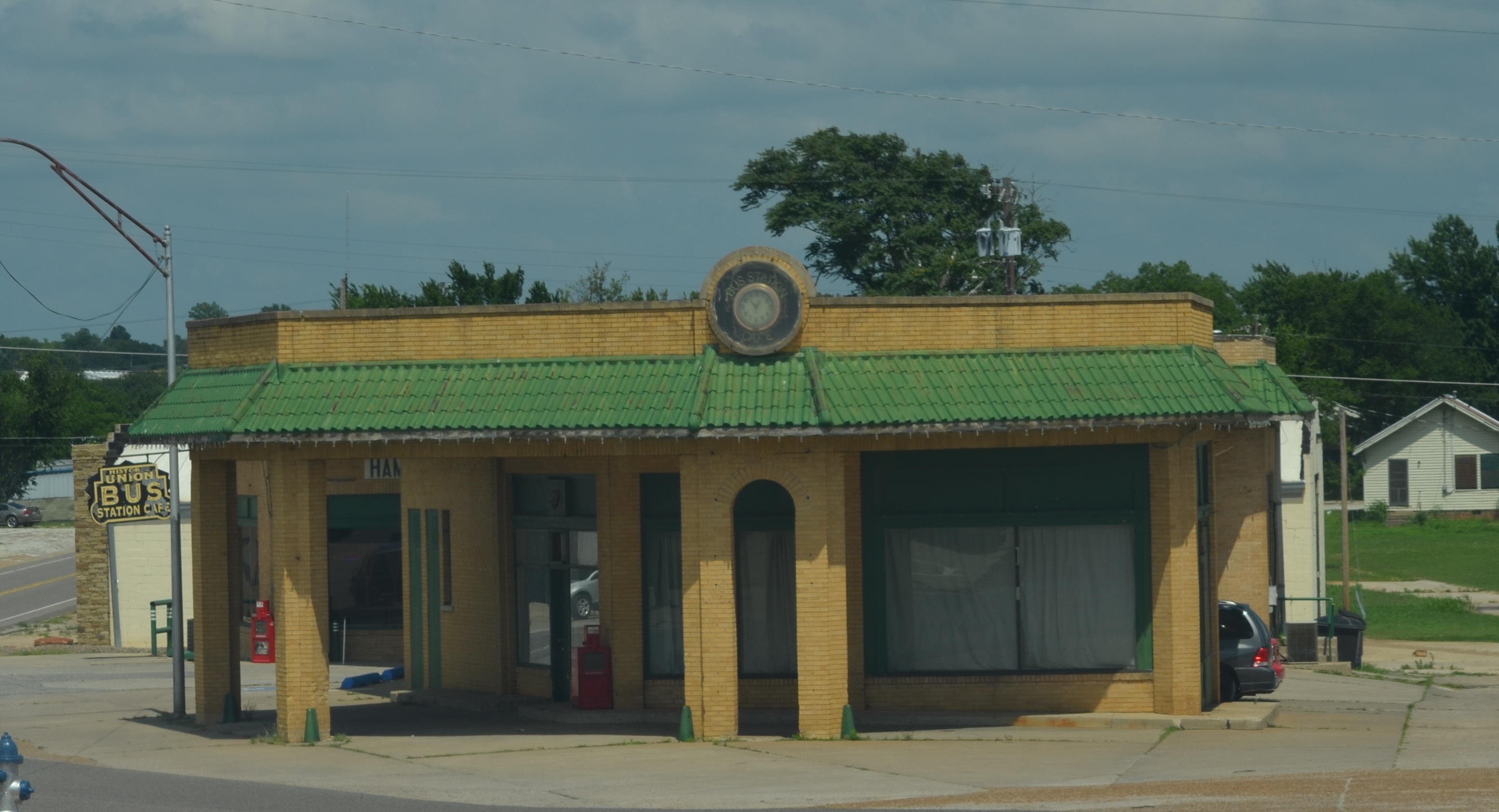
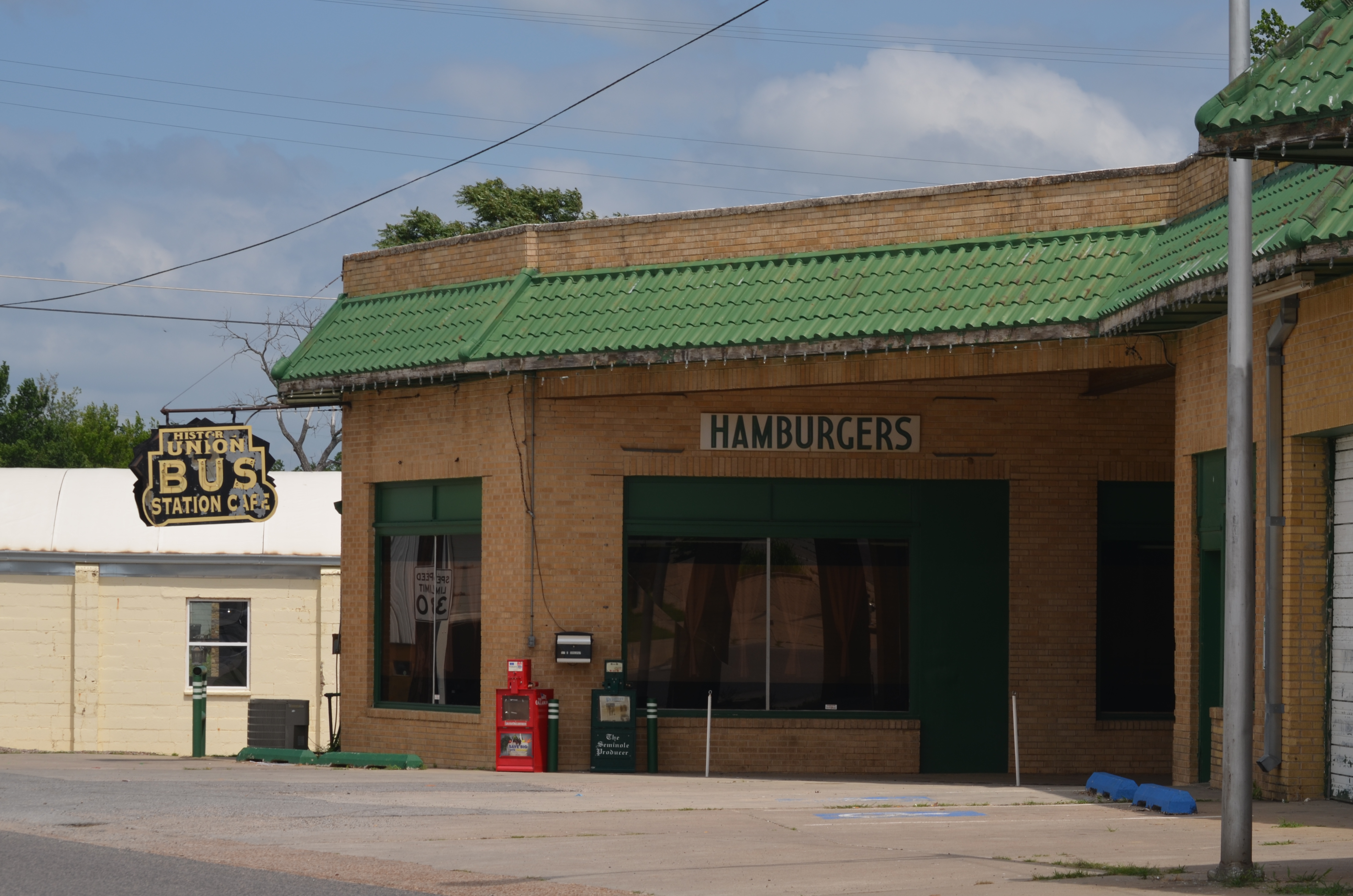
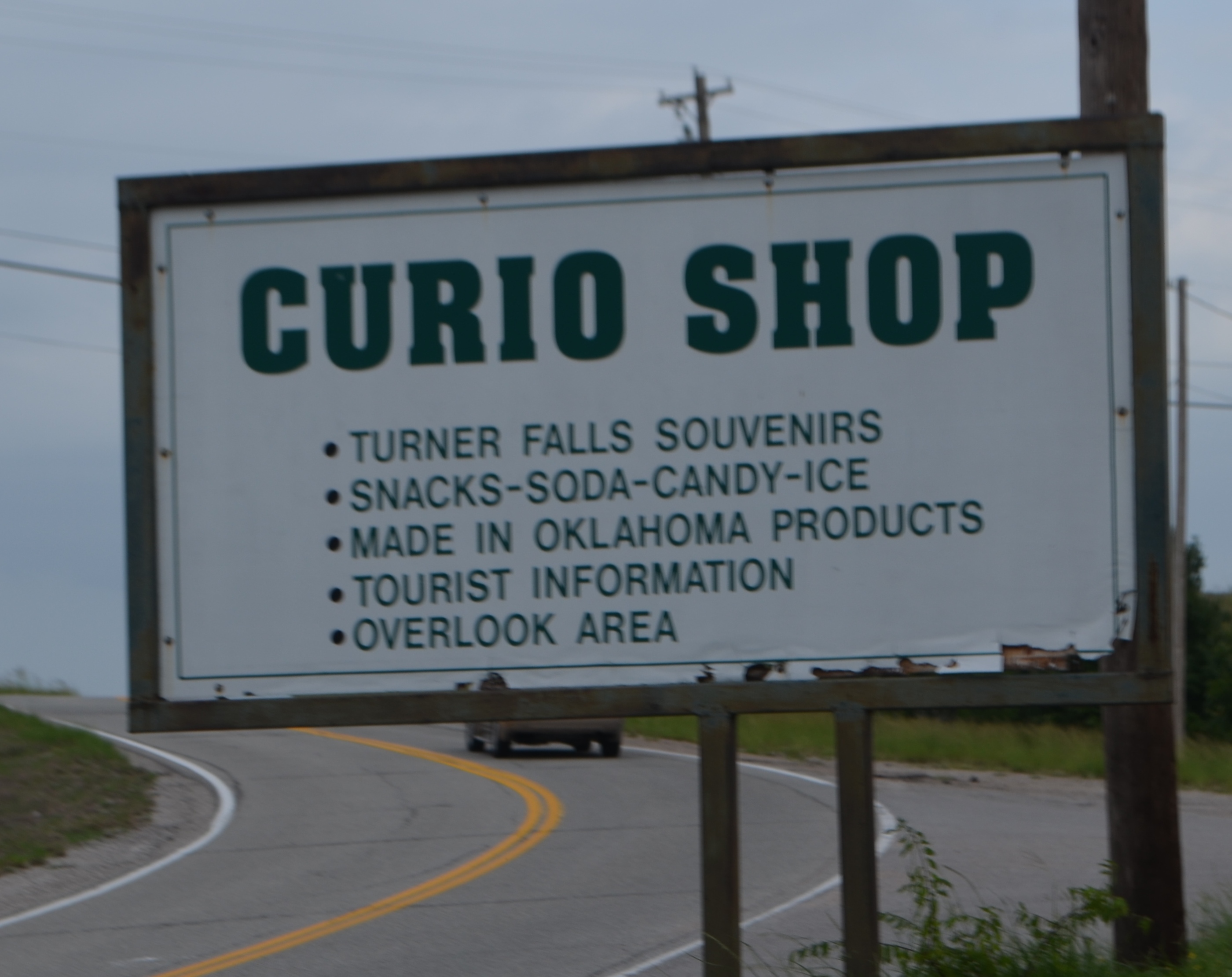
Her grandfather lived in Seminole, so we explored the downtown and found it full of treasures.  The streets are all brick…DSC_0111There are old signs to delight…DSC_0101And the bus station still functions…DSC_0113DSC_0105My friend was raised in Oregon, but has lived in Oklahoma during her adult life.  She acknowledged the beauty of the countryside as we drove, but was especially taken with Turner Falls.  She said she hadn’t believed that there was such a place in Oklahoma.  I grew up going by Turner Falls so it was a return to my childhood for me.DSC_0123DSC_0139The swimming hole wasn’t as crowded when we arrived around dinner time, so we enjoyed the beauty with just a few swimmers in the water.  We stopped at the old overlook, complete with the sign I remembered from my childhood.  Who has Curio Shops anymore?DSC_0144 DSC_0261We also discovered the place where everyone seemed to be stopping.  No wonder – they were delicious!DSC_0258 IMG_4920Our trip south ended in Ardmore, where my mother was born and I spent much of my childhood visiting my grandmother, aunts and uncles.  We took the old road in rather than the interstate.  The road through the Arbuckles that scared me as a child because it seemed high and had no shoulders and semis came at you around every curve was now a lovely drive into town.  When we saw the old standpipe in the distance, I felt one of those shivers of memory that go through you when you see something so familiar.DSC_0262There was so many memories in Ardmore and so much to learn about my family’s history there.  Downtown looked like it was hanging on..DSC_0199I found the bank where my uncle worked.  Walking through those doors as a child and seeing the brass cages where the tellers sat was most impressive.DSC_0191The high school where my mother graduated was still standing at least…DSC_0165And there were signs and places that I remembered well…DSC_0194 DSC_0195 DSC_0200 DSC_0205Central Park was across from my family’s historic home, long gone, but historic because it was built in the 1880s and was also the site of one of their wagon yards, one of the early ones in town.  I played in the park on this stage many a time since my aunt and uncle lived in the family house across the street until it was sold and replaced with an office, now an art gallery.DSC_0176I found both of the houses I remember my grandmother living in, changed but still recognizable, and the memories continued to flow.  A trip to the delightful museum left me with new insights to the place where my great-grandparents traveled from Texas to take their place in this new city.  DSC_0207My visit to the cemetery was touching as they all are buried neatly together, probably visited by nobody for many years since we all live in other parts of the state and country.  I have mixed feelings about cemeteries these days for that and other reasons.

We left Ardmore, driving to Sulphur and stopped at the Chickasaw National Recreations Area.  When I was a child, this was Platt National Park, the smallest national park in America.  We stopped for the Sulphur Springs, which stunk, and for the lovely creeks and waterfalls.  Today, this has all been encompassed into the larger area which includes the Lake of the Arbuckles and is a huge recreation area.  I chose to revisit the old Platt site, including the Nature Center.  The historic signature Lincoln Bridge is still there…DSC_0352The sites of the old Sulphur Springs are there, although many of them are dried up due to the ongoing drought in this area of the country.DSC_0295Even with springs and creeks dried up, we found beauty and water flowing.  There were wildflowers like the Indian Blanket and others…DSC_0271DSC_0293DSC_0279DSC_0339Birds and animals greeted us without fear in this protected area…DSC_0305 DSC_0314 DSC_0331And I ended this visit dipping my feet in a cool stream on a summer day…DSC_0366We drove home a different way, seeing small towns like Bowlegs and Wetova…DSC_0372…and a peek at Okemah, home of Woody Guthrie, before heading home after a delightfully beautiful road trip.DSC_0375