
We’re into a new year and I’m trying to live up to one of my own resolutions – to be a better human being by recognizing the humanity in all of us. I could preach about this, but I’m better off just trying to live up to it.
People tend to put other people in categories, which is normal. When you see or meet someone, you immediately register their size, their skin color, their voice, the way they dress, etc. It’s how we tell each other apart. The problem comes when we start to put people into categories and decide if we like them or not based on what we are seeing. I know we won’t like everyone we meet, nor should we, but we at least need to try and understand them and recognize that they are human beings.
Human beings are capable of such kindness and such cruelty and it doesn’t seem to take much to push us to either extreme. The extreme of cruelty crosses all peoples throughout history. Robert Burns wrote of “man’s inhumanity to man” in his dirge, “Man was made to Mourn” in 1784, but there are examples we are all too aware of, from the cruelty of slavery through the ages to the torture and mutilation of people by almost every culture.
“The Purpose of Propaganda is to make one set of people forget that other sets of people are human.” Aldous Huxley
We’ve seen the use of propaganda by Nazis and the Ku Klux Klan in more recent years. Elie Wiesel wrote of the “Dehumanization in Night,” where the concentration camp guards shaved the heads and branded the prisoners with numbers to make them less human so they could more easily torture and murder them. The Ku Klux Klan considered so many groups to be inferior that it’s difficult to understand who the members who considered themselves so pure were. They were against Blacks, Jews, Catholics, Irish, Italians, and anyone who didn’t fit their image of who they thought they were.

My daughter and I were in Ponca City, Oklahoma a few years ago and visited the statue of Standing Bear, a Ponca chief who sued the United States government and won. In 1879, he argued that Native Americans were “persons within the meaning of the law,” which was the first time that Native Americans were recognized as human beings by our government. Let that sink in. This did not stop the injustices that they were subjected to, but it was a beginning.
Several years ago, I worked for the American Red Cross and did educational programs in several counties in Oklahoma. The Red Cross is very focused on serving diverse populations as its mission is mandated by the U S Congress and they must give aid to everyone, regardless of who they are. After each program I gave, I needed to give the racial makeup of my audiences. I usually got this from teachers when I was in a school setting. I found that there were so many combinations of races in our state, a true melting pot of white, black, brown, red and yellow. For such a “red state” politically, we are certainly one of the most diverse.
Looking at my own DNA, as broken down by Ancestry, I am pretty white, although through various decades, I would have been hated for being Irish, Scottish, Catholic, and poor.
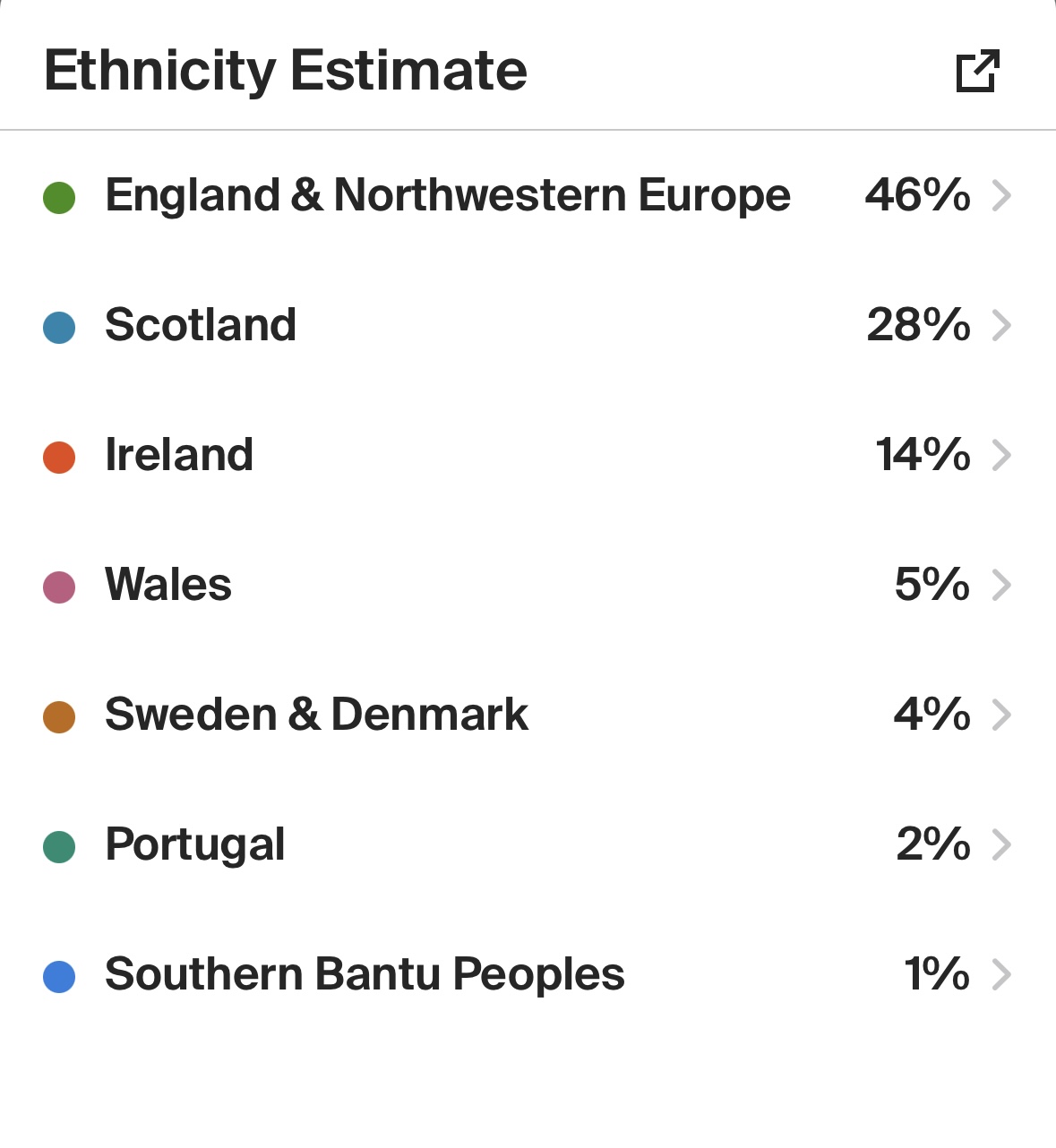
As the DNA tests become more sophisticated, I started seeing that I had some people in Northern Africa, which could mean all kinds of things. As I check the latest findings, I see that they have narrowed it down to the Southern Bantu peoples. I looked them up and here are my new relatives.

I’m really fascinated about the stories that brought so many cultures into my own personal DNA. Ancestry says that the Bantu are from my father’s side, where I know that there were some slave owners along the way. My ancestors range from well to do to Catholic nuns and priests to poor farmers just in the most recent times, so digging into the past yields all kinds of possibilities. I have a very rich heritage of all kinds of traveling people who merged with other peoples along the way. I’m a purebred nothing.
The point is that we all have stories in our ancestry and who are we to think we are any better than anyone else? Why are we afraid to embrace all that those various peoples contributed to who we are today?
Friedrich Nietzsche wrote “The surest way to corrupt a youth is to instruct him to hold in higher esteem those who think alike than those who think differently.” We need to celebrate all views and all cultures and quit being afraid of anyone who is the slightest bit different than we are. We are missing so much when we shut out the possibility of what other people can give us or the fact we could learn from what they have to say.
I’m going to work hard to ignore the propaganda that surrounds me telling me to think this person has no idea what they are talking about and this person is not worth my time and that person is just plain horrible and try to see each person in their own place in their own life. I still won’t like all of them, but I can at least open my ears and my heart and see them as human beings just like me, just trying to make my way through this life we have been given.
“Nothing is more important than empathy for another human being’s suffering. Nothing – not career, not wealth, not intelligence, certainly not status. We have to feel for one another if we’re going to survive with dignity.” Audrey Hepburn
And, I’m going to take these words and try to be the best human being I can be. It’s sad that it takes any effort at all, isn’t it?
 Confetti Thoughts