
My father and all my uncles served in World War II. Daddy was a Lt. Colonel in the Army Air Force and my five uncles served in the Army. All of them came home but one, my Uncle Bill, my father’s youngest brother. He died before my father met my mother, a couple of years before I was born, so I never knew him. On this Memorial Day, I’d like to tell what i know of his story.
My father was the oldest of four children. He and his brother and sister were all born within about three years, beginning in 1912, in Uniontown, Kentucky, where both of their parents were born. The family moved to Wichita, Kansas to start a new business and where William Lyle Hamilton was born in February, 1921. My mother was born the next month, which gives me a little perspective. Here is the first picture I find of Bill, obviously the baby of the family, with my father behind him, his brother, Ed, and his sister, Sara. The family moved to Oklahoma City at some point, where my grandfather started his automotive parts business, J. C. Hamilton Co. Here is a photo of the family during that time. My father is on the front fender behind his brother, Ed. Bill stands on the running board between his sister and parents. It’s the only photo I can find of the whole family together, but you get the idea.
  Years passed, the children grew up and the boys went into the family business. Sarah married my other Uncle Ed and started their family. When the United States joined World War II, all the men went into service. Here is my Uncle Bill with my grandfather.
  My grandfather was about 5’8″, so Uncle Bill was the smallest of the brothers in the family, besides being the baby. I still don’t know where my father got his height of 6’2″.
The brothers were stationed far apart for their service. I think my Uncle Ed served as a trainer, My Uncle Ed, married to Aunt Sara, served on General Patton’s staff. My father was a squadron commander, flying out of Africa to Italy, much like the story in the novel and movie, “Catch 22.” Uncle Bill was a Technical Sargeant. That’s what I know.
A few years ago, I traveled to Louisville, KY to go through some papers kept at the Filson Historical Society there. I had been told that the Hamilton papers were in their care and went to explore. I found boxes of papers belonging to my great-grandfather, mostly receipts for his business. But, there was a scrapbook kept by one of my father’s cousins, which was full of information I had never seen. I could only photograph the items quickly, but here are the things I found about my Uncle Bill. First is this article about his last mission. And then this article from the local paper.
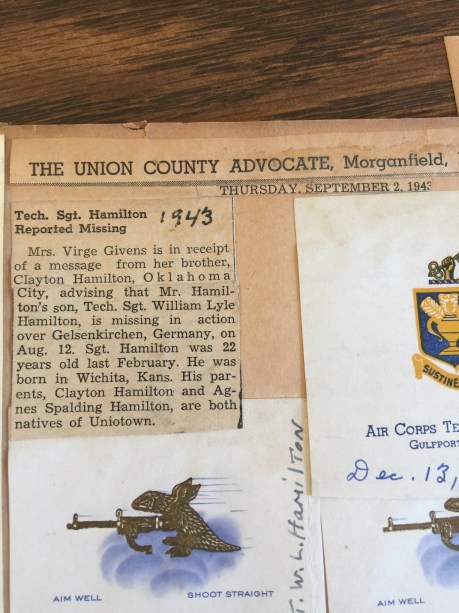 All I had ever heard was that he was shot down while parachuting into Germany and was buried there, far from home. Then I found this touching letter, written to my father. I’m not sure how this got into this group of papers, but it showed a big brother trying to find more information about his little brother, probably trying to get answers for my grandparents.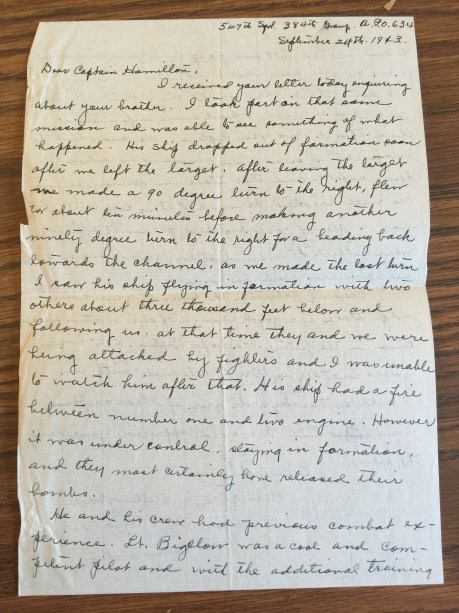
 The letter shows they didn’t know right away if he was killed or captured, as this letter was written well over a month after he must have been killed, according to the newspaper clip above.
Now I have to imagine how this affected my grandparents and the rest of the family. They were in limbo for I have no idea how long and there is nothing harder than the not knowing – except for the knowing.
My memories of my grandparents are of them laughing and smiling and enjoying their family so much. My grandmother developed painful arthritis and my mother once told me that the doctors said that the stress of losing Bill may have been a factor. She was a grieving mother, but her grandchildren didn’t know this. I was the fifth of nine grandchildren, the middle, and I didn’t hear her speak of Bill. When I was in high school or college, my mother told me that my grandmother still got letters from Bill’s girlfriend. And she told me that my grandmother blamed FDR for her son’s death (because she needed to blame someone) and wouldn’t even have a stamp with his picture on it.
I never heard anyone speak of Bill, but I understand he was always in their hearts. I’ve lost a son at a young age and I know that you have periods of wondering what would his life have been like, where would he be now. And you always love them, they are always with you. I didn’t know these things when I was young and my grandparents were alive, so I never asked. I’m so sorry I didn’t know to let them share with me.
On this Memorial Day, I want to remember the uncle I never knew, the uncle who gave the ultimate sacrifice for our country and our family. I don’t ever want to forget.
Thank you, William Lyle Hamilton. 
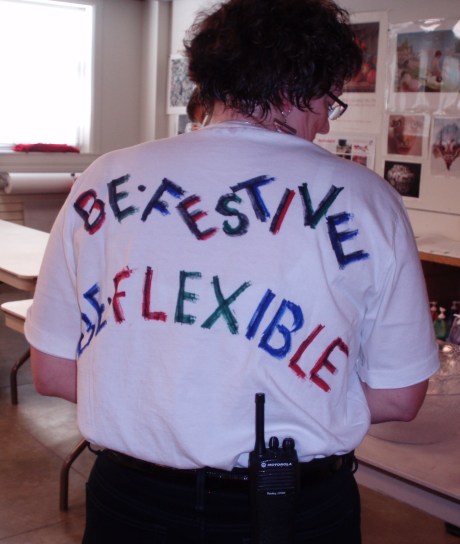 The words served all my teams well through the following years, both at the museum and at Oklahoma State University, where I did the same kind of work with college students.
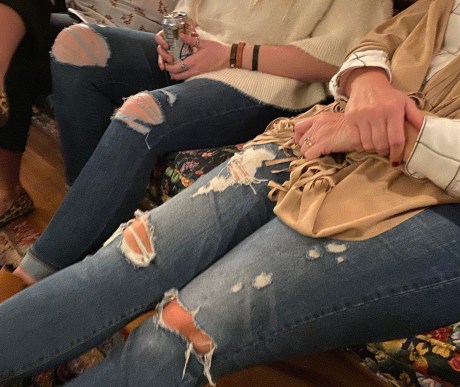 It looks like my family has made it. You can just look at the way we dress and see that we are successful…not to mention on trend, with it, cool.
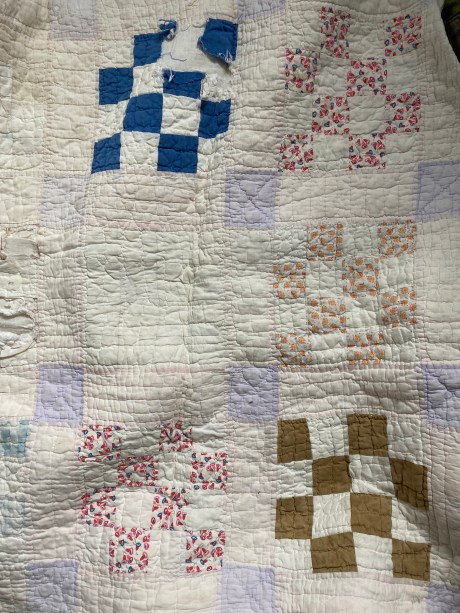
 My grandmother kept my mother’s dresses to make quilts. I have a few well worn quilts and some unfinished quilt tops from then that show the thinness of the fabrics. There was no waste in those days. They couldn’t afford it.
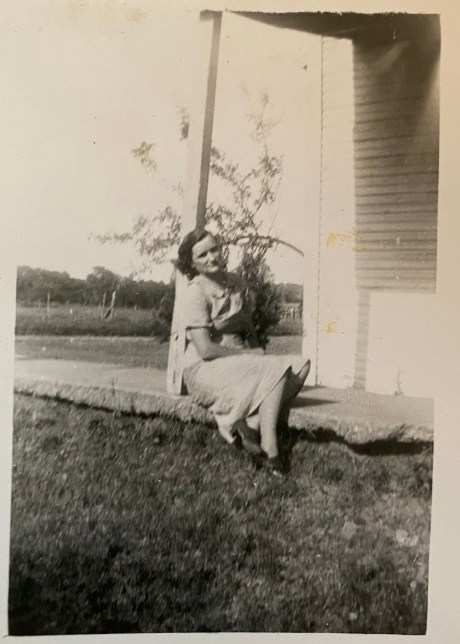
 My mother always looked stylish after she started working. Here she is when she was young.
 I only have photos of three of my great-grandmothers. This is my father’s paternal grandmother, shown with him. These were their everyday clothes. They weren’t poor, but they had lots of children to keep dressed.
 This is my mother’s paternal grandmother, shown with my mother and her brothers. My mother may be wearing one of the dresses that ended up in a quilt. My mother told me her grandmother dressed the same way until she died, wearing layers of clothes as they did in the late 1800s. The earliest information I can find out about her is that she worked as a house servant in Texas when she was 14. Later she married and traveled to Ardmore, OK by covered wagon, where they set up the West Wagon Yard and did pretty well, although she always lived very simply.
 This is my mother’s paternal grandmother. They were poor, living on a farm in southern Oklahoma. Both she and my grandfather ended up, literally, at the poor farm. I’m not sure if they were suffering from dementia or just couldn’t afford to live on the farm anymore, but I learned that they both died at the home in Vinita, OK. She was buried there and the family managed to bring him home later.
  So, I stand in the middle of the generations, looking back at my great-grandmothers who lived difficult lives, but managed to patch their children’s clothes and keep the families together, to my grandmothers, who both were poor as children, but worked hard and raised their families, to me, who was born to a comfortable lifestyle, which my husband and I worked hard to provide for our children.
 Our family has made it, if you look at the generations. I have grown children and grandchildren who can afford to buy expensive, torn clothing to show how well we are doing. I think I understand why I haven’t embraced this trend. I’m stuck in the middle of those who had nothing and those who have much. I look back and I look forward and I appreciate the progress. These are my people and I love them all.
 He said this was his first time to come here and I told him I come whenever I can. I asked him where he was from and he said, “Checotah,” which is about an hour and a half away. Then he told me that he didn’t have much of a Bucket List because he didn’t have much money, but he had a Thimble List. I told him this was definitely a great place to have on it. He told me he had never seen the ocean, but was planning to go next year. He told me that even if you were Rembrandt, whom he admired, you could never outdo the Lord’s work. I told him it was definitely a place to restore your soul.
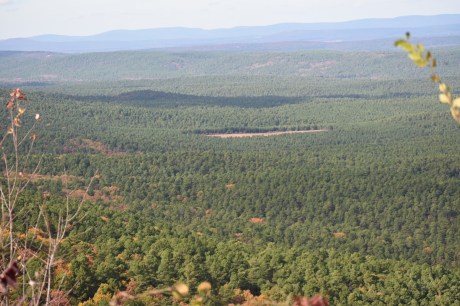 I watched the shadows from the clouds spread across the valley and took in all the beauty around me.
  We all need a Thimble List, which I define as a list of places to visit and things to do that are not unobtainable, not far from home. I can’t criticize him for just now getting to this beautiful place because I didn’t see it for the first time until I was in my late 50s or 60s. It’s only 2 1/2 hours from my home, but I might have missed it.
 Way back in the 1950s, when I was younger than my granddaughter now, we used to drive to visit my grandmother in Ardmore, Oklahoma. At that time, until the turnpikes and highways were built, the drive from Tulsa took at least four hours and involved going through multiple small towns and then winding along the narrow roads through the Arbuckles until you hit a flat road into Ardmore.
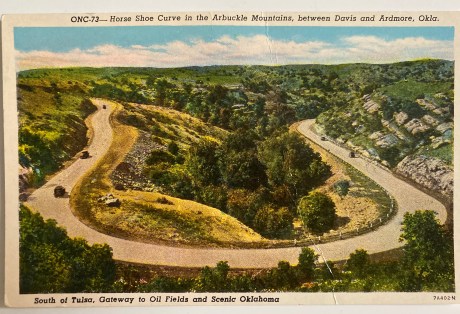 This doesn’t look too bad, but it was narrow with big trucks going by quickly. It used to scare me, sitting in the back seat looking at the drop off. I can now drive myself through the mountains in California and Colorado without freaking out, but it took me a long time to get over this minor childhood trauma (I had a great childhood).
 Maybe my granddaughter will remember doing this – maybe not. That’s ok since we have plenty of other memories we’ve shared. For me, this was a trip back in time, into my heart and soul, for the sweetest of times, the times of love and family.
 We posed for the obligatory pictures, asking strangers to help us get a shot of us all. This is so much easier now that everyone uses cell phones and knows how to work them. Everyone is helpful and friendly and everyone wants their picture there. There were visitors from all over the United States and we heard various languages spoken, as is the case wherever we travel, reminding us of the universal hope of our country.
 I brought the boys back the next morning to see Mt Rushmore in all its glory with the morning sun shining on the faces. We had the perfect blue sky and got another photo with the guys, as we had begun to call them.
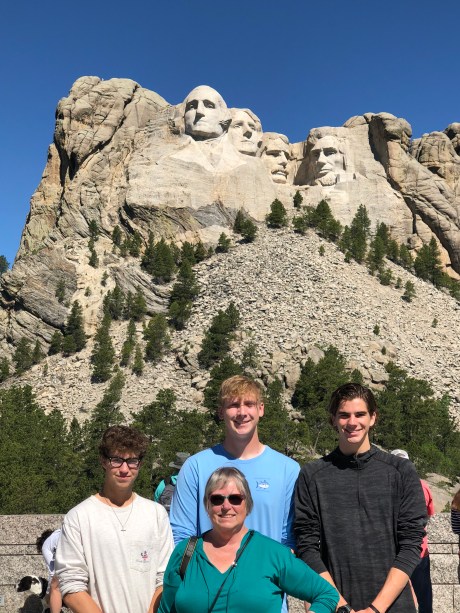 We had been through the museum and seen the film showing the construction of the memorial the night before and I know the boys will be studying this story more as we all marveled at the men who built this beautiful monument with all odds against the project, both financial and dangerous risks. It is a true marvel of sculptural achievement and a tribute to not only Gustav Borglum, but to his family, including his son, Lincoln, who finished the project, and to the scores of workers. Not a life was lost making this monument.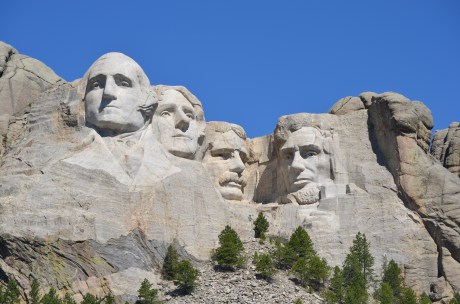
 In the end, she was on oxygen and had painful neuropathy in her feet, but never lost her sense of humor or her ability to listen to us tell about everything in our lives. I would say a fault was that she never liked to admit she was wrong, but she even mellowed in that as she grew older.
 I’ve tried to track down Hattie’s history, but it’s elusive as is the data on many who lived on farms across our country. From what I’ve found, she was born July 29, 1856 in Tuscaloosa, Alabama to Benjamin Mills and Dorcas Fox. The records get fuzzy because I find their names spelled different ways, etc. Some of those census people weren’t too careful back then.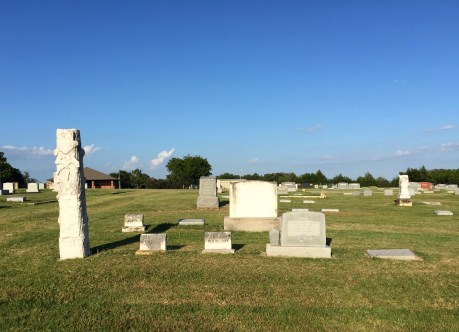
 John lived long enough to join the Woodmen of the World. I guess Ben helped E. Z. with the wagon yards until there was no need for them with the new automobile age. E. Z. died in 1920, the year before my mother was born.
 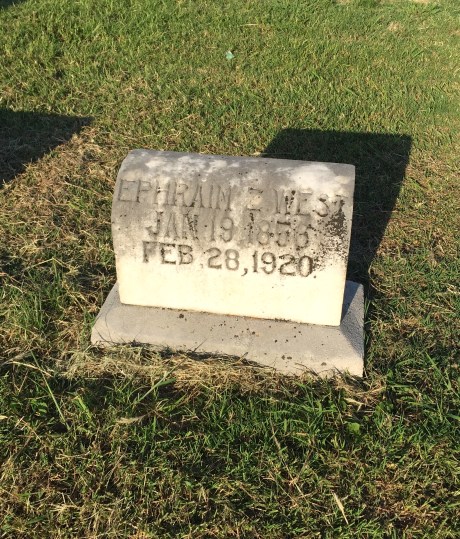 Piecing this story together, Ben lived with his mother, working in the wagon yard and then for the phone company as a lineman, as I recall. They had the wagon yard long enough for my mother to have a vague memory of it as she sketched me an picture not too long before she died. Ben met my grandmother, Artie Holt, when she was 18 and he was probably 38. They married and he brought her home.
 Hattie now is a widow and her husband and sons are gone. She is 71 years old and a respected Ardmore lady. The wagon yard was leased as a lumber yard before being developed in later years. She had her home, which was across the street from what is now Central Park in Ardmore, and she had several other properties. My grandmother and her children lived in a large home and my grandmother left each of the grandchildren their own house.
 We went back in time as she described the rooms and the furniture. At one time, Hattie and E.Z. purchased a farm and moved there, although Hattie hated being out in the country. I honestly believe my mother was born out there, but she didn’t admit it. There were barrels around that they used to bring things in from the farm. My grandfather lived at the back of the house and my grandmother had a big armoire in the living room where she kept her opera hats. Yes, there was an opera in Ardmore as artists traveled from town to town. The hats were described as wire frames that Hattie stuffed with chiffon. I know she kept copies of Mary Baker Eddy’s books, although she wasn’t a Christian Scientist.

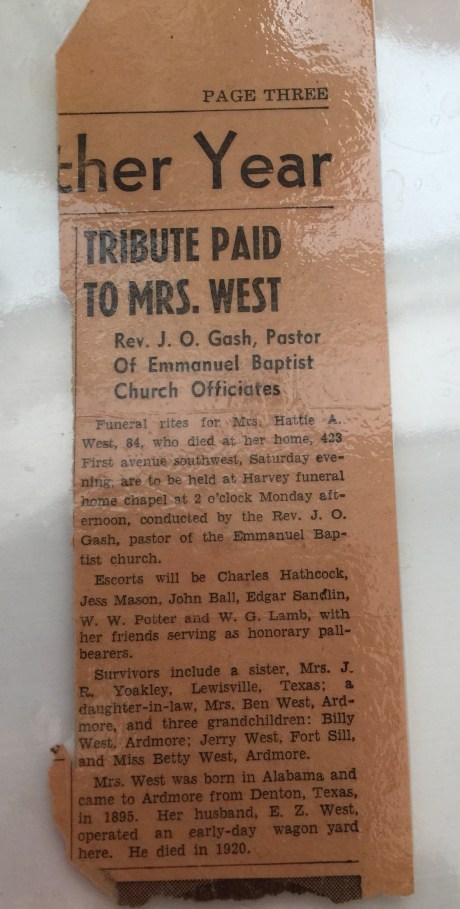 I wonder what I would have thought of this lady in white who influenced my Mommy so much. I can only take what I know and read between the lines to fill in the story.
 and Fats Domino, Little Richard and Chuck Berry. I had to explain to the kids that DJs were brave to play music from black artists, which my 19 and 20 year olds didn’t get understand at all.
 We were a dancing generation, so I’ve got some great anthems of my youth. “Do You Love Me?”, “What’d I Say?”, “Good Lovin'”, “Do You Want to Dance?”, “I Heard It Through the Grapevine,” and, of course, “Louie, Louie.” Hopefully other drivers don’t notice the old lady rocking out a little down the road.
 For this list, I don’t have my Barbra Streisand favorites, but there are songs from Diana Ross & the Supremes, Credence Clearwater, and Simon & Garfunkel. It’s a hodgepodge for me to sing and think about.
 And, to round it out, my country vibes are all out there with Willie Nelson, because, well because WILLIE! I’ve got some of his most fun songs to make me smile and sing, “I Didn’t Come Here,” “If You’ve Got the Money, I’ve Got the Time,” “Big Booty,” and “On the Road Again,” because you have to have that one when you’re driving.
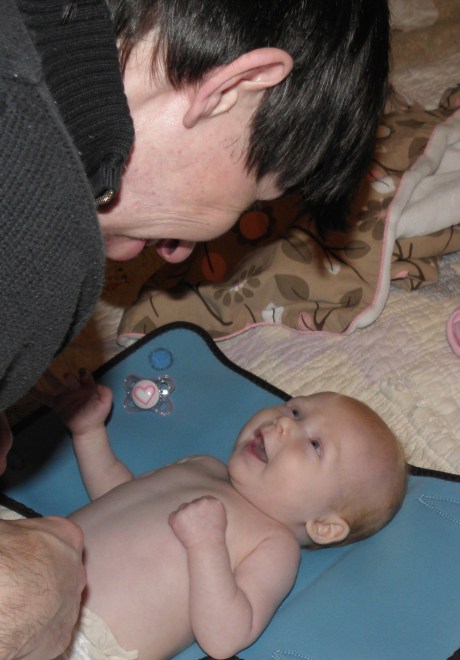 She was 15 months old when he died, already showing us a personality that rivaled her daddy’s at that age. Here’s how she looked the last day he spent with her.
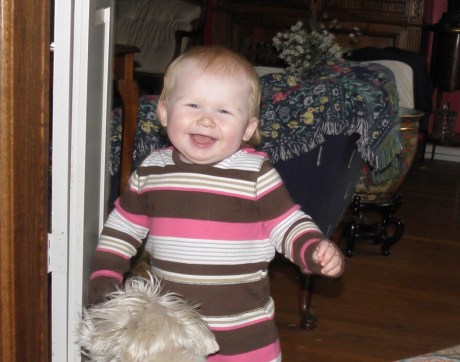 There is no doubt he didn’t want to leave this cutie behind. My mind did its tricks, whipping between memories and what ifs. Would she be as strong a personality if he had lived? Would she show the kindness that she has for all living things? Did his death make her stronger or bring out the best in her?
 Confetti Thoughts